The best way to get from Cusco to Machu Picchu depends on your budget, time, and travel style. Most travelers choose the train via Ollantaytambo, which is the fastest and most comfortable option, while others prefer hiking routes or the budget-friendly Hydroelectric route. Given this wide range of choices, selecting the best route to the sanctuary can be confusing. That’s why we created this guide to help you make the best decision.
Discover the most popular ways to get to the Inca citadel from the imperial city
- How to Get from Cusco to Machu Picchu: Transportation Overview
- Route 1: Train from Cusco to Machu Picchu (Fastest & Most Popular Option)
- Route 2: Hiking from Cusco to Machu Picchu (Inca Trail & Alternatives)
- Route 3: Alternative Route to Machu Picchu via Hydroelectric
- How to Choose the Best Route Based on Your Travel Style
- FAQs About Traveling from Cusco to Machu Picchu
How to Get from Cusco to Machu Picchu: Transportation Overview

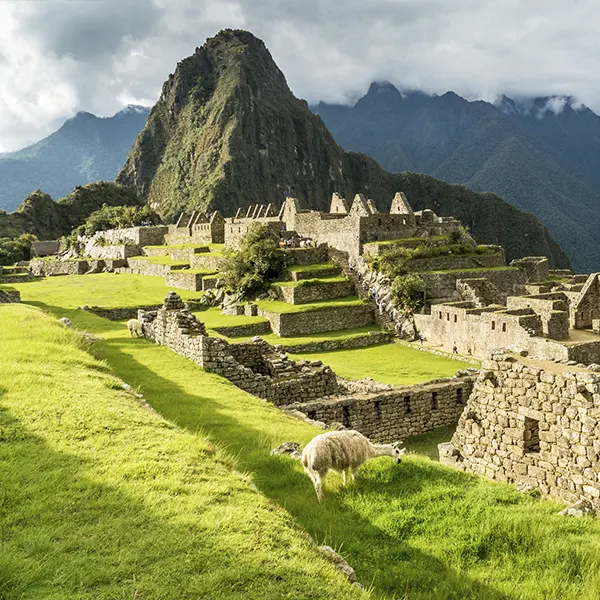
Machu Picchu is located on the eastern slopes of the Peruvian Andes, about 120 km northeast of Cusco. However, the distance between the historical sanctuary and the city varies depending on the route you choose. Let’s break it down: no road connects directly to Machu Picchu. The Peruvian government took this measure to protect the site, prevent overcrowding, and preserve the local ecosystem.
The railway system connecting Cusco with Aguas Calientes addresses the lack of a main road, as no direct road leads to Machu Picchu. Therefore, the use of train service has increased because it is the fastest and easiest way to reach Aguas Calientes. Because of these advantages, this way has grown significantly in popularity in recent years.
Despite this, other alternatives have also become perfectly viable, whether for their adrenaline rush or affordable prices. Currently, you can find a wide range of options to reach the citadel, including some that combine different modes of transport. Please consider evaluating each based on your travel style and expectations. To help you with this, we want to provide an overview of the main alternatives available.
Route 1: Train from Cusco to Machu Picchu (Fastest & Most Popular Option)
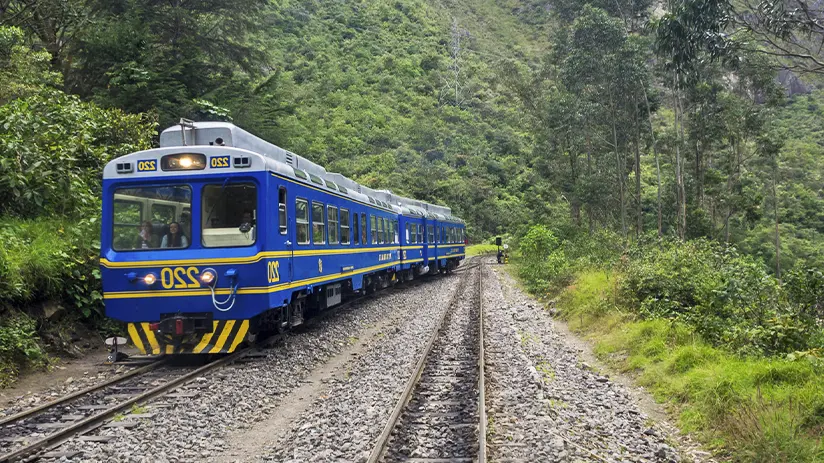
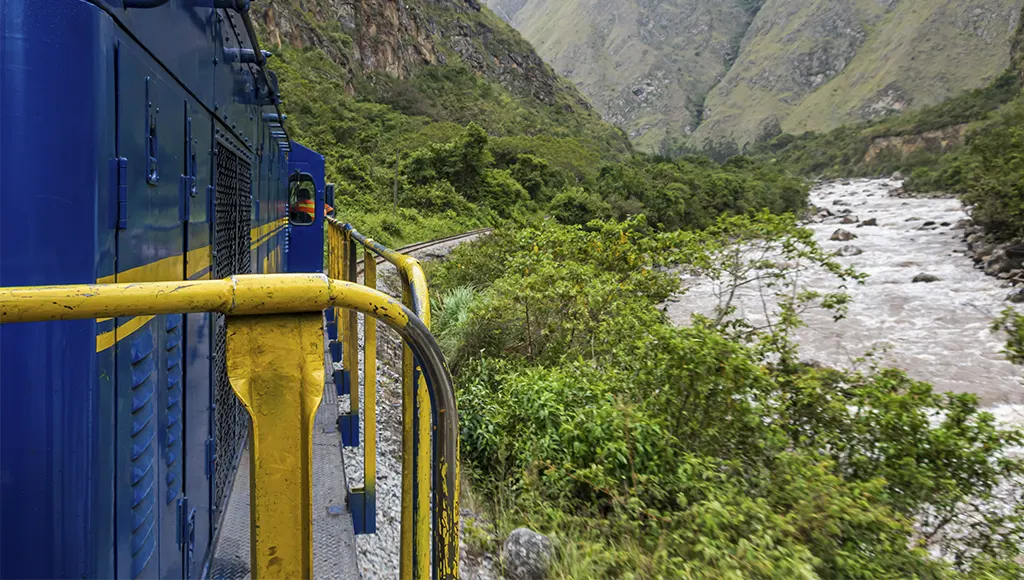
Taking the train is one of the most authentic ways to experience Machu Picchu. Andean and jungle landscapes, a welcoming atmosphere, and a peaceful ride are all that this route offers. Its popularity has grown exponentially in recent years due to its accessibility and speed. To provide more details, we explain the two main options available.
Option 1: Car + Train + Bus (via Ollantaytambo or Poroy)

The journey begins in Cusco, heading to your chosen train station to travel to the town of Aguas Calientes. The stations of Poroy, Urubamba, and Ollantaytambo in the Sacred Valley are the available options. Keep in mind that if the car trip is shorter, the train trip is longer, and vice versa. Below is a comparison chart to help you better understand this point.
| First step: By car | Train Station | Second step: By train | Popular With Which Type of Travelers | Additional Details | ||
| Driving Time from Cusco | Distance from Cusco | Train Time to Aguas Calientes | Train Distance to Aguas Calientes | |||
| 30–40 min | 20 km | Poroy Station | 3.5–4 hours | 88 km | Travelers looking for comfort and to avoid long road transfers | Operates only during the dry season (approx. April–December). Fewer daily departures. Scenic views from the start of the journey. |
| 1 hr 20 min – 1 hr 40 min | 60 km | Urubamba Station | 2.5–3 hours | 67 km | Travelers staying at luxury hotels in the Sacred Valley | Not always available. Mainly used by high-end tourist trains (e.g., Hiram Bingham). |
| 1 hr 45 min – 2 hrs | 72 km | Ollantaytambo Station | 1.5–2 hours | 43 km | Backpackers, independent travelers, and most tourists | The most commonly used station with the widest range of schedules. Tourist town with hotels, restaurants, and services. |
Once the train ride ends, you will arrive at the Aguas Calientes station, and there is only one last step before reaching the entrance to the citadel. Here you have two options, as the town is located at the foot of Machu Picchu, exactly 8.7 km away. The first is to take an eco-friendly bus operated by CONSETTUR, and the second is to walk. Each option features its own characteristics, and you can adapt it to your travel style.
| Consettur Bus | Hiking (Walking Trail) | |
| Schedules & Frequency | Runs from 5:30 a.m. to 3:30 p.m. (up) and until 5:30 p.m. (last down). Buses depart every 5–10 minutes | Available at any time of day, but access is usually from 5:00 am onward |
| Cost | Approx. USD 12 one way / USD 24 round trip | Free |
| Reservation | Needed | Not needed |
| Duration | About 25–30 minutes | Around 1.5–2 hours, depending on pace |
| Difficulty | Easy | Moderate to challenging (steep uphill trail) |
| Ideal For | Travelers short on time, families, seniors, or those wanting comfort | Budget travelers, hikers, and those looking for a physical challenge and scenic experience |
Option 2: Train + Bus / Hike

In case you were wondering, there are also train stations in Cusco, but direct trips to Aguas Calientes are infrequent. Only in some cases, during April and December, can some travelers take advantage of these services. This is mainly because of the area’s weather conditions during the rest of the year. In any case, the journey takes you to the town at the foot of Machu Picchu.
Once in Aguas Calientes, the final step is the same as the previous option. You can choose to travel by Consettur bus or walk, depending on your preference. Tour operators recommend this option for those who want to avoid exploring the Sacred Valley before Machu Picchu. Also, keep in mind that these train tickets to Machu Picchu can be more expensive compared to other options, so it’s worth considering this.
Train Options to Machu Picchu: PeruRail vs Inca Rail

Currently, two railway companies operate in the area, each with its own offerings, reputation, and service quality. Each provides many options for different types of travelers, considering factors such as comfort, scenic views, or food. To help you better understand your needs, we’d like to offer some details that might help you choose the ideal train.
| Train Type | General Characteristics | Departures per Day | Approx. Price (USD one way) | Considerations | Ideal For | |
| PeruRail | Expedition | Basic, comfortable tourist train with large windows. No luxury services included. | Many daily departures | $60–$80 | No entertainment or premium service. Best value option. | Budget travelers, backpackers, independent travelers |
| Vistadome | Panoramic windows, glass roof, cultural show, snacks included. | Several daily departures | $90–$120 | More expensive than the Expedition but with better views and experience. | First-time visitors, travelers wanting comfort + scenery | |
| Hiram Bingham | Luxury train with gourmet meals, open bar, live music, and an entrance ticket often included. | 1 departure per day | $450–$500+ | Very expensive; full-day experience rather than simple transport. | Luxury travelers, special occasions | |
| Inca Rail | Voyager Train | Comfortable tourist train, large windows, basic onboard service. | Several daily departures | $55–$75 | Similar to Expedition, limited extras. | Budget-conscious travelers |
| The 360º | Panoramic windows, a glass ceiling, an outdoor observation car, and snacks are included. | Limited daily departures | $85–$110 | Availability can be limited; popular in high season. | Photography lovers, scenic-focused travelers | |
| First Class | Premium seating, welcome drink, gourmet meal, and outdoor observation car. | 1–2 departures per day | $180–$250 | More affordable luxury compared to Hiram Bingham. | Travelers seeking comfort without full luxury pricing |
Route 2: Hiking from Cusco to Machu Picchu (Inca Trail & Alternatives)

Hiking is one of the best things to do in Cusco and the Andes in general, and it’s also a favorite option for adventurers heading to Machu Picchu. But it requires more, especially regarding time, logistical resources, and personal items. Below are some of the main routes you might consider if you love outdoor activities:
Inca Trail

The Incas called the network of trails they used to travel between the villages of the Sacred Valley the Inca Trail. Today, a section of these trails is the way that leads visitors to the entrance of Machu Picchu. This trek captivates adventurers with its diverse ecosystems, ancient ruins, and much more. Its scale has made it one of the most popular trekking routes in South America.
Unlike other attractions, this trail requires not only entrance tickets but also a special permit. Only official tour operators receive this authorization, so having one is essential. Hiking gear is also indispensable due to the area’s varied terrain. Below are the two available options for hiking the Inca Trail:
- Classic Inca Trail (4 days): This trek covers approximately 44 km through stunning natural scenery and archaeological sites. The difficulty level is moderate, although it could be challenging depending on weather conditions. As the most popular option, this experience requires a minimum booking of 6 months.
- Short Inca Trail (2 days): Those with limited time who prefer to avoid camping often opt for the short trail. This trail is less than 12 km long, and its difficulty level ranges from easy to moderate. Like the previous option, the trail leads to the Sun Gate, with the added benefit of a stay in Aguas Calientes (hot springs).
Alternative treks
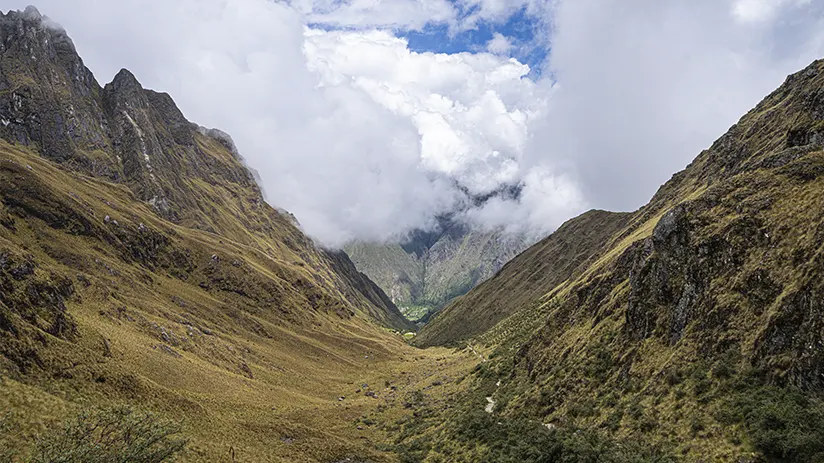
Those who are looking for different experiences should consider alternative routes. Some include the ancient Inca Trail, which no longer requires permits, while others complement the classic Inca Trail. Whichever you choose, any way will allow you to visit Machu Picchu after an exceptional journey. Remember that you can also choose to take the return train or other similar options.
| Trek | General Overview | Duration | Total Distance | Starting Elevation (masl) | Maximum Elevation (masl) | Ideal For | Additional Considerations |
| Salkantay Trail | A scenic high-altitude trek featuring glaciers, alpine lakes, and dramatic mountain views | 4–5 days | ~60 km | ~2,900 m | ~4,650 m | Adventure seekers and experienced hikers | Challenging altitude, colder weather, very popular alternative |
| Choquequirao Trek | A remote and demanding trek to the impressive Choquequirao ruins, sometimes combined with Machu Picchu | 7–9 days | ~62 km (one way) | ~1,500 m | ~3,050 m | Experienced hikers seeking solitude | Physically demanding, limited facilities, fewer tourists |
| Lares Trek | A cultural trek known for traditional Andean villages and natural hot springs | 3–4 days | ~33 km | ~3,200 m | ~4,400 m | Travelers interested in culture and relaxation | Less archaeological focus, route variations |
| Huchuy Qosqo Trek | A short and accessible trek to an Inca site overlooking the Sacred Valley | 1–2 days | ~17 km | ~2,900 m | ~4,200 m | Beginners or travelers with limited time | Often combined with Sacred Valley tours |
| Inca Jungle Trail | A mixed-activity route combining hiking, biking, and optional rafting | 3–4 days | ~40 km | ~1,200 m | ~4,300 m | Adventure lovers looking for variety | Less historical focus, more commercialized |
| Ancascocha Trek | A quiet, off-the-beaten-path trek following an original Inca route | 4–5 days | ~44 km | ~2,900 m | ~4,800 m | Hikers seeking solitude and authenticity | Requires good fitness, limited availability |
Route 3: Alternative Route to Machu Picchu via Hydroelectric
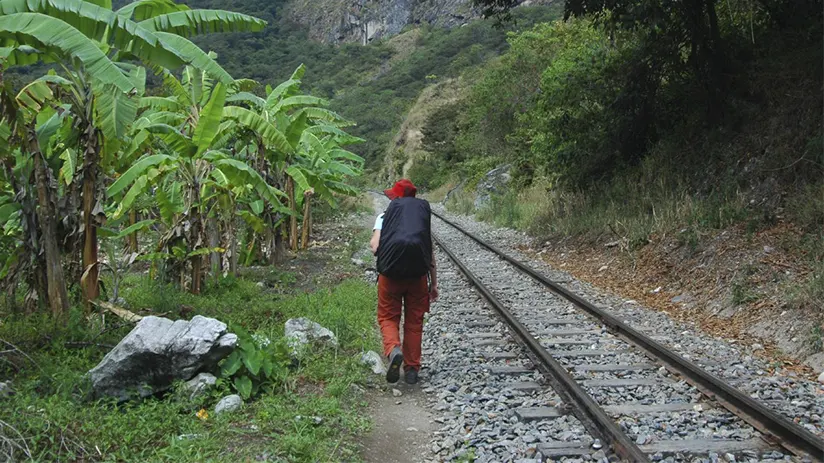
The route via the hydroelectric plant is the cheapest way to get to Machu Picchu from Cusco. The journey includes a 6-hour bus ride from Cusco to the power plant, followed by a flat 3-hour hike. You can also replace this last part with a 30-minute ride on the local train, but that will depend on your time and budget. After you tour Machu Picchu, we recommend heading to the Ollantaytambo train station for a faster return trip.
How to Choose the Best Route Based on Your Travel Style
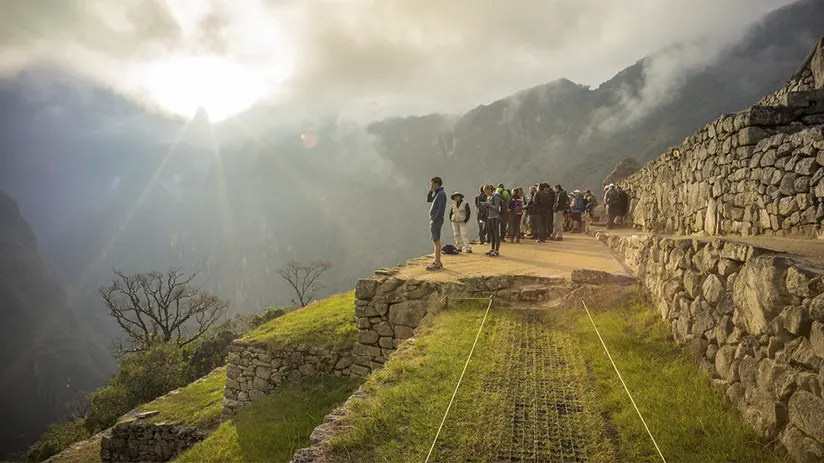
The best way to reach it will depend on your interests and how you want to experience your trip to Machu Picchu. As you can see, each option has its own advantages and will allow you to reach the foot of the sanctuary. Thus, we recommend carefully evaluating these three options based on your time, budget, and effort. Remember that good planning will give you peace of mind and make your traditional Andean adventure even more rewarding.
Nonetheless, the efficiency of traveling by car from Cusco to Ollantaytambo and then by train from Ollantaytambo to Aguas Calientes is undeniable. Its accessibility and speed have boosted the popularity of this option in recent years. Now it is the most chosen by travelers from all over the world, regardless of the best season to visit Machu Picchu. The other two options can be more difficult, especially during the rainy season when the trails are more challenging.
FAQs About Traveling from Cusco to Machu Picchu
What is the fastest way to get from Cusco to Machu Picchu?
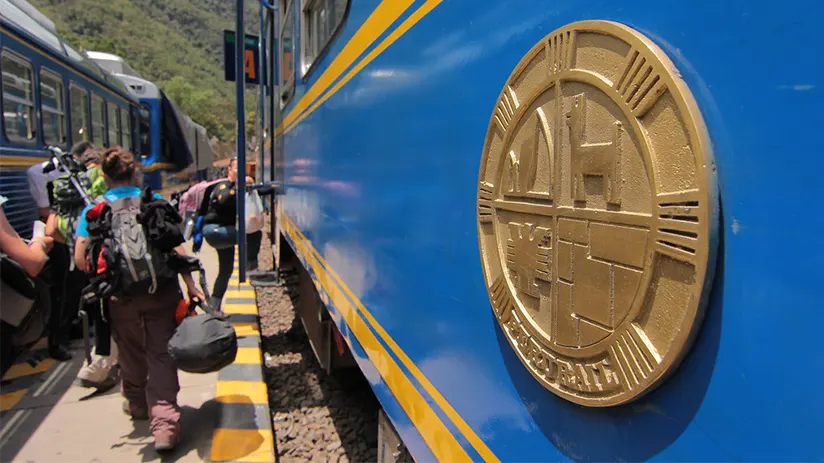
The fastest way is to take a train from Ollantaytambo train station to Aguas Calientes, then a short bus ride up to Machu Picchu. This option usually takes around 4 to 5 hours in total, depending on the departure point.
What is the cheapest way to travel from Cusco to Machu Picchu?
The cheapest option is the Hydroelectric route, which involves traveling by local bus or car to Hidroeléctrica and then hiking or taking a short train to Aguas Calientes. This way is popular among budget travelers but takes longer and requires more time and flexibility.
Do I need a tour to go from Cusco to Machu Picchu?
No, you do not need a tour to go from Cusco to Machu Picchu. You can visit Machu Picchu independently by booking your train tickets, entrance ticket, and bus to the site on your own. Nevertheless, tours are convenient for travelers who prefer a guided experience and less planning.
How long does it take to get from Cusco to Machu Picchu?
The travel time varies depending on the route that you choose. By train, it usually takes 4 to 5 hours, while alternative ways like the Hydroelectric option or trekking alternatives can take anywhere from one day to several days.
Is the Hydroelectric route safe to Machu Picchu?
Yes, the Hydroelectric route is generally safe and commonly used by backpackers. Despite this, it involves long travel hours and walking along train tracks, so caution is advised, especially during the rainy season.
When should I book trains and tickets to Machu Picchu?
We recommend booking train tickets and Machu Picchu entrance tickets at least a few weeks in advance. Also, during the high season (May to September), the Machu Picchu ticket prices and circuits increase, so consider that. Popular times and circuits can sell out quickly.
Can I visit Machu Picchu in one day from Cusco?
Yes, it is possible to visit Machu Picchu in one day from Cusco by taking an early train and returning in the evening. While it’s a long day, it’s a popular option for travelers with limited time.
“THE BIGGEST ADVENTURE YOU CAN TAKE IS TO LIVE THE LIFE OF YOUR DREAMS”
As we see, getting from Cusco to Machu Picchu offers travelers a wide range of routes and experiences. From scenic train journeys to multi-day treks through the Andes, visitors can find many options. Choosing the right option depends on your time, budget, and travel style, but every way has its own advantages. We hope the information provided above has helped plan your dream trip.
Machu Picchu has so much to offer; it can be hard to know where to start. With many years of experience in the tourism sector, Machu Travel Peru is happy to help with anything regarding your trip to Machu Picchu and any tours around it. Let us help you make your Machu Picchu travel experience unforgettable! Contact us today to plan your dream adventure!