When people think of Peru, Machu Picchu often takes the spotlight, but Lima, the vibrant capital of Peru, offers its own treasures. If you’re interested in culture, architecture, and colonial history, the historic buildings in Lima provide a deep, visually stunning glimpse into the country’s past. From baroque cathedrals to centuries-old mansions, these landmarks reflect the rich legacy of Spanish colonialism and pre-Columbian civilizations.
Whether you’re planning your trip with Machu Travel Peru or exploring on your own, Lima’s architecture offers an immersive cultural experience. Many of these iconic sites are centered around Lima’s main square, the famed Plaza de Armas, also known as the Plaza Mayor, making it easy to explore them all within a few days.
If you’re making a list of things to do in Lima, this architectural journey is an essential experience, especially for those interested in culture, history, and design.
The best historical buildings you can find in the City of Kings
- Presidential Palace
- Aliaga House
- Monastery of San Francisco
- Archbishop Palace
- Cathedral of Lima
- Plaza Mayor
- Torre Tagle Palace
- Huaca Pucllana
- Convento de Santo Domingo
- Osambela House
1. Presidential Palace

Located on the northern side of Lima’s main square, the Presidential Palace is one of Lima’s historical jewels. Originally built on the site where Francisco Pizarro, the Spanish conquistador, founded the city in 1535, this building serves as the official residence of the President of Peru.
The current structure, rebuilt in the early 20th century, combines Neobaroque elegance with state power. The daily changing of the guard is one of the more formal tourist attractions in Lima, drawing many visitors throughout the year.
Entry Cost | Free entry but requires prior reservation. Guided tours are usually offered on weekends and holidays. |
|---|---|
Scheadule | Saturdays and Sundays, in two shifts: 9:00 a.m. and 9:45 a.m. Changing of the Guard: Held daily, although not on Wednesdays and Saturdays. |
Contac Details | Phone: +51 1 311 3900 Email: visitas@presidencia.gob.pe |
2. Aliaga House
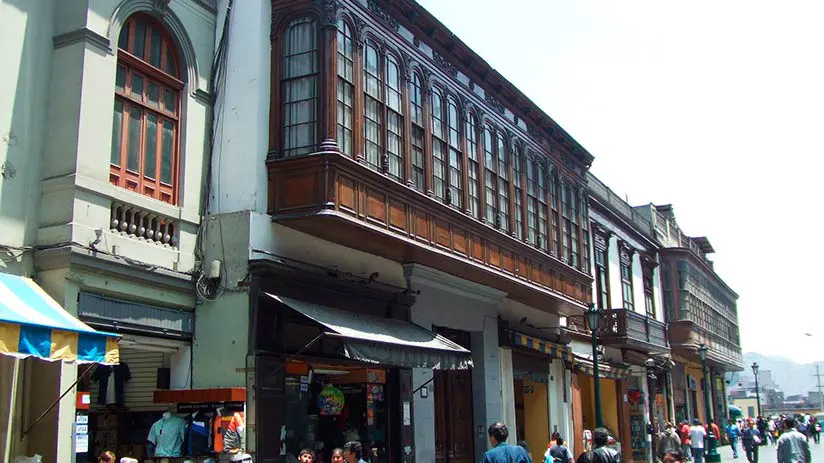
Just a short walk from the Plaza de Armas, the Casa de Aliaga is the oldest colonial mansion still inhabited in the Americas. Built in 1535 by Jerónimo de Aliaga, a companion of Francisco Pizarro and treasurer of the Royal Spanish Fleet, the house has remained in the Aliaga family for nearly five centuries.
This beautifully preserved colonial mansion in Lima reflects a unique blend of Moorish, Baroque, and Republican architectural styles. It’s one of the most fascinating buildings in Lima and a highlight for visitors seeking depth beyond the typical city tour.
Entry Cost | General admission: S/ 30-35 per person. Reduced rates for children, students, and other categories. |
|---|---|
Scheadule | Days: Tuesday to Saturday. Hours: 10:00 AM to 1:00 PM and 2:00 PM to 4:00 PM |
Contac Details | Phone: (01) 427‑7736 Email: reservas@casadealiaga.com |
3. Monastery of San Francisco

The San Francisco Monastery is one of Lima’s most recognizable landmarks. Known for its Spanish Baroque, ornate library, and chilling underground catacombs, it captures the essence of Lima’s historical and religious identity.
Located just a few blocks from the Plaza Mayor, the monastery is one of Lima’s top tourist attractions and a prime example of religious architecture from colonial times.
Entry Cost | General admission: S/ 15 per person. Reduced rates available for children and students. |
|---|---|
Scheadule | Monday to Sunday: 9:00 am – 6:00 pm Holidays: 9:00 am – 6:00 pm |
Contac Details | Phone: +51 1 426 7377 Email: info@sanfrancisco.pe |
4. Archbishop Palace

Next to the Cathedral of Lima, the Archbishop’s Palace is a striking neocolonial building that serves as the headquarters of the Archbishop of Lima. With its elegant stone detailing and intricately carved wooden balconies, the building showcases both power and piety.
Standing directly on Lima’s main square, it enhances the historic value of the Plaza de Armas and is a central piece in the collection of historic buildings in Lima.
Entry Cost | Adults: S/ 50 Students: S/ 25 Children under 6: Free |
|---|---|
Scheadule | Monday to Sunday: 9:00 a.m. to 5:00 p.m |
Contac Details | Phone: +51 1 427 9647 Email: museo@catedraldelima.org.pe |
5. Cathedral of Lima

Commanding the eastern side of the Plaza Mayor, the Cathedral of Lima is both a religious and architectural treasure. Built on the original site where Francisco Pizarro laid the city’s foundation, the cathedral reflects centuries of stylistic changes from Gothic and Renaissance to Baroque and Neoclassical.
It houses Pizarro’s tomb and offers visitors a profound glimpse into Lima’s historical past. Whether for its spiritual significance or architectural detail, it is a cornerstone among things to do in Lima.
Entry Cost | General admission: S/ 20 per person. Children and students: S/ 10. |
|---|---|
Scheadule | Monday to Friday, 9:00 a.m. to 5:00 p.m. |
Contac Details | Phone: +51 1 427 9647 Email: museo@catedraldelima.org.pe |
6. Plaza Mayor
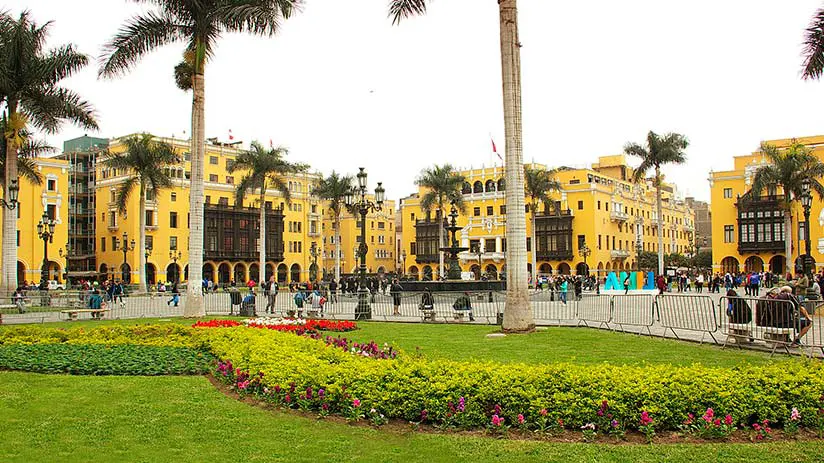
The Plaza Mayor, or Lima’s main square, is where the city was founded in 1535. It has been the epicenter of Peruvian politics, religion, and social life for nearly 500 years. Surrounded by the Presidential Palace, Cathedral of Lima, and Archbishop Palace, this space embodies the core of Lima’s historical identity.
If you’re wondering about the best time to visit Lima, consider the dry season (May to October), which offers the best weather for walking around the Plaza de Armas and exploring its many nearby attractions.
Entry Cost | Public space with free access. No entry fee. |
|---|---|
Scheadule | Public space with free access. |
Contac Details | Not applicable (public square). |
7. Torre Tagle Palace

The Torre Tagle Palace is one of the finest examples of Spanish Baroque architecture in the city. Built in the 18th century, it features lavish wooden balconies, intricate ironwork, and original tiles that speak to the wealth and status of the colonial elite.
Now home to the Ministry of Foreign Affairs, it remains a working institution and a showcase of refined architectural style. It’s just a few steps from the Plaza Mayor, making it easily accessible for those exploring the best buildings in Lima.
Entry Cost | Not open for regular tourist visits. Visitors can admire the beautiful colonial architecture from the outside. |
|---|---|
Scheadule | Not applicable for tourist visits. |
Contac Details | Not applicable for tourist visits. |
8. Huaca Pucllana

Long before the Spanish arrived, Lima was home to advanced indigenous civilizations. Huaca Pucllana, located in Miraflores, is a massive adobe pyramid that dates back to 500 AD. Its preserved platforms and ceremonial spaces offer a rare view into pre-Hispanic life.
This site contrasts dramatically with the surrounding colonial mansions and is perfect for travelers seeking something beyond colonial history. It’s one of the top unconventional things to do in Lima, and a great option for those looking for easy day trips from Lima without leaving the city.
Entry Cost | Adults: S/S/15 Children and students: S/ 7.50 Night visits: S/ 17 |
|---|---|
Scheadule | Monday to Sunday, 9:00 a.m. to 5:00 p.m. |
Contac Details | Phone: +51 1 617 7130 Email: huacapucllana@miraflores.gob.pe |
9. Convento de Santo Domingo

The Convent of Santo Domingo is deeply tied to the spiritual fabric of Peru. It houses the remains of Santa Rosa de Lima, San Martín de Porres, and San Juan Macías, making it a major pilgrimage site.
Its soft pink tower and tranquil cloisters reflect a Spanish-Moorish architectural style, and its location near the Plaza Mayor makes it a calm yet powerful place to reflect on Lima’s historical legacy.
Entry Cost | General admission: S/ 15 Students and children: reduced rates available |
|---|---|
Scheadule | Monday to Saturday, 9:00 a.m. to 5:00 p.m. |
Contac Details | Phone: +51 1 426 7947 Email: info@santodomingo.pe |
10. Osambela House
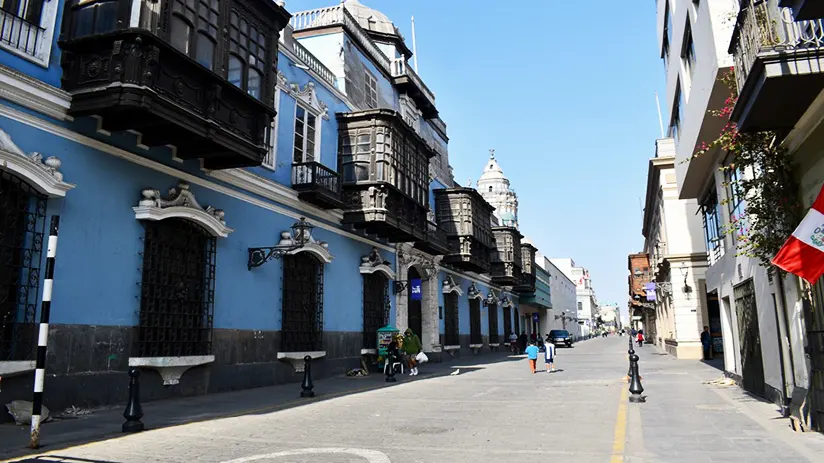
The Casa de Osambela is one of the largest and most elegant colonial mansions in Lima. Built in the late 18th century, it boasts a rare rooftop mirador and a long, sweeping balcony. Once home to a wealthy merchant, it later served as the Central Post Office during the 20th century.
Today, it functions as a cultural center and museum, offering exhibitions and public events. For architecture enthusiasts, it’s a quieter yet rewarding discovery among the many historic buildings in Lima.
Entry Cost | Entry to the cultural center and museum: Usually free or a small donation (check local event schedules).Open during cultural events and exhibitions. |
|---|---|
Scheadule | Entry to the cultural center and museum: Usually free or a small donation (check local event schedules). Open during cultural events and exhibitions. |
Contac Details | Email: info@casadeosambela.pe |
“OUR HAPPIEST MOMENTS AS TOURISTS ALWAYS SEEM TO COME WHEN WE STUMBLE UPON ONE THING WHILE IN PURSUIT OF SOMETHING ELSE”
Lima is a city of layers where Incan, colonial, and republican histories meet. Walking through Lima’s main square and seeing its historical buildings is more than just sightseeing. It’s a journey into Peru’s heart. The best time to visit Lima is during the dry season, from May to October. The skies are clear, and walking tours are more comfortable.
Whether you’re planning your visit with Machu Travel Peru or crafting your own itinerary, be sure to leave room for these iconic places. If you have extra time in the city, think about taking day trips from Lima. You could visit Pachacamac, the Paracas coast, or the artistic district of Barranco. Lima may be the gateway to Machu Picchu, but its own story told through its architecture is equally unforgettable.
Peru has so much to offer, it can be hard to know where to start. With many years of experience in the tourism sector, Machu Travel Peru is happy to help with anything regarding your trip to Machu Picchu and any tours around it. Make your Machu Picchu experience an unforgettable one! Contact Us today to plan your dream adventure!