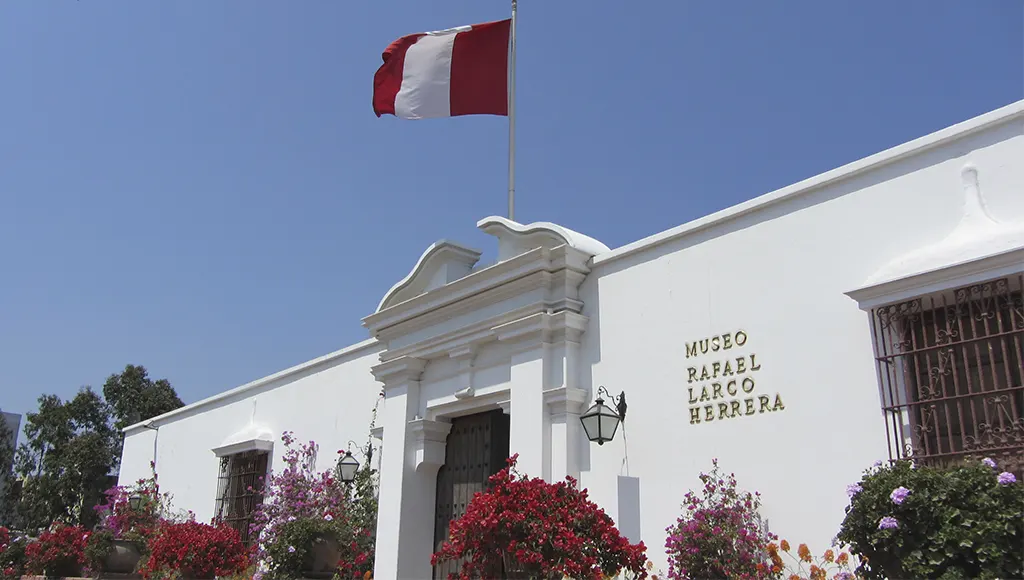
The Larco Museum in Lima is one of Peru’s most important museums, known for its world-class collection of pre-Columbian artifacts spanning more than 5,000 years of history. Located in an 18th-century colonial mansion, it offers visitors a unique opportunity to explore ancient Peruvian civilizations in a highly accessible and visually engaging way. It is one of the best museums in Latin America, making it a must-see when considering the best things to do in Lima. Whether you’re a casual visitor or a history enthusiast, the museum offers a wide range of experiences. This guide covers everything you need to know before visiting one of Lima’s most fascinating museums.
The Majestic Larco Museum in Lima
- What Is the Larco Museum in Lima?
- The History of the Rafael Larco Herrera Museum
- Why the Larco Museum Is One of the Best Museums in Lima
- Main Galleries Inside the Larco Museum in Lima
- The Larco Museum’s Famous Pre-Columbian Pottery Collection
- The Famous Erotic Pottery Gallery at the Larco Museum
- Exploring the Colonial Mansion and Gardens of the Larco Museum
- Larco Museum Tickets, Hours, and Visitor Information
- Where Is the Larco Museum Located in Lima?
- How Long to Spend at the Larco Museum
- Tips for Visiting the Larco Museum in Lima
- FAQs about the Larco Museum
What is the Larco Museum in Lima?
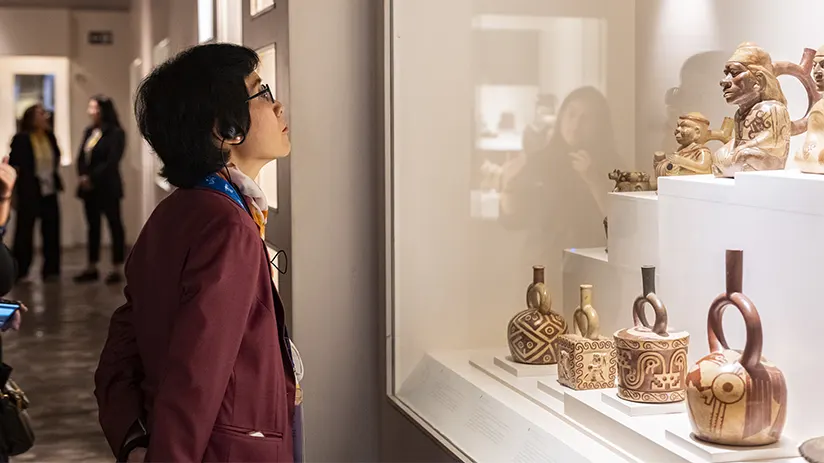
The Larco Museum is one of Peru’s most iconic landmarks, featuring artifacts that represent over 5,000 years of history. Among its most remarkable artifacts is a world-class collection of 45,000 pre-Columbian artifacts from regions including the northern, central, and southern coasts, as well as the Andean highlands. These objects belonged to important ancient cultures, including the Cupisnique, Chimú, Chancay, Moche, Nazca, and Inca. Each piece is exceptionally well-preserved and displayed in clean, well-lit showcases.
The museum not only houses ceramics but also an outstanding collection of textiles, gold, precious metals, and other artifacts. The Larco collection also offers visitors the opportunity to explore its extensive storage facilities, which are truly impressive. This area allows visitors to admire more than 30,000 unique artifacts, which we will discuss later.
The History of the Rafael Larco Herrera Museum
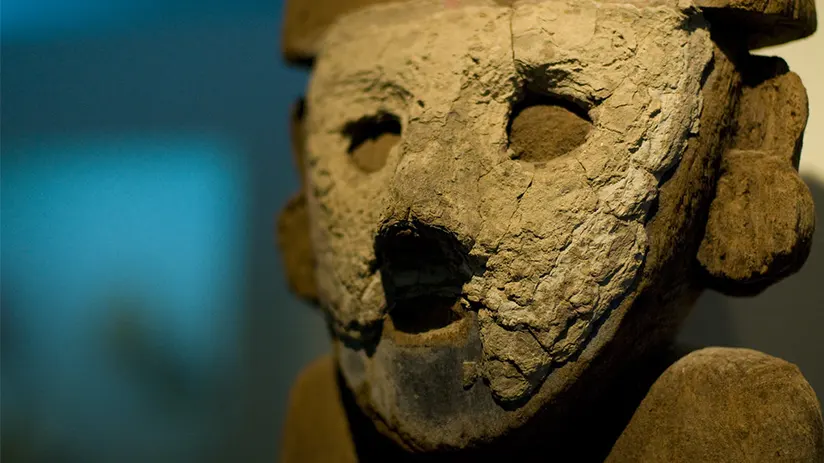
To understand the museum complex, it’s worth looking at the origin of its name. Rafael Larco Hoyle founded this Lima museum in 1926 in honor of his father, Rafael Larco Herrera, an important Peruvian politician, businessman, philanthropist, and collector. Three years before its opening, the founder received a portrait on a huaco (a type of ceramic vessel) that inspired his career in archaeology. This artifact, known as the ‘Head of the Priest-Lord,’ inspired his interest in archaeology.
Although Larco Hoyle was a landowner with studies in agriculture and administration, his passion for history was stronger. Thus, even after founding Museo Larco, he continued to conduct archaeological excavations throughout Peru. The friendly relationships he maintained with other landowners contributed to acquiring diverse collections throughout his life. For example, the 3,000 ceramic pieces from the Carranza landowner collection or the 8,000 ceramic, textile, and metal pieces from the Carlos Roa collection.
Years later, the Larco collection continued acquiring many new pre-Inca and Inca civilization artifacts, necessitating expansion and a new location. In 1953, Larco Hoyle moved this historic mansion museum to its current location (the 17th-century Spanish colonial mansion). Interestingly, the building stands on top of a 7th-century pre-Columbian pyramid. Today, because of its many characteristics, it is one of the most valuable historical buildings in Peru’s capital.
Why the Larco Museum Is One of the Best Museums in Lima
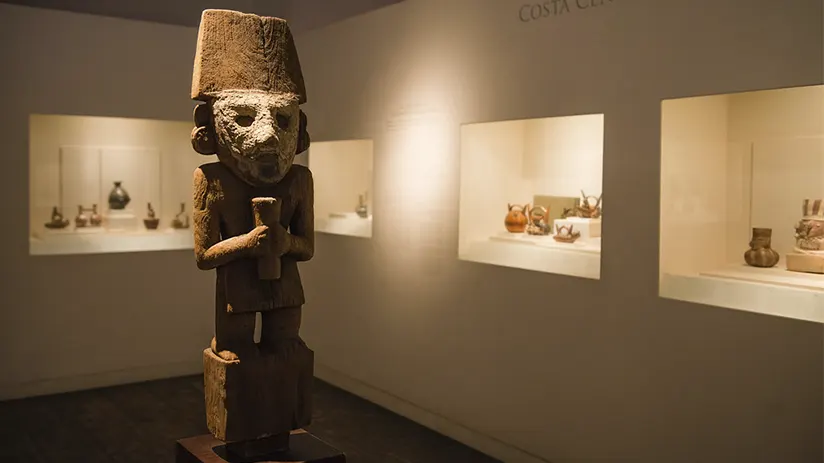
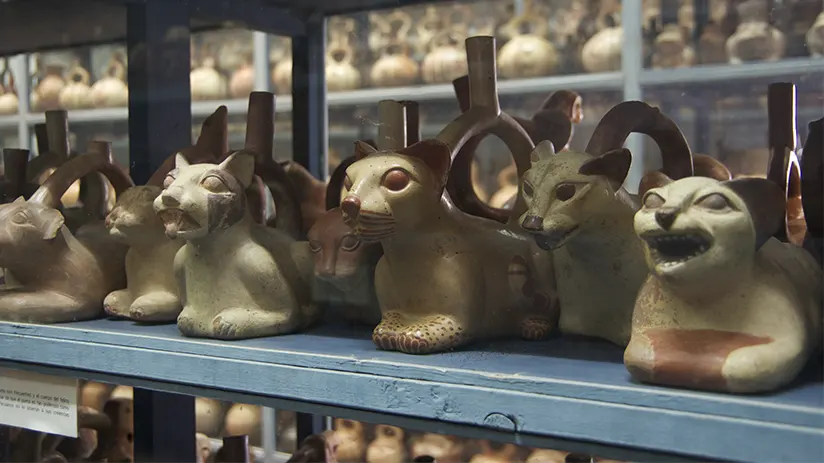
If any doubts remained, the Larco Museum is one of Lima’s best, boasting a world-class collection of 45,000 pre-Columbian artifacts. These objects offer visitors a comprehensive and immersive view of the last 5,000 years of Peruvian history. This, combined with its charming viceregal mansion setting and unique open-storage archives, provides a panorama unlike any other. Walking through the open storage galleries, visitors can see thousands of ceramic vessels stacked on floor-to-ceiling shelves.
Main Galleries Inside the Larco Museum in Lima
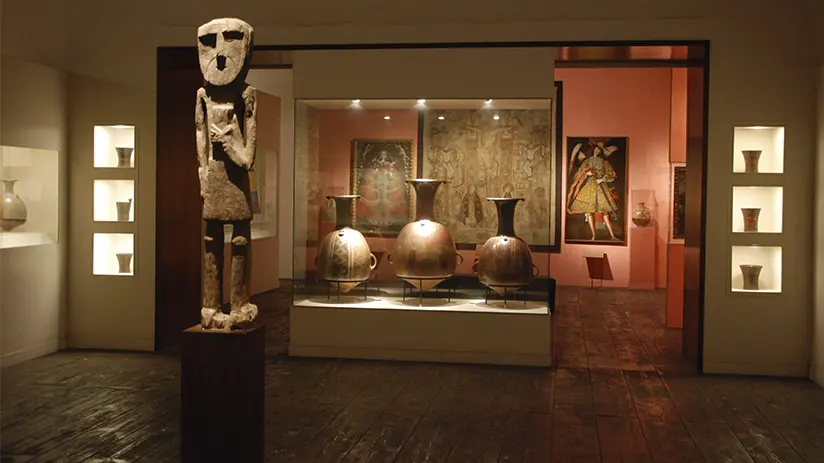
To better understand the museum, it’s helpful to explore its main galleries. Fortunately, this place facilitates the understanding of the development of ancient Peruvian cultures up to the most recent ones. This chronological order allows us to observe the evolution of these peoples, their rise and fall, through their artifacts. Below are some of the most important exhibition areas:
- Introduction Room: Upon entering Museo Larco, you’ll come across this small room, which tells the Rafael Larco Hoyle story. It briefly introduces the biography of the museum’s founder, his collection, and the history of the Museo Larco. Also, there is a timeline that helps visitors understand the development of the Andean civilization and prepares them for the following rooms.
- Gallery of Ancient Cultures: This section covers Peruvian history from 5000 BC to the Inca period before the Spanish conquest. The gallery consists of four main rooms (2, 3, 4, and 5) that feature ceramic objects, stone works, and woodworks. All exhibits are arranged by region and ordered chronologically, covering important years of pre-Columbian history.
- Textile Room: Inside the Textile Room (Nº 6), you can see examples of the technological and artistic mastery of ancient weavers. Alpaca and vicuña wool were used to weave garments of high quality since the earliest phases of civilizations in the Andes. As techniques evolved, these textiles became increasingly sophisticated. A note apart, next to this room, you will find fabric works by famous contemporary artists inspired by the looms of ancient Peru.
- Sacrificial Ceremony Room: This area of this historic mansion (room Nº 7) introduces visitors to the ancient practices relating to human sacrifices. These human offerings were common among ancient cultures, in particular those belonging to the Mochica culture. Often, people considered these religious practices sacred acts to thank or pay tribute to the gods. And you’ll see the graphic representation of these bloody rituals in ceramics and keros (ceremonial cups)
- Ceremonial Vessels Room: Inside this room (Nº 8), you will find a large selection of ceremonial vessels, which contain fermented drinks. People use these liquids in rituals, ceremonies, offerings, and burials. The gallery also displays cups, bowls, keros (ceremonial cups), and Aquillas (tall vases) made of wood, clay, and even precious metals like silver and gold. The objects made of gold and silver were used for rituals of the highest importance.
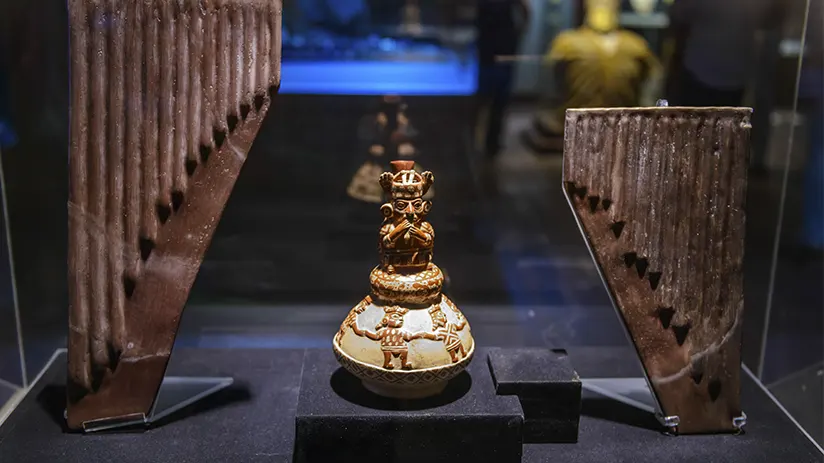
- Music Instruments and War Rituals Room: In room Nº 9, you’ll find different objects, mostly gold and silver, used during diverse battles. You will also see musical instruments associated with warfare, such as antaras (panpipes), quenas (Andean flutes), whistles, and drums.
- Funeral Instruments Room: Room Nº 10 shows the different instruments (made of wood, silver, and gold) used in funeral and burial rituals. One of the things in common that the different Peruvian cultures shared was that death did not mean the end, but the beginning of a new life. And the burial process was just a temporary step in which the instruments shown in this room were used.
- Gold and Jewelry Gallery: Inside rooms Nº 11, 12, and 13, you will find an exhibition of pre-Columbian pieces made of gold, silver, copper, and other various metals. You can find ceremonial pieces, funerary objects, and ornaments, including rings, bracelets, necklaces, earrings, and even decorative jewelry from the clothing of kings, chiefs, and high priests of these ancient Peruvian civilizations.
The Larco Museum’s Famous Pre-Columbian Pottery Collection
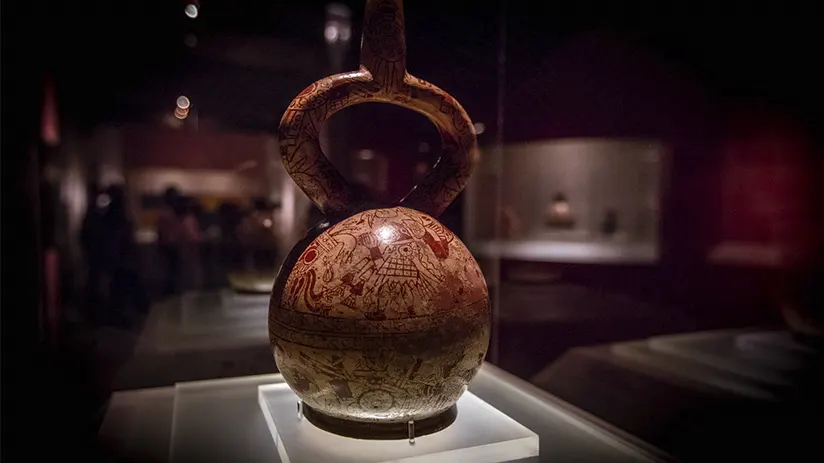
As we mentioned, unlike most museums and archaeological sites in Peru, the Larco allows visitors to walk through its storage areas. This famous collection of pre-Columbian ceramics comprises more than 30,000 pieces. All of them are well-organized and classified by theme and chronology, so you can browse them at your leisure. As a visitor, it’s a direct way to immerse yourself in local history and archaeological research.
The Famous Erotic Pottery Gallery at the Larco Museum
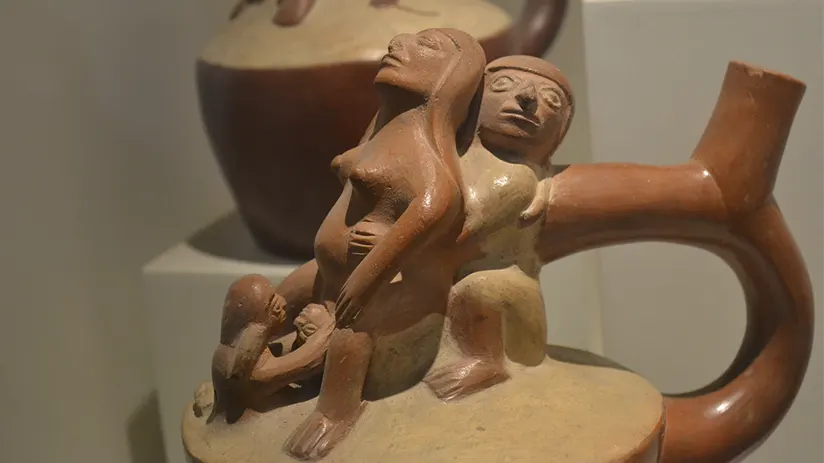
Those traveling to Peru for the first time, or even seasoned travelers, will be amazed by the stunning collection of erotic ceramics. These vessels depict various sexual positions and acts practiced by the ancient inhabitants of Peru. For many, this offers insight into the perception of sexuality in ancient Peruvian cultures, as well as a direct glimpse into the daily lives of these ancestral peoples.
Many people believe the Spanish conquistadors destroyed many of these pieces. They felt mortified when they saw such explicit sexual representations on objects like ceramics. Furthermore, these practices went against the religious beliefs of the Europeans. Fortunately, many of these ceramics survived the passage of time and are exhibited today in this historic mansion museum room. Below are some details of the galleries:
- Motherhood and female body gallery: This room shows that the ancient Peruvian inhabitants were already aware that the most beautiful thing in this world was the body of a woman. Here, you’ll find ancient ceramics and sculptures of a woman’s body, her genitals, and representations of pregnant bodies.
- Sexual act and fertility gallery: Maybe these ceramics would be the most explicit among all the collections. These ceramics represent the sexual act between a man and woman in different positions, some of them even resemble the Kamasutra.
- Underworld gallery: In Mochica beliefs, the underworld was seen as a continuation of life, where human behaviors, including sexuality, remained present. Even with people of this life, the world of the living. Mostly scenes of sexual interaction with Mochica ancestors.
- Non-reproductive sexual act gallery: The ancient Peruvians were already aware that sex not only had a reproductive purpose, but also pleasure. Justly, this room shows sex acts like masturbation, anal sex, and even fellatio. Actually, some scholars affirm that these practices were performed in order to worship the dead, in addition to obtaining pleasure. One of the ceramics represents a woman carrying the predominant role during the sexual act; this ceramic is better known as “Tinkuy Sexual”.
- Male body and sexual incitement gallery: These ceramics show the initiation of act sex having the man as an active part, and the woman as a passive part. The ceramic forms present kisses, caresses, and touching of the female body. Also, you’ll find crocks in the form of male genitals, female genitals, and fellatio scenes.
Exploring the Colonial Mansion and Gardens of the Larco Museum
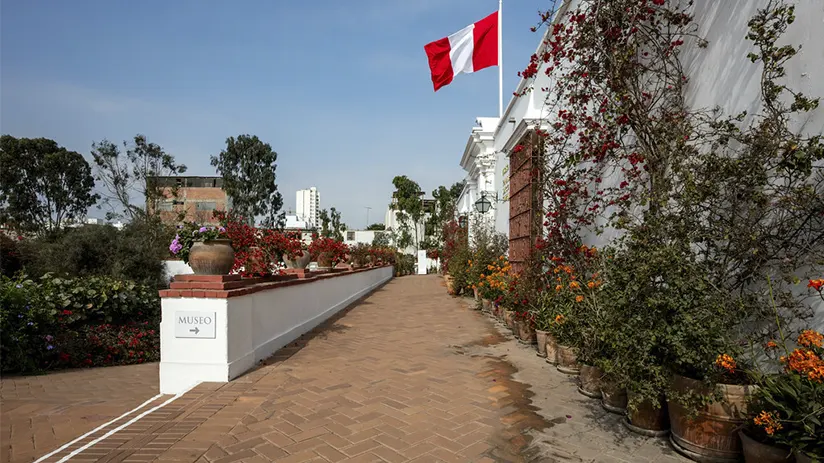
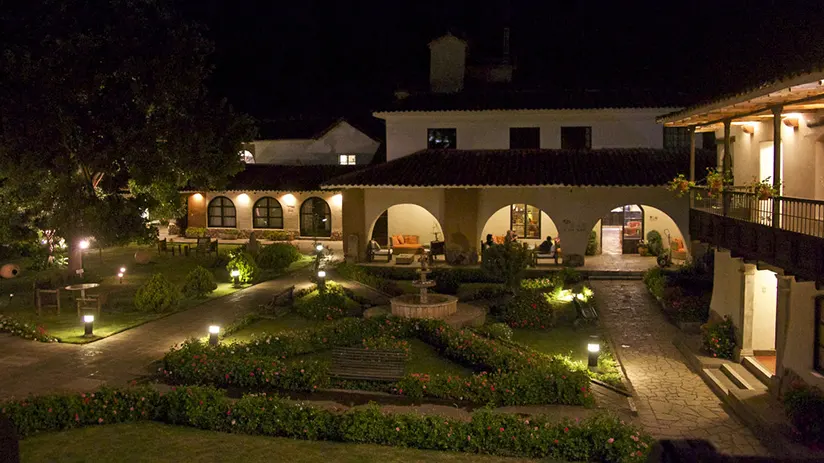
The 18th-century Colonial Mansion houses the extensive collection of Rafael Larco Hoyle. This building boasts colonial architecture, mystical lighting, and lush surrounding gardens. Its structure features a classic colonial style with courtyards, archways, and a facade typical of viceregal life. The preservation of its style and design is striking and makes a lasting impression.
The gardens surrounding the mansion enhance the natural surroundings. Both the flowers and plants further enhance this warm and mystical atmosphere, creating a welcoming environment. Among the plants on display are bougainvillea, cardinal flowers, gambilia, and other flora typical of Peru. A pleasant way to experience these spaces is through the local café and boutique, which we will explore in more detail below.
Larco cafe and boutique

The museum has a Cafe Restaurant located on the second floor, on the terraces that overlook the beautiful gardens of the Spanish mansion. The restaurant presents a cozy and pleasant atmosphere where the visitor can enjoy a variety of food (cold and hot plates) like sandwiches, desserts, cakes, salads, and hot and cold beverages.
On the first floor, surrounding the gardens, is the Larco boutique store, where visitors can purchase souvenirs of this Lima museum, like jewelry, fabrics, and replicas of art pieces inspired by masterpieces of the Larco collection. Also, the creations of Peruvian artists related to the Larco collection theme are sold at the same prices as their ateliers.
Other museum services

- Accessibility: The rooms of the exhibitions and the restrooms are connected by ramps. Guide dogs are welcome. Free wheelchair loan on the first level. Baby changing tables are available in the restrooms on both floors.
- Restrooms: Larco has two central restrooms, one of which is located on the first floor, just one side of the Larco Cafe Restaurant. The other is situated between exhibition rooms on the second floor. Both are implemented with access to handicapped people and baby changing tables.
- Languages: All room galleries have descriptions below every ceramic in Japanese, French, German, Italian, English, and Spanish.
- Wi-Fi: Free Wi-Fi in exhibition rooms, visitable warehouses, gardens, and the museum café.
- Luggage storage: Visitors can deposit bags, backpacks, and suitcases in the reception area. But, previously, they had to consult the luggage and backpack policies of Museo Larco to know what size luggage was permitted.
- Parking zone: There is no dedicated parking at the museum, but the cars of visitors can be parked on Navarra Street and Simon Bolivar Avenue.
- Photography: Flash photography and professional equipment are not allowed, as well as the use of tripods, selfie sticks, and selfie photos. For the other cases (amateur photography without flash) is allowed in all the exhibition rooms.
Larco Museum Tickets, Hours, and Visitor Information
Unlike other nearby tourist attractions such as Lima’s Plaza de Armas, the Larco Museum has strict entry regulations. These include specific entry times and dates, as well as the ticket price per person. This allows for organized entry and the maintenance of the historical site for proper enjoyment throughout the years. Here are some important details for any visitor:
Open daily throughout the year
- Monday – Sunday: From 09:00 am to 07:00 pm.
- Reduced hours: December 24, 25, and 31 and January 1 from 10:00 am to 06:00 pm.
Admission price to Museo Larco
| Type of ticket | On-site | Online |
| General admission | 15 USD | 14 USD |
| Seniors (over 60 years) | 11 USD | 10 USD |
| Students | 8 USD | 7 USD |
| Minors (ages 9 to 17) | 8 USD | 7 USD |
| Children’s ages range from 3 to 8 | 0,3 USD | 0,3 USD |
| Children’s ages range from 0 to 2 | Free | Free |
All visitors must present a valid ID to access the reduced rates. If you purchased tickets online, you must validate your ticket at the museum entrance. In addition to US dollars, you can pay in soles or with credit and debit cards.
Where Is the Larco Museum Located in Lima?
The Larco Museum is located at Avenida Simon Bolívar, 1515, Pueblo Libre district, Lima, Peru. For reference, this Lima museum is 6.3 kilometers (3.91 miles) from the historic center and 9 kilometers (6 miles) from the Miraflores district. Whether you’re traveling from districts like Barranco, San Isidro, or any other, it’s best to take a ride-hailing service. Besides ensuring your safety during the trip, you’ll get a fair price.
How Long to Spend at the Larco Museum
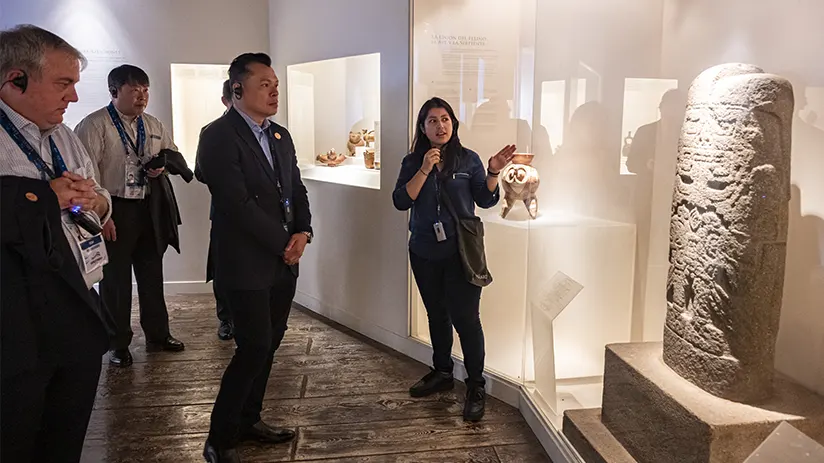
A full visit to the Larco Museum in Lima usually lasts between 2 and 3 hours, allowing for a leisurely exploration. Except for detailed tours, the time may be longer, or for more casual visits, it may be shorter. Fortunately, you can choose the length of your visit, even if it’s not the best time to visit Peru. Guided tours have stricter schedules, but we recommend checking beforehand to book.
Tips for Visiting the Larco Museum in Lima
- Dress lightly: Throughout the year, Lima’s climate encourages visitors to leave behind heavy coats and umbrellas. Unlike Andean cities, where weather conditions often change rapidly, the Peruvian capital is usually stable.
- Pack the essentials: The galleries only allow entry to people without luggage, so plan. If you have suitcases, backpacks, bags, or other large items, you should leave them in the cloakroom for an additional fee.
- Photograph with care: Museum rules allow photography for personal use, without the use of flash, tripods, or selfie sticks. You may not use professional or amateur photography for commercial purposes.
- Respect the artworks: To preserve them, do not touch the exhibited objects. Alternatives include using pencils and notebooks for taking notes.
- Be quiet: Throughout your visit, please keep your voice down so as not to disturb other visitors. The same applies to your mobile devices; set them to vibrate or silent mode.
- Enhance your visit: The tour lasts a maximum of 4 hours, so you could easily visit other similar attractions. Popular highlights include the Huaca Pucllana pyramid and the National Museum, which are generally the best complements to exploring Lima’s history.
FAQs about the Larco Museum
Is the Larco Museum worth visiting in Lima?
Yes, the Larco Museum is considered one of the best museums in Lima and is highly worth visiting. It offers an impressive collection of pre-Columbian artifacts, beautiful gardens, and clear explanations that help visitors understand Peru’s ancient cultures.
What can you see at the Larco Museum in Lima?
At the Larco Museum, visitors can see thousands of pre-Columbian artifacts, including ceramics, gold and silver jewelry, textiles, and sculptures that illustrate daily life, religion, and traditions of ancient Peruvian civilizations.
How much are Larco Museum tickets in Lima?
Larco Museum tickets usually cost around 45 Peruvian soles for adults, with discounted prices for students, children, and Peruvian residents. Prices may change slightly, so it’s recommended to check the museum’s official website before visiting.
What are the Larco Museum’s opening hours?
The Larco Museum is typically open every day from 9:00 AM to 7:00 PM. These extended hours allow visitors to explore the galleries at a relaxed pace throughout the day.
Where is the Larco Museum located in Lima?
The Larco Museum is located in the Pueblo Libre district of Lima, Peru. It sits inside an elegant 18th-century colonial mansion surrounded by beautiful gardens.
How long does it take to visit the Larco Museum?
Most visitors spend about 1.5 to 2 hours exploring the Larco Museum. However, history enthusiasts may choose to stay longer to fully appreciate the exhibits and the visible storage area.
Is the Larco Museum erotic gallery open to visitors?
Yes, the Larco Museum’s famous erotic gallery is open to visitors. It displays a unique collection of ancient ceramic pieces that represent themes of sexuality and fertility in pre-Columbian cultures.
Which civilizations are represented in the Larco Museum collection?
The Larco Museum collection represents several ancient Peruvian civilizations, including the Moche, Nazca, Chimú, and Inca cultures, among others, that existed long before the Spanish arrived in Peru.
“MUSEUMS ARE PLACES WHERE TIME IS TRANSFORMED INTO SPACE”
As we see, the Larco Museum is one of Lima’s most fascinating cultural attractions. This place offers visitors a deep look into Peru’s ancient civilizations through an extraordinary collection of artifacts. From beautifully crafted ceramics to its unique galleries, the museum provides an engaging and educational experience for travelers interested in history and culture. A visit to the Larco Museum allows you to better understand the richness of Peru’s pre-Columbian heritage.
Lima has so much to offer; it can be hard to know where to start. With many years of experience in the tourism sector, Machu Travel Peru is happy to help with anything regarding your trip to Lima and any tours around it. Let us help you make your Lima travel experience unforgettable! Contact us today to plan your dream adventure!