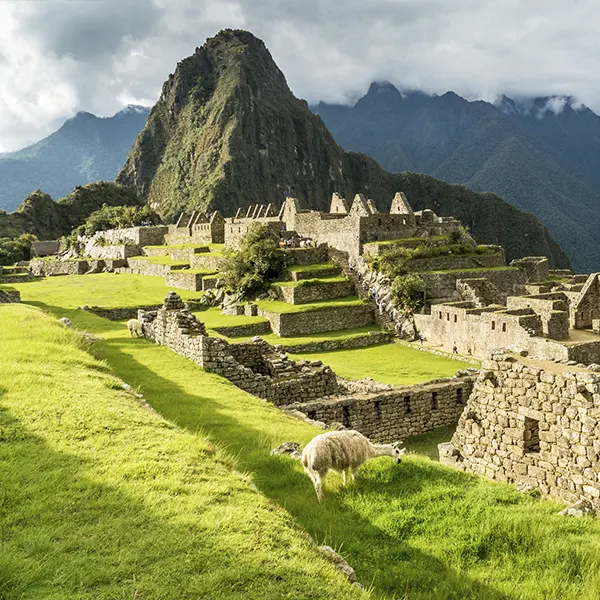
Machu Picchu is an ancient Inca citadel and an important ceremonial and political center. This has earned it recognition as one of the New Seven Wonders of the World. The guide explains what Machu Picchu is, who built it, and why it remains one of the world’s most remarkable archaeological sites.
Explore the Inca citadel of Peru
- What Is Machu Picchu?
- Who Built Machu Picchu?
- When Was Machu Picchu Built?
- What Was Machu Picchu Used For?
- How Was Machu Picchu Built?
- Machu Picchu’s Main Archaeological Features
- How Machu Picchu Was Rediscovered
- Machu Picchu’s UNESCO and World Heritage Status
- Frequently Asked Questions
- Conclusion
What is Machu Picchu?
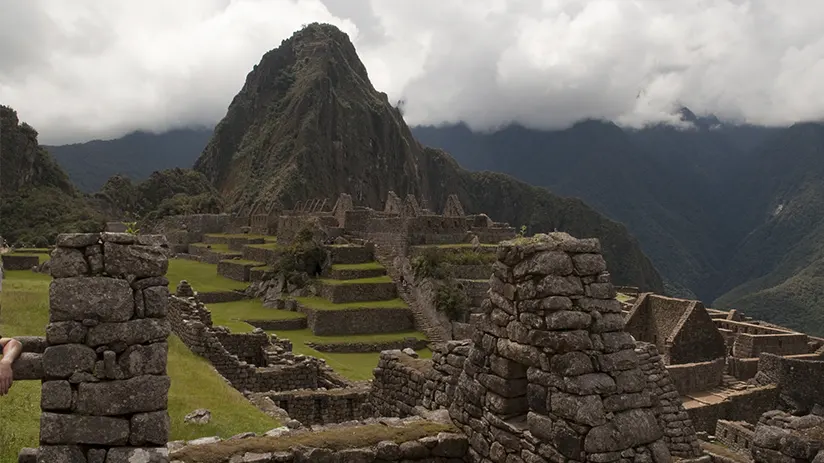
Located in Peru, near Cusco, Machu Picchu was built by the Incas during the 15th century as a royal estate and ceremonial center under Emperor Pachacuti. Today, it is a UNESCO World Heritage Site and one of the New Seven Wonders of the World. If you’re curious about the meaning of the name, read our guide on what the name Machu Picchu means.
Who Built Machu Picchu?
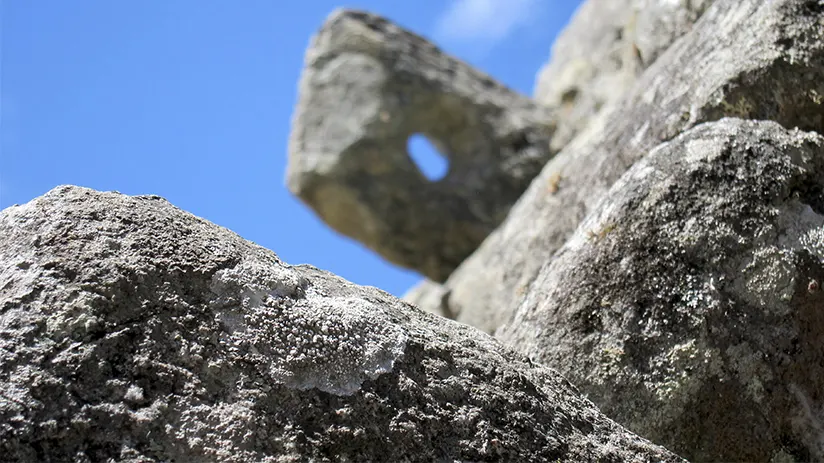
The Inca people built Machu Picchu under the direction of the ninth Inca emperor, Pachacuti. This ruler ordered the site to be constructed as a royal residence and religious sanctuary, as Inca religion and architecture were deeply intertwined.
It occurred after the war with the Chanca people and the subsequent Inca territorial expansion. Political stability and a large workforce created ideal conditions for construction. The expansion also enabled the consolidation of the Inca road system, which connected the site with Cusco, the capital of the empire.
Inca engineers meticulously planned every detail of the site to ensure its functionality. Using an ancient labor system called mita, they constructed large buildings. This system involved seasonal and rotating labor based on the principle of reciprocity. Thus, over time, the Inca civilization created one of the greatest legacies that remains today.
When Was Machu Picchu Built?
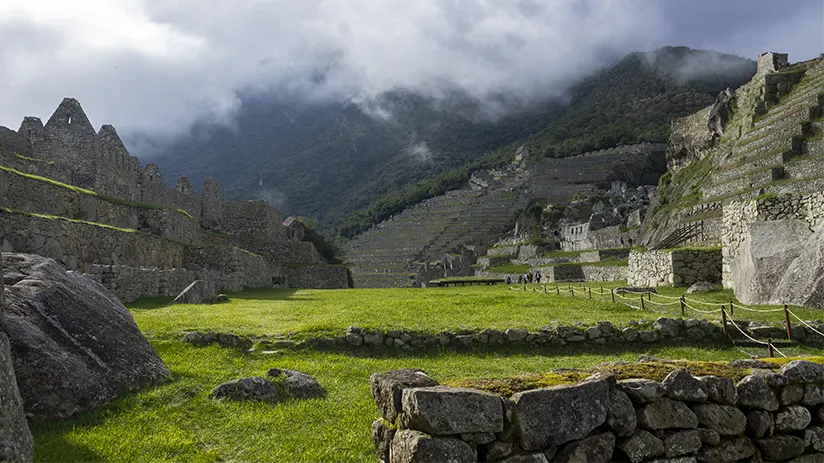
The Inca Empire built Machu Picchu around 1450 AD, during the mid-15th century. Its construction and active use lasted approximately a century, until its abandonment around the mid-16th century. People occupied the citadel for about a century before they abandoned it after the arrival of the conquistadors.
What Was Machu Picchu Used For?

Most historians believe Machu Picchu functioned as a royal estate with religious, political, and administrative purposes, although some details remain debated. Likewise, its function as a mountain refuge where the elite participated in ceremonies, crop trials, and imperial decisions is particularly noteworthy. For more information, read the unsolved mysteries of Machu Picchu.
How Was Machu Picchu Built?
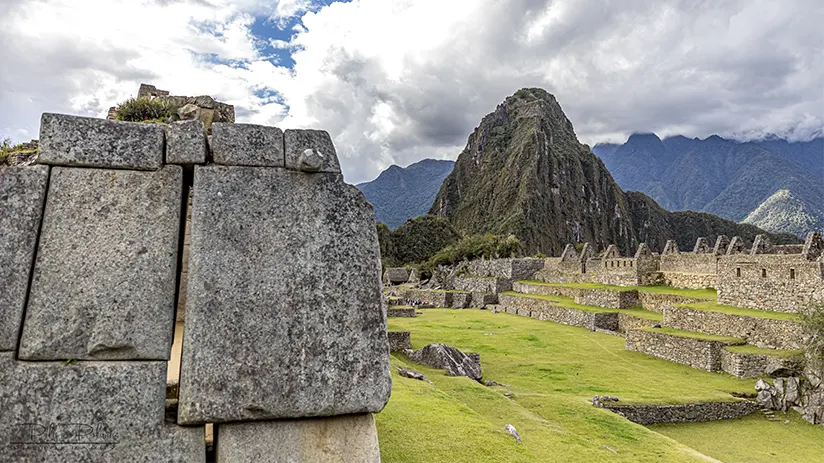
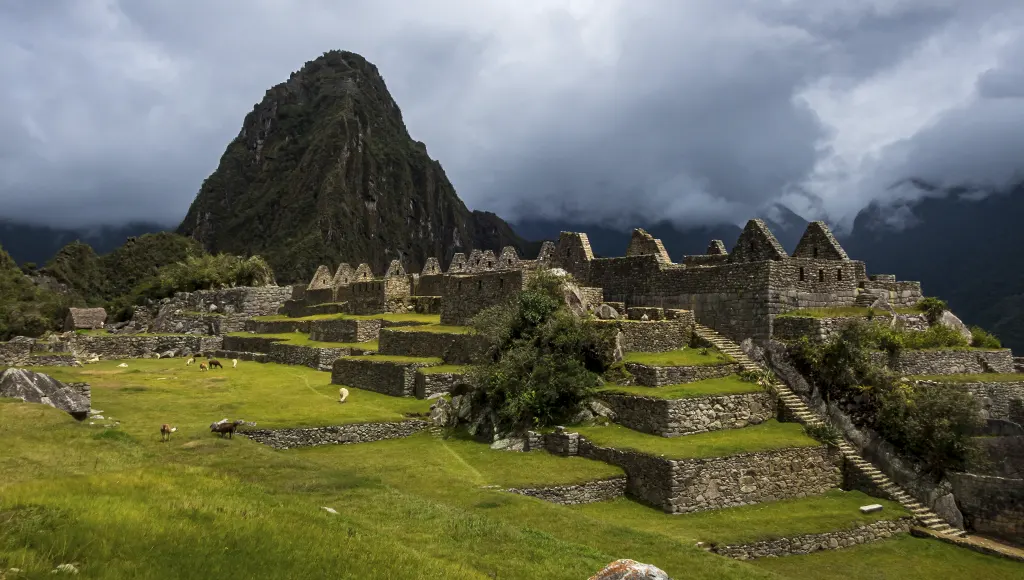
Another interesting question is how the Incas built Machu Picchu, and it’s astonishing to learn that they did so without mortar or wheels. The ancient builders used dry stone masonry and advanced engineering knowledge, evidenced in Machu Picchu’s water system and terraces. Thousands of workers extracted local granite and shaped the blocks by hand to create imposing structures.
Machu Picchu’s Main Archaeological Features

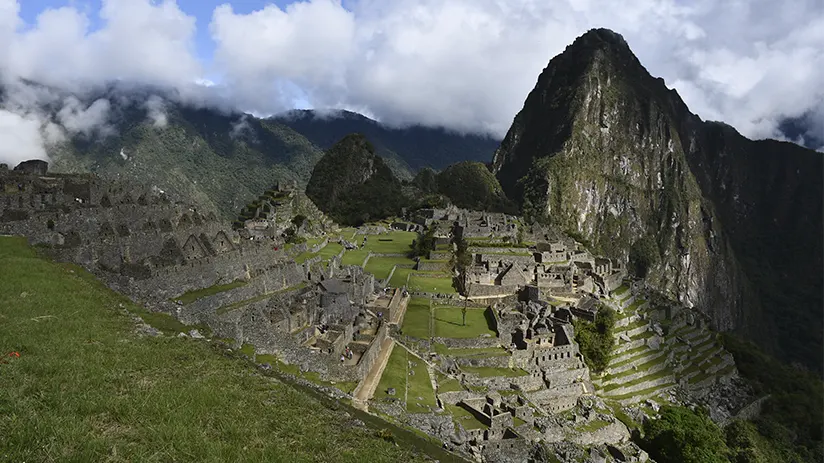
The sanctuary is organized into urban and agricultural zones, highlighting several archaeological landmarks. Most of these are noteworthy for their historical significance or unique characteristics. Below are some of the most iconic religious and ceremonial structures:
- The Intihuatana Stone: A carved granite pillar that acts as an astronomical clock to fix the sun’s position during the equinoxes. This structure allowed for a fully functional connection between Inca astronomy and sacred architecture.
- The Sun Gate or Intipunku: The Incas used this stone portal as a checkpoint and temple to observe the sun. It also marks the final entrance to the Inca citadel.
- The Temple of the Sun or Torreon: A semicircular, curved tower built over a natural cave, distinct from the one at Coricancha in Cusco. Its windows align with the sun’s rays on the June solstice, a key date in the Inca calendar.
- The Temple of the Three Windows: The main religious enclosure, notable for its three large trapezoidal openings. According to the Andean worldview, the three windows symbolized the three realms (sky, earth, and underworld).
How Machu Picchu Was Rediscovered

American explorer Hiram Bingham documented Machu Picchu for the international academic community in 1911 during an expedition. His primary objective was to find the capital of Vilcabamba, but his journey led him to the citadel. At that time, this lost city wasn’t entirely unknown, as local farmers and visitors like Agustín Lizárraga were already familiar with it. However, it remained largely unknown beyond the local area until later studies and the historic photographs of Machu Picchu circulated worldwide.
Machu Picchu’s UNESCO and World Heritage Status
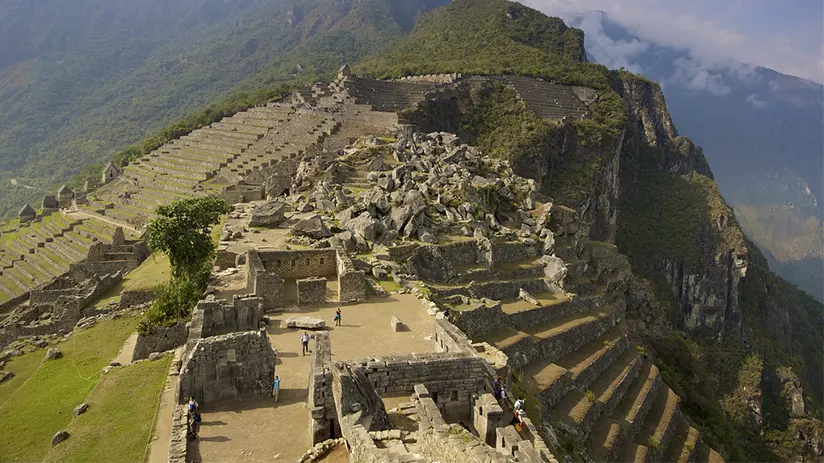
The United Nations Educational, Scientific and Cultural Organization (UNESCO) inscribed Machu Picchu as one of Peru’s UNESCO World Heritage Sites in 1983. It was inscribed as a mixed cultural and natural heritage site based on four main criteria: masterpiece of human creative genius, testimony to social organization, outstanding scenic beauty, and significant ecological and biological processes. Its exceptional universal value continues to attract archaeologists and travelers alike.
Frequently Asked Questions
Who built Machu Picchu and why?
Machu Picchu was commissioned by the Inca emperor Pachacuti around the mid-15th century. Most historians agree it served as a royal estate that also fulfilled ceremonial, political, and administrative functions. It reflected the growing power of the Inca Empire during its expansion across South America.
What year was Machu Picchu built?
Archaeological evidence indicates that Machu Picchu was constructed around 1450 AD during the reign of Pachacuti. Construction likely continued over several years, and the site remained occupied for about a century before it was abandoned during the Spanish conquest period.
Was Machu Picchu a royal estate, a religious site, or a fortress?
Most researchers believe Machu Picchu was primarily a royal estate with notable religious and ceremonial functions. Although it has defensive features, there is little evidence that it served mainly as a military fortress. Several areas combined residential, administrative, agricultural, and sacred purposes.
When did Machu Picchu become a UNESCO World Heritage Site?
UNESCO inscribed Machu Picchu as a World Heritage Site in 1983, recognizing both its outstanding cultural significance and the exceptional natural landscape that surrounds it. Today, it remains a significant protected archaeological site.
How did the Incas build Machu Picchu without modern tools or the wheel?
The Incas built Machu Picchu using carefully shaped stone blocks that fit together without mortar. Skilled workers relied on stone tools, human labor, and advanced planning rather than metal machinery or the wheel.
Is Machu Picchu one of the New Seven Wonders of the World?
Yes, in 2007, Machu Picchu was selected as one of the New Seven Wonders of the World through a global public vote. To learn why Machu Picchu is so famous, explore our dedicated article covering its worldwide recognition and cultural importance.
How many people lived in Machu Picchu?
Archaeologists estimate that between 300 and 1,000 people lived in Machu Picchu at different times, depending on the season and the activities taking place. The settlement was not a large permanent city but a carefully planned royal and ceremonial center known today as the City of the Incas.
What is the Temple of the Sun at Machu Picchu?
The Temple of the Sun is a significant ceremonial structure. Built with finely carved stone over a natural cave, it was likely used for important religious rituals connected to the sun.
Is Machu Picchu a city, a palace, or a temple complex?
Machu Picchu does not fit neatly into a single category. It includes royal residences, temples, agricultural terraces, ceremonial spaces, and administrative buildings, making it a multifunctional Inca citadel rather than simply a city, palace, or temple complex. Today, it is also a preserved Inca ruin in the Americas.
What language did the Incas who built Machu Picchu speak?
The Incas who created Machu Picchu primarily spoke Quechua. This served as the primary language that enabled the unification of the vast Tahuantinsuyo empire. Discover what other languages are spoken in Peru through deep immersion.
How is Machu Picchu different from other Inca sites like Ollantaytambo?
Unlike Ollantaytambo, which continues to function as a living town, Machu Picchu is an uninhabited archaeological sanctuary set high above the Urubamba River. The Inca citadel also stands out for its remote and isolated location in the heart of the cloud forest, which allowed it to remain hidden for a long time.
What is the difference between the Machu Picchu citadel and the Historic Sanctuary around it?
The citadel refers to the archaeological complex built by the Incas. The Historic Sanctuary is the much larger protected area that includes mountains, forests, rivers, and archaeological sites surrounding the citadel. If you’re planning your visit, our guide to things to do in Machu Picchu explores what can be experienced throughout the sanctuary.
Conclusion
Machu Picchu is much more than an archaeological landmark. It represents the vision, engineering, and cultural achievements of the Inca civilization while remaining one of the world’s best-preserved historical sites. Understanding its origins, purpose, and legacy provides valuable context before learning where Machu Picchu is located or planning to visit Machu Picchu.
From its construction under Pachacuti to its scientific rediscovery by Hiram Bingham of Yale University, Machu Picchu continues to reveal new insights into the history of the Inca Empire. Today, the site is protected by UNESCO and managed by the Peruvian government to help preserve its cultural and natural significance for future generations.
Whether you’re interested in its architecture, its history, or the people who built it, understanding what Machu Picchu truly is makes every experience more meaningful. As you prepare to explore Machu Picchu, our guides will help you discover each aspect of Peru’s most iconic Inca citadel before your adventure begins.
Peru has so much to offer; it can be hard to know where to start. With many years of experience in the tourism sector, Machu Travel Peru is happy to help with anything regarding your trip to Peru and any tours around it. Let us help you make your Peruvian travel experience unforgettable! Contact us today to plan your dream adventure!