Peru is a country in South America, bordered by the Pacific Ocean to the west, Ecuador and Colombia to the north, Brazil to the east, and Bolivia and Chile to the south. Understanding where Peru is located goes beyond knowing its position on a map. Its geography helps explain the country’s diverse landscapes, cultures, climates, and travel experiences. This guide explains where Peru is located, which countries border it, its main geographic regions, major cities, and how its geography influences travel.
Discover the location of the Andean country
- Where Is Peru Located?
- Peru on the Map of South America
- Countries That Border Peru
- Peru’s Three Main Geographic Regions
- Major Cities in Peru
- Why Peru’s Location and Geography Are Unique
- How Peru’s Geography Shapes Travel
- Best Places to Visit in Peru by Region
- FAQs About Peru’s Location and Geography
- Conclusion
Where Is Peru Located?
Peru is located in the Southern and Western Hemispheres of the Americas. It spans approximately between 00°01′ and 18°21′ south latitude and 68°39′ and 81°19′ west longitude. The country stands out for its megadiversity, internationally renowned gastronomy, and ancient historical legacy, much of which is due to its strategic location. You can find other interesting facts about Peru in our detailed guide.
Peru on the Map of South America
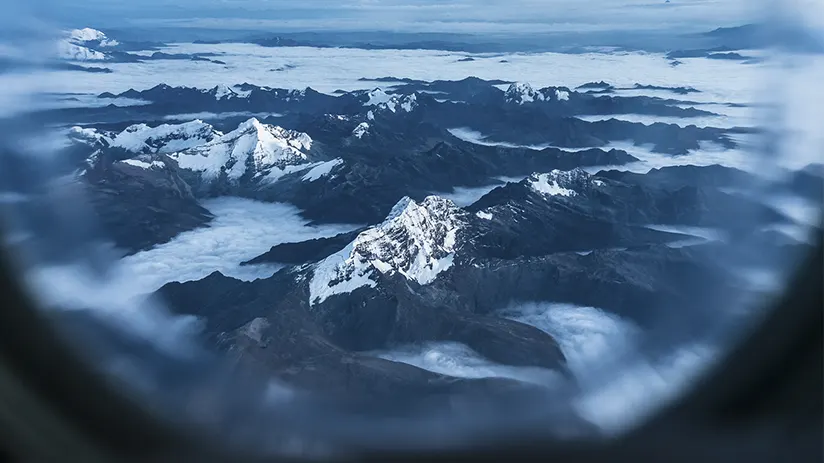
Peru is located along the western coast of South America, bordering the Pacific Ocean. Peru’s long Pacific coast plays an important role in the country’s climate, ecosystems, cities, and tourism. On a South American map, it stands out for its size, being one of the largest countries in the region.
Countries That Border Peru
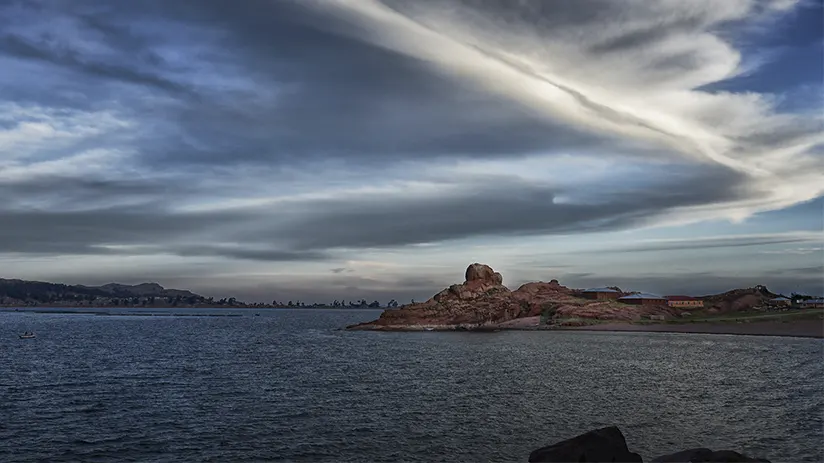
Peru shares land borders with five countries: Ecuador, Colombia, Brazil, Bolivia, and Chile. If you are traveling to Peru for the first time, you can enter the country through border crossings with its neighboring countries. Below is a detailed breakdown of its borders for easy comprehension:
| Direction | Bordering country |
| North | Ecuador and Colombia |
| East | Brazil |
| Southeast | Bolivia |
| South | Chile |
Peru’s Three Main Geographic Regions
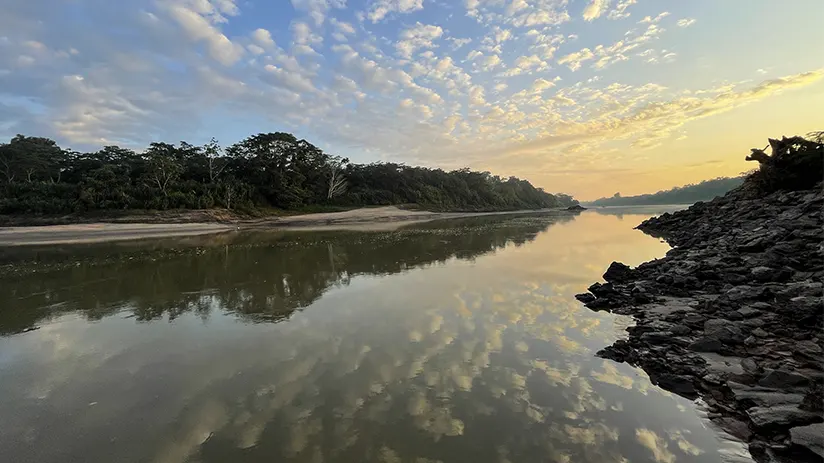
Peru is divided into three main geographic regions: the coast in the west, the highlands in the center, and the rainforest in the east. These distinct zones and Peru’s biodiversity are directly related to the country’s location, stretching from the Pacific Ocean to the Amazon basin, passing through the Andes Mountains. Below are general details of each natural region:
| The Coast | The Andes | The Amazon Rainforest | |
| Location | Extends along the western border, facing the Pacific Ocean. | Extending through the central part of the country, the Andes separate the Pacific coast from the Amazon Basin and create major variations in elevation and climate. | Found in the eastern part of the country, descending from the Andes towards the Amazon Basin. |
| Main characteristics | It is primarily an arid desert. The cold Humboldt Current cools the air, preventing heavy rainfall, but the rivers that descend from the Andes create verdant agricultural valleys. | High peaks and cold plateaus (altiplano) predominate. Extreme changes in altitude create numerous small climatic zones and rich mineral deposits. | Very humid, hot, and covered with dense forests. It is home to an extraordinary diversity of plants and animals and supports important river systems that flow into the Amazon Basin and ultimately the Atlantic Ocean. |
The Coast
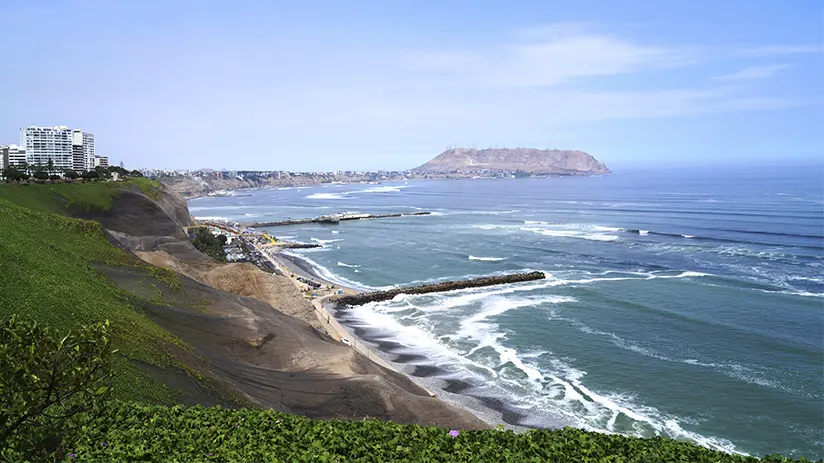
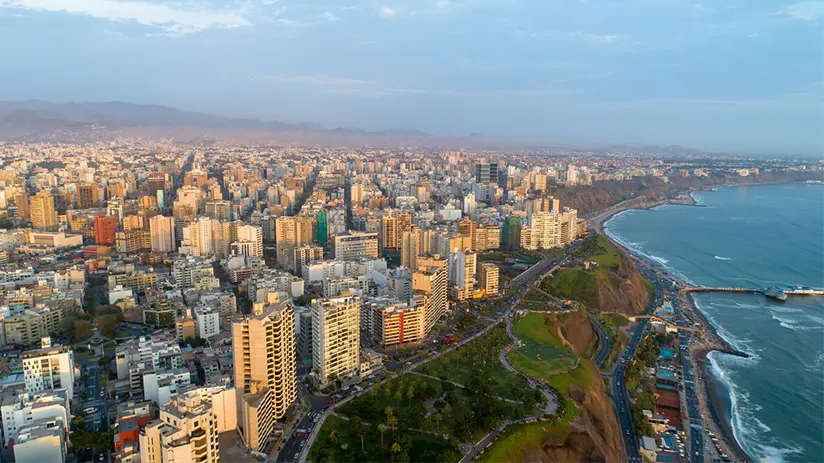
Peru’s coastal region stretches along the Pacific Ocean and includes extensive deserts, beaches, fertile valleys, and major urban centers. The coastal region accounts for approximately 11% of Peru’s territory. Many of Peru’s major cities are located along or near the coast, including Lima, Trujillo, and Chiclayo. Peru’s climate varies by location. In the Coast, the northern areas are generally warmer and sunnier, while central and southern coastal areas can be cooler, more humid, and frequently cloudy, with very little rainfall.
The Andes
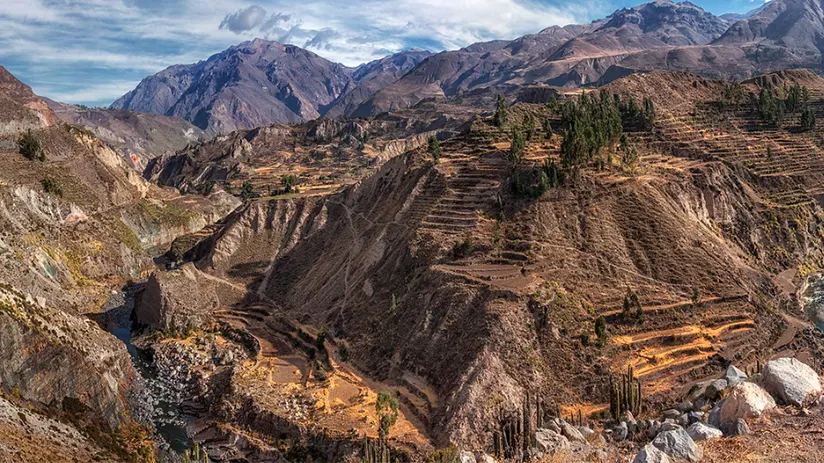
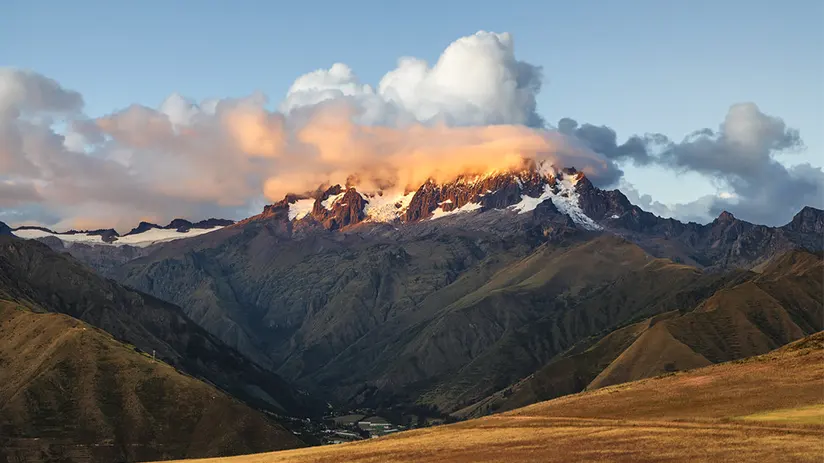
The Andes Mountains run from north to south across Peru, creating deep valleys, high plateaus, and dramatic mountain landscapes. On the other hand, a great variety of rivers are born from their slopes and cross the valleys to flow into the Amazon Rainforest or the Pacific Ocean. This region accounts for approximately 30% of Peru’s territory.
The Cordillera Blanca is one of Peru’s most impressive mountain ranges and is home to Huascarán, the country’s highest peak, which rises to 6,768 meters (22,205 feet) above sea level. Further north in the Andes, the mountains reach much lower heights.
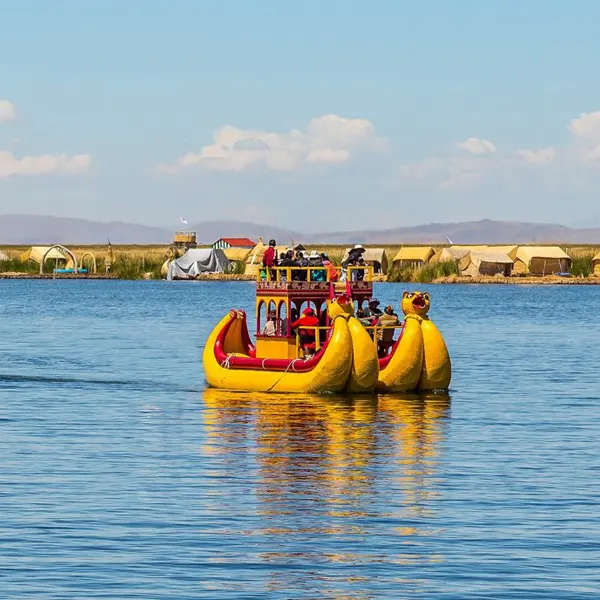
On the other hand, in the south, the Andes widen and form natural wonders like the Ubinas volcano, which is still quite active. In southern Peru, the Andes form the high plateau known as the Altiplano, which extends across Peru and Bolivia and includes the area around Lake Titicaca. Andean destinations include Cusco, Puno, Arequipa, and the Sacred Valley.
The Amazon Rainforest
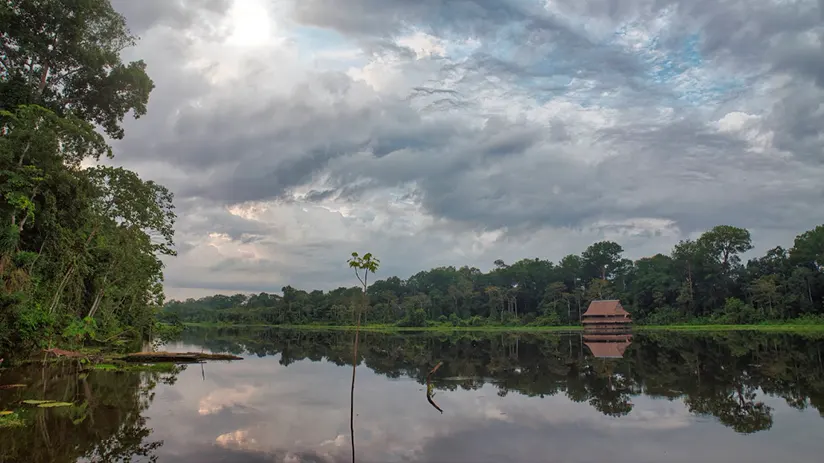
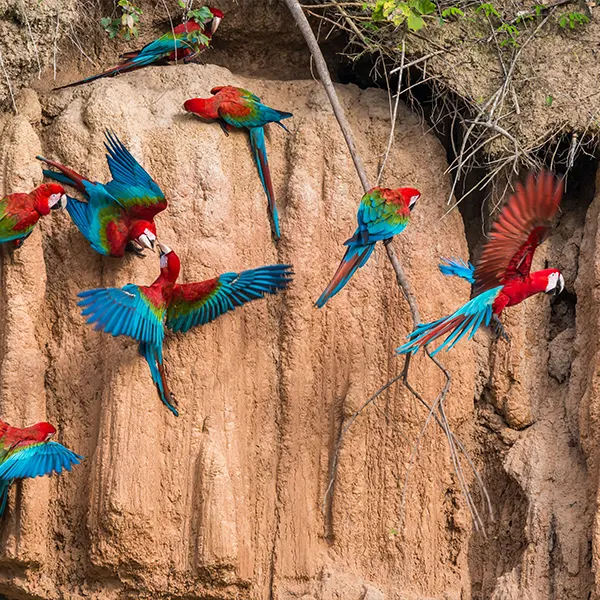
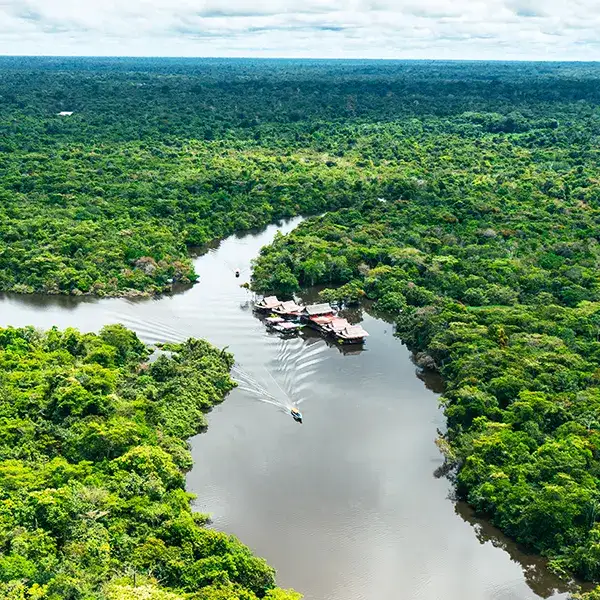
On the eastern slopes of the Andes, you can see how the mountain landscapes merge into the tropical mountain forest or cloud forest. The region contains a wide variety of ecosystems, including lakes, rivers, wetlands, and dense tropical forests. The Peruvian Amazon covers roughly 59% of the country’s territory and contains extensive forests, rivers, wetlands, and other ecosystems.
Many rivers originating in the Andes flow eastward into the Amazon Basin, supporting the region’s extensive rainforest ecosystems. Together with the Ucayali River, the Marañón River flows to form the famous Amazon River. Planning to explore Peru? Discover some of the best things to do in Peru for ideas on how to build your itinerary.
Major Cities in Peru
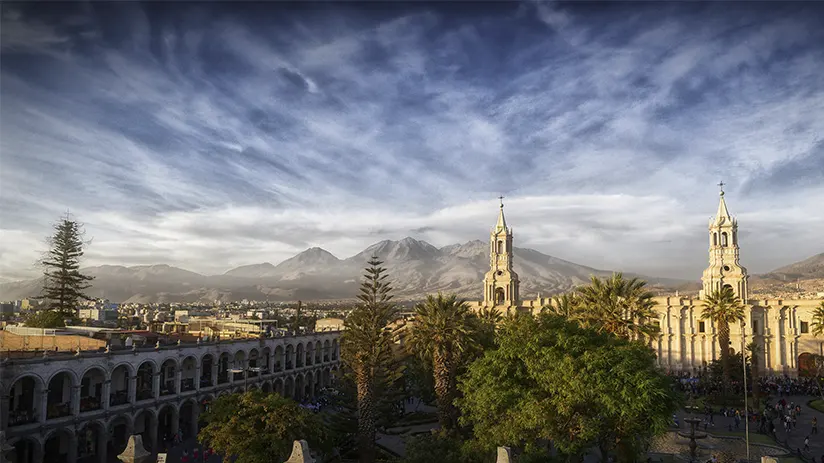
Peru’s diverse geography has shaped a network of cities, each offering a different cultural, historical, or travel experience. However, Lima is the capital of Peru and the largest urban center, as well as the country’s main economic and gastronomic hub. Here are some of the biggest highlights and an overview of each one:
| Lima | Peru’s capital and largest urban center, as well as the country’s main economic and gastronomic hub. |
| Arequipa | One of Peru’s largest cities, known as the “White City” for its distinctive volcanic sillar architecture and its historic importance in southern Peru. |
| Trujillo | The main urban center in northern Peru, renowned for its rich colonial history and nearby ancient archaeological sites. |
| Cusco | The historic capital of the Inca Empire and the main gateway for travelers visiting Machu Picchu. |
| Huancayo | A vibrant commercial and cultural focal point situated in the central highlands of the Mantaro Valley. |
| Iquitos | One of the world’s largest cities without road connections to the national highway network and serves as an important gateway to the northern Amazon. |
| Pucallpa | A rapidly growing commercial river port located along the Ucayali River. |
Why Peru’s Location and Geography Are Unique
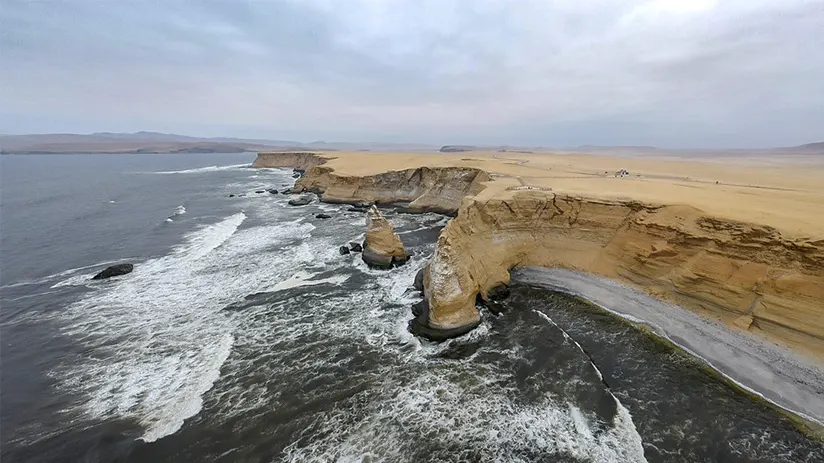
Peru’s location in western South America is unique because it combines a tropical latitude with the Andes Mountains and the conditions of the Pacific Ocean. This combination has created a diverse microclimate encompassing arid deserts, alpine peaks, and a lush Amazon Rainforest. The country’s position along the Pacific coast and across the Andes creates remarkable geographic diversity and climatic conditions. Travelers can experience coastal deserts, high-altitude mountains, and Amazon rainforest ecosystems in one country.
How Peru’s Geography Shapes Travel
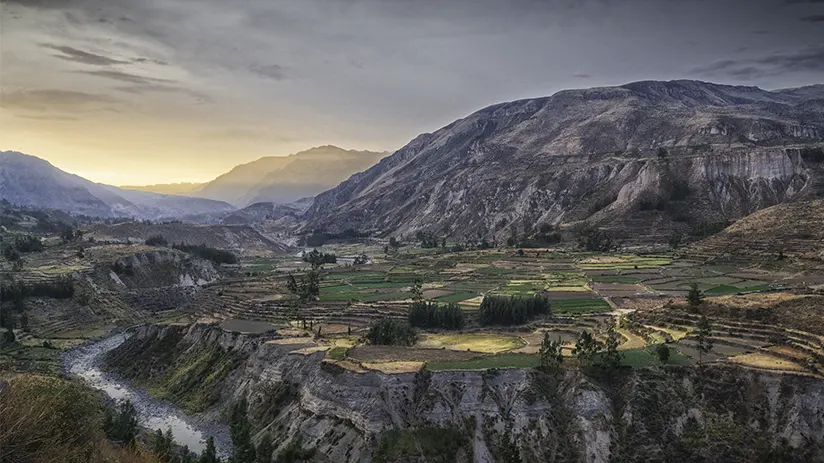
The geographical conditions of the country influence travel, and with so many tourist options throughout the territory, the possibilities are numerous. Travel pace, transportation needs, luggage, and temperature changes are some of the main considerations that travelers to Peru evaluate.
Proper planning will allow you to be prepared for any unexpected conditions. For example, traveling from sea level to over 3,350 meters above sea level requires a well-thought-out itinerary, especially to avoid altitude sickness. As with the above, there are many key aspects of traveling in Peru, and they depend heavily on the destinations you visit. Below are some interesting details regarding the natural regions:
| Terrain & Environment | What It Means for Travelers | Climate & What to Pack | |
| Pacific Coast | Arid coastal deserts, dunes, fertile valleys, and Pacific beaches. Cities such as Lima, Paracas, and Ica offer urban, marine, and desert experiences. | Travel is generally easier by road or domestic flight. Coastal destinations are well connected, making them a practical starting point for many itineraries. | Conditions vary along the coast. The south-central coast can be cool and foggy due to the garúa, while northern areas tend to be warmer. Light layers, sun protection, and comfortable clothing are useful. |
| Andean Highlands | Towering mountains, deep valleys, high-altitude plateaus, and rugged mountain ranges. | Altitude can significantly affect travel. Altitude can affect travelers at different elevations, particularly when ascending rapidly to high-altitude destinations. Gradual acclimatization is recommended. Travel may involve winding mountain roads or scenic train journeys. | Temperatures can change quickly. Days are often cool and dry during the dry season, while temperatures can drop significantly at night. Warm layers are recommended. |
| Amazon Rainforest | Dense tropical forests, rivers, wetlands, and extensive ecosystems east of the Andes. | Many Amazon destinations are reached by air followed by river transportation, although access varies by location. Travel often focuses on guided wildlife excursions and stays at eco-lodges. | The region is warm, humid, and rainy throughout much of the year. Lightweight, breathable clothing, rain protection, and insect repellent are recommended. |
Best Places to Visit in Peru by Region

A Peru tourist map allows you to identify the best places with solid tourist infrastructure. However, the best choice will depend on the traveler’s interests, time, and budget. From iconic destinations like Machu Picchu to remote spots in the Peruvian Amazon Rainforest, there are many options to consider. Below are some of the country’s main attractions:
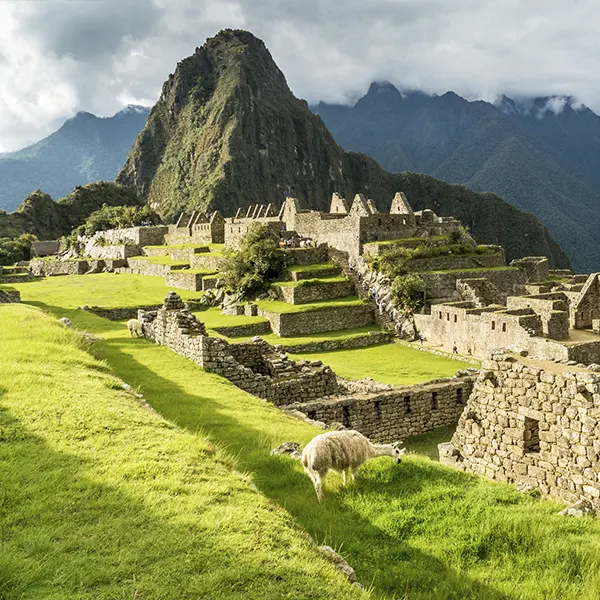
- Machu Picchu: Iconic Inca citadel set high in the Andes Mountains.
- Cusco: Historic Andean city and former capital of the Inca Empire.
- Sacred Valley: Scenic valley known for Inca sites, villages, and mountain landscapes.
- Colca Canyon: Deep canyon famous for dramatic scenery and Andean condor sightings.
- Lake Titicaca: High-altitude lake shared by Peru and Bolivia.
- Arequipa: Historic southern city known for its colonial architecture and volcanic sillar stone.
- Amazon Rainforest: Vast tropical region known for exceptional biodiversity and river ecosystems.
- Paracas: Coastal destination known for marine wildlife, desert landscapes, and nearby islands.
- Huacachina: Desert oasis surrounded by dunes near the city of Ica.
- Huaraz: Mountain destination and gateway to the spectacular Cordillera Blanca.
FAQs About Peru’s Location and Geography
Where is Peru located in South America?
Peru is located on the western side of South America, along the Pacific Ocean. The country lies between Ecuador and Colombia to the north, Brazil to the east, and Bolivia and Chile to the southeast. Its location makes Peru an important destination for travelers interested in South American history, culture, nature, and adventure.
What countries border Peru?
Peru shares land borders with five countries: Ecuador, Colombia, Brazil, Bolivia, and Chile. It also has a long coastline along the Pacific Ocean, which gives the country access to important coastal cities and beaches.
What is Peru famous for?
Peru is best known for its ancient Inca heritage, spectacular landscapes, and diverse cultural traditions. Peru in South America is home to Machu Picchu, one of the world’s most famous archaeological sites, as well as traditional cuisine, historic cities such as Cusco and Lima, the Amazon Rainforest, and numerous archaeological remains from pre-Columbian civilizations.
Is Peru a good destination for first-time travelers?
Yes, Peru can be an excellent destination for first-time travelers. It offers a combination of well-established tourist routes, fascinating cultural attractions, diverse landscapes, and a wide range of travel experiences. Visitors can explore historic cities, hike in the Andes, discover the Amazon, or visit coastal destinations. As with any international trip, planning transportation, accommodation, altitude considerations, and travel insurance can make the experience more comfortable.
What are the main regions of Peru?
For travel and geographic purposes, Peru is commonly described through three major natural regions: the Coast (Costa), the Andes or Highlands (Sierra), and the Amazon Rainforest (Selva). Each region has its own climate, landscapes, ecosystems, and cultural characteristics. This remarkable Peruvian geography allows travelers to experience Pacific beaches, high-altitude mountain valleys, ancient Andean communities, and tropical rainforest within the same country.
How far is Peru from the United States?
The distance between Peru and the United States varies depending on the departure city, which also affects flight time and routing. For example, a direct flight from Miami to Lima typically takes around 6 hours, while flights from cities farther north can take considerably longer and may require a connection. Lima is the country’s main international gateway, making it relatively accessible from several major U.S. cities.
What is the geography of Peru like?
Peru has exceptionally varied geography for a single country. Its territory includes an arid Pacific coastline, the towering Andes Mountains, and a vast portion of the Amazon Basin. The country is also known for diverse ecosystems and protected natural areas, including Peru’s national parks, which preserve important wildlife habitats and landscapes.
Where is Machu Picchu located in Peru?
Machu Picchu is located in the Andes Mountains of southeastern Peru, in the Cusco Region near the town of Aguas Calientes (Machu Picchu Pueblo). The ancient Inca citadel sits at approximately 2,430 meters (7,972 feet) above sea level and is surrounded by dramatic mountain scenery. It is one of the most famous UNESCO World Heritage Sites in Peru and is commonly visited as part of a trip through Cusco and the Sacred Valley.
Conclusion
Understanding where Peru is located is the first step to appreciating the country’s remarkable geographic diversity. From the Pacific coast and its desert landscapes to the Andes Mountains and the Amazon rainforest, Peru offers very different environments within one country. Its geography has also shaped its cities, cultures, climate, and travel experiences.
Knowing more about what Peru is famous for also helps put its geography into perspective. Machu Picchu, the Andes, the Amazon, diverse landscapes, and rich cultural traditions all reflect Peru’s unique geography and history. This diversity is also reflected in the languages spoken in Peru, which form part of the country’s cultural identity and heritage.
Whether you are interested in history, nature, adventure, or cultural experiences, understanding Peru’s geography can help you plan a more meaningful trip. From the coast to the highlands and the rainforest, each region offers something different to discover. Now that you know where Peru is and what makes its geography unique, it’s time to explore everything this fascinating country has to offer.
Peru has so much to offer; it can be hard to know where to start. With many years of experience in the tourism sector, Machu Travel Peru is happy to help with anything regarding your trip to Peru and any tours around it. Let us help you make your Peruvian travel experience unforgettable! Contact us today to plan your dream adventure!