Many people recognize Cusco as one of the most important destinations in Peru. Especially for its vast traditions and festivities that converge in this ancient and mystical place. The Corpus Christi is one of the most recognized festivals where the celebration, dance, and music converge.
Every year, thousands of visitors come to the imperial city to take advantage of this magnificent event. Nice weather and many complementary cultural activities attract them during this time. Therefore, the Machu Travel Peru team is excited to share everything about this incredible festival in Cusco. This city never ceases to amaze its visitors with its cultural wealth and fascinating history that captivates anyone.
Explore one of the most famous festivities in Cusco.
- Origin and history
- What is Corpus Christi?
- Saints and virgins
- Corpus Christi nowadays
- Typical dish: Chiriuchu
- Tips during the procession
Origin and history
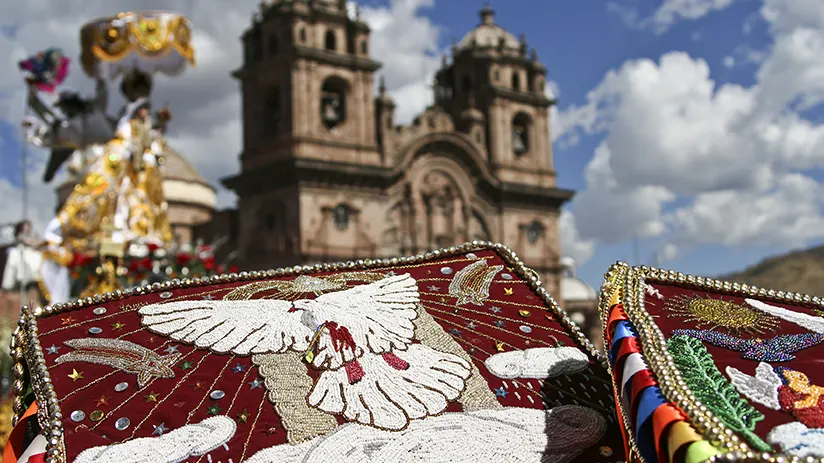
The origin of Corpus Christi in Cusco goes back to the time of the Incas. Where large crowds carried the mummies of their priests and emperors in a procession. The Inca descendants continued to venerate these mummified bodies, considering them earthly representations of their gods. These processions culminated in the gathering of pilgrims who, in addition to worshipping, shared traditional meals.
With the arrival of the Spanish in Cusco and South America, the situation changed drastically. The conquistadors, bringing with them Catholicism and their religious festivals, imposed new practices. The cultural differences were so marked that the Spanish considered their religion and customs superior. As a result, the authorities decided to replace mummies with the Catholic saints.
According to some historical records, many Inca descendants refused to fully submit to the new religion. Therefore, besides maintaining their legacy, they hid the mummies under the vestments of Catholic saints during processions. Ancient people did this to preserve their traditions and sustain their customs.
Since then, the festival has changed into a mix of cultures. The Spanish Crown continued its religion, but local people kept parts of their old traditions. The people of Cusco developed a celebration that, over time, became deeply entrenched in their popular culture. Later, the Peruvian government declared Corpus Christi in Cusco a National Cultural Heritage Site in 2004.
What is Corpus Christi?
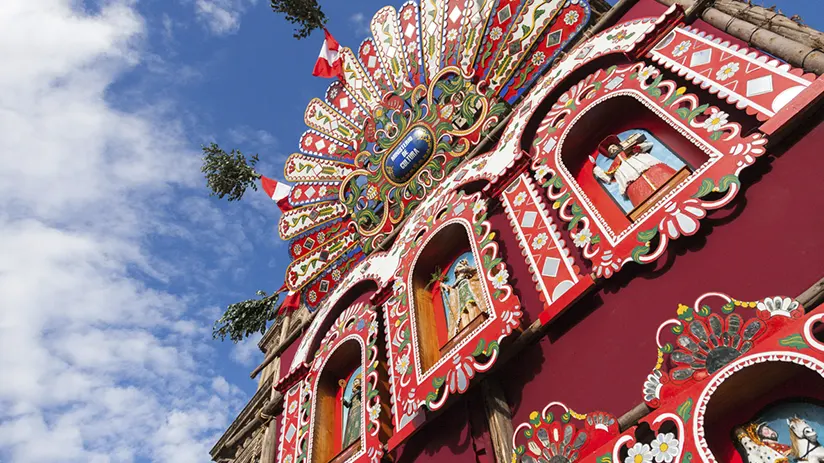
According to the Andean culture, Corpus Christi, Body of Christ, is a religious holiday that celebrates the Eucharist. This festivity commemorates the time when the bread or the host transforms into the body and blood of Christ. Therefore, this celebration takes on a special meaning thanks to its fusion of ancient traditions and Catholic elements. That and added to its location create a unique and deeply moving cultural expression.
Since time immemorial, Corpus Christi has been one of the most important religious holidays in Peru. Hundreds of locals and tourists consider this date crucial because it represents a living expression of history and culture. Every year, thousands of people, including pilgrims, faithful, and visitors, gather in Cusco’s Historic Center to commemorate this day.
These days, the best traditional chefs prepare to offer the most emblematic dishes of Cusco cuisine. At the same time, musicians and dancers perform folk dances that fill the city with color and joy. Therefore, Cusco is a fascinating destination, and June stands out as the ideal month to visit. During this month, we can find other things to do in Cusco, such as Inti Raymi or the Festival of the Sun.
Saints and virgins
As we saw, the ceremony focuses mainly on the fifteen religious figures and the act of the Eucharist. Likewise, the most prominent parishes of Cusco and the surrounding area are also major participants in these days. Below, we present the order in which the saints and virgins pass in the procession:
Saint Anthony the Abbot / Parish of San Cristobal
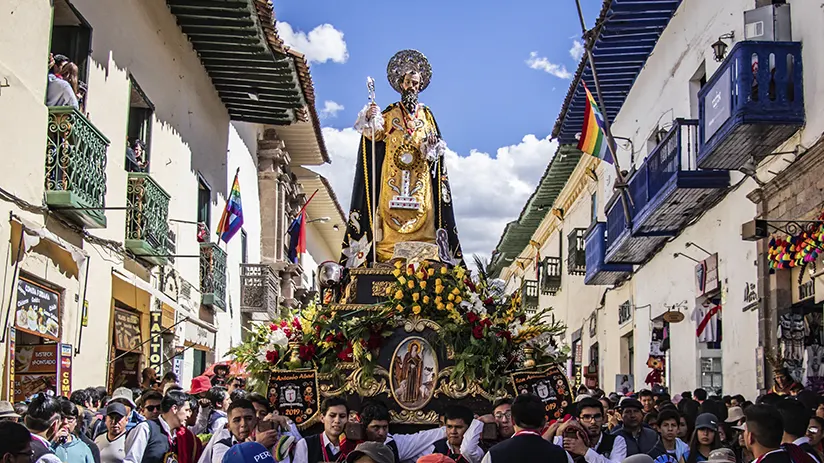
Saint Anthony the Abbot, originally from Egypt, is venerated for his austere life dedicated to prayer and fasting. Locals knew him as the Patron Saint of Animals and Farmers. His image, from the parish of San Cristóbal, leads the Corpus Christi procession. A pig accompanied him near his feet, symbolizing his triumph over temptations.
During the ceremony, pig sellers and faithfuls adorn him with luxury clothes. Additionally, they accompany the also know as the Patron Saint of Animals and Farmers with traditional music. His presence marks the beginning of the procession, and he is a highly anticipated figure for the faithful.
Saint Jerome / Parish of San Jerónimo
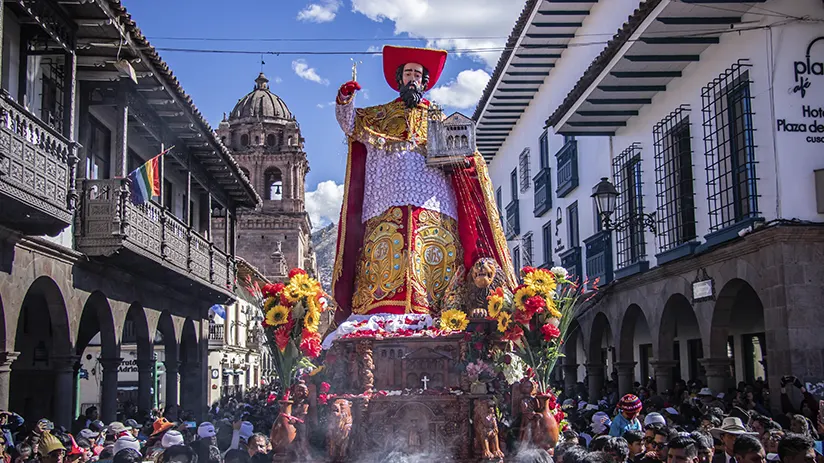
Locals knew Saint Jerome as the translator of the Bible into Latin (the Vulgate). His image, from the district of San Jerónimo, is imposing because he wears a scarlet robe and a red hat. The golden feather and a church on a book symbolize his vast wisdom. In addition, a characteristic lion accompanied the Patron Saint of Scholars, representing his animal friendship.
Saint Christopher / Parish of San Cristóbal
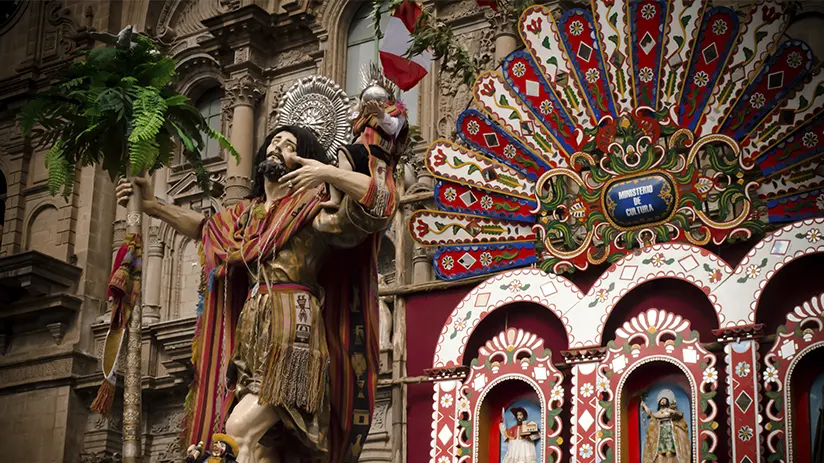
According to a legend, Saint Christopher crossed a river carrying the Child Jesus on his shoulders. Bringing him the denomination as the Saint of Travelers and Drivers. His image comes from one of the most impressive parishes of Cusco, the parish of San Cristóbal.
During the procession, numerous faithful who pay homage to him for his strength and devotion to service are expectant. His presence is imposing, notable for his size and the devotion he inspires.
Saint Sebastian / Parish of San Sebastián
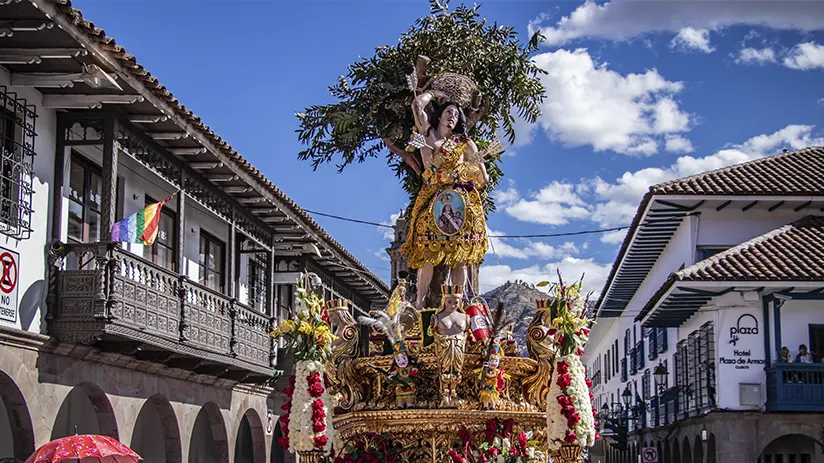
People venerate Saint Sebastian for his courage and spiritual resilience. The image of the Patron Saint of Archers and Soldiers displays the wounds of his martyrdom, recalling his sacrifice for the faith. During the ceremony, devotees accompany him, recalling his role in local history. His presence is a symbol of protection and strength because people attributed to him the saving from the smallpox plague.
Saint Barbara / Parish of Poroy
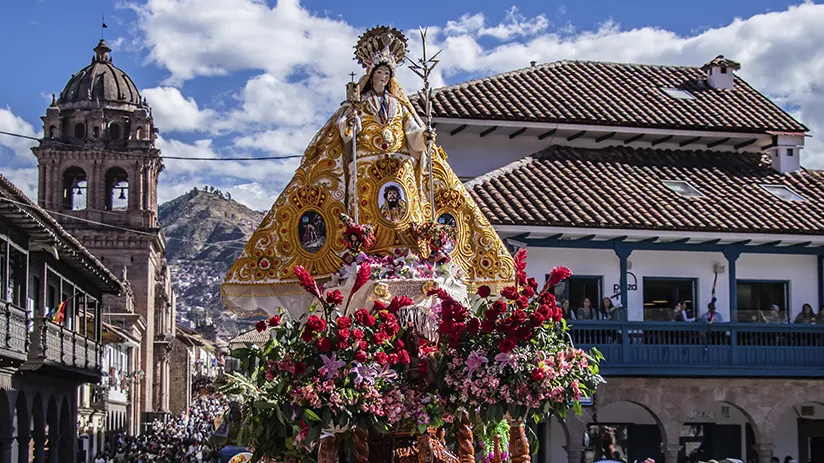
Faithful know Saint Barbara as the protector of lightning and storms. The image of the Patron Saint of Artillery Workers and Miners comes from the district of Poroy, the image that takes the longest route. The day before the main day, Saint Anne waits in the traditional neighborhood of Santa Ana and brings her welcome and unity. Her presence is notable for her connection to the earth and the protection for those who are in difficult conditions.
Saint Anne / Parish of Santa Ana
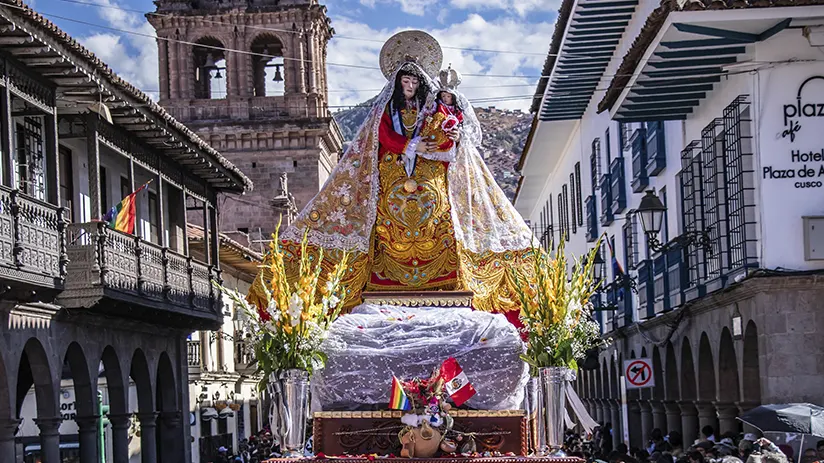
According to some tales, the Patron Saint of Pregnant and Working Women is the mother of the Virgin Mary. People recognize her for her humility and the characteristic infant that she carries in her arms. In the preparative days, she is one of the first to arrive at the meeting point with the other saints. She is one of the most loved because she represents familiarity and Christian piety.
Saint James the Apostle / Parish of Santiago
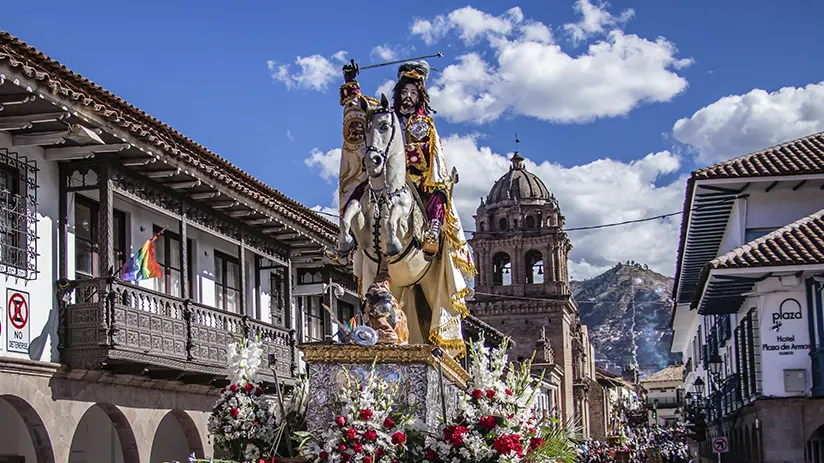
A warrior mounted on horseback represents Saint James the Apostle, one of the twelve apostles of Jesus. The also know as Patron Saint of Pilgrims and Soldiers also comes from one of the nearest districts of Cusco. Crowds accompanied him to pay homage to his role in evangelization and divine protection. In addition, his presence is a symbol of faith and courage.
Saint Blaise / Parish of San Blas
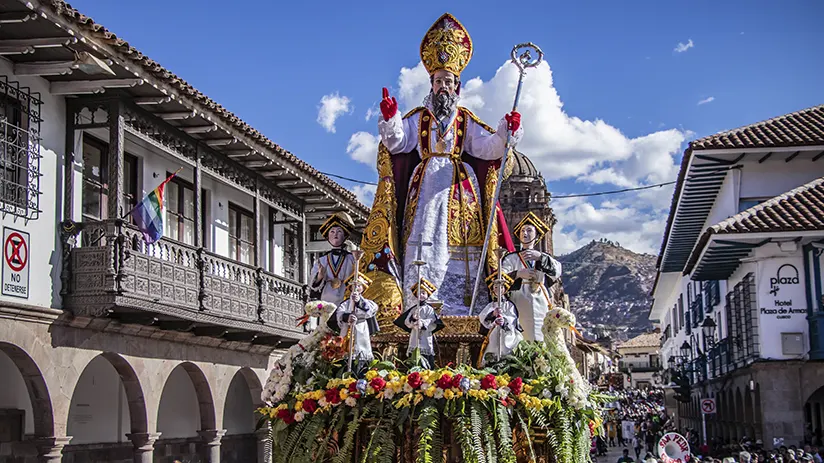
The also known as the Patron Saint of Artisans, comes from the San Blas neighborhood, famous for its artisan tradition. In addition, people attribute to him the protector of those with throat disease and related ailments. Artisans and devotees accompany him for his proper protection and guidance. Some visitors highlight his presence by his nearby connection to local culture and art.
Saint Peter / Parish of San Pedro
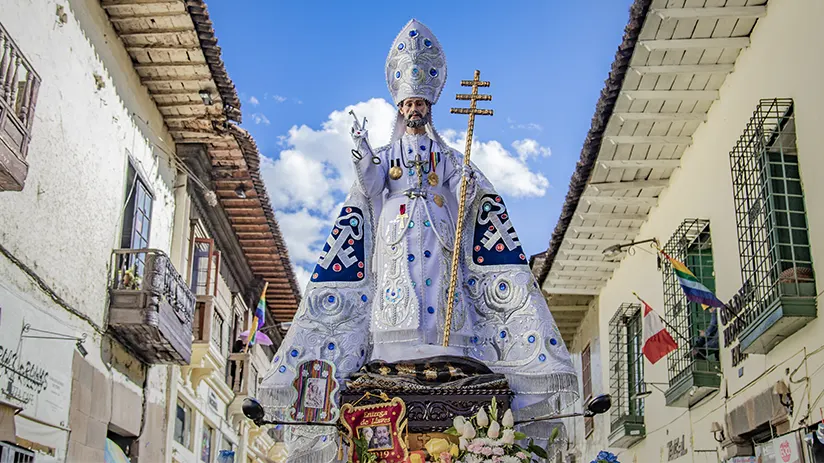
Historically, Saint Peter, one of the best-known apostles, was the first Pope of the Catholic Church. Today, local people consider him the Patron Saint of Fishermen. His popularity is considerable because of his presence as a symbol of spiritual authority and guidance. His key highlights the image symbolizing those who have the keys to heaven.
Saint Joseph / Parish of Belén
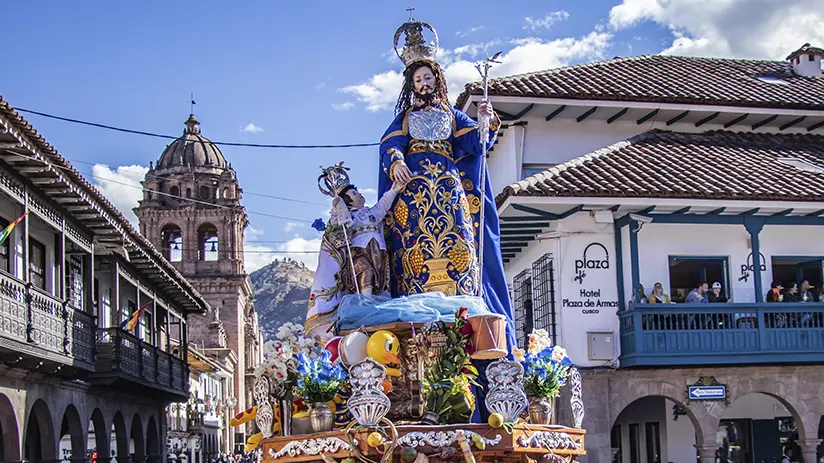
Locals recognize Saint Joseph as the Patron Saint of Married Couples and Carpenters. The miter, staff, and cloak are the most representative items of the husband of Mary’s image. In addition, many pay homage to his humility, hard work, and family dedication. His presence is a symbol of protection and paternal love.
Virgin of the Nativity / Parish of Almudena
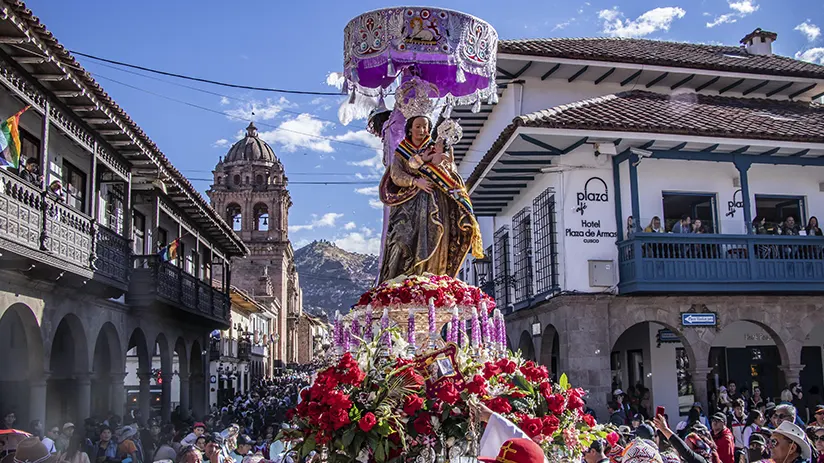
The also known as “Our Lady of Almudena” is one of the most iconic representations of the Virgin Mary. The devotees consider her the “Meztizo Virgin”, and her presence is a symbol of the rich heritage and devotion. Crowds pay homage to her for her purity and motherhood.
Virgin of Remedies / Parish of Santa Catalina
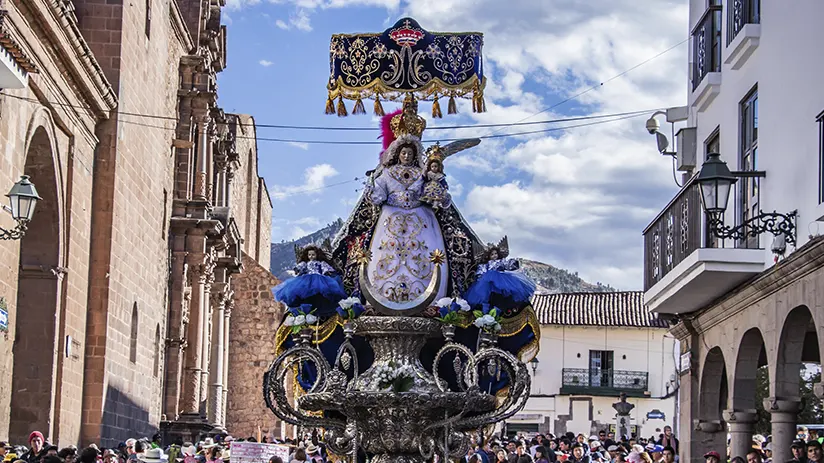
People from Cusco venerate the Patron Saint of the Sick and Afflicted. In 1980, locals included her image in the 1980′ procession with the authorization of Archbishop Vallejo Santoni. During the year, the faithful recognise her miracles related to health. Her presence is a symbol of comfort and assistance in times of need.
Purified Virgin / Parish of San Pedro
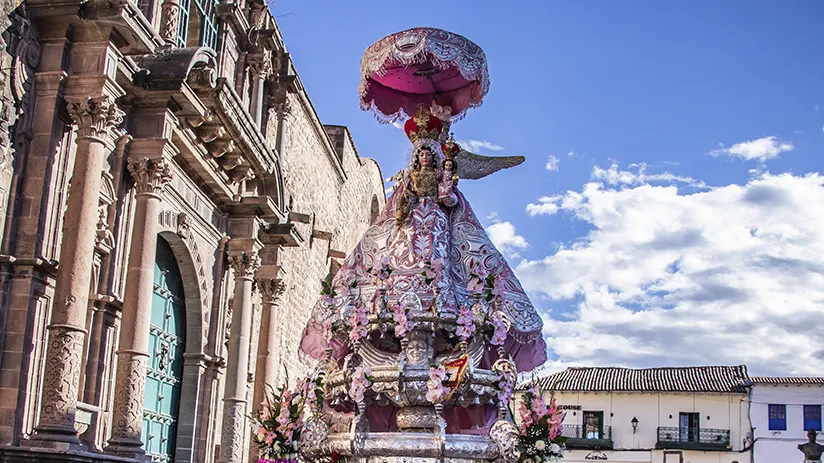
According to traditions, “La Candelaria” is a symbol of purity and light. Her candle, baskets, and a child in her right hand are the most representative features of the image of the Purified Virgin. Her presence is a symbol of hope and renewal and highlights her role in spiritual purifications. During the main day, the faithful accompanied her as a sign of high devotion.
The Virgin of Bethlehem / Parish of Belén
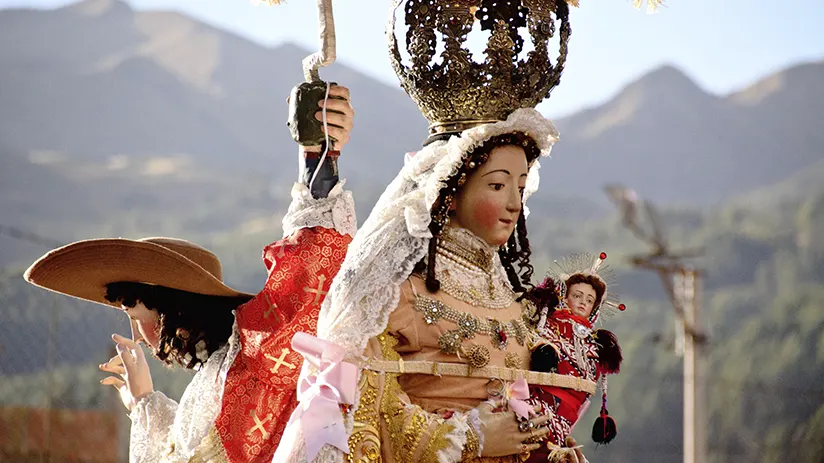
The Virgin of Bethlehem, known as “Mamacha Belén”, is the Patron Saint of Cusco at Christmas. Her image wears a gold brooch called Tupu, a real Inca brooch, and the emerald cross of Bishop Mollinedo. Her deep connection with the Andean culture reflects the cultural syncretism of the ceremony.
Immaculate Conception Virgin / Cusco Cathedral
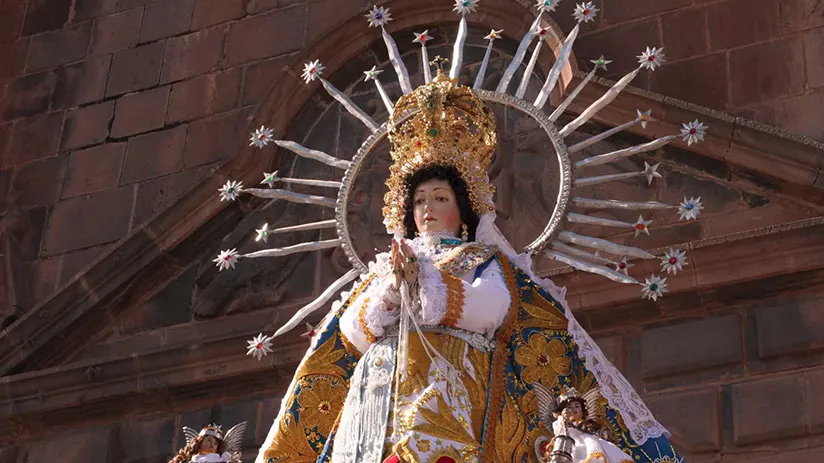
Locals know Immaculate Conception as “The Beautiful One” because of her angelic face. The Patron Saint of the Bishop is the principal host of Corpus Christi because she comes from the Main Cathedral. During the principal day, many people go to church with her because of her purity. Her presence is a symbol of welcome and centrality to the celebration.
Corpus Christi nowadays
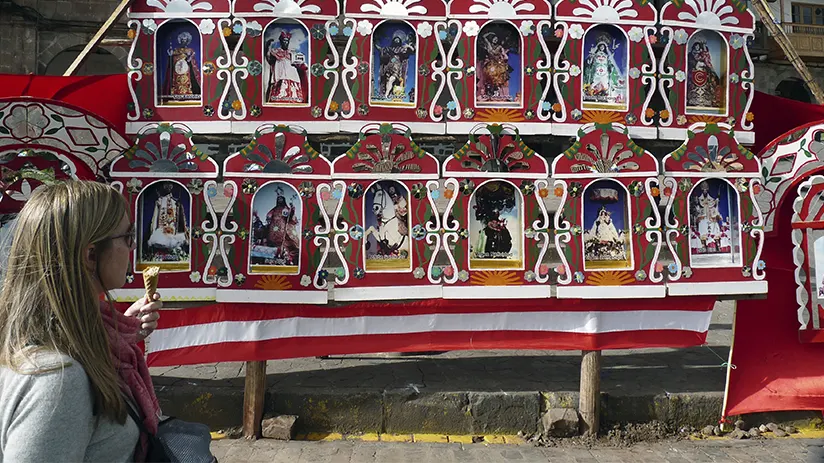
Today, Corpus Christi has been celebrated for over 480 years. This unique ceremony extends beyond its main day, as preparations are essential, especially for the saints and virgins. Each year, the figures astonish the crowds of Cusco with their attire that captivates everyone present. Furthermore, the logistics involved in the celebration are considerable, as all the temples actively participate.
Preparations
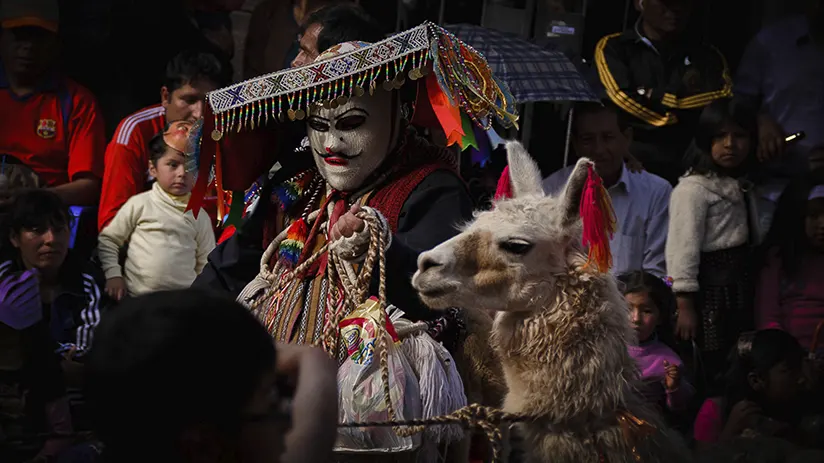
Although usually the main day is a Thursday, the most important preparations begin the day before the grand procession. Each saint must leave their respective temple, accompanied by a large group of people. Carguyoq (main bearers), religious stewards, and qaperos (volunteer musicians) accompanied every one of the 10 saints and 5 virgins.
The procession of the saints and virgins follows a set order because it depends on the distance from their temple to the Main Square. On that day, all the images gather in the main Cathedral, where they remain until the following day, Corpus Christi. Some images come from nearby temples, while others arrive from as far away as 14 kilometers, which is worth noting.
Main Day
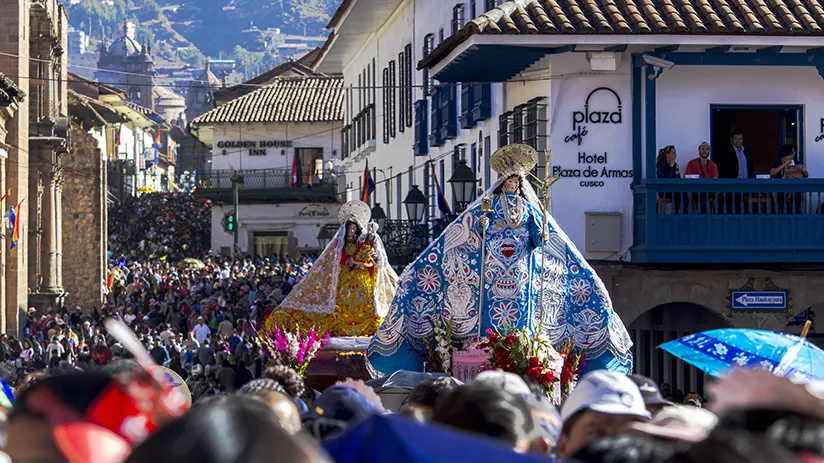
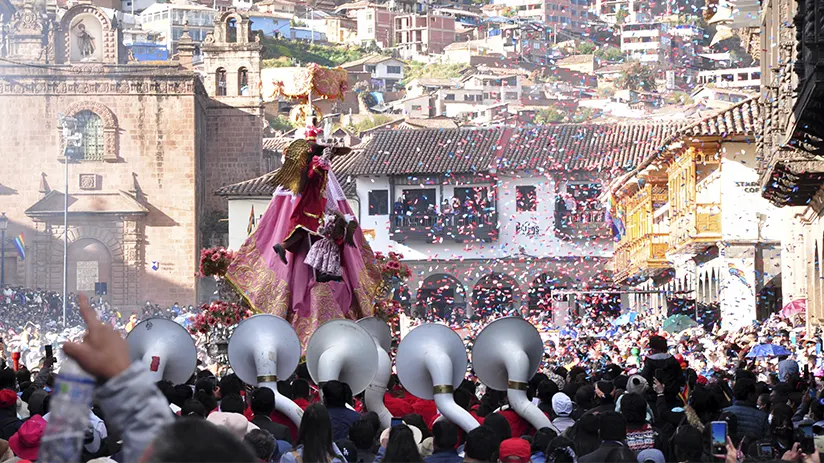
The main day is important for the mayordomos, who ensure that the event proceeds according to tradition and expectations. The main ceremony begins at 10:00 a.m. with a Mass officiated by the Archbishop of Cusco. At the end of the liturgical celebration, the procession of all the saints begins. Locals and tourists typically gather near the Cathedral of Cusco Main Square, to witness this majestic event.
At the same time, the main procession, the most attractive part of this ceremony, is about to start. The cathedral entrance displays Cusco’s 15 most significant religious figures, ready to commence their procession. Each saint is on the shoulders of the brave chargers and accompanied by a group of musicians. As they circulate, it appears that the saints and virgins sway in harmony with the beat of the customary tunes.
During the procession, the saints stop at various points to relieve the fatigue of those whose faith they carry. The weight of these religious images varies; the lightest image weighs 800 kilos, while the heaviest is over two tons. In addition, the mayordomos distribute gifts to those present, such as postcards, candies, and traditional souvenirs. The procession ends at approximately 5:00 p.m., when the last saint returns to the Cathedral.
The Octava
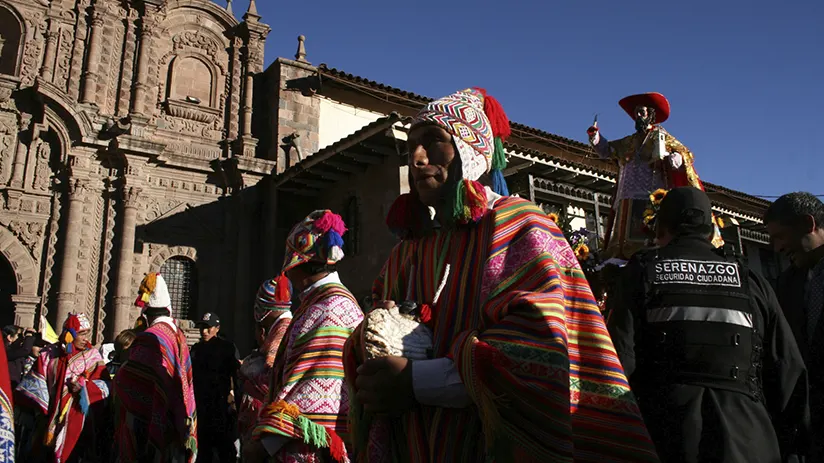
Finally, the celebration concludes with the so-called “Octava“, eight days after the main day of Corpus Christi. On this date, the faithful, mayordomos, and other participants return the images to their respective churches. These saints will remain in their respective churches for the rest of the year. They parade again before arriving at their respective districts.
Eight days after the principal day of Corpus Christi, locals celebrate the Octava. On this day, the fifteen images of saints and virgins return to their respective parishes of origin. Every year, the streets of the historic center witness this return procession, which unites religious fervor and popular joy.
The chargers take the sacred images back to their original temples after they have remained in the Cathedral. This procession usually begins around noon and lasts until approximately nightfall. During the procession, traditional music is played, often with personalized arrangements for each saint.
Typical dish: Chiriuchu
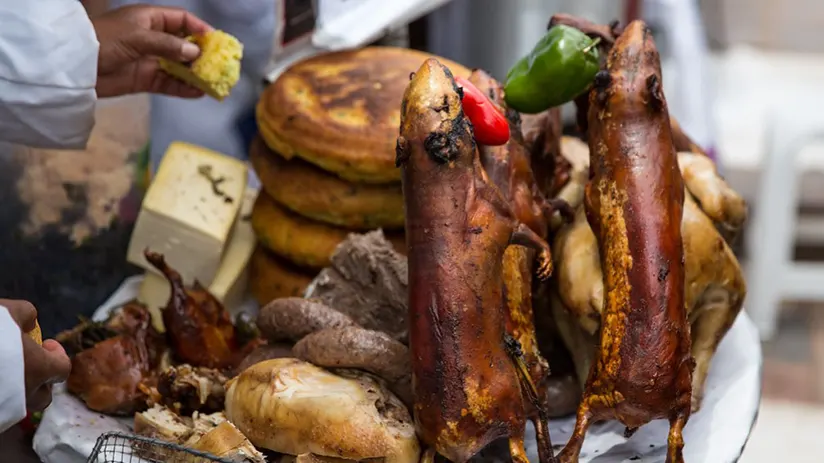
Cusco sits in Peru, one of the countries with the best gastronomy in the world. Therefore, it couldn’t help but link its traditions with various delicious dishes. One of the most emblematic options during Corpus Christi is the famous Chiriuchu. This option has become the culinary accompaniment par excellence for this religious holiday.
Chiriuchu originates from the Quechua language, where “chiri” means cold and “uchu” means spicy. This unique feature lies in the fact that the dish is best eaten cold, something unusual but characteristic. To fully enjoy this gastronomic experience, we recommend pairing Chiriuchu with a traditional beer or an ice-cold Cusqueña. This exquisite dish comprises guinea pig, fish roe, boiled chicken, cured meat, seaweed, sausage, traditional toast, and other ingredients.
According to some traditions, the origin of this dish dates back to the Inca era. During that time, residents shared their produce through the reciprocity system known as “Ayni”. In this family context, each household offered the best ingredients, resulting in a delicious mix of foods. Thus, people created a cold banquet, rich in flavor and cultural diversity.
On the other hand, those who prefer sweeter flavors have other options. Local vendors offer seasonal fruits such as cherimoya, coconut, and sugarcane, which people consider traditional celebration products. Additionally, vendors sell these delicacies throughout the squares and streets of the historic center, where commerce intensifies.
Tips during the procession
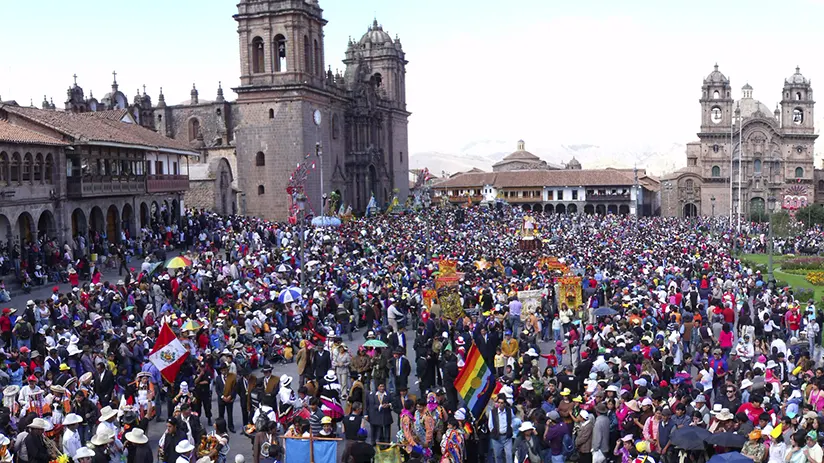
For those who visit and experience this for the first time, this will be a unique and unforgettable experience. However, it’s important to keep in mind some recommendations during the procession and the ceremony in general. Therefore, below are some points to consider to enjoy these days of Andean culture and tradition:
- To not miss the opportunity to capture that unique moment, we recommend bringing a camera. So, you can capture an unforgettable memory in a one-of-a-kind photograph.
- Wear comfortable clothing appropriate for the weather and conditions. Considering the time of year, it’s best to bring light clothing for those hot weather moments. Additionally, some other coats to deal with those afternoon strong winds.
- Bring light snacks and cold drinks, especially to avoid complications, as it can be difficult to find stores because of the large crowds. The best options are energy bars, nuts, or some easy-to-eat cereals.
- The streets of Cusco are usually cobblestone; therefore, it can be a bit tricky to navigate. Thus, it’s best to wear the most comfortable footwear possible. The best option, without a doubt, is trekking shoes, perfect for all types of terrain.
- Bring items to protect yourself from sunlight. During these months, the days tend to be warmer, so staying as exposed as possible becomes essential. We recommend using sunscreen, sunglasses, and a hat during sunny days.
- Be careful with your items because most people gather in the Historic Center or do a Cusco City Tour. Therefore, carry as few belongings as possible and only the essentials to avoid potential theft or misunderstandings.
- Although some establishments accept payment with digital currency or even credit cards, it is advisable to carry cash. Street shops usually only accept Peruvian currency, so take precautions for occasional purchases.
- Year by year, the organizers establish the ceremony times. However, planning is best because you can locate yourself in some of the best vantage points.
“RICH ANCESTRAL TRADITIONS EMERGE FROM CULTURES FULL OF ANCIENTS DANCES, MUSIC, AND RITUALS”
As we saw, this holiday is a tradition filled with emotion and Andean culture. Corpus Christi is a must-visit for tourists who want to experience this Andean country. The Machu Travel Peru team hopes we’ve helped provide a brief overview of this holiday. Remember, this is just a small glimpse into what Cusco and its traditions have to offer.
Peru has so much to offer, it can be hard to know where to start. With many years of experience in the tourism sector, Machu Travel Peru is happy to help with anything regarding your trip to Machu Picchu and any tours around it. Make your Machu Picchu experience an unforgettable one! Contact Us today to plan your dream adventure!