


When the Spanish first arrived here in 1533, the valley was dominated by three important Inca-controlled urban complexes: Carabayllo, to the north near Chillón; Maranga, now partly destroyed, by the Avenida La Marina, between the modern city and the Port of Callao; and Surco, now a suburb within the confines of greater Lima hut where, until the mid-seventeenth century, the adobe houses of ancient chiefs lay empty yet painted in a variety of colorful images. Now these structures have faded back into the sandy desert terrain, and only the larger pyramids remain, protruding here and there amid the modern concrete urbanization.
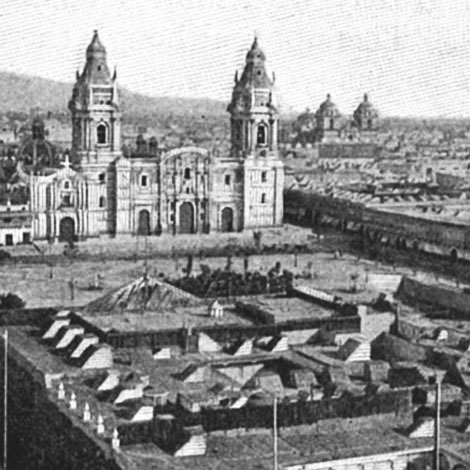
Francisco Pizarro founded Spanish Lima, nicknamed the "City of the Kings", in 1535. The name is thought to derive from a mispronunciation of Río Rimac, while others suggest that the name "Lima" is an ancient word that described the lands of Taulichusco, the chief who ruled this area when the Spanish arrived. Evidently recommended by mountain Indians as a site for a potential capital, it proved a good choice - apart perhaps from the winter coastal fog - offering a natural harbor nearby, a large well-watered river valley, and relatively easy access up into the Andes.
Since the very beginning, Lima was different from the more popular image of Peru in which Andean peasants are pictured toiling on Inca-built mountain terraces. By the 1550s, the town had developed around a large plaza with wide streets leading through i fine collection of elegant mansions and well-stocked shops run by wealthy merchants, rapidly developing into the capital of a Spanish viceroyalty which encompassed not only Peru but also Ecuador, Bolivia, and Chile. The University of San Marcos, founded in 1551, is the oldest on the continent, and Lima housed the Western Hemisphere's headquarters of the Spanish Inquisition from 1570 until 1820. It remained the most important, the richest, and - hardly believable today - the most alluring city in South America, until the early nineteenth century.
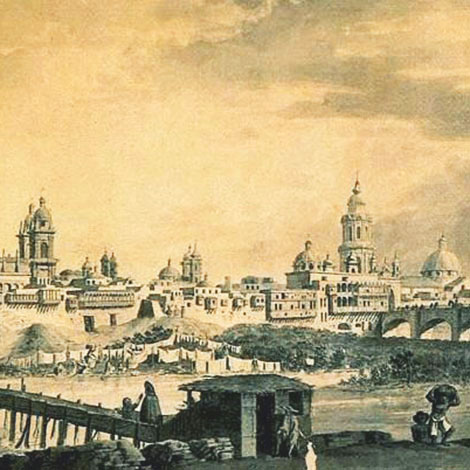
Perhaps the most prosperous era for Lima was the seventeenth century. By 1610 its population had reached a manageable 26,000, made up of forty percent black people (mostly slaves); thirty-eight percent Spanish people; no more than eight percent pure Indian; another eight percent (of unspecified ethnic origin) living under religious orders; and less than six percent mestizo, today probably the largest proportion of inhabitants. The center of Lima was crowded with shops and stalls selling silks and fancy furniture from as far afield as China. Rimac, a suburb just over the river from the Plaza Mayor, and the port area of Callao, both grew up as satellite settlements - initially catering to the very rich, though they are now fairly run down.
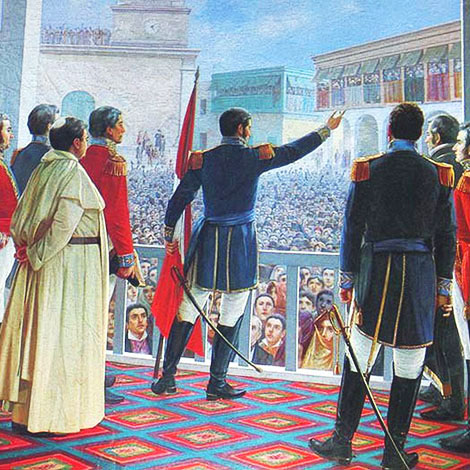
The eighteenth century, a period of relative stagnation for Lima, was dramatically punctuated by the tremendous earthquake of 1746, which left only twenty houses standing in the whole city and killed some five thousand residents - nearly ten percent of the population. From 1761 to 1776 Lima and Peru were governed by Viceroy Amat, who, although more renowned for his relationship with the famous Peruvian actress La Perricholi, is also remembered for spearheading Lima´s rebirth. Under his rule, the city lost its cloistered atmosphere and opened out with broad avenues, striking gardens, Rococo mansions, and palatial salons. Influenced by the bourbons, Amat's designs for the city's architecture arrived hand in hand with other transatlantic reverberations of the Enlightenment, such as the new anti-imperialist vision of an independent Peru.
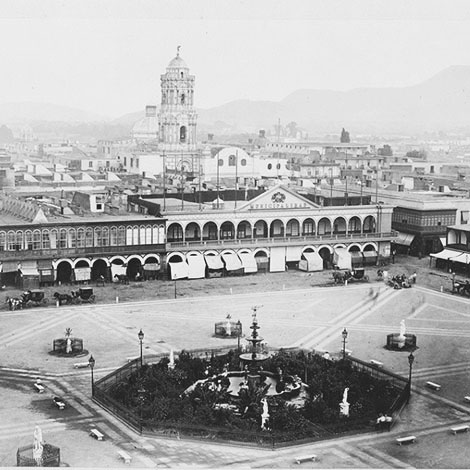
In the nineteenth century, Lima expanded still further to the east and south. The suburbs of Barrios Altos and La Victoria were poor from the start; above the beaches at Magdalena, Miraflores, and Barranco, the weakly developed new enclaves of their own. These were originally separated from the center by several kilometers of farmland, at that time still studded with fabulous pre-Inca huacas and other adobe ruins. Lima´s first modern facelift and expansion was effected between 1919 and 1930, revitalizing the central areas. Under orders from President Leguia, the Plaza San Martín's attractive colonnades and the Gran Hotel Bolívar were erected, the Palacio de Gobierno was rebuilt and the city was supplied with its first drinking water and sewage systems.
Lima´s rapid growth has taken it from 300,000 inhabitants in 1930 to over nine million today, mostly accounted for by the massive immigration of peasants from the provinces into the pueblos jovenes ("young towns", or shantytowns) now pressing in on the city. "The ever-increasing traffic is a day-to-day problem, yet environmental awareness is rising almost as fast as Lima's shantytowns and neon-lit, middle-class suburban neighborhoods, and air quality has improved over the last ten years for the nine-million-plus people who live here.
Lima continues to grow, perhaps faster than ever, and the country's economy is booming even in the face of serious slowdowns in some of Peru's traditional markets, namely Europe and the US. The city is as varied as any in the developing world: while many of the thriving middle class enjoy living standards comparable to, or better than, those of the West, and the élite ride around in chauffeur-driven Cadillacs and fly to Miami for their monthly shopping, the vast majority of Lima's inhabitants endure a constant struggle to put either food on the table or the flimsiest of roofs over their heads.
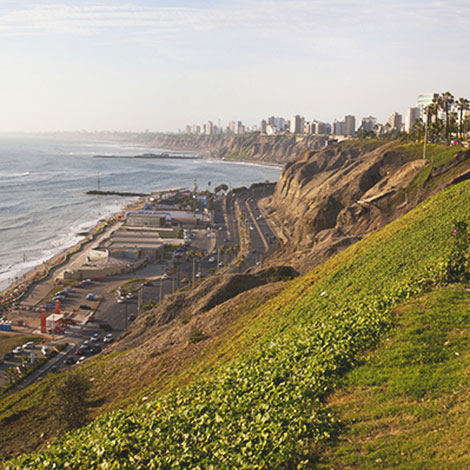
Situated on the desert coast of Peru, the city of Lima occupies an oasis-like valley watered by the Rimac River. The Pacific ocean is to the west and the foothills of the Andes to the east. Sandy 70-meter-tall cliffs separate the Pacific shore from the westernmost edge of Lima city.
The port of Callao provides a natural harbor which for many centuries provided the main connection to trading ports in Europe and Spain. Today, Callao continues to operate as one of the busiest ports in the Americas and a port of call for many South American cruise ships.
The elevation of Lima city gradually increases in proportion to distance from the Pacific shore. Average elevations for key districts and places:
Peru is quite close to the equator, but the cold water Humboldt Current flows up from Antarctica and interacts with air temperatures to keep things cool.
The Andes Mountains are a second factor affecting the climate. The tall peaks, which begin to rise not too far from the coast create a rain shadow effect that prevents rain clouds from forming. This is why much of Peru’s coast is desert. In Lima, the result is a temperate climate with high humidity around the year.
During the winter months, the city of Lima is covered by constant gray fog called garúa. Travel some kilometers north or south of the city or up into the foothills and you’ll experience the sunny skies that typify the rest of coastal Peru.
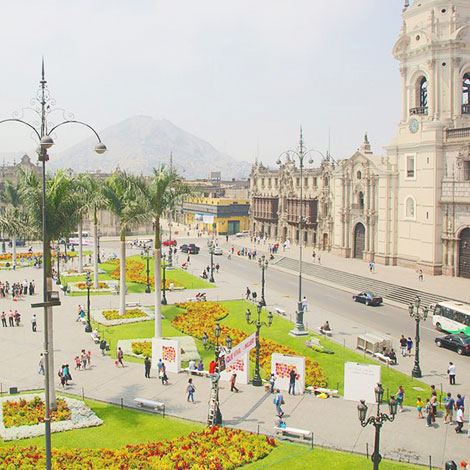
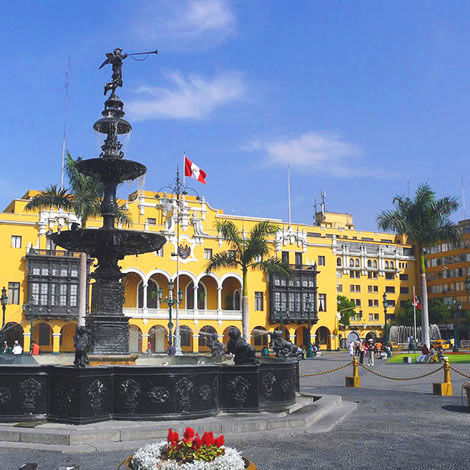
The heart of the old town is Plaza Mayor - also known as the Plaza de Armas, or Plaza Armada as the early conquistadors called it. There are no remains of any Indian heritage in or around the square; standing on the original site of the palace of Tauri Chusko (Lima´s indigenous chieftain at the time the Spanish arrived) is the relatively modern Palacio de Gobierno, while the cathedral occupies the site of an Inca temple once dedicated to the puma deity, and the Palacio Municipal lies on what was originally an Inca envoy's mansion.
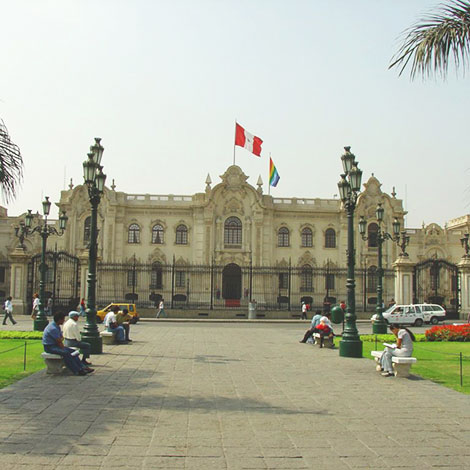
The Palacio de Gobierno - also known as the Presidential Palace - was the site of the house of Francisco Pizarro, long before the present building was conceived. It was here that he spent the last few years of his life, until his assassination in 1541. As he died, his jugular severed by the assassin's rapier, Pizarro fell to the floor, drew a cross, then kissed it; even today some believe this ground to be sacred.
The changing of the guard takes place outside the palace – it´s not a particularly Spectacular sight, though the soldiers look splendid in their scarlet-and-blue uniforms. There are free guided tours in English and Spanish, which include watching the changing of the guard; to go on a tour you have to register with the Departamento de Actividades at least 24 hours in advance. The tour also takes in the imitation Baroque Interior of the palace and its rather dull collection of colonial and reproduction fumitory.
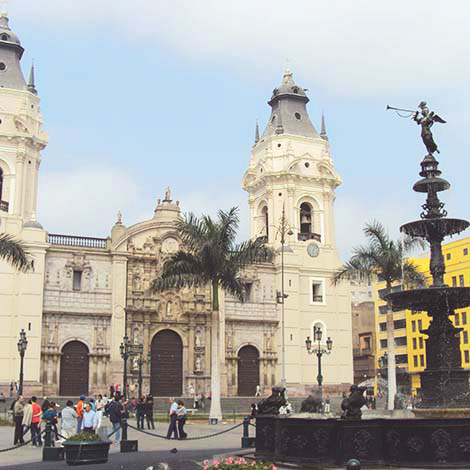
Southeast across the square, less than 50m away from the Palacio de Gobierno, the squat and austere Catedral, designed by Francisco Becerra, was modeled on a church from Seville, and has three aisles in a Renaissance style. When Becerra died in 1605, the cathedral was far from completion, with the towers alone taking another forty years to finish. In 1746, further frustration arrived in the guise of a devastating earthquake, which destroyed much of the building. Successive restorations over the centuries have resulted in an eclectic style; the current version, which is essentially a reconstruction of Becerra's design, was rebuilt throughout the eighteenth and nineteenth centuries, then remodeled once again after another quake in 1940.
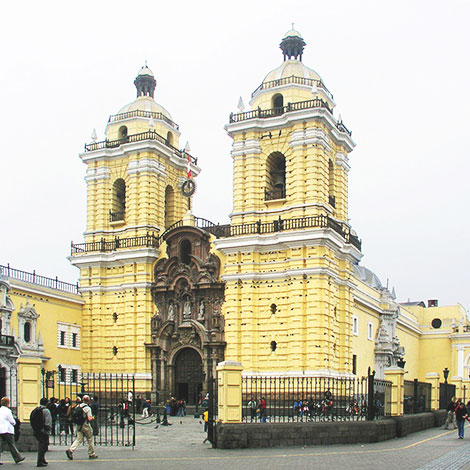
Jirón Ancash leads east from the Palacio de Gobierno towards one of Lima´s most attractive churches, San Francisco, a majestic building that has withstood the passage of time and the devastation of successive earth tremors. A large seventeenth-century construction with an engaging stone facade and towers, San Francisco's vaults and columns are elaborately decorated with Mudejar (Moorish-style) plaster relief.
The Convento de San Francisco, part of the same architectural complex and a museum in its own right, contains a superb library and a room of paintings by (or finished by) Zurbarán, Rubens, Jordaens and Van Dyck. You can take a forty-minute guided tour of the monastery and its subterranean crypt, both of which are worth a visit. The museum is inside the monastery's vast crypts, which were only discovered in 1951 and contain the sculls and bones of some seventy thousand people.
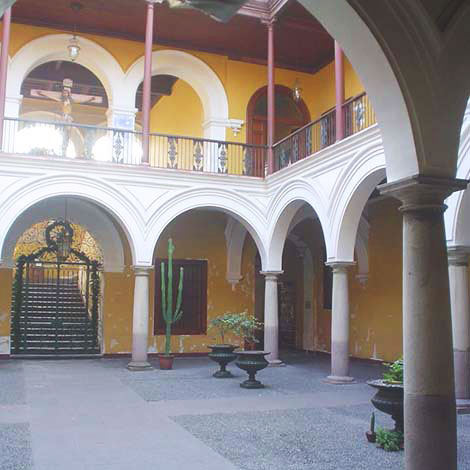
Opposite San Francisco is the Casa Pilatos, today home to the constitutional courts; although you can't enter the building, you can get as far as the central courtyard. Quite a simple building, and no competition for Torre Tagle, it is nevertheless a fine, early sixteenth-century mansion with an attractive courtyard and a stone staircase leading up from the middle of the patio. The wooden carving of the patio's balustrades adds to the general picture of opulent colonialism.
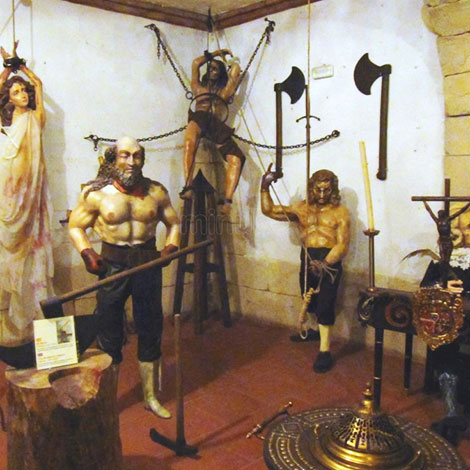
Behind a facade of Greek-style classical columns, the Museo de la inquisición was the headquarters of the Inquisition for the whole of Spanish-dominated America from IVO until 1820 and contains the original tribunal room with its beautifully carved mahogany ceiling. Beneath the building, you can look around the dungeons and torture chambers, which contain a few gory, life-sized human models, each being put through unbearably painful, antique contraptions, mainly involving stretching or mutilating.
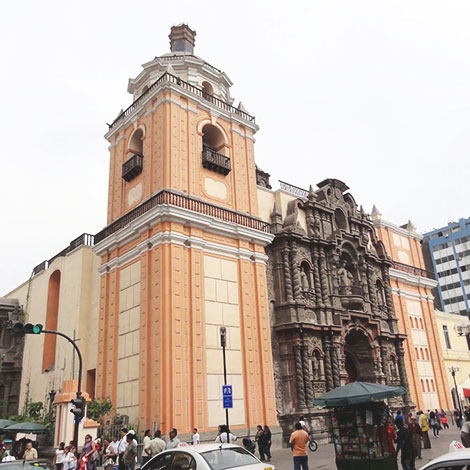
Perhaps the most noted of all religious buildings in Lima is the Iglesia de la Merced, two blocks south of the Plaza Mayor. Built on the site where the first Latin Mass in Lima was celebrated, the original sixteenth-century church was demolished in 1628 to make way for the present building whose ornate granite facade, dating back to 1687, has been adapted and rebuilt several times - as have the broad columns of the nave to protect the church against tremors.
By far the most lasting impression is made by the Cross of the Venerable Padre Urraca (La Cruz de Padre Urraca El Venerable), whose silver staffs witness to the fervent prayers of a constantly shifting congregation, smothered by hundreds of kisses every hour. lf you’ve just arrived in Lima, a few minutes by this cross may give you an insight into the depth of Peruvian belief ¡n miraculous power. Be careful if you get surrounded by the ubiquitous sellers of candles and religious icons around the entrance - pick-pockets are at work here. The attached cloisters are less spectacular, though they do offer a historical curiosity: it was here that the Patriots of Independence declared the Virgin of La Merced their military marshal.
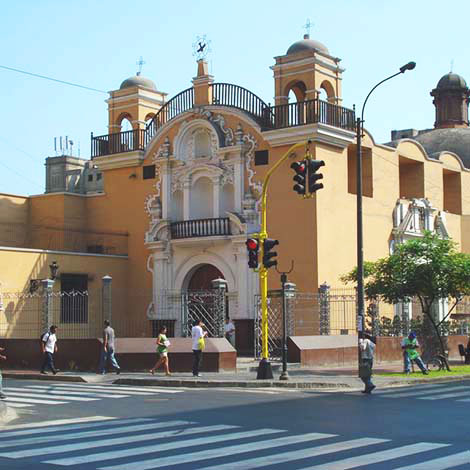
Close to the Plaza San Martín stands the Iglesia de Jesús María y José, home of Capuchin nuns from Madrid in the early eighteenth century; its particularly outstanding interior contains sparkling Baroque gilt altars and pulpits.
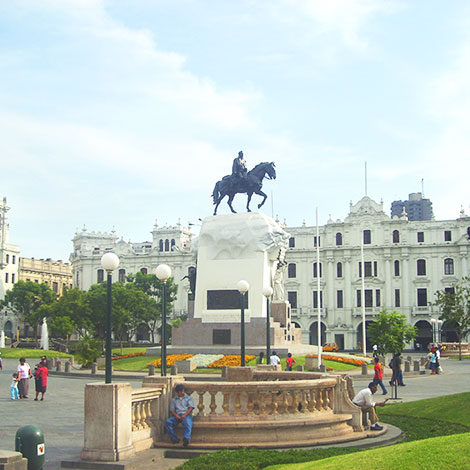
A large, grand square with fountains at its centre, the Plaza San Martín is almost always busy by day, with traffic tooting its way around the perimeter. Nevertheless, it's a place where you can sit down for a few minutes - at least until hassled by street sellers or shoeshine boys.
Ideologically, the Plaza San Martín represents the sophisticated, egalitarian and European spirit of intellectual liberators like San Martín himself, while remaining well and truly within the commercial world. The plaza has attracted most of Lima´s major political rallies over the past hundred years, and rioting students, teachers or workers and attendant police with water cannons and tear gas are always a possibility here.
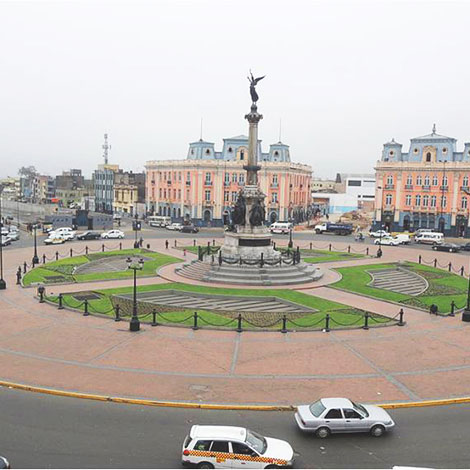
The city's main rallying point for political protests is Plaza Dos de Mayo, linked to the Plaza San Martín by the wide Avenida Nicolás de Pierola (also known as La Colmena). Built to commemorate the repulse of the Spanish fleet in 1866 - Spain's last attempt to regain a foothold in South America - the plaza is markedly busier and less visitor-friendly than Plaza San Martín. It sits on the site of an old gate dividing Lima from the road to Callao.
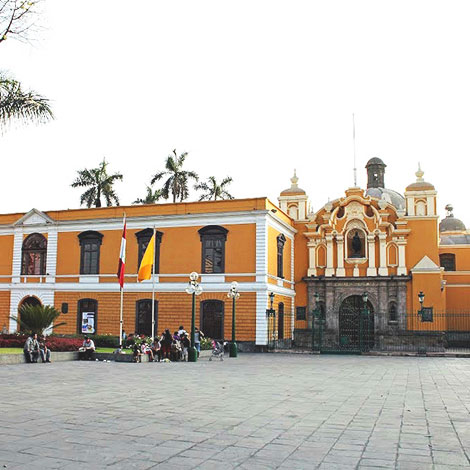
East of Plaza San Martín, Avenida Nicolás de Piérola runs towards the Parque Universitario, site of South America's first university. Right on the park itself, the Casona de San Marcos is home to the Centro Cultural de San Marcos and the Ballet de San Marcos. Once lodgings for the Jesuit novitiate San Antonio Abad (patrón saint of everything from animáis to skin complaints), it´s a pleasant seventeenth-century complex with some fine architectural features including colonial cloisters, a Baroque chape), a small art and archeology museum, exhibitions and a great café. The amphitheater in the: park is sometimes used for free public performances by musicians and artists.
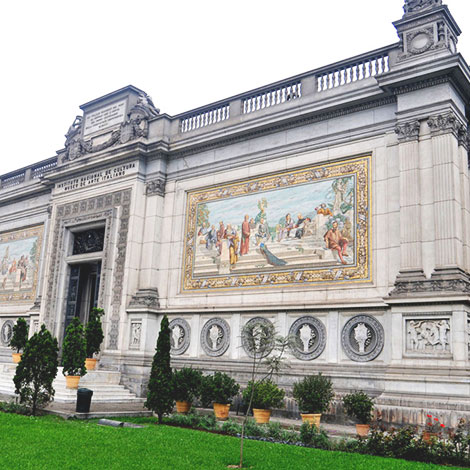
South of Plaza San Martín, Jirón Belén leads down to the Paseo de la República and the shady Parque Neptuno, home to the pleasant Museo de Arte Italiano. Located inside a relatively small and highly ornate Neoclassical building that's unusual for Lima, built by the Italian architect Gaetano Moretti, the museum exhibits oils, bronzes and ceramics by Italian artists, and offers a welcome respite from the hectic city outside.
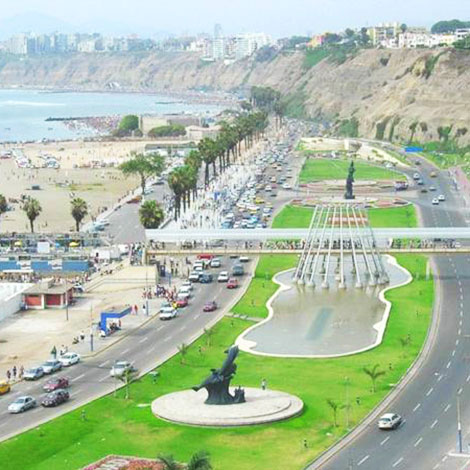
The Museo de Arte is at the city end of the extensive, leafy Parque de la Cultura Peruana, originally created for the International Exhibición of Agricultural Machines in 1872. Conspicuously green for Lima, the park is where lovers meet at weekends and students hang out amid greenery, pagodas, an amphitheater, a small lake, and organized music and dance performances at fiesta times. The park stretches a couple of hundred yards down to Avenida 28 de Julio, from where it's just a few blocks to the Estadio Nacional and Parque de la Reserva (see below).
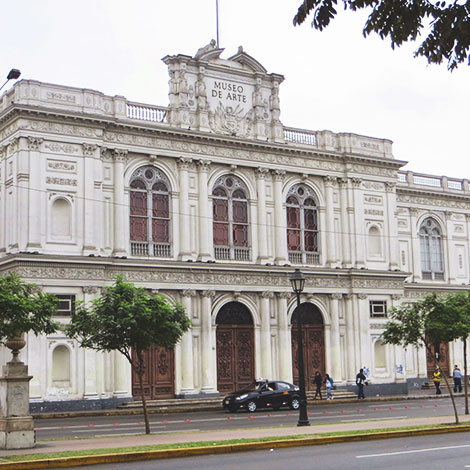
A couple of minutes' walk south of the Museo de Arte Italiano is the commanding Museo de Arte, housed in the former International Exhibition Palace, built in 1868. The museum holds interesting permanent collections of colonial art, as well as many line crafts from pre-Columbian times, and also hosts frequent international exhibitions of modern photography and video as well as contemporary Peruvian art. Film shows and lectures are offered on some weekday evenings (check the website, El Comercio newspaper listings or posters in the lobby).
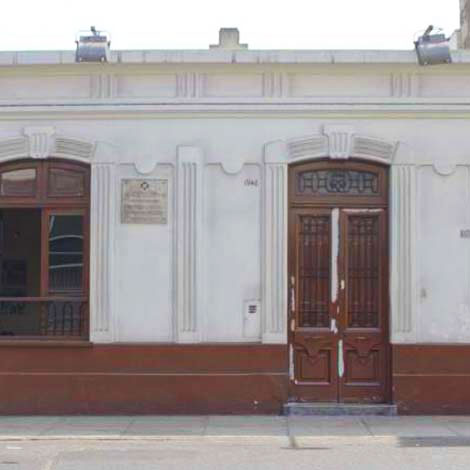
Not far from the Parque de la Cultura Peruana is the Casa Museo José Carlos Mariátegui, an early twentieth-century one-story house - home for the last few years of his life to the famous Peruvian political figure, ideologist, and writer Mariátegui - which has been restored by the Instituto Nacional de Cultura. The period furnishings reveal less about this man than his writings, but the house is kept alive in honor of one of Peru's greatest twentieth-century political writers.
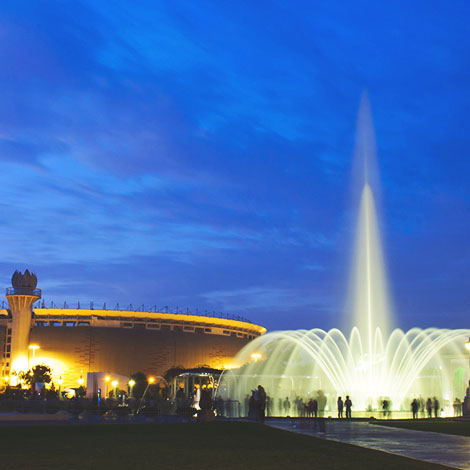
The Parque de la Reserva, next to the Estadio Nacional, was superbly and imaginatively refurbished in 2007 to create the circuito mágico del, a splendid array of fountains, each with a different theme, set to go off at specific times.
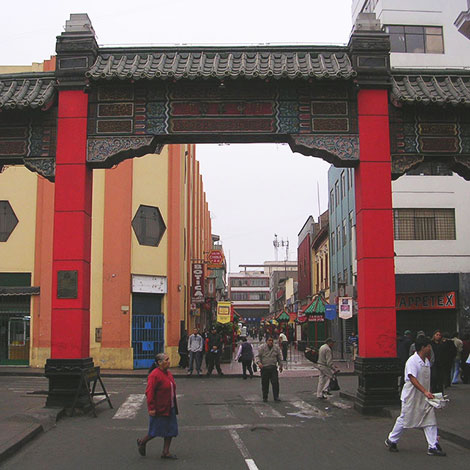
The few blocks east of Avenida Abancay are taken over by the Mercado Central (Central Market) and Barrio Chino (Chinatown). Perhaps one of the most fascinating sectors of Lima Centro, the Barrio Chino (which can be entered by an ornate Chinese gateway, at the crossing of Jirón Ucayali with Capón) houses Lima´s best and cheapest chifa (Chinese) restaurants. Many Chinese carne to Peru in the late nineteenth century to work as laborers on railway construction; many others carne here in the 1930s and 40s to escape cultural persecution in their homeland. The shops and street stalls in this sector are full of all sorts of inexpensive goods, from shoes to glass beads, though there is little of genuine quality.
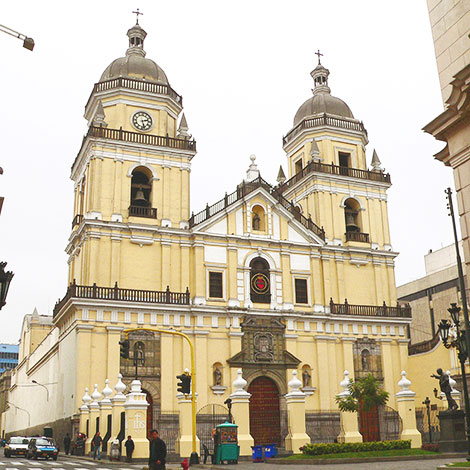
At the corner of Jirón Ucayali, the Iglesia de San Pedro was built and occupied by the Jesuits until their expulsion in 1767. This richly decorated colonial church is home to several religious art treasures, including paintings from the Colonial and Republican periods, and a superb main altar which was built in the late nineteenth century after the Jesuits returned; definitely worth a look around.
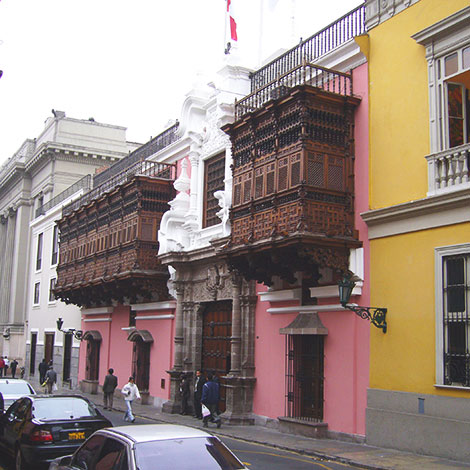
The spectacular Palacio Torre Tagle is the pride and joy of the old city. A beautifully maintained mansion, it was built in the 1730s and is embellished with a decorative facade and two elegant, dark-wood balconies, typical of Lima architecture in that one is larger than the other. The porch and patio are distinctly Andalucía, with their strong Spanish colonial style, although some of the intricate woodcarvings on pillars and across ceilings display a native influence; the azulejos, or tiles, also show a combination of Moorish and Limeño tastes. In the left-hand corner of the patio, you can see a set of scales like those used to weigh merchandise during colonial times, and the house also contains a magnificent sixteenth-century carriage (complete with a mobile toilet). Originally, mansions such as Torre Tagle served as refuges for outlaws, the authorities being unable to enter without written and stamped permission - now anyone can go in v (afternoons are the quietest times to visit).
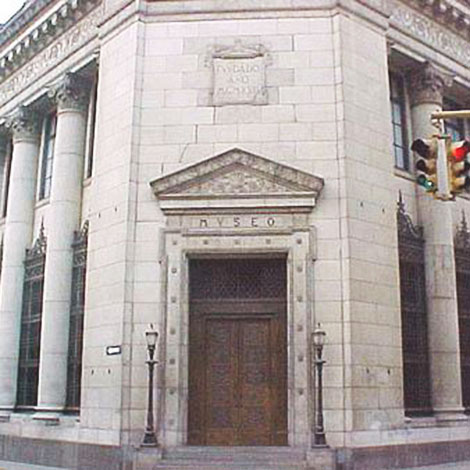
The Museo del Banco Central de Reserva del Peru holds many antique and modern Peruvian paintings, as well as a good collection of pre-Inca artifacts, including some ancient objects crafted in gold; most of the exhibits on display come from grave robberies and have been returned to Peru only recently. The museum also has a numismatic display and sometimes shows related short films for kids.
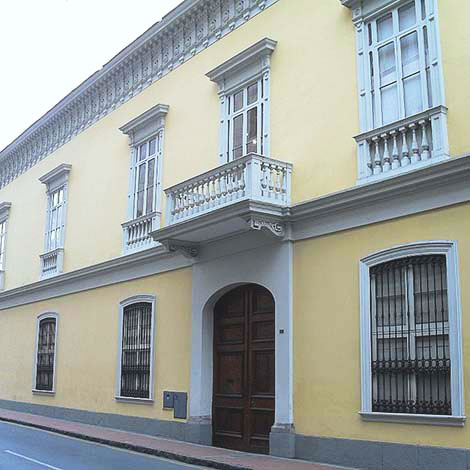
By Torre Tagle, you'll find the Centro Cultural Inca Garcilaso, built-in 1685 as the Casa Aspillaga but restored during the late nineteenth century and again in 2003. It contains an art gallery (mainly temporary photographic or sculpture exhibitions) but is most interesting for its Neoclassical Republican-style architecture.
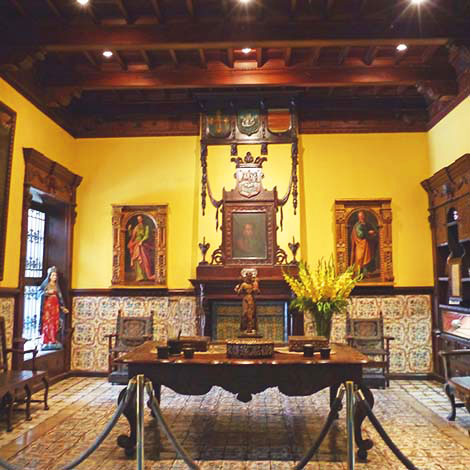
Heading north from the Plaza Mayor you pass the Casa Aliaga, an unusual mansion, reputed to be the oldest in South America, and occupied by die same family since 1535, making it the oldest colonial house still standing in the Americas. It´s also one of the most elaborate mansions in the country, with sumptuous reception rooms full of Louis XIV mirrors, furniture and doors. It was built on top of an Inca palace and is largely made of wood divided stylishly into various salons.
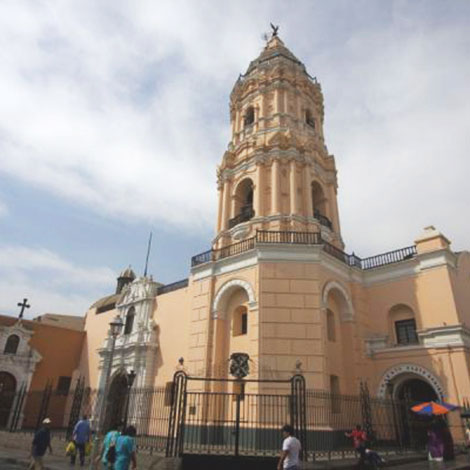
Just off the main square, a block behind the Palacio Municipal is the church and monastery of Santo Domingo. Completed in 1549, Santo Domingo was presented by the pope, a century or so later, with an alabaster statue of Santa Rosa de Lima. The tombs of Santa Rosa, San Martín de Porres and San Juan Masías (a Spaniard who was canonized in Peru) are the building's great attractions and are much revered. Otherwise, the church is not of huge interest or architectural merit, although it is one of the oldest religious structures in Lima, built on a site granted to the Dominicans by Pizarra in 1535.
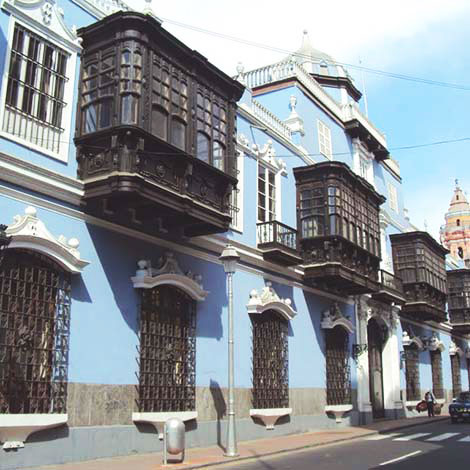
The early nineteenth-century Casa de Osambela has five balconies on its facade and a lookout point from which boats arriving at the port of Callao could be spotted by the first owner, Martín de Osambela. This mansion is home to the Centro Cultural Inca Garcilaso de la Vega, which offers guided tours of the building.
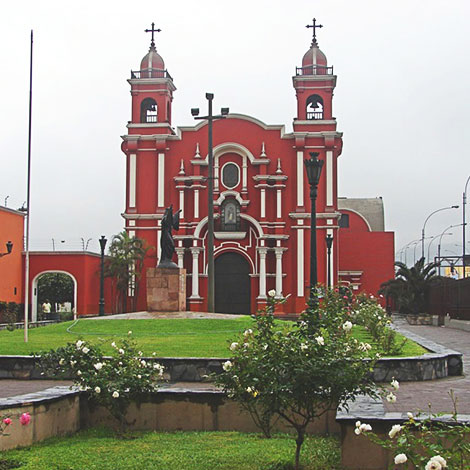
Two traditional sanctuaries can be found on the western edge of old Lima, along Avenida Tacna. Completed in 1728, the Sanctuario de Santa Rosa de Lima is a fairly plain church named in honor of the first saint canonized in the Americas. The construction of Avenida Tacna destroyed a section of the already small church, but in the patio next door you can visit the saint's hermitage, a small adobe cell; there's also a twenty-meter-deep well where devotees drop written requests.
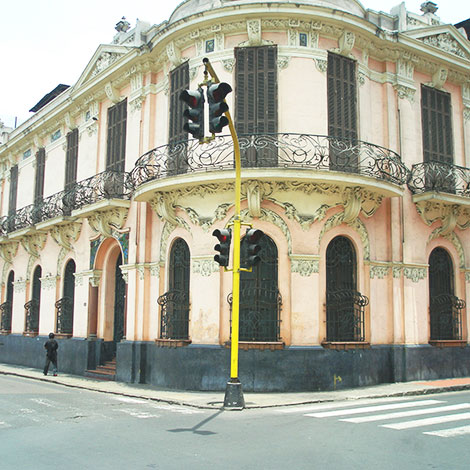
A short stroll down Avenida Tacna from die Sanctuario de Santa Rosa takes you to the fascinating Museo Etnográfico José Pia Asa, containing crafts, tools, jewelry and weapons from jungle tribes, as well as some photographs of early missionaries.
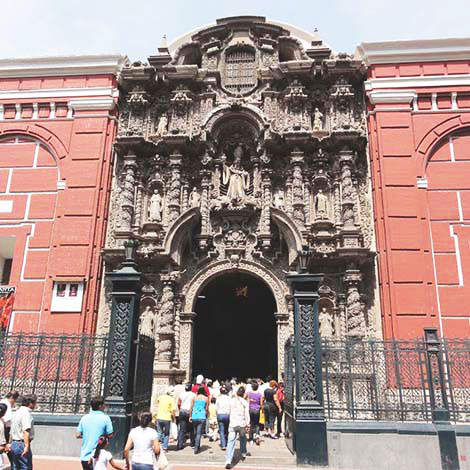
The southern stretch between the Plaza Mayor and Plaza San Martín is the largest area of Old Lima, home to several important churches, including San Agustín, founded in 1592. Although severely damaged by earthquakes (only the small side chapel can be.
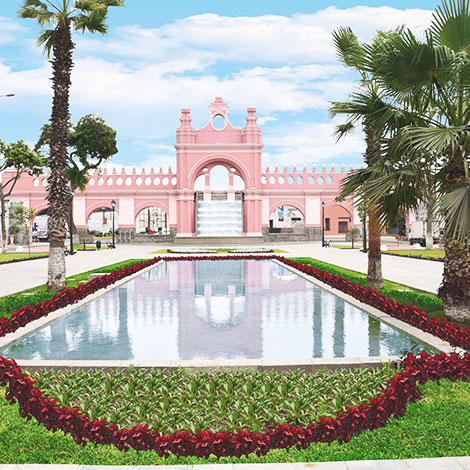
The function of the Puente de Piedra was to provide a permanent link between the centre of town and the Barrio of San Lázaro, known these days as Rimac, or, more popularly, as Bajo El Puente ("below the bridge"). This district was first populated in the sixteenth century by African slaves, newly imponed and awaiting purchase by big plantation owners; a few years later Rimac was beleaguered by outbreaks of leprosy. Although these days its status is much improved, Rimac is still one of the most run-down areas of Lima. It can be quite an aggressive place after dark when drug addicts and thieves abound, and it's dangerous to walk in this area alone at any time of day. Take a taxi directly to where you want to go.
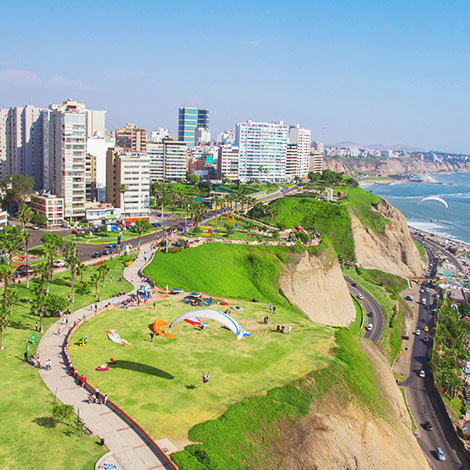
As far as Lima´s inhabitants are concerned, Miraflores is the major focus of the city's action and nightlife, its streets lined with cafés and the capital's flashiest shops. Larco Mar, a modern entertainment district built into the Cliffside at the bottom of Miraflores Main Street, adds to its swanky appeal. Although still connected to Lima Centro by the long-established Avenida Arequipa, which is served by frequent colectivos, another generally faster road - Paseo de la República (also known as the Vía Expressa and El Zanjón) - provides the suburb with an alternative route for cars and buses.
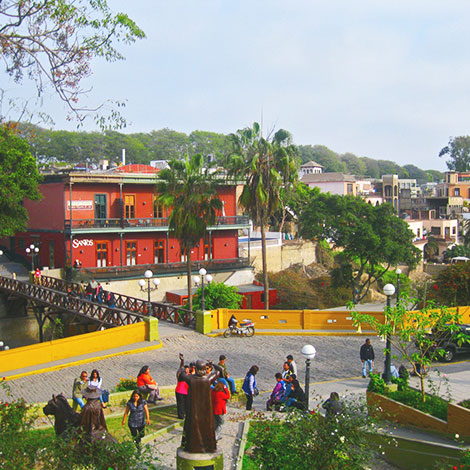
Some 3km south of Larco Mar and quieter than Miraflores, Barranco overlooks the ocean and is scattered with old mansions, including fine colonial and Republican edifices, many beginning to crumble through lack of care. This was the capital´s seaside resort during the nineteenth century and is now a kind of Limeño Left Bank, with young artists, writers, musicians and intellectuals taking over some of the older properties. Only covering three square kilometers, Barranco is quite densely populated, with some 40,000 inhabitants living in its delicately colored houses. The area's primary attractions are its bars, clubs and cafés, and there's little else in the way of specific sights, though you may want to take a look at the clifftop remains of a funicular rail-line, that used to carry aristocratic families from the summer resort down to the beach.
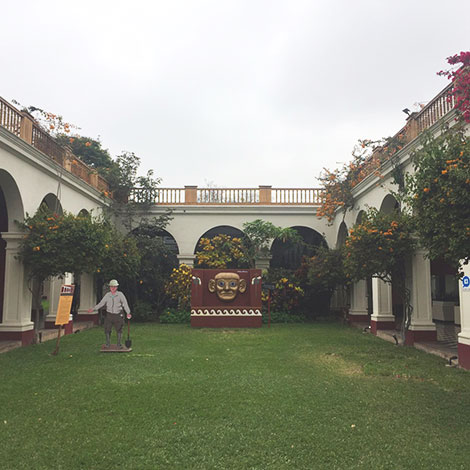
This museum was opened on December 17th 1924 as the "Museo Bolivariano", and it is located in the Magdalena Palace, the construction of which was ordered by Viceroy Joaquin de la Pezuela in 1818.
Its didactic display begins with the human settlement of America, the origins of culture in the central Andes and the first inhabitants of the coast, before moving on to the Formative Period, noteworthy for the pottery ¿ artifacts of Kotosh and Chavín and especially the Raymondi Stela and the Tello Obelisk (both from the Chavín culture).
It covers the regional cultural developments of Nasca, Recuay, Pasash, Moche, Tiahuanaco and Lima; and displays the metalwork of a number of periods in the room known as the Metallurgy and Metalworkers room; it exhibits more than 31,000 textiles from several cultures in the Pre-Hispanic Textiles room; it features the Chancay, Lambayeque and Chimú cultures ("Late Kingdoms and Chiefdoms"); and, finally, it dedicates two rooms to the culture of the Incas.
In addition, it also boasts a gallery where a collection of Peruvian viceroyalty paintings features a chronological display of portraits of the viceroys of Peru, as well as examples of 19th and 20th-century art showing the evolution of culture in the Andes.
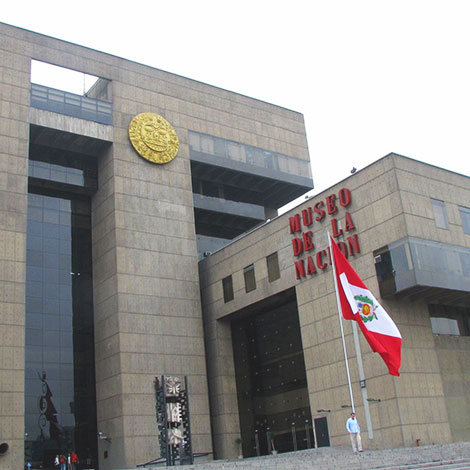
This museum created in the 1980s does not possess a particularly fine collection, but its display ¡s one of the most didactic and organized in Lima.
The permanent exhibition is spread through four floors of the museum in a chronological and sequential manner supported by scaled models, illustrations and diagrams.
The entrance hall of the museum is usually decorated with examples of the nation's cultural heritage recovered from overseas.
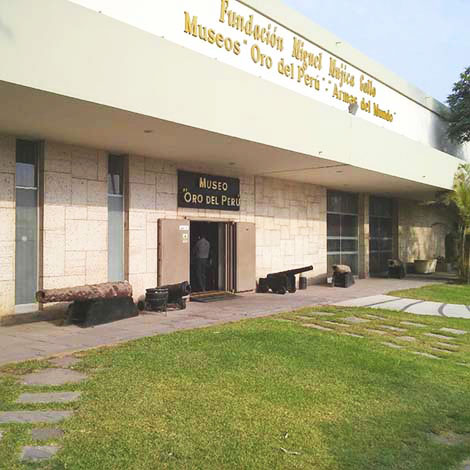
This museum was based upon the large Miguel Mujica Gallo private collection and includes important examples of pre-Hispanic art made from gold, silver, and copper, as well as textiles. The most valuable piece in the collection is the solid gold tumi, or ceremonial knife, the Lambayeque culture, and the museum also houses necklaces, funerary masks, ceremonial vessels, nose ornaments, and miniatures. The museum also boasts a spectacular collection of weapons.
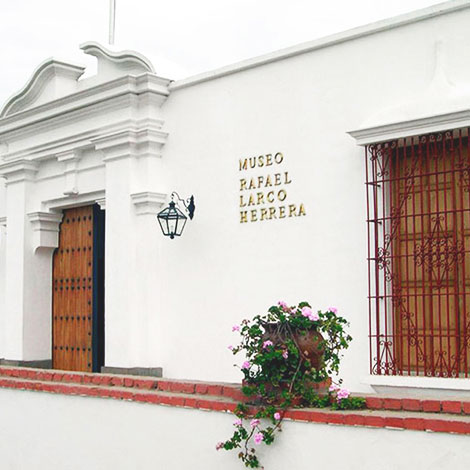
This is without a doubt one of the best private museums in Peru, particularly in terms of its collection covering the northern cultures, such as the erotic art of the Moche.
Rafael Larco Hoyle founded the museum on July 28th 1926 at the Chiclín sugarcane plantation in Trujillo, and the collection was in a Lima mansion in the 1950s.
The museum has two floors and seven exhibition rooms, as well as a vault and storerooms which are also open to the public. The erotic art room is located on the first floor and houses the largest collection of pottery of this type anywhere in the world
On the second floor, one finds the rooms displaying mummies, pottery, metalwork, stonework (including the heads of a serpent and an old man from the temple at Chavín), textiles (including a beautiful 2000-year-old Paracas cloak and a fragment of cloth containing 398 threads per linear inch, as well as the cultures of Peru from 7000 BC to the time of the Spanish conquest
The vault contains a number of pieces made from gold, silver, and semiprecious stones, such as ear and nose ornaments, breastplates, ceremonial vessels, and masks. The storerooms contain thousands of pieces placed on rows of shelves and displayed under glass, arranged and classified according to culture and subject matter so that visitors can study them freely.
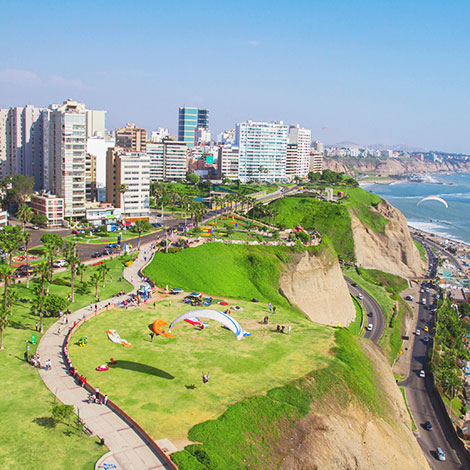
Lima is the cultural, political and economic capital of Peru. Teaming with art galleries, historical buildings, museums and markets that all contribute to making the capital a must-see on any Peruvian journey.
Migration from all over the world has always been a part of Peru´s modern history. Immigrants from Asia, Europe, and Africa as well as from all parts of Peru have merged to give Lima a true melting pot of cultures. Today most Peruvians are mestizos, meaning descendants of the mix of European and indigenous traced back to the conquest of Peru.
Peruvian people are mostly polite and will greet you and leave you with warmth and friendly words. You should learn some simple phrases so you can return the greetings.
When you feel that you have had great service from a tour guide, driver, or in a restaurant or hotel, it is nice to show your appreciation with a tip.
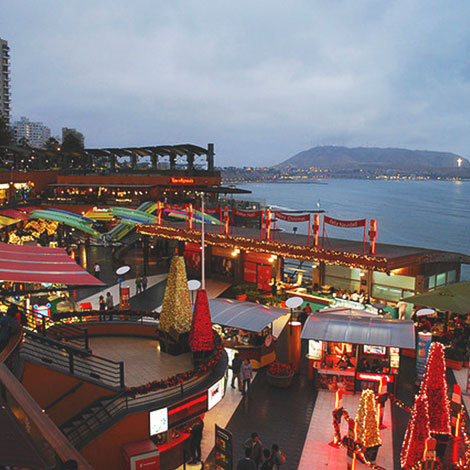
The district of Barranco is known for its exquisite art galleries and vibrant nightlife, while Miraflores is known for having stunning views of the ocean and excellent shopping. You can enjoy these ocean views from the cliff-hanging outdoor shopping centre known as Larcomar or soar above the cliffs while paragliding at Parque del Amor. The cuisine in Lima is regarded as the best in Peru so you can find a wide variety of local restaurants at all budgets.
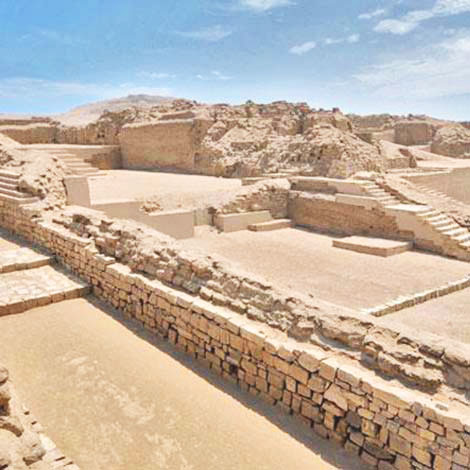
Peru´s biggest and most modern city also has some of South America´s most ancient civilizations. See the contrasts between the old and the new, visit Huaca Pucllana, an adobe temple from the 4th century surrounding by high rises of modern Lima. See more temples in the Pueblo Libre and San Miguel districts of Lima. Not far from the center of Lima, you will find the Pachacamac temple an important temple for many centuries.
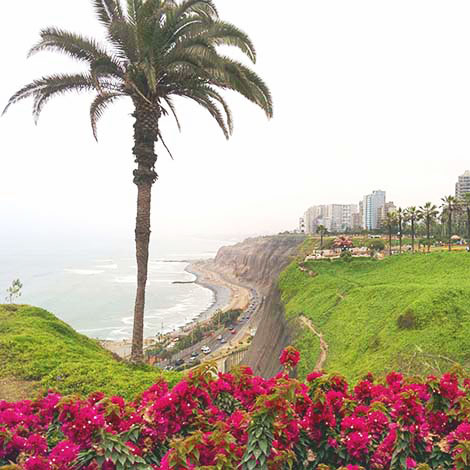
On the green coastal cliffs of Lima is El Malecon, which is considered Lima´s most scenic landscape. For around 10km along the coast, El Malecon separates the ocean from the city. If you love beautiful sunsets this is the place to go.
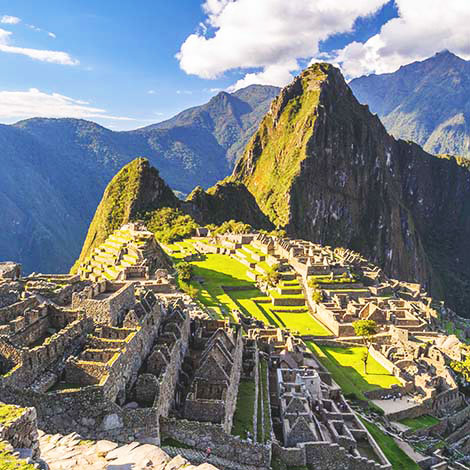
Being Peru’s capital, Lima and its international airport are a layover point to travel anywhere in Peru, including Cusco / Machu Picchu, Puno / Lake Titicaca and Arequipa / the Colca Canyon. In the same way as by bus, from Lima you can be connect to all the regions of Peru.
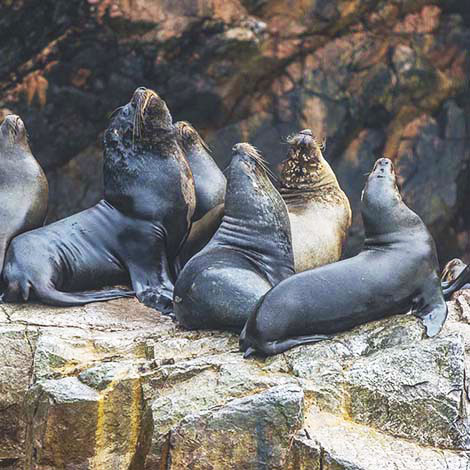
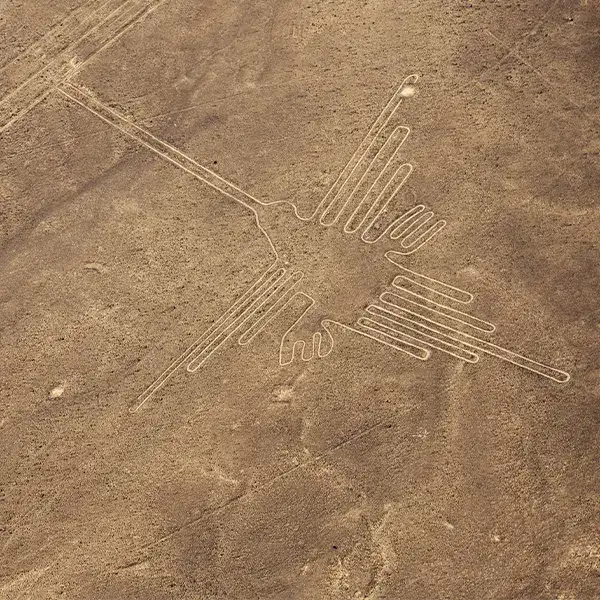
Another popular trip from Lima is to Paracas and Peru's only marine reserve, the Ballestas Islands (Islas Ballestas). From there, it is easy to continue to Ica and Huacachina for sand boarding, wine tasting and sunbathing beside the oasis. Then, you can continue south to the mysterious Nazca Lines.
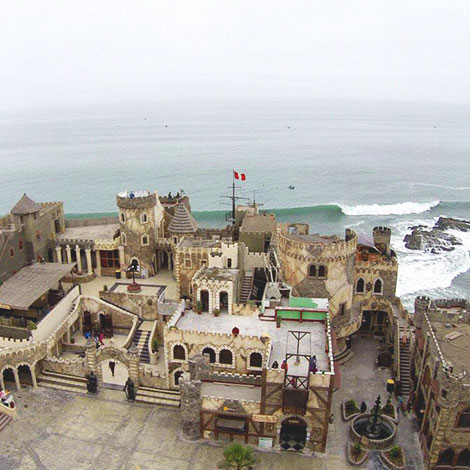
North of Lima, you will find many beaches and other attractions. Travelling north along the Pan-American Highway, just past Ancon, you will find the curious Eco Truly Park (Km 63). This ecological community, administered by a group of Hare Krishnas, is located on the Chacra y Mar Beach (Huaral). Meditation, yoga, vegetarian cooking and a unique style of architecture are some of the things you will find here. Also in this area is the Chancay Castle and many resturants, including Pipo (Km 80), Marcelo (Km 83) and Lachay (Km 105).
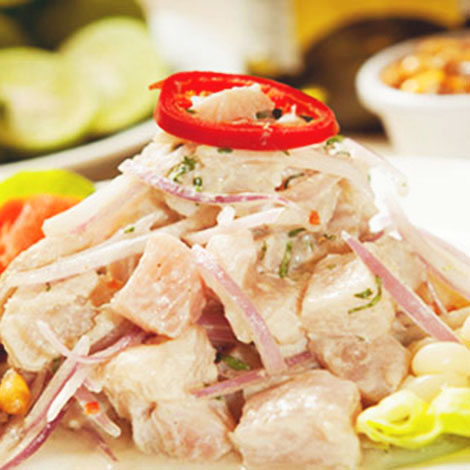
Lima boasts some of the best restaurants in the country, serving not only traditional Peruvian dishes, but cuisines from all over the world. Many of the more upmarket places fill up very quickly, so it's advisable to reserve in advance. In recent years a large number of cafés have sprung up around Miraflores and Barranco, many offering free wi-fi and providing snacks as well as coffee. Lima Centro is less well served by cafés, though there are a few appealing options.
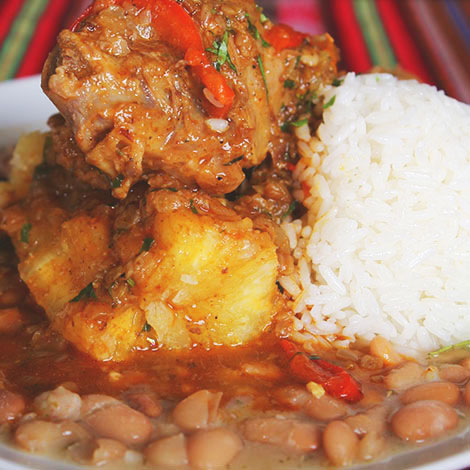
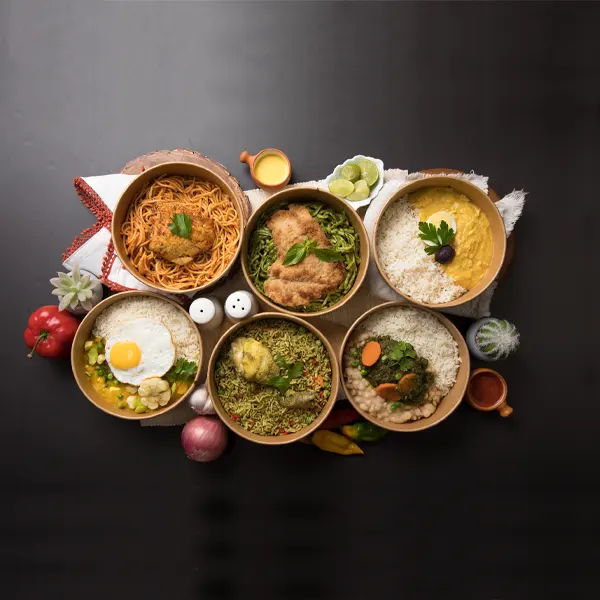
Widely acclaimed as one of the world's great culinary destinations, Lima ¡s a paradise for food enthusiasts. As well as a wide array of delicious meat, rice- and vegetable-based criolla dishes, you'll come across the highly creative novo andino cuisine, often pairing alpaca steaks with berries or cheese sauces from lush Andean farms, and best appreciated in Lima's finest restaurants. Below are a few specialties that your taste buds will thank you for trying. Ceviche Seafood is particularly good in Lima, with ceviche - raw fish or seafood marinated in lime juice and served in dozens of possible formulas with onions, chillis, sweetcorn and sweet potatoes - a must-try.
Chorros a la Chalaca: These spicy mussels are best sampled near the port area of Callao.
Cabrito a la Norteña: This traditional goat feast has made its way to Lima from the northern coast of Peru; as well as tender goat meat, the dish incorporates a sauce made with chicha de jorra (rustic maize beer), yellow chillis, zapallo squash, onions and garlic, plus yuca and lots of fresh coriander, served with rice.
Arroz con Pato a la Chiclayana: From northern Peru, this is a dish of duck and rice prepared as in the city of Chiclayo, with oranges, spices, beer, brandy, peas and peppers. It's such a popular dish you'll probably come across it in all regions of the country.
Asado: A good cut of beef roasted in a red sauce, ususally served with pure de papas (smooth, garlic-flavoured mashed potatoes).
Chicken broaster: The staple at the thousands of broaster restaurants found in every corner of Peru: essentially, spit- or oven-roasted chicken with chips, and often a very meager salad on the side.
Cuy: This is the Inca word for guinea pig, one of the most common foods for Andean country folk, but also something of a delicacy that can be found everywhere from backstreet cafés to the best restaurants in Lima, Cusco and Arequipa. There are various ways to prepare cuy for the plate, but cuychactado (deep-fried) is one of the most common.
Pisco Sour: Pisco is Peru's clear, grape-based brandy, which forms the heart of the national drink - pisco sour. The pisco, crushed ice, fresh lime juice, plus a sweetener and egg white, are whisked together with a bitter added at the end. It's refreshing and sometimes surprisingly potent.
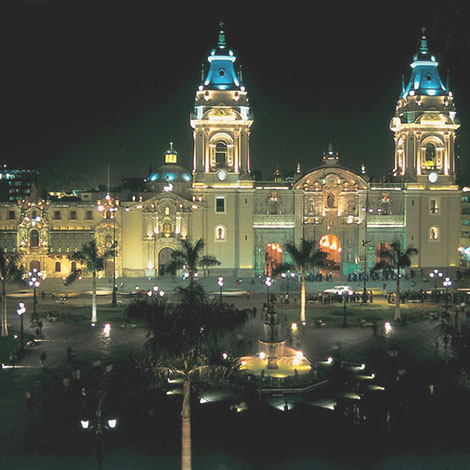
Lima's nightlife is more urban, modern and less traditional than in cities such as Cusco and Arequipa; Barranco is the trendiest and liveliest place to hang out. The city has an exciting club scene, with the majority of its popular bars and discos located out in the suburbs of San Isidro and Miraflores. In the summer months (Jan-March) the party sometimes carries on down the coast to the resort of Asia, 110km south, where there are some surprisingly sophisticated nightclubs.
As far as the live music scene goes, the great variety of traditional and hybrid sounds is one of the best reasons for visiting the capital, with folk qroup peñas Latin jazz, rock, reggae and reggaeton all popular. All forms of Peruvian music can be found here, some - like salsa and Afro-Peruvian (see p.511) - better than anywhere else in the country. Even Andean folk music can be close to its best here (though Puno, Cusco and Arequipa are all more probable contenders).
Entrance charges and policies Most clubs charge an entrance fee of around S/20-50, which often includes a drink and/or a meal. Many clubs have a members-only policy, though if you can provide proof of tourist status, such a passport, you usually have no problem getting in.
Listings The daily El Comercio provides the best Information about music events, and its Friday edition carries a comprehensive nightlife supplement - easy to understand even if your Spanish is limited. Things are at their liveliest on Friday and Saturday nights.
Lima's peñas - some of which only open at weekends and nearly all located in Barranco - are the surest bet for listening to authentic Andean folk, although some of them also specialize in Peruvian criolla, which brings together a unique and very vigorous blend of Afro-Peruvian, Spanish and, to a lesser extent, Andean music These days it's not uncommon for some of Lima's best peñas to feature a fusion of criolla and Latin jazz. Generally speaking, peñas don't get going until after 10pm and usually the bands play through to 3 or 4am, if not until first light.
Lima is also an excellent place to experience the Latin American salsa scene, and there are salsódromos scattered around many of the suburbs. They play a mix of tropical music, salsa, merengue and technocumbia. Most are open Friday and Saturday 10pm-3am.
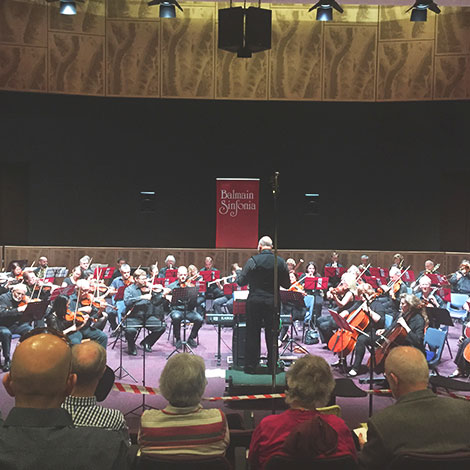
Going to the cinema and theatre is an important part of life in Lima. Peruvians are a well-cultured people with a passion and intuitive understanding of everything from Latin music and fine arts to ancient textiles and traditional Andean dance forms. Peruvian culture is very much alive and most locals know dozens of songs and several folk dances, as well as being able to dance salsa with the best of them. Lima's cultural centers, often associated with one of the local universities, are often the best place to catch innovative films, music shows and drama. The best source of information about film, theatre, sporting events and exhibitions is the daily El Comercio, especially its Friday supplement.
There are clusters of cinemas around the Plaza San Martín, Jirón de la Unión and Avenida Nicolás de Pierola in Lima Centro, on the fringes of the park in Miradores, at Larco Mar and in some of the suburban shopping malls.
Centro Cultural de la PUCP (Universidad La Católica) Av Camino San 1075, San Isidro One of the most active cultural centres in Lima, with innovative theatre, cinema and video, as well as ar exhibitions, a library and cafeteria.
Centro Cultural de la UNMSM (Universidad de San Marcos) Av Nicolás de Piérola 1222, Parque Universitario, Lima Centro. Often presents folk music and dance performances. The centre is run by the Universitario de San Marcos, on the Parque Universitario, and performances are publicized on the noticeboard at the entrance.
Centro Cultural Ricardo Palma Av Larco 770, Miraflores; Often hosts excellent concerts of Andean music, but doesn't have the same participatory feel of the peñas . It does, however, boast a library, two exhibition rooms and occasional cinema festivals, plus jazz, dance and theatre performances.
Lima possesses a prolific and extremely talented theatre circuit, with many of its best venues based in Miraflores. In addition to the major theatres, short performances sometimes take place in the bars of the capital's top theatres. The country's major prestige companies, however, are the National Ballet Company and the National Symphony, both based seasonally at the Teatro Municipal (see below).
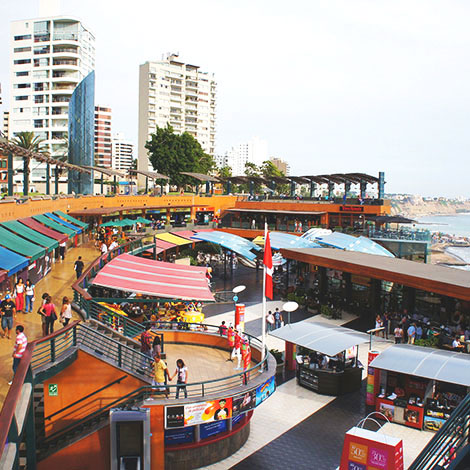
When it comes to shopping in Peru's towns and cities, Lima is the most likely to have what you're looking for. It's certainly your best bet for shoes and clothing, particularly if you want a large selection to choose from. The same is true of electronic goods, stationery and music, though bear in mind that most Limeños who can afford it do their main shopping in Miami. Lima also has a good selection of reasonably priced arts and crafts markets and shops.
Shopping hours The usual shopping hours are Mon-Sat 10am-7pm, though in Miraflores, the main commercial area, many shops and artesanía markets stay open until 8pm and sometimes later. Some shops, but by no means all, shut for a two-hour lunch break, usually 1-3pm, and most shops shut on Sundays, though the artesanía markets avenidas La Marina and Petit Thouars tend to stay open week until 7pm.
Lima’s climate is dry and warm in the areas near the coast. There is high humidity and a lack of rain throughout the year. In areas more than 2,500 metres above sea level, the temperature drops and the climate is cold and wet.
ARID AND SEMI-WARM
| Maximum temperature | Minimum temperature |
| 27°C | 14°C |
| 81°F | 57°F |
Most international travellers enter Lima through Jorge Chavez International Airport. Once in Peru, it is easy to get to and from Lima via aeroplane or bus. Airlines that operate flights to Lima include LAN, TACA, Delta, United, American Airlines, KLM, Jetblue and Air Canada. Average taxi fares from the airport to hotels in Miraflores and Barranco range from S/.40 to S/.60. Most hotels can also arrange transfers by taxi or private car. You can visit Lima International Airport’s website for flight status and information.
Taxis are by far the easiest and fastest mode of transportation in Lima. However, if you plan to be in Lima for an extended period of time, you can opt to take the public transportation option in the form of micros (large public buses), combis (smaller buses or vans) or the Metropolitano (a standardised bus route connecting the centre of Lima to the coastal districts. The public transportation options in Lima are significantly cheaper than taxis, but they can be difficult to navigate if you are not familiar with the layout of the city. If you are only spending a few days in Lima and you want to get around the city quickly, taxis are the best option, but know that fares are not standardised and often the price to get from point A to point B is at the discretion of the driver. Therefore, it is important to negotiate the price before getting in. We recommend asking your hotel to contact a taxi for you.
Different season, different clothes. Remember that what is suitable for a few nights in Lima might be drastically different than what is suitable for the rest of your trip to Peru. The country’s diverse geography, desert coast, high mountains and humid jungle, results in local weather patterns that can vary widely by altitude and region. For summer time in Lima (December through February), make sure you bring sunblock, sunglasses and warm weather clothing. Nights tend to be cool and breezy at this time of year, so it is best to bring a light jacket or sweater. Lima in winter (June through August) is chilly and wet. You will probably want a scarf and hat, jacket, pants and close-toed shoes. For spring (September through November) and autumn (March through May), most people are comfortable with a light sweater or a long sleeved shirt.
The official currency of Peru is the Sol (S/.) which can be found in various denominations. Products, food and services are generally cheaper than in western countries. However, there are upscale restaurants, clubs and bars that set their prices to be on par with those in developed countries. Foreign currency can be changed to Peruvian soles in banks or in exchange houses called casa de cambios.
Major Banks are generally open Monday through Friday from 9am until 6pm and Saturday from 9am until noon. Some branches, especially those located inside shopping malls and supermarkets, are open Monday through Saturday until 8pm or 9pm.
First of all, we would like to mention that it is not customary to tip in Peru as it is in many other countries. As a consequence, most Peruvians do not show their appreciation for good service by leaving a tip. That doesn't mean you should never do it. We recommend you use your judgment when you receive good service and adjust the amount for each situation.
It is a good idea to avoid eating food from street vendors. This is because it is difficult to tell how fresh the food is or if clean water was used during its preparation. Except for brushing your teeth, don’t drink water from the tap. Bottled water is best. Like in most major cities, it is important to be aware of your surroundings at all times. Keep your valuables close and preferably hidden from sight.
South America's Leading Destination Management Company 2025
Peru's Leading Destination Management Company 2025

Peru's Leading Destination Management Company 2024

Peru's Leading Tour Operator 2024

Peru's Leading Destination Management Company 2023

Peru's Leading Tour Operator 2023

Peru's Leading Destination Management Company 2022

Peru's Leading Tour Operator 2022

Peru's Leading Tour Operator 2021

Peru's Leading Tour Operator 2020

Peru's Leading Tour Operator 2019

Peru's Leading Tour Operator 2018

Peru's Leading Tour Operator 2017