Join Machu Travel Peru for an amazing journey in South America. Experience a stunning drive through Volcano Avenue, Ecuador. This famous route features beautiful Andean landscapes, rich indigenous culture, colonial cities, cloud forests, and towering snowcapped mountains.
This interesting area is between Quito and Cuenca. Explorers have been fascinated by it since the 1800s. Alexander von Humboldt was one of the first to describe it. Today, this route is one of the most exciting road trips for nature lovers and adventure seekers. It offers a great mix of beautiful scenery and rich culture in the Andes Mountains.
Here is your complete guide to planning the best volcano route in Ecuador. It includes key stops, activities, and essential driving tips for first-time visitors to Ecuador.
Discover everything about the Volcano road trip in Ecuador
- What is the Avenue of Volcanoes?
- Best time to visit Ecuador’s Avenue of Volcanoes
- Main volcanoes & highlights
- Suggested route
- Best things to do on Ecuador’s Avenue of the Volcanoes
- Best Hotels & Lodges along Volcano Avenue, Ecuador
- Essential road Trip Tips for driving in the Ecuadorian Andes
- Avenue of the Volcanoes: FAQs for Travelers
What is the Avenue of Volcanoes?

The Avenue of the Volcanoes is a majestic stretch of the Andean corridor located in central Ecuador. It runs for about 200 kilometers from Quito to Riobamba. Many travelers also go south to Baños, Alausí, and Cuenca. Humboldt created the term. It describes the amazing chain of volcanoes. Many of these volcanoes are active. They stand over the highland valleys on both sides of the Pan-American Highway.
This region is home to some of the most impressive volcanoes in Ecuador, including:
- Cotopaxi Volcano, one of the highest active volcanoes in the world
- Chimborazo, Ecuador’s tallest peak and the closest point on Earth to the sun
- Rumiñahui, Corazón, Illinizas, Tungurahua, and more
The landscape is a dramatic blend of high-altitude plains, rugged valleys, glacial lakes, Andean páramo ecosystems, forests, and expansive national parks where wildlife such as spectacled bears, condors, deer, llamas, foxes, and wild horses roam freely.
From a cultural perspective, the region remains deeply rooted in Andean traditions. Many small towns preserve vibrant markets, weaving practices, and celebrations linked to the ancestral heritage of the indigenous people who have lived in these mountains for centuries.
In essence, the Avenue of the Volcanoes is both a natural wonder and a cultural treasure, making it one of the top tourist attractions in Ecuador. Join us for this fantastic experience.
Best time to visit Ecuador’s Avenue of Volcanoes

Because Ecuador sits on the equator, its seasons do not follow the typical northern or southern hemisphere patterns. Instead, the weather is influenced primarily by altitude and microclimates.
That said, there is a clear best time to visit Ecuador volcano route and enjoy your travel experience.
June to September (Dry Season)
This is the ideal time for clear skies, better volcano visibility, comfortable driving conditions, and excellent trekking opportunities. Travelers planning outdoor activities like hiking in Cotopaxi National Park or the Quilotoa Loop Ecuador will enjoy crisp days and cold, starry nights.
October to February
The Andes look lush and vibrant, although afternoon showers are common. The rain is usually manageable, and mornings often offer good visibility.
March to May
These months tend to have the heaviest rainfall, reducing visibility and making driving more challenging. Still, prices drop, and cloud forests become incredibly atmospheric. No matter when you visit, temperatures are cool due to the altitude. Layering is essential, and having a waterproof jacket always helps.
If you plan your trip around cultural events, consider Quito’s December festivities or Riobamba’s Holy Week celebrations. These events can add a special cultural touch to your road trip. The best time to visit Volcano Avenue is during the dry season. This is ideal for photography and enjoying great views of volcanoes for an adventure travel in Ecuador.
Main volcanoes & highlights

The Avenue of the Volcanoes is home to nearly a dozen iconic mountains, geological formations, parks, and cultural destinations. Below are the most important highlights you shouldn’t miss:
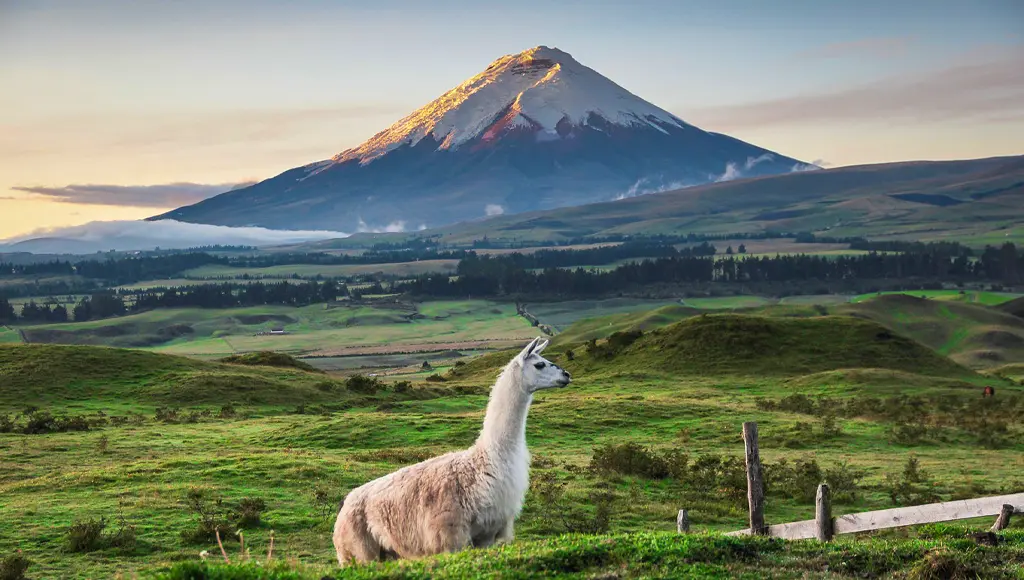
1) Cotopaxi Volcano & Cotopaxi National Park
Cotopaxi is the star of the region, an almost perfectly symmetrical cone rising 5,897 meters above sea level. It’s one of the highest active volcanoes on Earth and a highlight of any Cotopaxi National Park travel guide. Inside the park, visitors can hike to the glacier line. They can see wild horses and enjoy the Limpiopungo Lagoon. They can also watch Andean wildlife in its natural home.
2) Chimborazo
The towering king of the Andes in Ecuador. At 6,263 meters, Chimborazo, Ecuador, isn’t just the country’s tallest volcano; it’s also the point on Earth closest to the sun due to the equatorial bulge. Its slopes offer surreal views and high-altitude hikes.
3) Quilotoa Crater Lagoon
Part of the western Andes, this surreal volcanic caldera filled with turquoise water is among the most photographed places in South America. The Quilotoa Loop in Ecuador is one of the country’s most iconic trekking routes.
4) Tungurahua & Baños
Near the adventure capital of Ecuador, this active volcano frequently emits steam, ash, and rumbling sounds. Baños itself is famous for waterfalls, canyoning, rafting, and relaxing hot springs.
5) Rumiñahui, Illinizas, Corazón and Altar
These mountains create a dramatic skyline along the Andes. All are excellent destinations for trekking, photography, and learning about Andean ecology.
6) Quito: UNESCO World Heritage Site
Ecuador’s capital is the gateway to the entire route. Its historical center has many churches, plazas, and colonial buildings. It is one of the largest and best preserved in the Americas. A city tour is essential before hitting the road.
7) Cuenca city
At the southern end of the route, Cuenca is a beautiful city. It is known for its cobblestone streets, flower markets, museums, and lively local culture. It’s also a UNESCO World Heritage Site.
Together, these highlights make this region one of the most spectacular travel corridors in all of South America.
Suggested Route

This suggested Ecuador road trip itinerary combines scenic drives, cultural immersion, and outdoor adventures. You can complete it in 5 to 10 days, depending on your pace.
Day 1: Quito
- Explore the Historic Center
- Visit the Middle of the World (Mitad del Mundo)
- Evening stroll through La Ronda
Day 2: Cotopaxi National Park (1.5-hour drive)
- Hike around Limpiopungo Lagoon
- Trek to the José Rivas Refuge
- Observe condors and wild horses
- Optional mountain biking descent
Day 3: Quilotoa (2-hour drive)
- Walk the rim of the crater
- Descend to the lagoon or kayak
- Visit nearby artisan villages
Day 4: Latacunga and Baños (3-hour drive)
- Explore the Latacunga markets
- Arrive in Baños for waterfalls & thermal baths
- Optional swing at Casa del Árbol
Day 5: Riobamba (2-hour drive)
- Visit the famous waterfalls route
- Continue toward Chimborazo
Day 6: Alausí and Cuenca (5-hour drive)
- Explore indigenous people’s communities
- Take the Devil’s Nose train (if operating)
- Arrive in Cuenca City for colonial charm
This route includes stunning views, wildlife encounters such as spectacled bears, and the most important volcanoes in Ecuador along the way. It’s the definitive Andean road trip Ecuador adventure.
Best Things to Do on Ecuador’s Avenue of the Volcanoes

The Avenue of the Volcanoes is a paradise for outdoor enthusiasts and travel tips for first-time travelers alike. Expect endless opportunities for:
Hiking and trekking
- Cotopaxi glacier trail
- Illinizas Norte summit
- Chimborazo refuge routes
- Quilotoa crater hike
- Rumiñahui trekking
Adventure sports
- Mountain biking
- Horseback riding
- Paragliding
- Rafting and canyoning in Baños
- Ziplining through cloud forests
Cultural experiences
- Visiting indigenous markets
- Learning about weaving traditions
- Participating in festivals
- Tasting Andean cuisine
- Exploring haciendas and old estates
- Thermal baths & relaxation
Throughout the route, you’ll find hot springs, perfect after long drives or hikes.
Best Hotels & Lodges along Volcano Avenue, Ecuador

Avenue of the Volcanoes accommodations range from eco-lodges to historical haciendas. Here are recommended stops throughout the route:
Quito
- Boutique hotels in the historic center
- Modern stays in La Carolina and La Floresta
Cotopaxi region
- Mountain lodges overlooking Cotopaxi
- Traditional haciendas with fireplaces and Andean decor
Quilotoa & Latacunga
- Rustic inns near the crater
- Cozy guesthouses with local food and warm drinks
Baños
- Spa resorts with thermal pools
- Adventure-focused hostels
- Riobamba / Chimborazo
- Haciendas beneath the volcano
- Scenic mountain lodges
Cuenca City
- Chic boutique hotels
- Colonial-style guesthouses on cobblestone streets
- These offer comfort, Andean charm, and easy access to the region’s best landscapes.
Essential Road Trip Tips for Driving in the Ecuadorian Andes

The Avenue of the Volcanoes is best explored after spending a day or two in Quito. Dress in layers for the changing mountain weather. Carry sunscreen, water, and cash in small bills. Buses exit, using a rental cart or guided tour gives easier access to viewpoints, larger lakes, and lakes and small Andean towns. Top stops include Cotopaxi National Park, Quilotoa crater, and Baños for hot springs and waterfalls.
For any high altitude or glacier climbs, hire a certified guide and plan proper acclimatization. Travel is most beautiful from June to September. However, conditions can change throughout the year. So, being flexible and well-prepared is very important.
Avenue of the Volcanoes: FAQs for Travelers
How long does it take to drive Volcano Avenue in Ecuador?
It usually takes 3 to 4 hours to drive the main part of the Avenue of the Volcanoes. This stretch is between Quito and Riobamba. However, most travelers spend a full day enjoying the views, national parks, and photo stops along the way.
Is Volcano Avenue safe for a self-drive road trip?
Yes, the Avenue of the Volcanoes is generally safe for a self-drive road trip, especially during daylight hours. Workers have paved the main highways, and they remain in good shape. However, travelers should stay alert for changing weather, fog, and winding Andean roads. I recommend renting a reliable vehicle and avoiding night driving.
What is the best time of year to explore Volcano Avenue, Ecuador?
The best time to visit the Avenue of the Volcanoes is during the dry season. This is from June to September. During this time, the skies are clearer.
Hiking trails are easier to access, and the views of the volcanoes are at their best. You can visit the region all year. The weather in the Andes changes fast. Each season has its own unique landscapes.
Can you visit Cotopaxi and Quilotoa on the same route?
Yes, you can visit Cotopaxi and Quilotoa on the same route. Many travelers combine both in a single day trip from Quito, although it makes for a long day. A two-day plan is perfect. It gives you more time to enjoy Cotopaxi National Park. You can hike around the Quilotoa crater and explore local Andean villages along the way.
What towns should you stop in along Volcano Avenue?
Some of the best towns to stop along the Avenue of the Volcanoes include Latacunga, known for its culture and access to Cotopaxi; Saquisili, famous for its traditional Andean market; Lasso, a quiet stop near haciendas and viewpoints; and Riobamba, a gateway to Chimborazo and a great base for exploring the southern Andes. These towns offer local food, culture, and easy access to volcano viewpoints.
Do you need a 4×4 to drive the Avenue of Volcanoes?
No, you don’t usually need a 4×4 to drive the Avenue of Volcanoes. The Pan-American highway and main access roads to Cotopaxi, Quilotoa, and Chimborazo are paved and well-maintained, so a regular car is enough. A 4×4 is only useful if you plan off-road detours or visit remote hiking trailheads.
What wildlife can be seen along Volcano Avenue?
Along the Avenue of the Volcanoes, travelers can spot wild Andean species such as llamas, alpacas. and vicuñas grazing in the highlands. Birdlife is also abundant, including Andean condors, carunculated caracaras, and hummingbirds.
Is it easy to rent a car in Ecuador for this road trip?
Yes, renting a Car in Ecuador is generally straightforward for visitors. You’ll need a valid driver’s license, often an international one, and a credit card. Major cities and airports have many rental agencies to choose from, and road conditions vary, so plan your route carefully and drive cautiously. Also, if you want to explore the route a little more, you can use a Quito travel guide, which will be very helpful.
“TRAVEL WITH PURPOSE AND HOPE”
Traveling through Ecuador’s Avenue of the Volcanoes is an amazing experience in the Andes Mountains. This journey features stunning landscapes, powerful volcanoes, ancient culture, rich biodiversity, and unforgettable adventures.
Cotopaxi National Park is a great place to visit. You can use a travel guide to explore it. There are many popular spots in Ecuador. If you plan a road trip in the Andes, you will create unforgettable memories. Let the mountains guide you. Let the culture inspire you. And let this spectacular road trip show you the best of Ecuador, one volcano at a time.
This place is a land of striking contrasts, from icy peaks and ancient cultures to tropical jungles and surreal landscapes. Knowing the weather and seasons in this place will help you choose the best time to visit. This depends on your travel style and what you expect.
Ecuador offers so many experiences that choosing where to begin can feel overwhelming. At Machu Travel Peru, we can guide you and help shape your journey so you enjoy a memorable adventure your own way. Contact us today to plan your dream adventure!