Caral is one of the most important archaeological sites in Peru, offering a glimpse into a civilization that developed nearly 5,000 years ago on the country’s central coast. Recognized by UNESCO as a World Heritage Site in 2009, Caral provides a remarkable look at one of the earliest centers of civilization in the Americas. Located about four hours from Lima, the archaeological site is known for its monumental pyramids, sunken circular plazas, and carefully planned urban spaces.
This guide covers Caral’s history, what to see, how to get there from Lima, and practical information for planning your visit.
- What is Caral, Peru?
- Why is Caral Significant in the History of the Americas?
- Caral Civilization: History and Development
- What to See at the Caral Archaeological Site
- Monumental Architecture and Pyramids
- Sunken Circular Plazas and Ceremonial Spaces
- Residential Areas and Social Organization
- How to Get to Caral from Lima?
- Planning your Visit to Caral
- Can You Visit Caral as a Day Trip from Lima?
- Is Caral Worth Visiting?
- Frequently Asked Questions
- Conclusion
What is Caral, Peru?
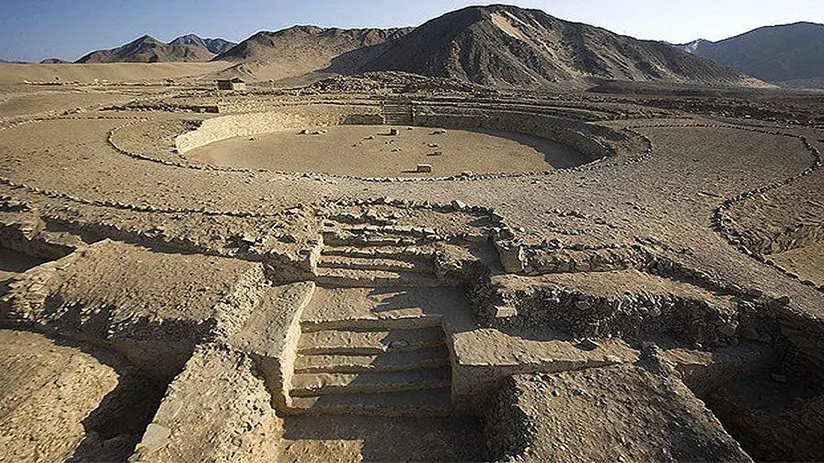
Caral is an ancient urban and archaeological site in Peru’s Supe Valley, about 200 km (124 miles) north of Lima. Known as the Sacred City of Caral-Supe, Caral was the center of one of the earliest civilizations in the Americas, dating back approximately 5,000 years. The site features monumental pyramids, plazas, and residential structures that reveal the complexity of this early society.
Why is Caral Significant in the History of the Americas?
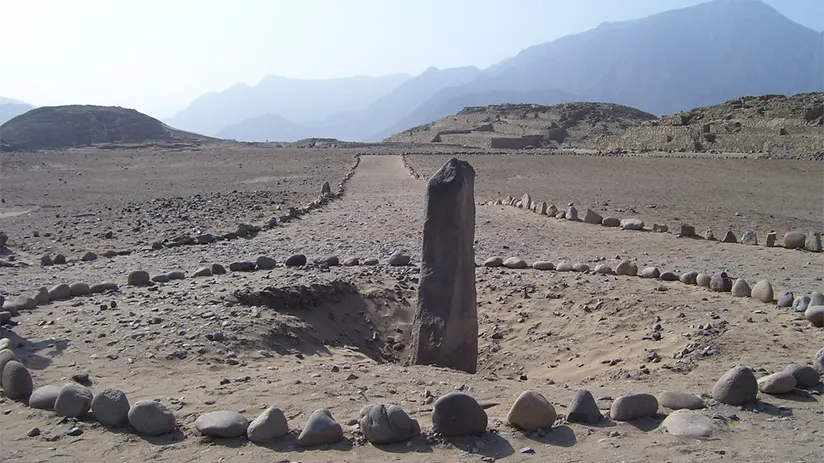
Its monumental architecture and carefully planned urban layout provide evidence of a highly organized society, making Caral an important site for understanding the development of early urban communities in the Americas. In recognition of its archaeological and cultural importance, Caral was designated a UNESCO World Heritage Site in 2009.
Caral predates later monumental centers such as the Chan Chan archaeological site, highlighting the long history of urban development in ancient Peru.
Caral Civilization: History and Development
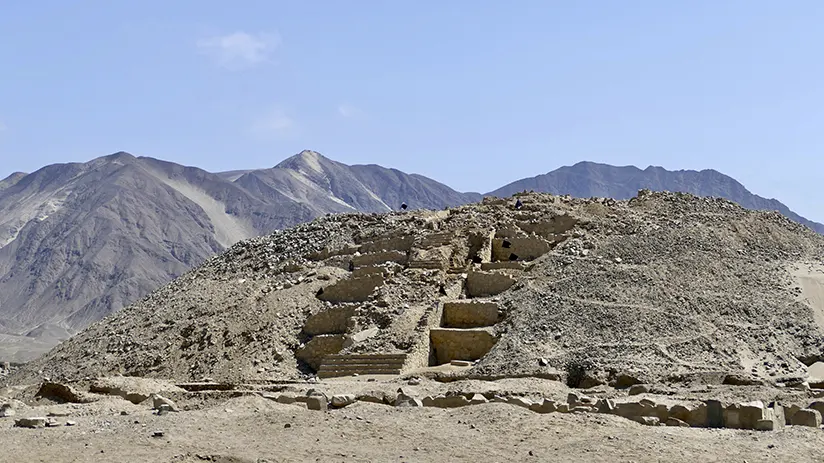
Origins and Development
Caral developed in the Supe Valley on Peru’s central coast around 3000 BC, during the Late Archaic Period of the Central Andes. Over the following centuries, Caral developed from established communities into a large urban center, with public spaces, residential areas, and monumental structures. Its growth reflects the emergence of complex social organization and large-scale construction in the Americas, long before the rise of later Andean civilizations.
The development of Caral was part of a broader network of settlements in the Supe Valley and nearby areas. Caral became one of the most important centers within this network, while other settlements, including Áspero on the coast, were connected through exchanges of resources and knowledge.
Economy and Environment
The environment of the Supe Valley played an important role in the development of these communities. Although the surrounding coastal region is largely arid, the Supe River provided water for agriculture and supported permanent settlements. Agriculture in the valley was complemented by marine resources from the nearby Pacific coast, particularly fish and shellfish.
These connections supported an economy based on agriculture, fishing, and the exchange of resources between inland and coastal communities. Evidence of long-distance exchange also suggests that Caral maintained connections with other regions, helping support the development of a large and interconnected society.
Society and Cultural Practices
Caral’s development reflects a society with distinct roles and organized communal activities. Public and residential spaces indicate that different groups participated in activities related to administration, agriculture, fishing, construction, trade, and religious or ceremonial practices. However, the exact structure of Caral society remains an area of ongoing archaeological research.
What to See at the Caral Archaeological Site

The Sacred City of Caral is best explored by visiting its main monumental complexes and public spaces. These features reveal how the ancient city was organized and provide insight into the daily and religious life of its inhabitants.
Among the highlights are the Great Pyramid, sunken circular plazas, monumental platforms, and residential compounds. The site also preserves archaeological evidence of musical traditions and other practices that provide insight into daily and ceremonial life in Caral.
The main architectural features are explained in more detail below, including the pyramidal structures, circular plazas, residential areas, and archaeological discoveries associated with the site.
Travelers interested in Peru’s ancient civilizations can also visit the Pachacamac archaeological complex, located south of Lima and associated with several different periods of Andean history.
Monumental Architecture and Pyramids
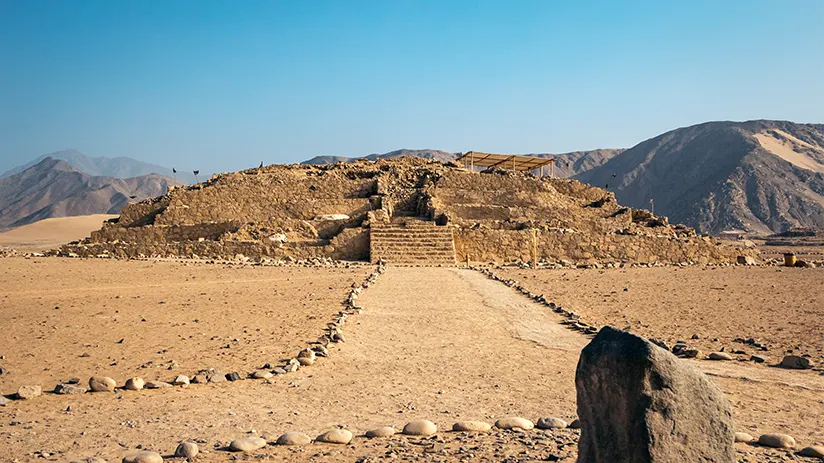
The Sacred City of Caral features a combination of pyramidal structures, residential compounds, and ceremonial spaces. Rather than functioning as isolated buildings, these elements formed part of a carefully planned urban center, with different areas serving communal, ceremonial, residential, and administrative purposes.
Pyramidal Structures and Public Spaces
The Great Pyramid and other large platform structures dominate the city’s main public areas. Their elevated platforms, stairways, and adjoining plazas created spaces for gatherings and ceremonial activities, while their scale demonstrates the construction capabilities of the Caral-Supe society.
Sunken Circular Plazas and Ceremonial Spaces
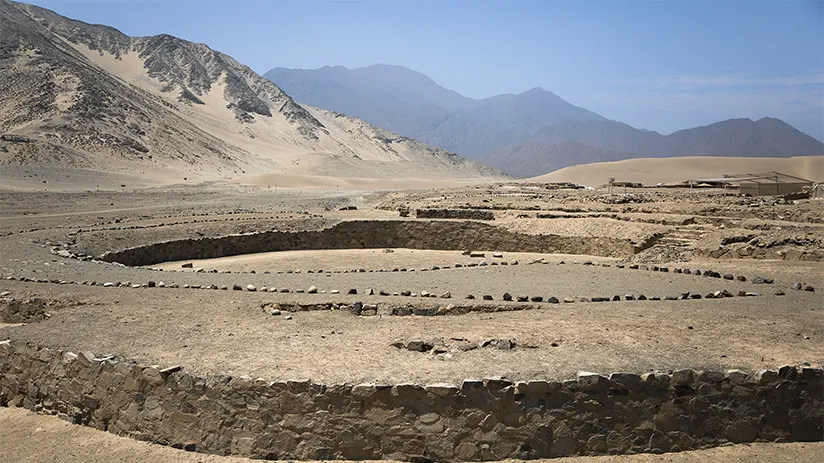
Sunken circular plazas are distinctive elements of Caral’s architecture. Located in front of or alongside monumental structures, these spaces were connected by stairways and likely accommodated collective activities and ceremonies. Their repeated use across the settlement reflects the importance of shared public spaces within Caral’s urban design.
Residential Areas and Social Organization
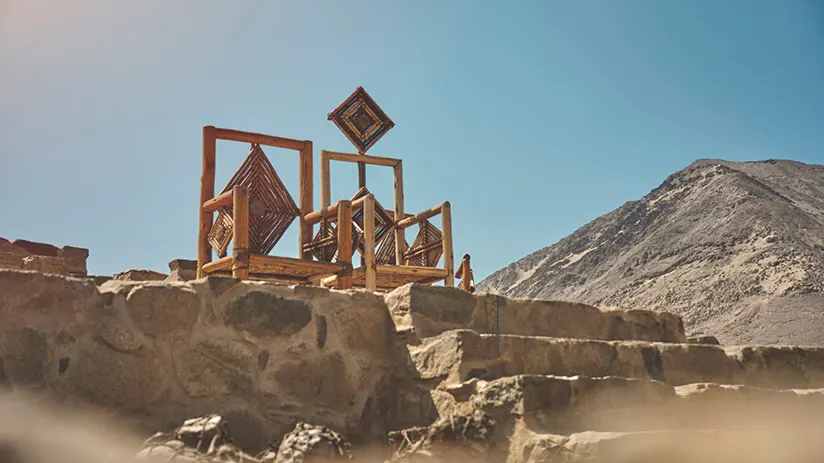
Residential compounds were integrated into the broader urban layout alongside monumental and ceremonial spaces. Differences in the size and design of these complexes suggest that different groups occupied different areas of the city, providing evidence of social distinctions within Caral society.
Music and Ceremonial Life
Archaeological discoveries provide additional evidence of Caral’s ceremonial and cultural practices. Researchers have found sets of transverse flutes, cornets, and antaras at the site, while a quipu provides evidence of early information recording practices in the Andes. These finds add another dimension to the architectural evidence of life at Caral.
How to Get to Caral from Lima?
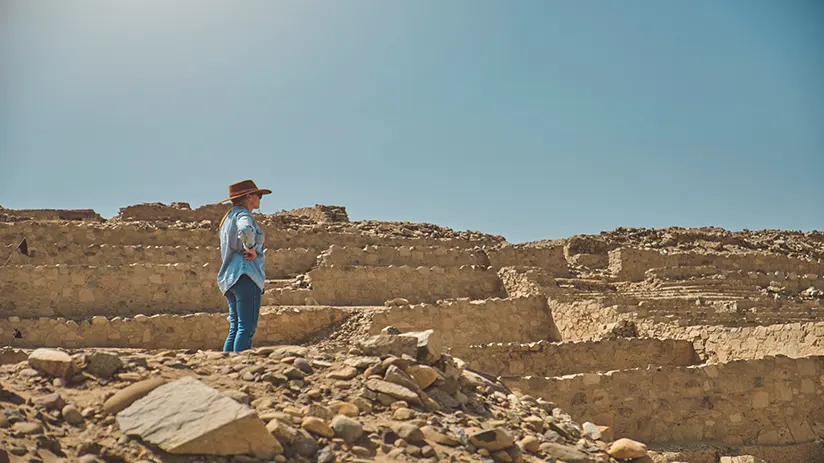
Travelers can reach the Sacred City of Caral from Lima by private vehicle or public transportation. The journey follows the Panamericana Norte to Supe, from where travelers can continue to the archaeological site by taxi or other local transportation.
By Private Vehicle
Drivers traveling from Lima should take the Panamericana Norte and continue north to km 184, where a signed turnoff leads toward Caral. After approximately 23 km, the road reaches the town of Caral. From there, follow the signs toward the tourist station area and continue to the pedestrian bridge. The final section by private vehicle requires a walk of approximately 20 minutes to reach the Reception Center.
River Crossing
Access conditions can vary depending on river levels. The main route uses the pedestrian bridge, requiring a walk of about 20 minutes to the Reception Center. An alternative route across the river is typically available during the dry-river months, generally from mid-May to mid-November. Check current road and river conditions with the official Zona Arqueológica Caral website before traveling.
By Public Transportation
To travel by public transportation, take a bus from Lima heading north along the Panamericana Norte and continue toward Supe or Barranca. From the km 184 area, local taxis or colectivos can take you toward Caral.
Depending on road conditions and the service available, local taxis or colectivos may be able to take you closer to the archaeological site’s Reception Center. Some services may instead drop passengers near the pedestrian entrance. If you prefer to have transportation arranged for the return journey, you can agree on a round-trip taxi service with the driver in advance. Return colectivo services may have limited schedules, so confirm the available options locally before starting your visit.
Planning Your Visit to Caral

The following information will help you plan your visit to Caral.
Visiting Information
Opening hours: Daily from 9:00 a.m. to 5:00 p.m. Last admission is at 4:00 p.m.
Entrance fees: Admission fees vary by visitor category, including adults, students, and other groups. Check the official Zona Arqueológica Caral website for current entrance fees before your visit.
Guided Visits: Cultural interpretation services are available, and the main visitor circuit takes approximately 1.5 hours. The site follows marked visitor routes designed to protect the archaeological remains.
Terrain and accessibility: The visitor circuit follows mostly flat paths at low elevation, although much of the site is exposed to the sun.
Best Time to Visit Caral
Caral can be visited year-round, but weather and access conditions can vary throughout the year. The site is located in an arid coastal environment, so much of the visitor circuit is exposed to the sun. Comfortable clothing, sun protection, and plenty of water are especially important during warmer periods.
River conditions are another practical consideration when traveling to Caral. During periods of higher water levels, access by vehicle can change, and visitors may need to park near the tourist station and continue on foot across the pedestrian bridge. If you are traveling independently, check current road and access conditions before leaving Lima.
What to Bring
- Comfortable shoes
- Water, a hat, and sunscreen for protection from the sun
- Passport or ID
- Some cash in soles for the entrance fee (if visiting independently)
Practical Considerations
- Arrive with enough time to explore the site before the last admission
- Stay on the marked trails and avoid entering restricted areas.
- Hiring a local guide can help you better understand the history and layout of the archaeological site.
Can You Visit Caral as a Day Trip from Lima?

Yes, Caral can be visited as a day trip from Lima, but it requires an early start and a full day. The drive to the archaeological site takes several hours each way, so travelers should plan enough time for transportation, exploring the site, and the return journey to Lima before the end of the day.
When planning the excursion, check the site’s current visiting schedule and admission requirements in advance. If traveling independently, arrange transportation to and from Caral ahead of time, especially when relying on public transportation. An organized tour can simplify the day by combining transportation, site access, and a guided visit in one itinerary.
Is Caral Worth Visiting?
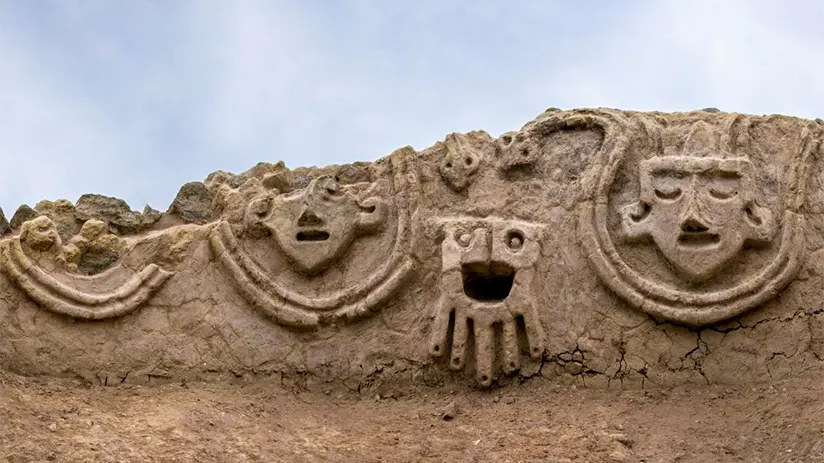
Caral is particularly worthwhile for travelers interested in early Andean history and large-scale monumental architecture. Unlike later sites in Peru, Caral dates to the Late Archaic Period and offers a glimpse into urban life nearly 5,000 years ago. Its proximity to Lima also makes it a practical full-day archaeological excursion for travelers with enough time in the capital.
Travelers with an interest in Peru’s ancient cultures can also visit the Larco Museum in Lima, which provides additional context about the country’s pre-Columbian history and archaeological heritage
Frequently Asked Questions
Who built Caral?
Caral was developed by the society now known as the Caral-Supe civilization. Between about 3000 and 1800 BC, communities in the Supe Valley built monumental urban settlements, with Caral becoming the largest and most complex known center in the valley.
How old is Caral?
Caral dates back approximately 5,000 years. Archaeological research places its development between about 3000 and 1800 BC, during the Late Archaic Period of the Central Andes.
What was Caral for?
Caral served as an important urban, ceremonial, and administrative center in the Supe Valley. Its public spaces and large structures supported communal activities and ceremonies, while its connections with other settlements helped sustain the broader Caral-Supe society.
The city was occupied and developed over roughly a millennium, from around 3000 to 1800 BC, making it one of the earliest known examples of large-scale urban development in the Americas.
What did people in Caral eat?
People in Caral relied on both agriculture and marine resources. Coastal communities, particularly those associated with Áspero, relied heavily on fish and shellfish from the Pacific Ocean. Anchoveta was an important food resource and could be dried and preserved, making it easier to store and transport to inland settlements. This exchange between agricultural communities in the valley and fishing communities along the coast was an important part of the Caral-Supe economy.
How was Caral discovered?
Caral was known before its age and importance were fully understood. In 1994, Peruvian archaeologist Ruth Shady began systematic research in the Supe Valley, followed by excavations at Caral in 1996. Her research helped establish the site’s remarkable antiquity, monumental architecture, and urban complexity, transforming understanding of early urban development in the Americas.
What happened to the Caral civilization?
Between 2000 and 1800 BC, Caral and other urban centers in the Supe Valley experienced a period of decline. Researchers have proposed that prolonged droughts and environmental changes contributed to the decline of Caral and other settlements in the Supe Valley. Reduced water availability may have affected agriculture and the systems that supported these urban centers.
Over time, many people left these settlements and moved to areas with better access to water, food, and other resources, including locations closer to the coast. Caral eventually lost its central role in the valley, although later communities continued some of the region’s exchange networks and cultural traditions in new settlements.
Conclusion
Caral offers a unique perspective on the development of early urban societies in the Americas. Its monumental pyramids, sunken circular plazas, residential areas, and archaeological remains provide insight into the organization and cultural practices of the Caral-Supe civilization, which developed on Peru’s central coast thousands of years ago.
For travelers based in Lima, Caral can be visited as a full-day archaeological excursion, provided enough time is allowed for transportation and exploring the site. Whether you travel independently or with an organized tour, checking current access conditions and planning your transportation in advance can make the visit easier and more enjoyable.
Planning a visit to Caral? If you would like to include Caral in your Peru itinerary, Machu Travel Peru can help you arrange transportation and combine your visit with other destinations in the region. Contact us and start planning your Peru adventure!