The Galapagos Marine Reserve is home to more than 2,900 marine species, including sea lions, marine iguanas, green sea turtles, Galapagos penguins, hammerhead sharks, whale sharks, dolphins, and manta rays. Its unique ocean currents make it one of the world’s richest marine ecosystems. Learning about the islands’ underwater ecosystems helps visitors appreciate why the Galapagos is one of the world’s most important marine conservation areas. This guide will provide interesting details about the Galapagos marine life.
Discover the fascinating Galapagos National Park marine life
- Why the Galapagos Marine Life Is Unique
- The Most Iconic Marine Animals in the Galapagos
- The Best Places to See Marine Life in the Galapagos
- Snorkeling and Diving in the Galapagos
- The Best Time to See Galapagos Marine Life
- Conservation and the Galapagos Marine Reserve
- Responsible Galapagos Wildlife Viewing Tips
- FAQs About Galapagos Marine Life
Why the Galapagos Marine Life Is Unique

Few places on Earth offer the chance to swim alongside sea lions, penguins, turtles, and schools of hammerhead sharks in the same trip. The marine environment of the Galapagos Islands is unique due to the singular conditions it offers for the development of aquatic life. Cold, nutrient-rich currents collide with tropical waters, creating an ideal environment for marine life. For example, visitors can see the Galapagos penguin, an endemic species that normally thrives in cold waters, living alongside tropical marine life.
The Galapagos Marine Reserve covers approximately 133,000 km², making it much larger than the archipelago’s land area. Its enormous size supports an extraordinary diversity of marine life, 17% of which is endemic, meaning it is found nowhere else. Some notable examples include the marine iguana and the Galapagos fur seal. This extraordinary biodiversity inspired Charles Darwin’s observations on evolution and continues to fascinate scientists today.
The Most Iconic Marine Animals in the Galapagos

The Galapagos is home to hundreds of species, making it impossible to list them all. Some stand out for their unique adaptations, striking appearance, and memorable wildlife encounters they offer visitors. Many of them can be seen on a Galapagos trip through activities such as diving and snorkeling. Here are some of the most emblematic animals of the area:
Galapagos Sea Lions
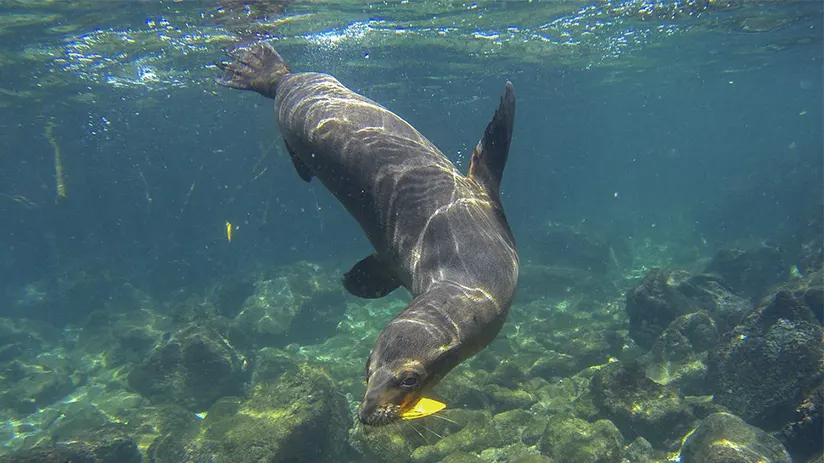
- Common Name: Galapagos Sea Lion
- Scientific Name: Zalophus wollebaeki
- Family and Group: Otariidae (Eared Seals), Marine Mammal
- Conservation Status: Endangered (IUCN)
- Habitat: Sandy beaches, rocky shores, docks, and coastal waters throughout the Galapagos Islands.
Galapagos sea lions are an endemic and sociable species of the area. They have a population of approximately 50,000 individuals throughout the archipelago, particularly on beaches and docks. On guided tours, there are many opportunities to see them in large colonies. They are also frequently seen at dive sites, where they often interact with snorkelers and divers.
Marine Iguanas

- Common Name: Marine Iguana
- Scientific Name: Amblyrhynchus cristatus
- Family and Group: Iguanidae, Reptile
- Conservation Status: Vulnerable (IUCN)
- Habitat: Rocky coastlines, lava shores, mangroves, and intertidal zones across the Galapagos Islands.
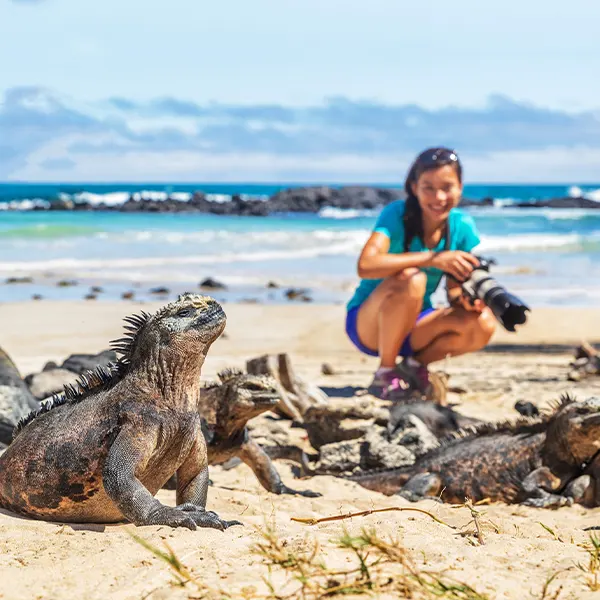
Another species found only in the Galapagos is the marine iguana, iconic for its swimming ability. Unlike land iguanas, these marine reptiles adapted to the marine environment to feed. These creatures venture into the water to feed on underwater algae and survive. They have even evolved special nasal glands that allow them to expel excess salt by sneezing.
Visitors can often spot them gathered in large colonies basking in the sun. Their preferred resting places are rocky shores, black sand beaches, and mangroves. Different islands are home to distinct subspecies that vary in size and color.
Sea Turtles
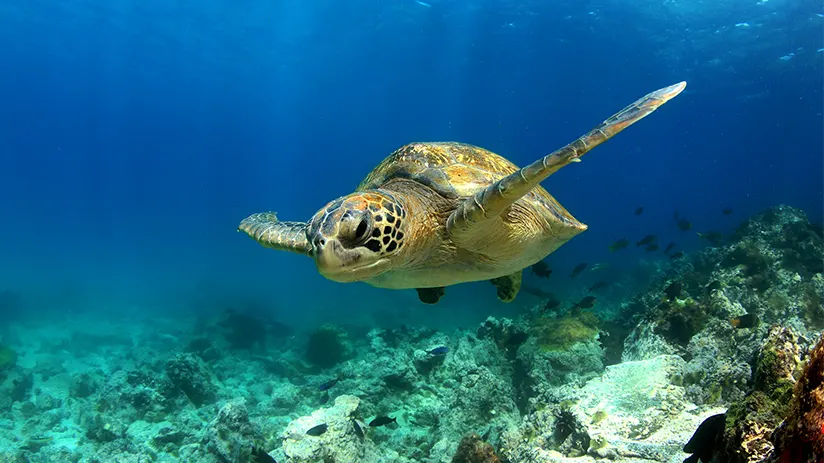
- Common Name: Galapagos Green Sea Turtle
- Scientific Name: Chelonia mydas agassizii
- Family and Group: Cheloniidae, Marine Reptile
- Conservation Status: Endangered (IUCN)
- Habitat: Coastal bays, coral reefs, seagrass beds, and nesting beaches throughout the archipelago.
The Galapagos green sea turtle is the only turtle species that breeds and nests in the Galapagos Islands. They are gentle herbivores, and their diet consists mainly of algae and seagrass. They are strong swimmers, as they move with great ease in the shallow waters of the bays. While exploring the islands, visitors can encounter them alongside divers and snorkelers near most of the islands.
Galapagos Penguins
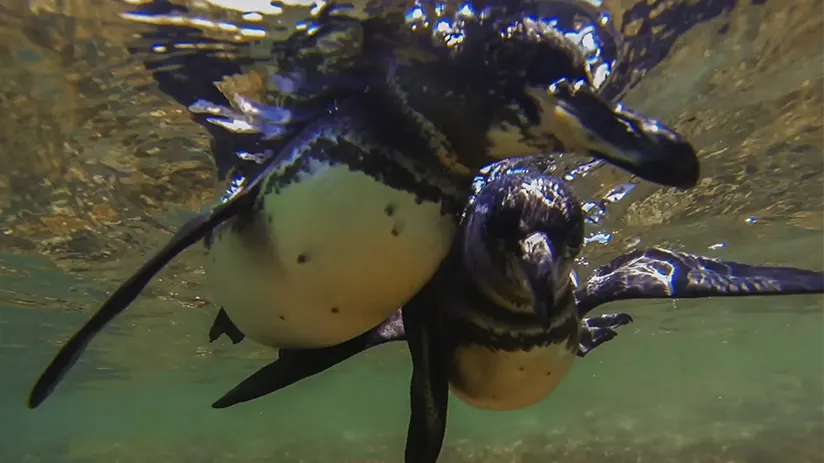
- Common Name: Galapagos Penguin
- Scientific Name: Spheniscus mendiculus
- Family and Group: Spheniscidae, Seabird
- Conservation Status: Endangered (IUCN)
- Habitat: Rocky coastlines, lava cliffs, caves, and cool western waters around Fernandina and Isabela Islands.
Another endemic species of the Ecuadorian archipelago is the Galapagos penguin, the only penguin species that lives naturally north of the equator. These penguins survive thanks to the cold currents and their adaptability, spending long periods in the cool water and seeking shade. To observe this Galapagos bird, head to the western islands, where they nest in lava caves or volcanic fissures.
Galapagos Sharks and Rays
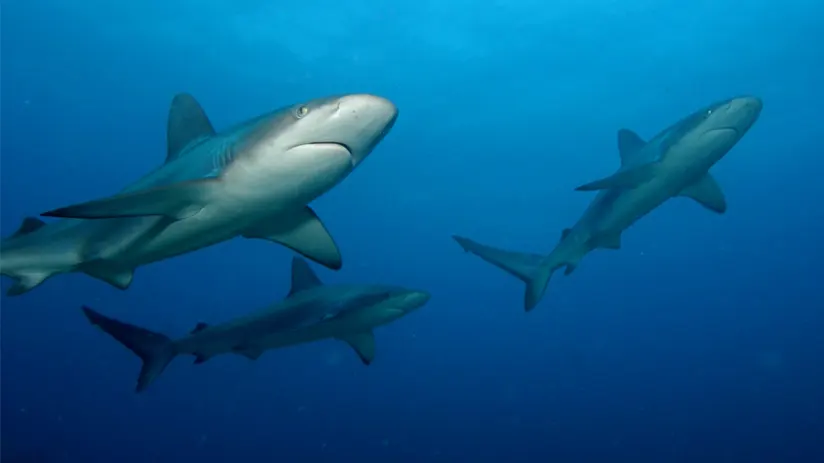
More than 50 species of sharks and rays also inhabit the Galapagos Marine Reserve. These large marine predators can be intimidating at first glance, but they are further evidence of the vibrant South American biodiversity in these waters. Experienced divers often describe Wolf and Darwin Islands as world-renowned shark diving destinations. Sightings of them usually require advanced dives around the northern islands, lasting approximately one day. Among the most notable species are:
- Scalloped hammerhead sharks (Sphyrna lewini)
- Galapagos sharks (Carcharhinus galapagensis)
- Whale sharks (Rhincodon typus)
- Whitetip reef sharks (Triaenodon obesus)
- Galapagos horn sharks (Heterodontus quoyi)
- Giant oceanic manta rays (Mobula birostris)
- Spotted eagle rays (Aetobatus narinari)
- Golden cownose rays (Rhinoptera steindachneri)
Galapagos Dolphins and Whales

Other impressive marine species in the Galapagos are whales and dolphins. More than 20 species of these animals inhabit the waters of this marine reserve. Their observation depends largely on ocean currents, and many multi-day cruises take advantage of these currents to see them. Below are some examples of these resident and migratory mammals:
- Bottlenose Dolphins (Tursiops truncatus)
- Common Dolphins (Delphinus delphis)
- Bryde’s Whales (Balaenoptera brydei)
- Orcas (Orcinus orca)
- Humpback Whales (Megaptera novaeangliae)
- Blue Whales (Balaenoptera musculus)
- Sei Whales (Balaenoptera borealis)
Galapagos Mollusks and Crustaceans
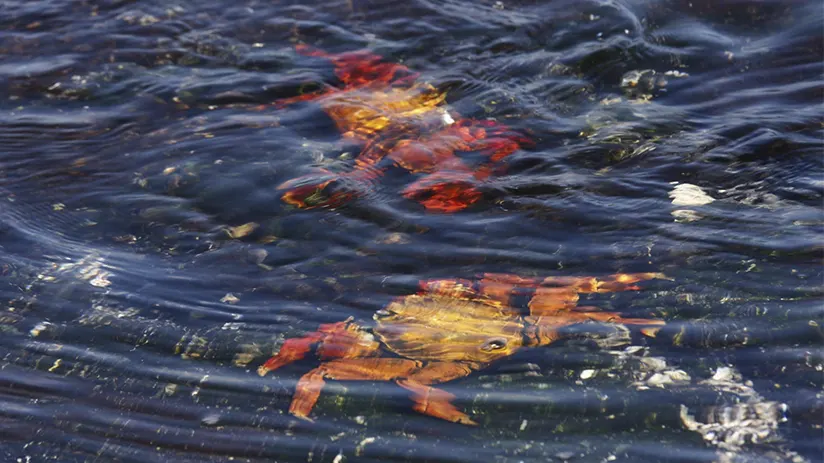
The Galapagos Islands boast fascinating marine life and immense biodiversity, reflected in their mollusks and crustaceans. The diversity is exceptional, especially since some of these species are endemic to the islands. Snails, sea slugs, clams, octopuses, squid, crabs, and much more can potentially be seen during an exploration. Here are some interesting local species:
- Canchalagua (Radsia goodallii)
- Black Clam (Anadara tuberculata)
- Pearl Oyster (Pinctada)
- Galapagos Octopus (Microeledone galapagensis)
- Diamond Squid (Thysanoteuthis rhombus)
- Argonauta (Argonauta argo)
- Sally Lightfoot Crab (Grapsus grapsus)
- Galapagos Lobster (Panulirus penicillatus)
Other Galapagos Marine Wildlife
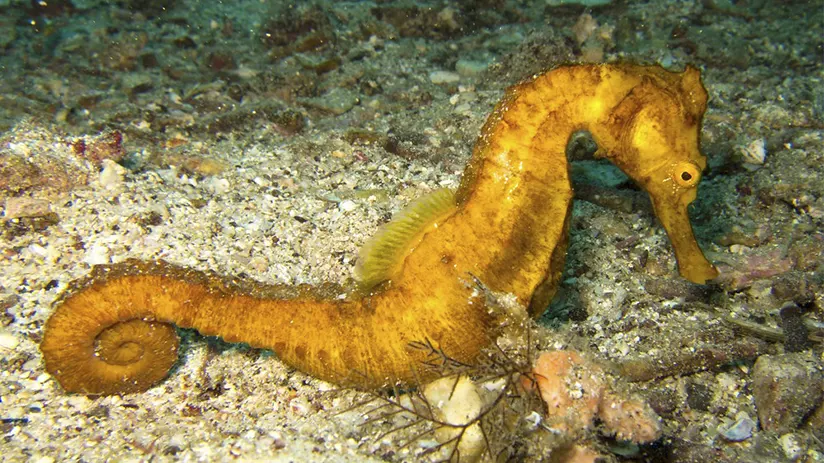
The list goes on, and discovering it is one of the best things to do in the Galapagos. Although marine invertebrates outnumber them, fish stand out as a group of high diversity. If you want to explore the complete list and its richness, it’s recommended to consult the official Galapagos National Park website. Here are some other interesting species to discover:
- Galapagos fur seal (Arctocephalus galapagoensis)
- Blue-footed booby (Sula nebouxii)
- Flightless cormorant (Phalacrocorax harrisi)
- King angelfish (Holacanthus passer)
- Mola mola ocean sunfish (Mola mola)
- Red-lipped batfish (Ogcocephalus darwini)
- Pacific seahorse (Hippocampus ingens)
The Best Places to See Marine Life in the Galapagos
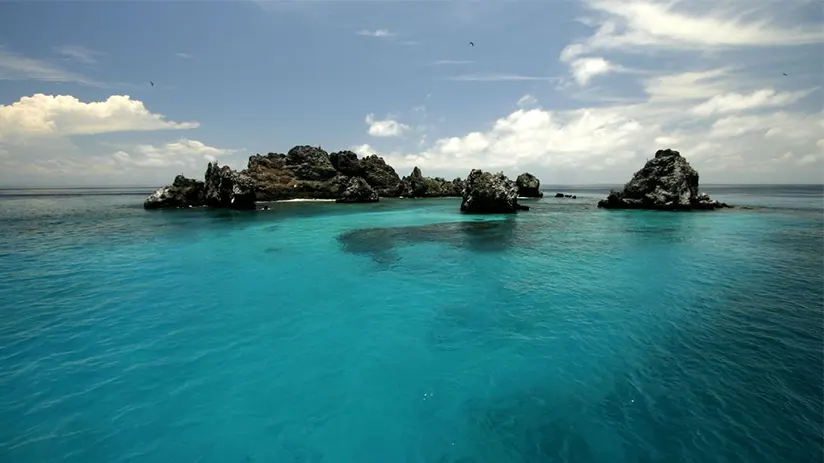
After identifying the animals you might like to see, it’s necessary to determine which areas are suitable. Therefore, the best marine locations in the Galapagos will depend on the species you wish to see. From swimming with small fish near Isabela Island to snorkeling alongside whale sharks at Darwin Island, there are iconic spots. Here are some interesting locations and highlights of the Galapagos:
- Kicker Rock (León Dormido, San Cristóbal): One of the most famous snorkeling and diving sites in the Galapagos, Kicker Rock is renowned for its crystal-clear waters and abundant marine life. Visitors commonly encounter Galapagos sharks, sea turtles, spotted eagle rays, and large schools of colorful fish while exploring the dramatic volcanic rock formations.
- Darwin’s Arch (Darwin Island): Considered one of the world’s premier scuba diving destinations, Darwin’s Arch attracts experienced divers hoping to witness spectacular schools of scalloped hammerhead sharks, whale sharks, and giant manta rays. Strong currents and exceptional biodiversity make this an unforgettable underwater adventure.
- Punta Espinosa (Fernandina Island): Punta Espinosa is one of the best places to observe endemic wildlife both above and below the water. Snorkelers and visitors can often see marine iguanas, Galapagos penguins, sea turtles, and the flightless cormorant in one of the archipelago’s most pristine environments.
- Devil’s Crown (Floreana Island): Formed by the remains of an ancient volcanic crater, Devil’s Crown is one of the Galapagos’ top snorkeling sites. Its nutrient-rich waters are home to playful sea lions, whitetip reef sharks, eagle rays, sea turtles, and vibrant tropical fish, making every snorkeling excursion unique.
- Punta Vicente Roca (Isabela Island): Located along the western coast of Isabela Island, Punta Vicente Roca is famous for its cooler waters created by the Cromwell Current. These conditions attract Galapagos penguins, mola mola (ocean sunfish), sea turtles, and several species of seahorses that thrive in this nutrient-rich habitat.
- Isla Lobos (San Cristóbal): Perfect for beginner snorkelers and wildlife enthusiasts, Isla Lobos offers calm waters and frequent encounters with Galapagos sea lions. Visitors also have excellent chances of spotting green sea turtles, rays, colorful reef fish, and nesting blue-footed boobies along the shoreline.
Snorkeling and Diving in the Galapagos

Snorkeling and diving are the best activities for seeing marine animals of the Galapagos. Both are popular among visitors due to the many advantages they offer, most notably the close-up observation of wildlife. Discovering this aspect of South American wildlife offers close wildlife encounters, as it allows you to experience one of the world’s most biodiverse marine ecosystems.
Snorkeling in the Galapagos is a relaxing experience suitable for different skill levels. Most excursions are organized as boat trips from the main islands, such as Santa Cruz, San Cristóbal, Isabela, and Floreana. No certification is required, and the experience is generally suitable for most visitors. Some of the species you might see include sea lions, colorful fish, marine iguanas, and Galapagos penguins, although their visibility will depend on the specific area.
Scuba diving, on the other hand, is better suited to experienced divers because the currents can be unpredictable. These excursions last a day and offer access to deeper marine habitats, allowing you to explore the waters at greater depths. Among its main highlights are the observation of huge schools of hammerhead sharks and whale sharks.
The Best Time to See Galapagos Marine Life
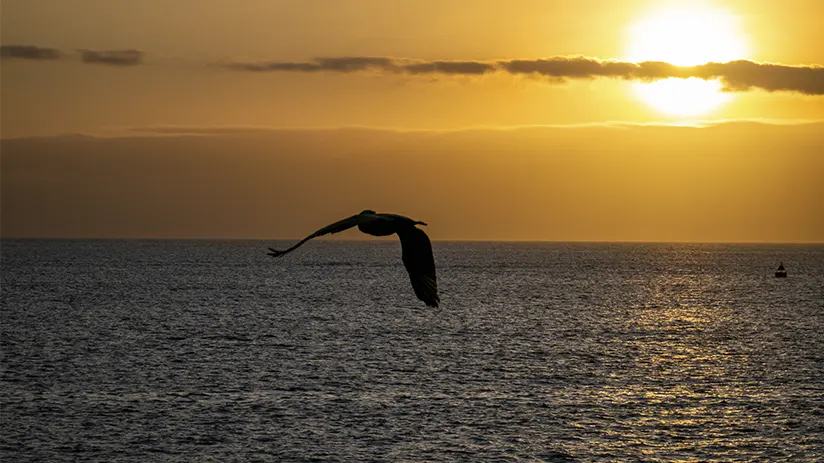
The Galapagos Islands have two seasons throughout the year for marine wildlife viewing: the warm season and the dry season. The warm season (December to May) offers better visibility and warmer waters, ideal for snorkeling. The dry season (June to November) provides a greater chance of seeing fish and mammals such as sharks and whales. Just like the best time to visit Ecuador, choosing one or the other will depend on the traveler’s interests. Here’s a brief overview of each season to help you decide:
| Warm Season | Dry Season | |
| Months | December to May | June to November |
| Top Marine Wildlife | Sea turtles (nesting), marine iguanas (nesting/feeding), manta rays, hammerhead sharks. | Whale sharks, Galapagos penguins, sea lion pups, playful fur seals, massive schools of fish. |
| Weather Conditions | Sunny, warm, with occasional tropical rain showers. Air temperature is high. | Cooler, overcast, and misty (locally known as garúa). Windier days. |
| Best For | Snorkeling comfortably without thick wetsuits, underwater photography (great light), and calm seas. | Seeing large marine animals (whale sharks) and highly active, playful sea mammals. |
| Water Temperature | Warm and tropical 24ºC to 28ºC / 75ºF to 82ºF | Cooler and refreshing 18ºC to 22ºC / 64ºF to 72ºF |
| Water Visibility & Currents | Generally clear water with calm, gentle sea currents. | Nutrient-rich water (can be slightly greener/murkier) with stronger, choppy currents. |
| Key Marine Behavior | Courtship, mating, and egg-laying for green sea turtles and marine iguanas. | Intense feeding activity due to the cold, nutrient-packed Humboldt Current. |
Conservation and the Galapagos Marine Reserve

The authorities managing the Galapagos Marine Reserve are constantly implementing measures to protect biodiversity. Patrols, monitoring of industrial fishing, and regional agreements help safeguard the many species. However, the main measure is the zoning and division of the area to separate zones for artisanal fishing, regulated tourism, and protected areas.
Technological surveillance using drones and satellite tracking also helps protect the area from foreign industrial fleets. Another important strategy is tourism management, which limits the number of visitors and vessels per day. This also requires biosecurity protocols to prevent the introduction of invasive species.
Responsible Galapagos Wildlife Viewing Tips
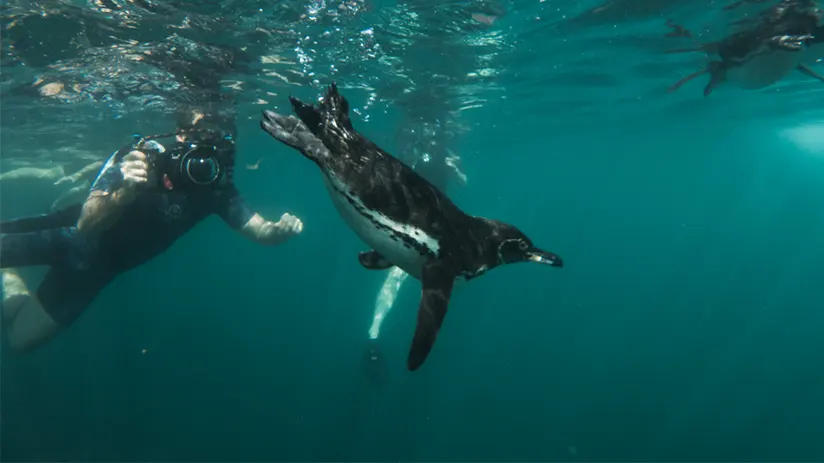
Respecting the wildlife of the Galapagos is essential while exploring the islands. Among the strict regulations are measures that promote this, such as maintaining a minimum distance of 2 meters from wildlife. Hiring a specialized agency can provide practical guidance for responsible exploration. In any case, here are some key guidelines for protecting wildlife:
- Maintain a distance of at least 2 meters from all wildlife
- Hire a licensed and authorized guide
- Do not touch or feed the animals
- Do not buy souvenirs made from native plants
- Use reef-safe sunscreen
- Turn off your camera’s flash
FAQs About Galapagos Marine Life

What marine animals live in the Galapagos Islands?
The archipelago is home to a staggering variety of species, including sea lions, marine iguanas, green sea turtles, manta rays, and an impressive array of Galapagos underwater wildlife. You can also spot unique birds like the flightless cormorant and the famous Galapagos penguin.
What is the most famous marine life in the Galapagos?
While the giant tortoises rule the land, the most famous underwater stars are the playful Galapagos sea lions, the marine iguanas (the world’s only ocean-feeding lizard), and the rare Galapagos penguin, which holds the title of being the only penguin species found north of the equator.
Can you swim with sea lions in the Galapagos?
Yes, absolutely; swimming and snorkeling in the Galapagos with sea lions is one of the most magical experiences. They are incredibly curious and love to spin, dive, and play around swimmers. Just remember to respect their space and maintain the required distance.
What sharks can you see in the Galapagos?
The islands are a world-class shark sanctuary. You can easily spot whitetip and blacktip reef sharks resting in shallow waters, massive schools of hammerhead sharks, Galapagos sharks, and, if you visit during the cooler months, the majestic whale shark, the largest fish in the sea.
When is the best time to see marine life in the Galapagos?
Marine life is spectacular year-round, but it depends on what you want to see. The warm season (December to May) offers warmer waters and great visibility for snorkeling. The dry season (June to November) brings cooler currents packed with nutrients, attracting larger sea megafauna like whale sharks.
Is snorkeling or diving better for seeing Galapagos wildlife?
Both are remarkable, but they offer different experiences. Snorkeling is perfect for everyone and lets you swim right alongside sea lions, turtles, and penguins. Diving, on the other hand, is unmatched if you want to experience deep-water highlights like the famous hammerhead shark schools at Darwin and Wolf islands.
Are marine iguanas only found in the Galapagos?
Yes, marine iguanas are completely endemic to the Galapagos Islands. Unlike the lizards you might see basking near Ecuador’s beaches on the mainland, these reptiles have uniquely evolved to swim and forage for algae deep underwater in the cold ocean currents.
Why is Galapagos marine life so unique?
The secret lies in the ocean currents. The Galapagos Islands sit at the crossroads of three major oceanic currents (the cold Humboldt, the warm Panama, and the deep Cromwell current). This unique convergence creates a nutrient-rich environment where tropical and cold-water species thrive side-by-side, resulting in species found nowhere else on Earth.
“THE DEPTHS OF THE SEA HIDE TREASURES READY TO BE FOUND”
Planning a trip to this unique archipelago is the first step toward an unforgettable adventure that will stay with you forever. By choosing the right season for your travel style and respecting the delicate local ecosystems, you will be fully prepared to experience the wonders of Galapagos marine life most responsibly.
The Galapagos Islands have so much to offer; it can be hard to know where to start. With many years of experience in the tourism sector, Machu Travel Peru is happy to help with anything regarding your trip to the Galapagos Islands and any tours around it. Let us help you make your Galapagos Islands travel experience unforgettable! Contact us today to plan your dream adventure!