The Inca archaeological center of Tambomachay is located 10 kilometers north, on the outskirts of Cusco city. At 3,700 meters above sea level. It may have had several functions in Inca times: irrigation, ceremonial, military, or recreational. The Inca zone also has three levels of beautifully constructed terraces with perfectly fitted polished stones.
The upper terrace has 4 large trapezoidal niches built over a spring and natural underground aqueducts. These bring water from an unknown source to its lovely water features. It is a must-see for anyone who wants to visit Cusco since it is within the archaeological park of Sacsayhuaman, which also contains other interesting attractions of Inca origin, such as Puca Pucara and Qenqo.
Therefore, together, the experts of Machu Travel Peru bring the most complete guide to Tambomachay. You can visit it on your own or as part of the best things to do in Cusco, which includes the traditional City Tour. This half-day tour includes visiting the Sacsayhuaman archaeological park, the Cusco Cathedral, and the Inca temple of Qoricancha.
Everything you need to know to visit Tambomachay, this beautiful Inca site
- Tambomachay
- Site structure
- What was Tambomachay?
- How to get
- Schedules and entrances
- Archaeological sites near Tambomachay
- What to bring?
Tambomachay

This awesome Inca site has a Quechua word that means “resting place” or “Tambo of Cavern”. Since Tambo means “collective accommodation” and Machay means “cavern” or “place of rest”. Around the XV century, the Pachacutec Inca ordered it to be built over the Tambomachay River and surrounding underground springs. Its location is not a coincidence since it’s the ninth Huaca of the first Ceque of Antisuyo.
Let’s start from the biggest to the smallest. The city of Cusco was the Inca capital of Tawantinsuyo, the empire of Inca culture.
South of Cusco, the territory extended to the northern part of present-day Chile and Argentina to the south. To the north, it extended to Colombia. To the west, it bordered the Pacific Ocean, and to the east, it bordered Bolivia.
So, the Incas divided the Tawantinsuyo into 4 Suyos for better administration. Chinchasuyo is to the north, Cuntisuyo is to the west, Collasuyo is to the south, and Antisuyo is to the east, concerning Cusco. The ceques were imaginary lines in space that started from Cusco, specifically Coricancha, the Inca Sun temple. These were oriented in the direction of the roads that led to the four Suyos of the empire and along which, at certain intervals, the shrines or Huacas were marked.
The Huacas were sacred and pilgrimage centers for the Incas. These could be anthropomorphic rocks or mountains, caves, or rivers. On them, the Incas built small, aesthetically beautiful buildings such as Tambomachay.
Site structure
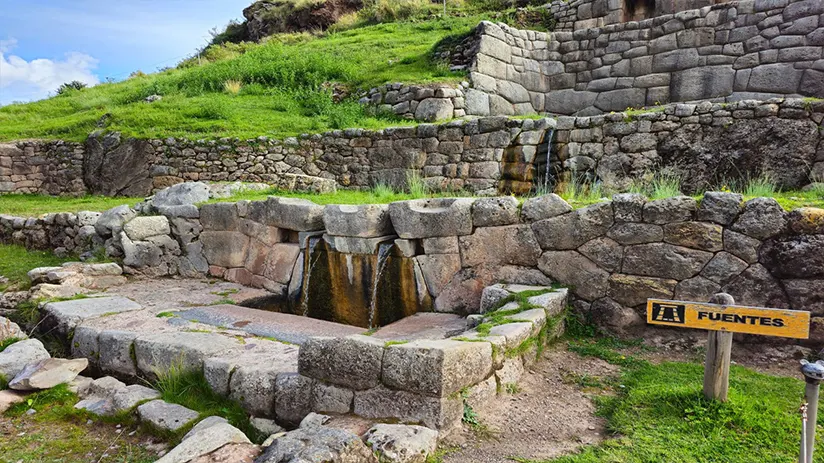
The Incas built it over the natural system of underground springs and the Tambomachay River. The origin of these springs is a total mystery. It has 4 terraces supported by walls of perfectly carved stones fitted together.
The upper surface holds 4 trapezoidal niches embedded in a beautifully finished Inca wall. In them, mummies, the Inca panacas relatives, or objects of worship, were deposited. By the way, the panacas were the family lineage of the Inca rulers.
The lower terraces house 2 beautiful water fountains. Each one was made of perfectly carved stones.
The upper fountain provides a constant stream of water that supplies the second one. The latter divides the water jet into 2 constant flow streams of equal volume. This demonstrates the high knowledge of hydraulic engineering that the Incas had.
At the height of the third terrace, on the right-hand side, there are two impressive trapezoidal niches. There is also an Inca staircase that leads to an upper area. For this reason, many scholars maintain that Tambomachay is a much larger complex than is currently shown.
What was Tambomachay?
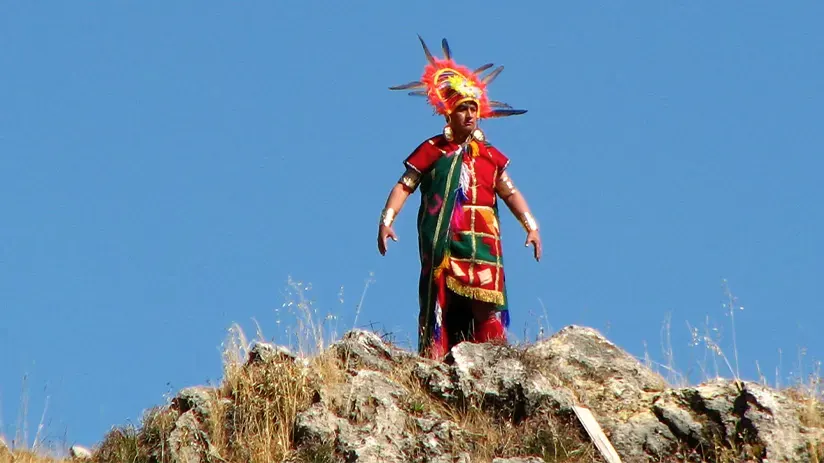
Many theories arise from its location, its structure, and also its water fountains. However, we must know that the Inca buildings and complexes were multi-purpose. And, we can find many examples like Machu Picchu, Sacsayhuaman, and Ollantaytambo, among others.
1. Warehouse Center or Tambo
Some chronicles from the time of the conquest indicate that its original name was Quinua Puquio. Puquio means spring of water. This is because, very close to the place, there was a royal garden where quinoa and corn, among others, were grown. The water that nourished them came precisely from the underground springs in the surrounding area.
Additionally, it provided water for irrigation to the surrounding Inca center and farms.
2. Center for Water and Fertility worship
The Incas believed in two powerful entities of life: the water and the earth (Pachamama). Water, the male factor, inseminates the earth, the female factor, entering it in the form of rain, springs, rivers, among others. In this way, Pachamama (earth) gave birth to generous fruits from which the Incas fed.
For this reason, the archaeological site of Tambomachay could have been a religious center of worship of Water. Its two stone fountains on the lower terraces and its trapezoidal niches on its upper terraces are proof of this. Water channels made of carved stone adorned each of these fountains.
The first and highest fountain provides the second with flowing water through a single constant jet. The water flows constantly to the second fountain, and it divides it into two. This signifies the Andean duality, male and female. On the other hand, the trapezoidal niches were used to deposit cult objects and/or mummies of the royal Panacas relatives.
It is said that the royal panacas of Hanan Qosqo inhabited the area.
3. Inca hunting and “Bath of the Inca”
As an area where various food products were grown, there is evidence of wildlife roaming around, such as the vicuña and the guanaco. Consequently, the Inca Tupac Yupanqui used it as a hunting ground and retreat area.
There is even a record that the Inca ruler used one of the water fountains in the enclosure to bathe during ceremonial acts. Therefore, the locals know it as the Inca baths, too! Let us remember that the Inca were considered God, the son of the deity of the Sun.
4. Passage checkpoint
According to the Peruvian anthropologist Federico Kauffmann Doig, Tambomachay was a military center and a checkpoint for visitors to Cusco coming from Antisuyo. The high-rise terraces that make it up are proof of this since Kauffmann indicates that they were defensive, like other archaeological complexes.
Furthermore, this Inca center is located very close to another amazing archaeological site in Cusco. We refer to the Inca barracks of Puca Pucara.
How to get
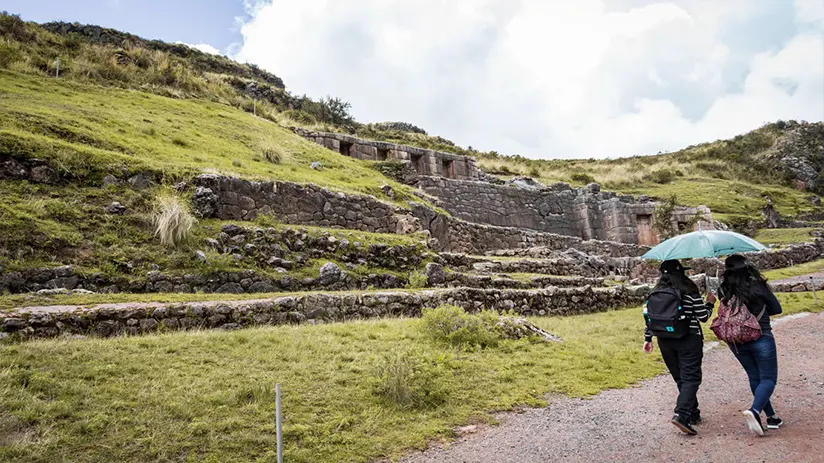
Hiring a City Tour in Cusco is essential during your adventures in the Peruvian Andes. You can get there by booking a City Tour through a travel agency, in private or group form. This experience includes entrance fees and transportation. It lasts half a day (04:30 hrs) in the morning or afternoon and includes visits to the Cathedral, Qoricancha, and Sacsayhuaman.
In the case of taxis, you can hire one through taxi apps or in the reception area of your hotel. Cabify, Indriver, or Uber. The cost includes the round-trip service and the wait time while you explore the Inca center.
The taxi trip up to the place lasts 20 minutes one way. Your exploration of the site will last 01 hours at maximum. So, your Tambomachay experience will take around 03 hours. The cost is around 35 $ USD.
If you want to use public transportation, you must go to the local national university bus stop. San Antonio Abad is the name of the university. From there, you’ll wait “El Huerto” public transport line. It will take to Tambomachay in 40 minutes.
The return is the same way; you’ll wait for the “El Huerto” bus at the same entrance to Tambomachay heading to Cusco. The cost is 0.26 cents of $ USD. Here, you will probably be traveling standing up and are more likely to encounter pickpockets.
Schedules and entrances

The Inca center is open from 07 am to 06 pm. Every day, even on holidays, Christmas, and New Year’s. The Cusco Tourist Ticket (Boleto Turistico de Cusco) includes admission to museums, viewing points, and archaeological attractions in the southern valley, the Sacred Valley, and Cusco, including admission to Tambomachay.
The cost of this ticket is 35 $ USD.
There is a cheap version, the Partial Cusco Tourist Ticket, that includes the entrance to the museum, viewpoints, and Inca sites like Tambomachay, which are only in Cusco city and its surroundings. This entrance costs 19 $ USD.
You can buy the Cusco Tourist Ticket at the Municipality of Cusco office in Sol Av. S/N, from 07 am – 05 pm. Every day, except Sundays. Of course, to avoid altitude sickness, we recommend visiting it from your second day in the city, when your body is completely acclimatized.
Archaeological sites near Tambomachay
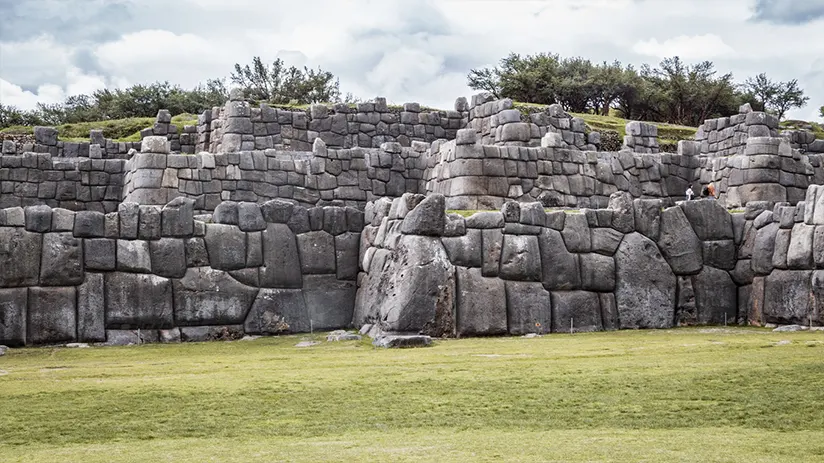
After visiting Tambomachay, extend your walking tour in Cusco to explore other fascinating archaeological sites nearby. Just a short distance away, you’ll find Puka Pukara, an ancient military checkpoint; Qenqo, a ceremonial site filled with carved rock labyrinths; and the impressive Sacsayhuaman, known for its massive stone walls and panoramic views of Cusco.
All of these landmarks are clearly marked on the Cusco tourist map, making it easy to organize a half-day or full-day route that combines nature, history, and local culture. Exploring these sites on foot offers a deeper connection with the Inca heritage that surrounds the city.
What to Bring
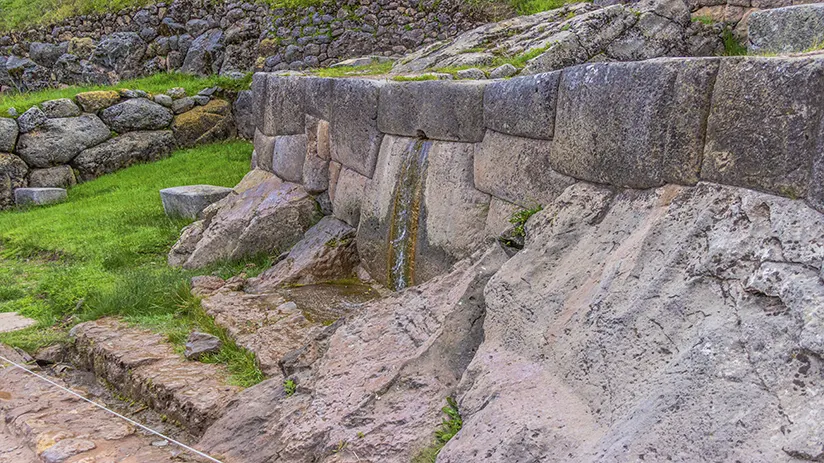
Before beginning your walking tour in Cusco, make sure you’re well-prepared for your visit to Tambomachay. Check the Cusco Tourist Map to plan your route and bring comfortable walking shoes, a refillable water bottle, sunscreen, and a light waterproof jacket. The mountain weather can change quickly. A small backpack is ideal for carrying snacks and essentials, and don’t forget your camera to capture the intricate stonework and peaceful Andean scenery. Being prepared will help you enjoy the experience fully and appreciate the harmony between Inca architecture and the surrounding natural landscape.
“PEOPLE DON’T TAKE TRIPS, TRIPS TAKE PEOPLE”
The archaeological complex of Tambomachay is a true marvel of Inca hydraulic engineering. Its beautiful water fountains, impressive trapezoidal niches, and stepped terraces will surely amaze you. Also, be sure to visit it along with other nearby archaeological sites such as Saycsayhuaman, Puca Pucara, and Qenqo in an unforgettable walking tour in Cusco surroundings.
Peru has so much to offer; it can be hard to know where to start. With many years of experience in the tourism sector, Machu Travel Peru is happy to help with anything regarding your trip to Machu Picchu and any tours around it. Make your Machu Picchu experience an unforgettable one! Contact us today to plan your dream adventure!