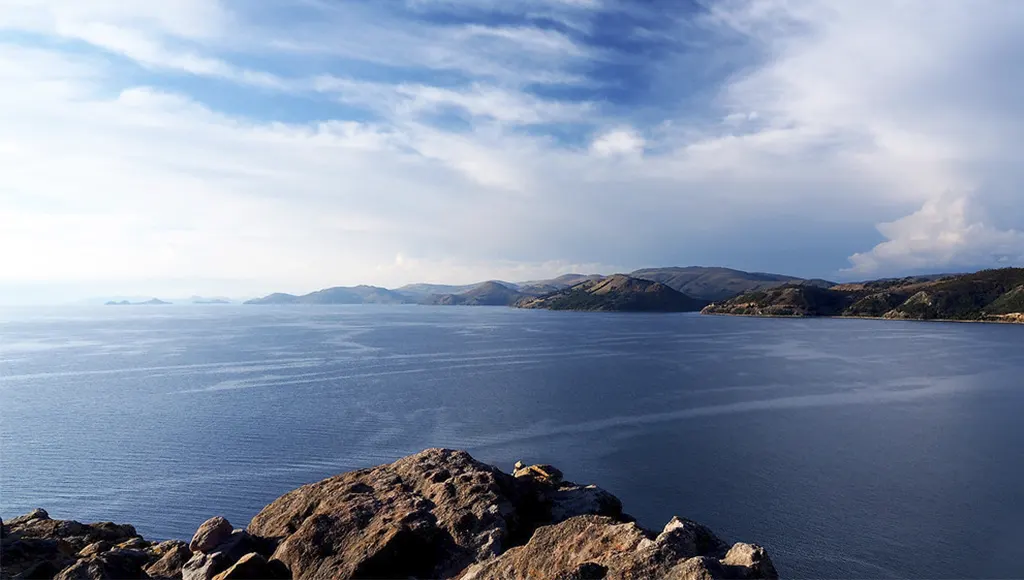
Lake Titicaca is one of the highest land lakes in South America and one of Peru’s most important attractions. With its unique characteristics, it stands out as one of the Andean countries’ favorite destinations. Its breathtaking views, surrounding culture, and grand connection to history make this an unparalleled option.
However, visiting such an enigmatic place can bring a multitude of questions. Among the primary concerns, you may wonder where to find it or how to locate it. The answer is simple: You can find Lake Titicaca in the Andes mountain range between Peru and Bolivia. Nevertheless, there’s much more to discover, and together with the Machu Travel Peru team, you’ll learn every necessary detail.
Everything you need to know about the location of the highest navigable lake in the world
The Lake Titicaca
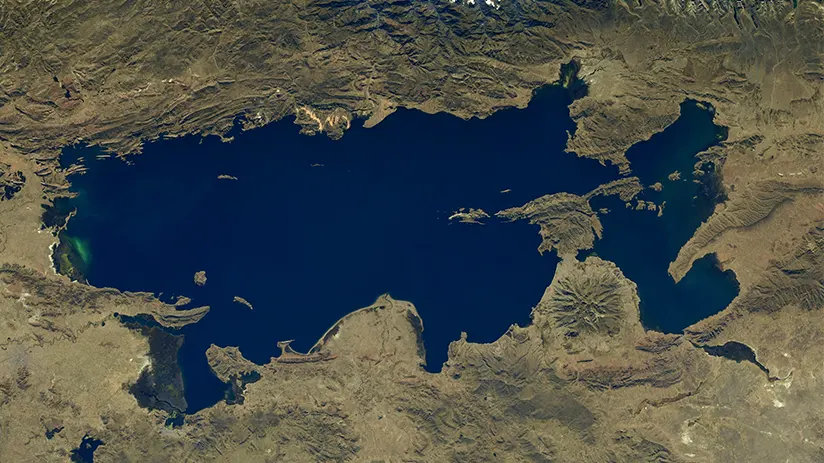
Undoubtedly, one of the best things to do in Puno is to visit and discover the magnificent Lake Titicaca. This body of water has garnered numerous international accolades, further underscoring its popularity and significance in the tourism industry. From the world’s highest navigable lake to the largest freshwater lake in South America, it holds a unique reputation. Furthermore, its cultural richness, ancient remnants, and stunning landscapes perfectly complement the traveler’s experience.
Location
The easiest way to locate Lake Titicaca is in the limits of Peru and Bolivia. However, those traveling to this destination for the first time may find it a little confusing. Well, let’s take it one step at a time: this body of water is in the central region of South America, between those countries. Specifically, you can find this natural wonder in northeast Bolivia and southeast Peru.
Furthermore, its area of more than 8,700 square kilometers makes it a completely notable landmark on any map. With a length of 190 km (120 miles) and a width of up to 80 km (50 miles), no tourist will fail to notice it. Surrounded by multiple Andean villages, traveling there or taking a Lake Titicaca boat tour will be exceptional. However, you should also consider its specific layout.
Distribution
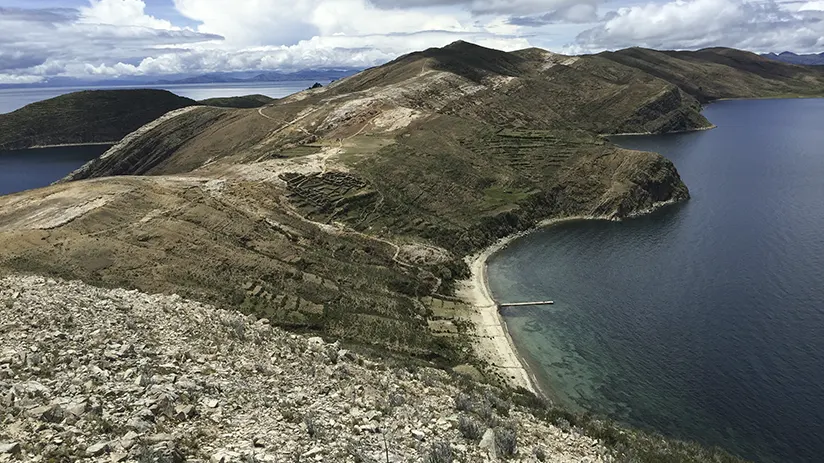
When researching distribution, you’ll likely find many alternatives to help you navigate space and time. However, one of the most recognized is the one that divides by country, which encompasses the dividing line. Featuring a distinct zone of countries, we present some characteristics that will help you better understand:
The Peruvian side of the lake
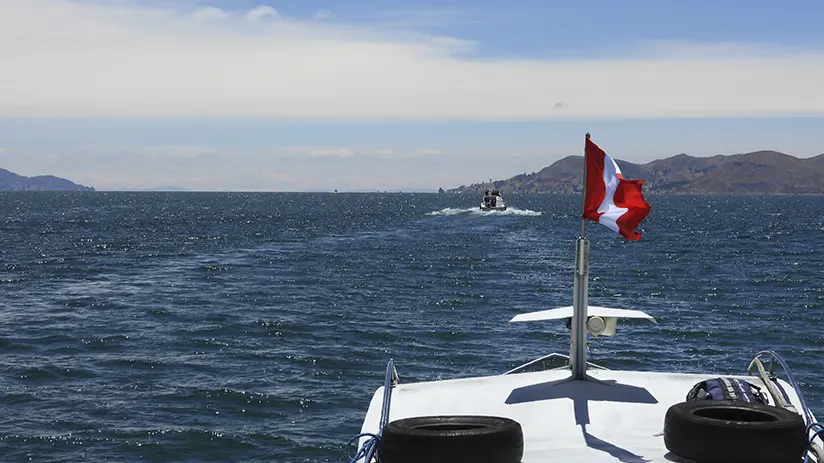
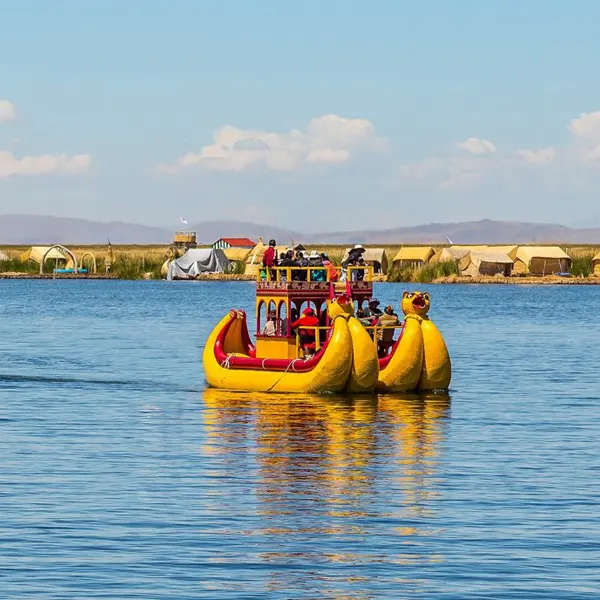
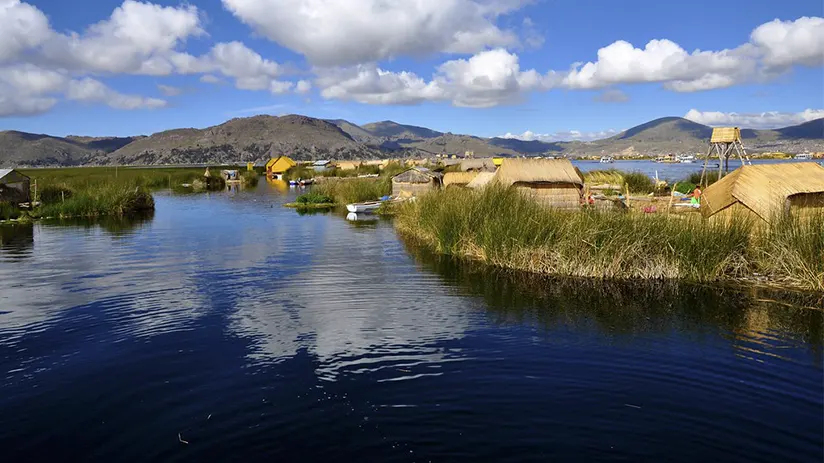
The Peruvian side comprises approximately 60% of Lake Titicaca’s total surface area. The common access is by Puno, the closest city to the lake, and one of the most popular tourist destinations. In addition to boasting numerous Inca ruins and breathtaking views, people also know it for its cultural symbol. We are referring to the Uros Islands, a treasure trove of traditions and customs nestled on the lake.
The Bolivian side of the lake
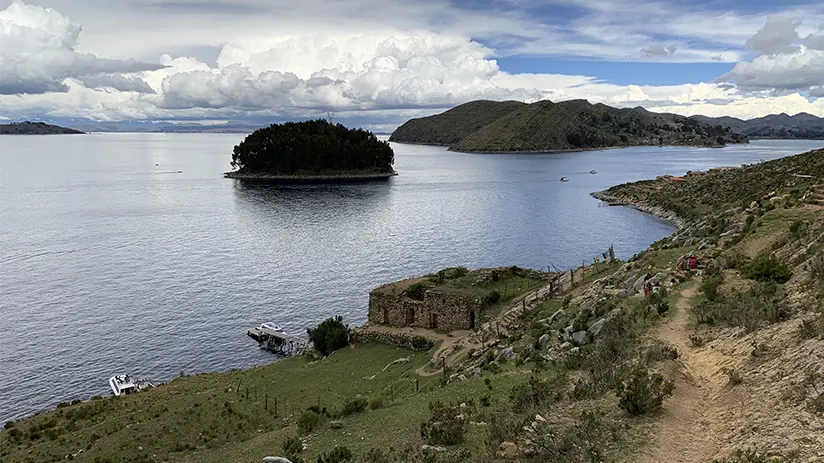
On the other hand, the Bolivian side comprises the remaining 40% of the lake’s surface. With Copacabana, the closest town, this sector boasts charming attractions and services that you can enjoy without any hassle. Among these are its natural islands and more than 180 Inca ruins that offer a different perspective of the lake. Whatever your choice, we recommend evaluating your connecting destinations to make a more effective decision.
Ways to go
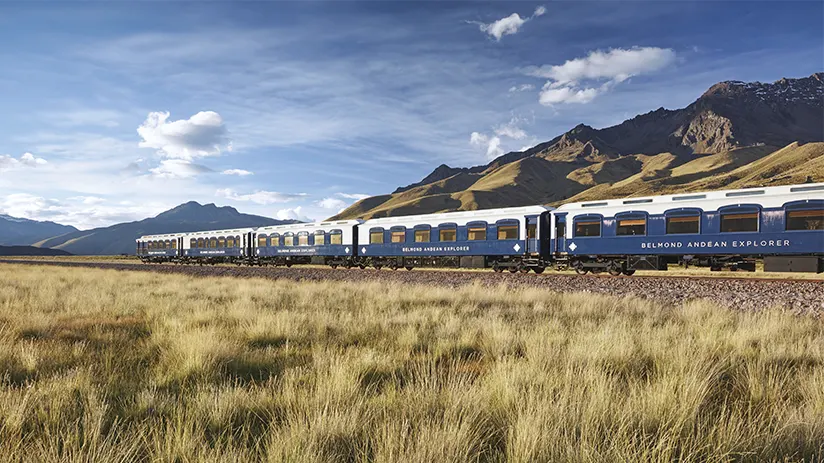
In reference to the previously mentioned, you’ll probably want to connect your plans with destinations such as Cusco or Lima. Therefore, it’s important to know the ways to get to and from the lake. With Peru’s many attractions, it’s completely normal to want a complete experience. Below are some of the most popular routes among tourists and visitors:
- From Lima: Traveling from Peru’s capital can be a bit challenging because of the distance between the two destinations. However, the classic route involves taking a plane to the nearest airport in the city of Juliaca. Then, take land transportation to Puno, the easy access to the shore of the lake. This is one of the least popular options because of the drastic change in altitude, but it’s also viable.
- From Cusco: From the capital of the Inca empire, there are two main options for reaching the lake. The first is by car, and the second is by train, one of the most sophisticated experiences. We are referring to the Andean Explorer, one of the most acclaimed luxury train services among lovers of Andean culture.
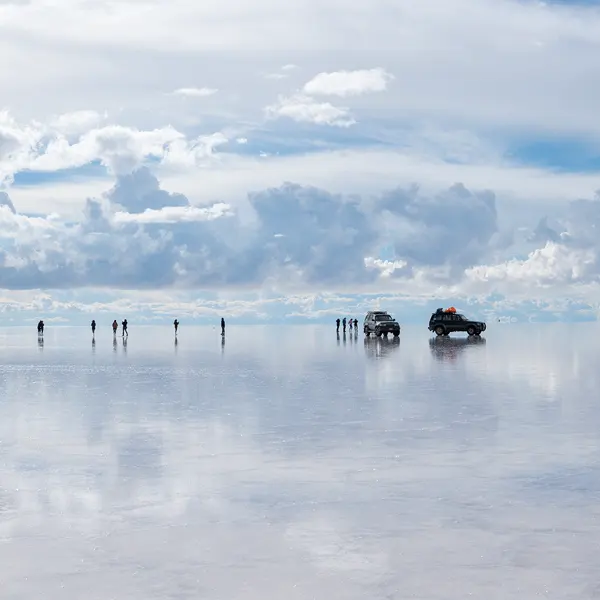
- From Bolivia: Those visiting the majestic Salar de Uyuni will most likely choose this route. It involves driving to Copacabana, the Bolivian city closest to Lake Titicaca, and then embarking on their journey. With affordable travel and incredible views, this route is completely accessible.
Interesting facts
Although different from the location, we consider it relevant to discuss some important features of Lake Titicaca. Those who are still unsure about whether to go will find it has unique characteristics. From the famous to the more curious, there is much to discover in this wonderful destination. Therefore, we present some factors that will surely influence your travel decision:
- Undoubtedly, the Lake Titicaca Islands are the emblem of this attraction. Although the most famous are the Uros with their iconic totora reed boats, you will find many more. Among the floating islands we can mention are Isla del Sol, Taquile Island, and Amantani Island, among others. Each of them has unique characteristics and a completely different experience.
- As we mentioned, Lake Titicaca has many accolades, including the title of the highest navigable lake in the world. This is precisely because of its location at more than 3,800 meters (12,467 feet) above sea level. According to some research, this altitude is due to the same phenomenon that formed the Andes mountain range.
- Regardless of whether it’s the dry or rainy season, Lake Titicaca’s climate is stable. With temperatures reaching a maximum of 18°C and a minimum of -2°C, you’ll find no abrupt changes. However, the best months to visit are from April to October when the weather is drier and sunnier.
- Lake Titicaca holds great cultural significance, and many legends and stories originate from it. One of the main ones attempts to explain the origin of the Inca empire, with Manco Capac and Mama Ocllo emerging from the lake. Likewise, people closely link the meaning of Lake Titicaca to pumas as its representative animals.
- On the other hand, the incredible diversity of animals and plants is also important. Among the most iconic, you’re sure to find the totora reed, a type of aquatic plant abundant in the lake. Naturally, we must also highlight the giant frog, a species that lives solely in aquatic environments. The list goes on, but we’ll allow you to explore it independently.
Frequently asked questions

Where is Lake Titicaca?
The Andes, in central South America, host Lake Titicaca. You can find this attraction between northeastern Bolivia and southeastern Peru. The city of Puno in Peru is also the main access to this magnificent destination. At 3,800 meters (12,500 feet) above sea level, it is the highest lake in the world.
What is Lake Titicaca famous for?
Lake Titicaca is famous for being home to the Uros indigenous communities and its iconic floating islands. Its immense cultural and natural significance also makes this wonder unparalleled in popularity. With myths, stories, traditions, and histories, there are many reasons to explore this magnificent body of water.
What are the things to do on Lake Titicaca?
Exploring the Uros floating islands is undoubtedly one of the best things to do on Lake Titicaca. Likewise, kayaking, visiting pre-Columbian ruins, and learning from local communities will be ideal. Keep in mind, there’s plenty to explore and uncover in one of Peru’s most mysterious locations.
Can you swim in Lake Titicaca?
Indeed, swimming in Lake Titicaca is completely feasible. However, experts do not recommend it because of the high altitude and surface temperatures of the water. Although it requires more than average effort, we suggest taking some precautions to avoid complications. Basic preparation, assessing a suitable location, and using good equipment are some of the things we can mention.
Are there fish in Lake Titicaca?
Of course, research indicates that there are many native and introduced fish species in Lake Titicaca. While it varies based on which part of the lake, trout is one of the most prevalent species. Trout are also important, serving as a food source for the locals.
“THE STILL WATERS OF A LAKE REFLECT THE BEAUTY ALL AROUND IT”
As we’ve seen, the location of Lake Titicaca is ideal, with Peru to the west and Bolivia to the east. This makes it easy to locate this magnificent natural wonder. The Machu Travel Peru team hopes to have provided you with useful information for your next dream visit. Remember to contact our advisors for more information about this and other enchanting destinations.
Peru has so much to offer, it can be hard to know where to start. With many years of experience in the tourism sector, Machu Travel Peru is happy to help with anything regarding your trip to Machu Picchu and any tours around it. Make your Machu Picchu experience an unforgettable one! Contact us today to plan your dream adventure!