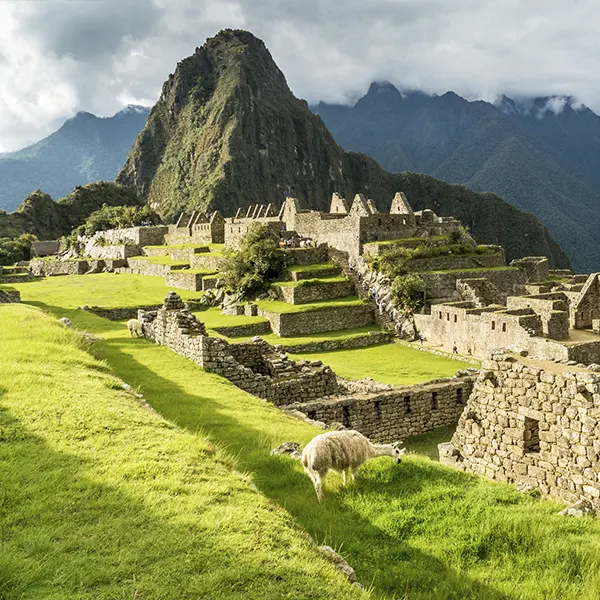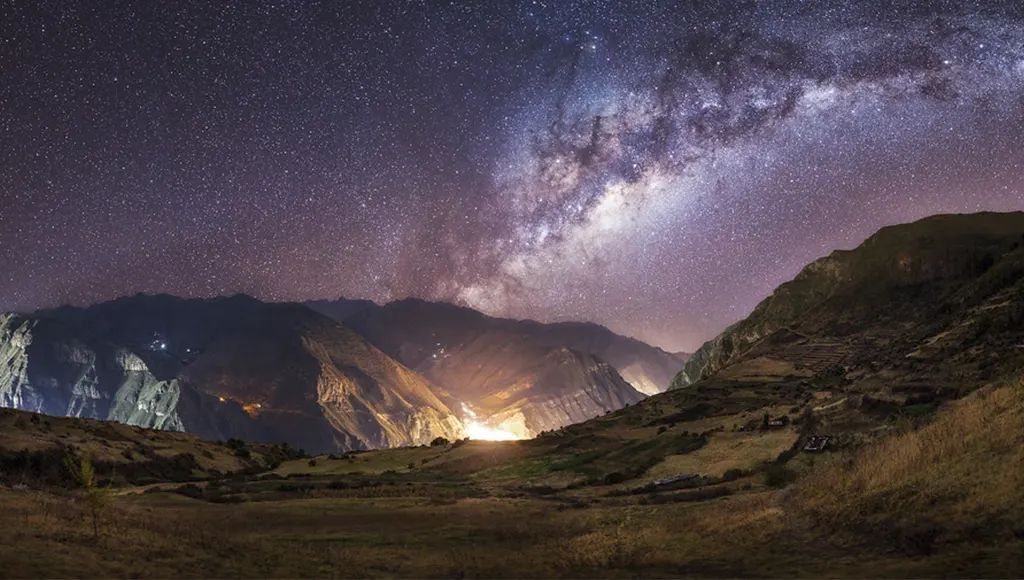
Machu Picchu was designed with architectural alignments that allowed the Incas to observe the sun, moon, and seasonal cycles. These astronomical principles influenced the site’s architecture, agriculture, and religious ceremonies. Today, visitors can still see how Machu Picchu astronomy influenced one of the world’s greatest archaeological wonders.
Discover the fascinating Inca astronomy at Machu Picchu
- Why Astronomy Was Essential to the Inca Civilization
- How Machu Picchu’s Architecture Reflects Inca Astronomy
- The Intihuatana Stone and Its Celestial Purpose
- The Temple of the Sun and Solar Alignments
- Solstices, Equinoxes, and Sacred Ceremonies at Machu Picchu
- Inca Cosmology and the Sacred Landscape
- Was Machu Picchu an Astronomical Observatory?
- Visiting Machu Picchu to Appreciate Its Astronomical Heritage
- FAQs About Machu Picchu Astronomy
Why Astronomy Was Essential to the Inca Civilization
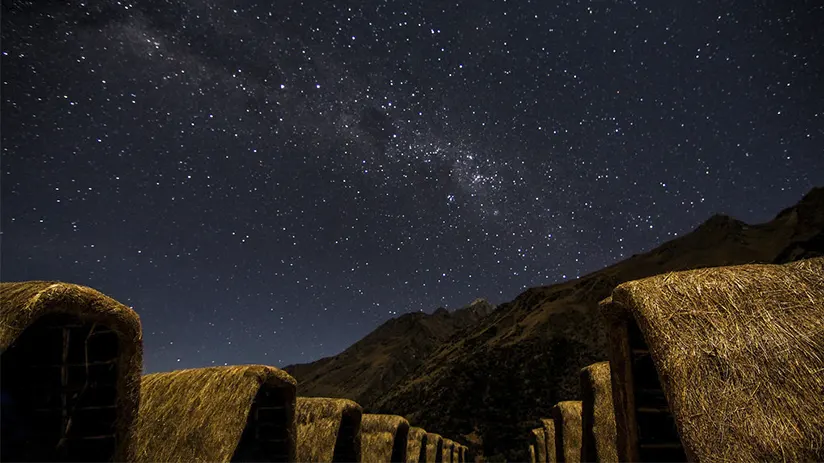
Astronomy was essential to the Inca Empire because it guided agriculture, religious ceremonies, and the organization of everyday life. Agriculture was one of the foundations of the empire, and these ancient people carefully observed seasonal changes throughout the year. By observing the sun and the moon, they developed a calendar that helped identify the rainy and dry seasons, allowing farmers to plan planting and harvesting more accurately.
On the other hand, astronomical traditions were also deeply connected to Inca religious beliefs. Inca religion established the worship of multiple deities related to nature, such as Pachamama (Mother Earth). They believed that everything on Earth had its counterpart in the heavens, and this also applied to the stars and celestial phenomena. Inti (the sun god), Mama Quilla (goddess of the moon), and Illapa (god of rain) were some of their most important deities.
As a result, the Incas divided time into a 12-month lunar cycle, establishing that each month was dedicated to specific festivals and cosmic events. Those in charge of studying the sky were the Inca priests, who received a special education from childhood. This allowed them to develop specialized knowledge to understand the movements of the sun, moon, stars, planets, and Milky Way.
How Machu Picchu’s Architecture Reflects Inca Astronomy

This vast astronomical knowledge is reflected in the Inca architecture. Carefully positioned windows, carved stones, and ceremonial structures allowed the Incas to observe the movements of the sun, moon, and stars while organizing agricultural and religious activities. In addition to precisely integrating the observation of celestial cycles, they enabled the regulation of their agricultural calendar and religious ceremonies. Some key architectural pieces include the Intihuatana stone, the Temple of the Sun, and the Temple of the Three Windows, among others.
The importance of astronomy was also echoed in the development of their civilizations. For example, the city of Cusco was designed to reflect the stars and mimic the constellations in the sky. Likewise, the urban layout and the location of some of the main temples, such as the present-day Coricancha Temple, represented dark constellations of the Milky Way. Therefore, even today, some of these architectural achievements can be seen as evidence of the Inca mastery of the sky.
The Intihuatana Stone and Its Celestial Purpose
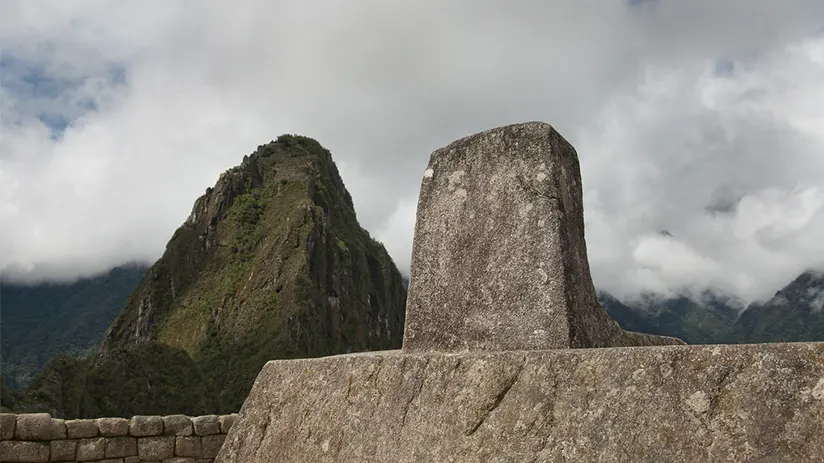
The Intihuatana Stone, literally translated from Quechua as “sun-tying post”, is an exceptionally carved granite monolith located in the Sacred Plaza of Machu Picchu. This Inca structure functioned as a sundial to track the sun’s movements. Inca priests used it to track seasonal changes and maintain an accurate astronomical calendar. In this way, they were able to align the agricultural seasons with their seasonal and daily life.
The polygonal structure is one meter high and approximately two meters across, casting a specific shadow throughout the year. Its central pillar casts a shadow that indicates the time of day, and its four corners align with the cardinal directions. Mejor:
Many researchers interpret this monument as an astronomical marker used to observe solar movements such as the solstices and equinoxes. Built during the reign of Emperor Pachacuti in the 15th century and still standing today, it is one of the best-known examples of Inca astronomical knowledge.
The Temple of the Sun and Solar Alignments

The inhabitants of the Inca Empire built their Temples of the Sun as astronomical observatories, incorporating precise architectural alignments to measure the sun’s movements. These structures also coincide with key celestial events such as solstices and equinoxes. In addition to being important observatories, their design was combined with the worship of Inti, the sun god. Here are two of the main temples built by the Incas:
- Temple of the Sun (Machu Picchu): This is a curved, semicircular structure located in the Inca citadel, featuring trapezoidal windows. The most remarkable feature is its window, perfectly oriented towards the exact point where the sun rises during the Southern Hemisphere’s winter solstice (June 21). On this day, a single ray of light enters through the window and illuminates the central ceremonial stone, marking the beginning of the celestial event.
- Qorikancha (Cusco): The main Inca solar temple in the city of Cusco, used for astronomical and religious purposes. Its walls, gates, and even surrounding streets were built to align with the sunrise during the June solstice. The temple also functioned as an Inca astronomical observatory, featuring special chambers focused on the study of other celestial bodies. Inca engineering and astronomical knowledge combine perfectly to create this remarkable example of Inca engineering.
Solstices, Equinoxes, and Sacred Ceremonies at Machu Picchu

The calendar of the Inca civilization was deeply connected to astronomical cycles, including the equinoxes and solstices. While their activities were related to solar movements, four important festivals stood out, known as Raymis. During these events, they celebrated cosmic balance, agricultural renewal, and profound spiritual reverence for the sun. Here is an overview of these Andean festivals:
- Inti Raymi (Winter Solstice – June): The most important festival, marking the shortest day of the year and the Inca New Year. On this day, the Sun god was celebrated, and the people observed strict customs such as fasting, purification, offerings, and rituals.
- Qhapac Raymi (Summer Solstice – December): Unlike Inti Raymi, this festival marks the longest day of the year and is the second most important date. Abundance and fertility were celebrated through ceremonies and rituals, and the initiation rite for young Incas also began on this day.
- Pawkar Raymi (Spring Equinox – March): This celebration symbolized the balance between day and night. It also marked the beginning of the planting cycle and was an opportune time to invoke the fertility of the land.
- Killa Raymi (Autumn Equinox – September): The rituals during this period focused on warding off illnesses and evil spirits. They also served to honor the Coya (the Inca’s wife) and the deities Mama Quilla and Pachamama.
All these sacred ceremonies were also present at the sanctuary of Machu Picchu, as the Incas worshipped these same deities there as well. To identify these sacred rituals, they used key structures such as the Temple of the Sun and the Intihuatana stone.
Inca Cosmology and the Sacred Landscape

For the Inca, religion, astronomy, and the sacred landscape formed a single interconnected worldview. These components formed a highly integrated system where the cosmos dictated key aspects of society. Their worldview was based on three interconnected spiritual realms linked by physical elements of the Andes. Here is a brief overview of the three planes, or pachas:
- Hanan Pacha (Upper World): Also known as the celestial realm, it is the home of deities such as the sun, moon, stars, and lightning. Its main symbol is the condor.
- Kay Pacha (Earthly World): The Incas called this the world of the living, where humans, plants, and animals reside. Its main symbol is the puma.
- Uku Pacha (Underworld/Inner World): Known as the realm of the dead and ancestors, it is located beneath the earth and was associated with fertility, springs, and seeds. Its main symbol is the serpent.
Was Machu Picchu an Astronomical Observatory?
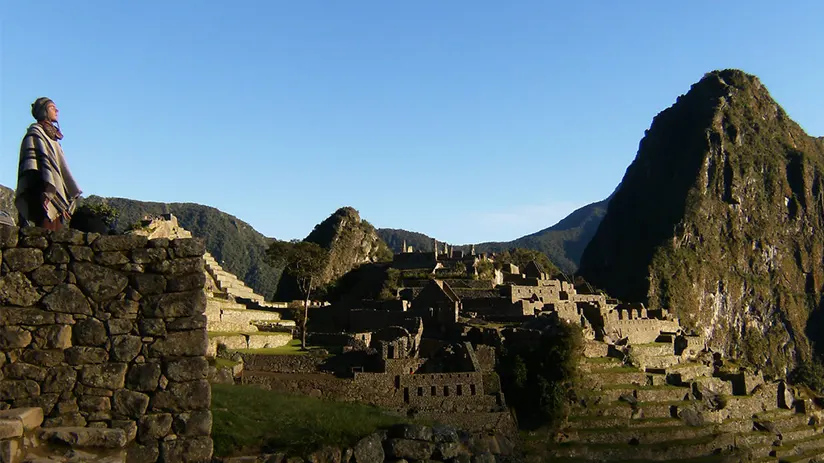
Machu Picchu was an important center for celestial observation used by the Incas for ceremonial purposes and celestial tracking. The structures at this archaeological site in Peru are meticulously designed to align with the sun, moon, stars, and other celestial bodies. These alignments helped the Incas track the seasons, solstices, and the agricultural calendar thanks to these constructions. The Temple of the Sun, the Intihuatana Stone, the Water Mirrors, Intimachay, and the Mirador are some of the site’s main astronomical instruments.
Among these structures, Intimachay stands out as one of the best-known examples of Inca astronomical engineering. This small cave features a carefully carved window that allows sunlight to enter only during the December solstice, marking an important moment in the agricultural and ceremonial calendar. Archaeologists believe it was used to observe the sunrise with remarkable precision, demonstrating how the Incas integrated architecture, astronomy, and spirituality into a single sacred space.
Visiting Machu Picchu to Appreciate Its Astronomical Heritage

It’s now possible to see the citadel and its important astronomical legacy through a guided tour. The citadel offers various circuits and routes, but some are particularly suitable for observing these structures. The best option is Circuit 2 (Classic Machu Picchu) via routes 2-A or 2-B. Both tours are comprehensive and allow you to explore the ancient astronomical chambers and get a general overview of the sanctuary.
If you want to experience Machu Picchu’s astronomical heritage at its best, consider visiting during the dry season, from May to September. Clear skies and lower rainfall provide excellent visibility for watching the sunrise over the citadel, observing the surrounding mountain peaks, and appreciating the solar alignments that inspired Inca architecture. Early morning visits are especially recommended, as the first sunlight illuminates key ceremonial structures such as the Temple of the Sun and the Intihuatana Stone.
Many visitors choose to hire a specialized guide to obtain essential information. They can explain the precise solar alignments, historical observations, and the significance of each structure. During the tour, it’s essential to respect the structures by avoiding touching them and respecting the marked boundaries for their optimal preservation. The history of Machu Picchu and its Inca legacy lives on in its ruins and can be observed during a visit.
FAQs About Machu Picchu Astronomy
How did the Incas use astronomy at Machu Picchu?
The Incas carefully observed the movements of the sun, moon, stars, and constellations to understand seasonal changes and organize their society. These observations guided religious ceremonies, architecture, and agricultural activities. The astronomy of the Incas reflected a sophisticated knowledge of the natural world and played a fundamental role in daily life.
What is the Intihuatana Stone used for?
The Intihuatana Stone is believed to have been a ceremonial monument that also served as an astronomical marker. Its carefully carved shape may have helped Inca priests observe the sun’s position during important moments of the year, reinforcing the spiritual relationship between the heavens and the earth.
Was Machu Picchu an astronomical observatory?
Although it was not an observatory in the modern sense, many scholars consider Machu Picchu an important center for celestial observation. Several buildings were designed to align with significant solar events, making astronomy one of the most fascinating aspects of Machu Picchu.
How does the Temple of the Sun align with the solstice?
The Temple of the Sun features a window strategically positioned to receive the first rays of the June solstice sunrise. This architectural precision demonstrates the Incas’ advanced knowledge of solar movements and their ability to integrate astronomical knowledge into sacred spaces.
Why was astronomy important to the Incas?
Astronomy influenced nearly every aspect of Inca civilization, from religion and state ceremonies to timekeeping and farming. Through Inca astronomy, celestial observations became an essential way to interpret the natural world and maintain harmony between people, nature, and their deities.
What celestial events can be observed at Machu Picchu?
Visitors can witness clear sunrise views, seasonal solar alignments, and exceptional views during the dry season. The Sun Gate is especially famous for offering breathtaking sunrise views that highlight the site’s connection with the surrounding mountains.
How did Inca astronomy influence agriculture?
The Incas used the position of celestial bodies to identify the best times for planting and harvesting crops. This astronomical knowledge allowed them to adapt farming practices to the challenging Andean environment and helped sustain one of the greatest civilizations in South America.
What is the connection between Machu Picchu and the sun?
The sun was one of the most revered deities in the Inca civilization, and many structures within Machu Picchu were designed to honor its annual cycle. Solar alignments observed during the Machu Picchu solstice continue to demonstrate the close relationship between architecture, spirituality, and astronomy.
“EVERY STONE AT MACHU PICCHU TELLS A STORY, BUT ITS CONNECTION TO THE SKY REVEALS THE BRILLIANCE OF THE INCA CIVILIZATION”
Machu Picchu astronomy reflects the Incas’ remarkable understanding of the sky and its influence on daily life. Their knowledge shaped architecture, agriculture, and sacred traditions, creating a lasting connection between nature and human activity. Together with the Quipu, this legacy demonstrates the ingenuity of one of the most advanced civilizations in the Andes and continues to inspire historians, archaeologists, and travelers from around the world.
Machu Picchu has so much to offer; it can be hard to know where to start. With many years of experience in the tourism sector, Machu Travel Peru is happy to help with anything regarding your trip to Machu Picchu and any tours around it. Let us help you make your Machu Picchu travel experience unforgettable! Contact us today to plan your dream adventure!