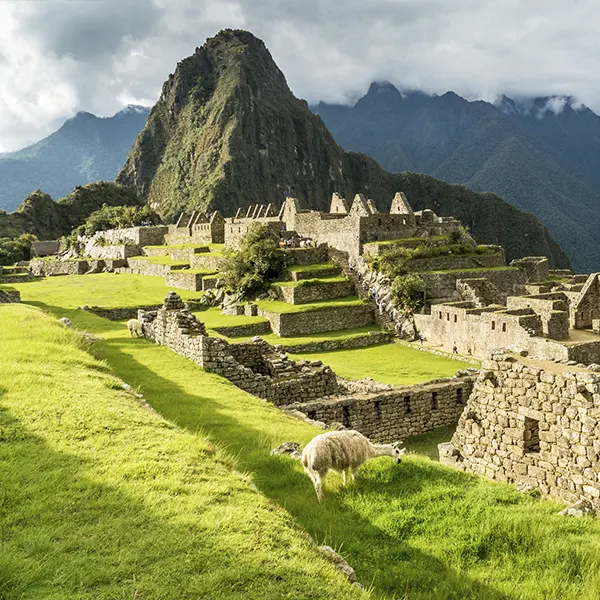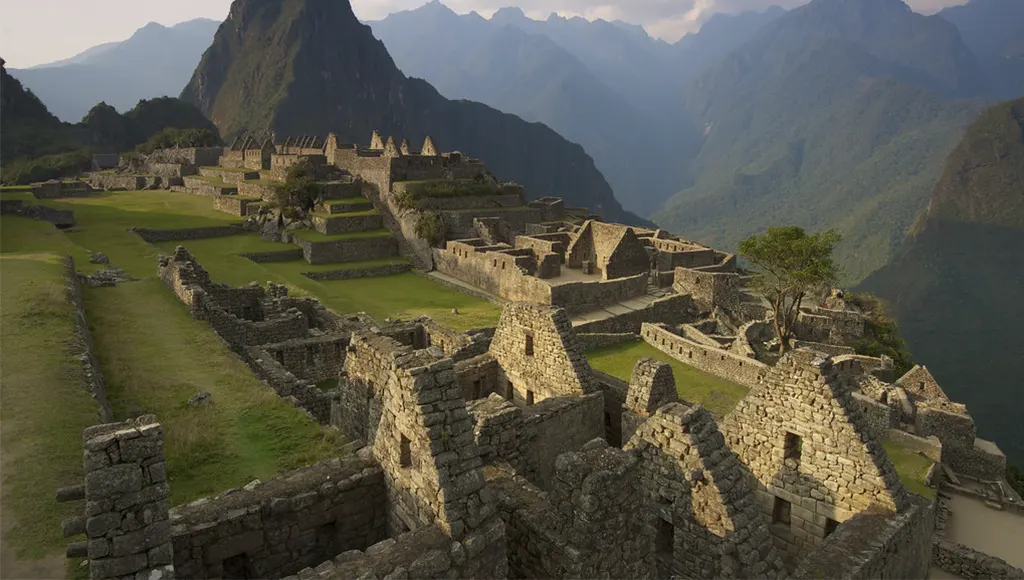
Machu Picchu is considered one of the world’s greatest engineering achievements because of its earthquake-resistant stonework, sophisticated drainage system, agricultural terraces, and advanced hydraulic design, all built without iron tools or the wheel. The Incas accomplished this using sophisticated construction techniques without modern machinery or iron tools. This guide explores the remarkable engineering behind one of the world’s most extraordinary archaeological sites.
Discover the fascinating Inca architecture at Machu Picchu
- Why Machu Picchu Engineering Still Amazes the World
- How the Incas Chose the Perfect Location
- The Engineering Principles Behind Machu Picchu
- How the Incas Built Machu Picchu Without Iron or Wheels
- The Materials and Construction Techniques Used at Machu Picchu
- Why Machu Picchu Has Survived for More Than Five Centuries
- What Modern Engineers Can Learn from Machu Picchu
- FAQs About Machu Picchu Engineering
Why Machu Picchu Engineering Still Amazes the World

| Feature | Description |
| Construction period | c. 1450 |
| Main material | Granite |
| Drainage channels | 130+ |
| Agricultural terraces | 700+ |
| UNESCO World Heritage Year | 1983 |
Machu Picchu’s engineering continues to amaze visitors, architects, and historians around the world with its exceptional infrastructure, making it one of the best-preserved examples of Inca engineering. This citadel was built by the Incas, who mastered architecture, engineering, geology, and hydraulics, knowledge reflected in their ancestral sanctuary. Some interesting Machu Picchu facts include its construction on a tectonic fault and the absence of iron tools or the wheel. Other features include its more than 700 agricultural terraces, 130 rainwater drainage systems, and much more.
How the Incas Chose the Perfect Location
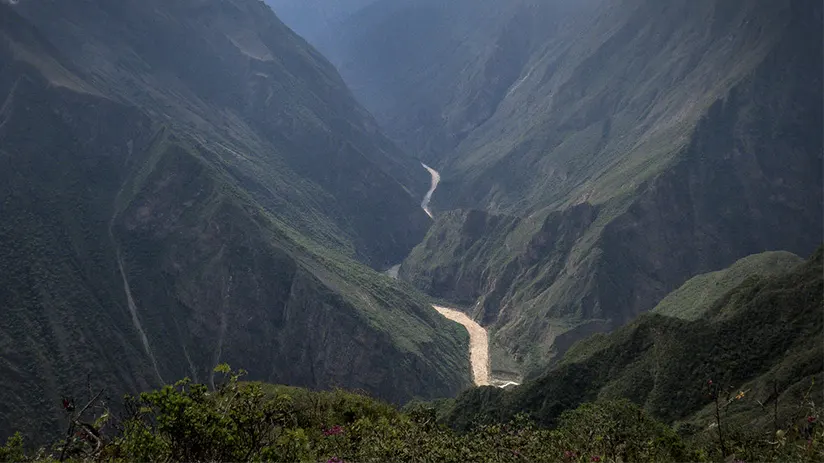
The Incas chose the location for its numerous strategic, spiritual, and agricultural advantages. First, its strategic advantage stems from its environment: Machu Picchu was built at an altitude of 2,430 meters in the heart of the cloud forest. Furthermore, the steep slopes and the surrounding Urubamba River served as protection against enemies and as a natural fortress. The site’s difficult access also helped protect it from potential invaders of the Inca civilization.
The location was also chosen for its spiritual significance; it’s important to remember that the Inca Empire placed great importance on nature as part of its theology. According to Inca beliefs, the apus (protective mountain spirits) played a vital role for their people. This importance was such that the Incas built high-altitude sanctuaries to perform offerings and rituals invoking prosperity. One example is the citadel itself, located between the peaks of Machu Picchu and Huayna Picchu.
Agriculture was another key reason for the settlement’s location, because of the abundant rainfall and generally warm climate. This, combined with the extensive agricultural terraces, allowed the population to obtain a sustainable and sufficient food supply. The environment also provided a reliable water supply from the area’s natural underground springs. Therefore, this was further enhanced by the elaborate network of aqueducts and drainage systems, which helped prevent landslides.
The Engineering Principles Behind Machu Picchu
The long-term durability of the Inca archaeological site results from four key engineering principles: earthquake-resistant stone masonry, advanced drainage, agricultural terraces, and careful site planning. These principles are evident in other important structures of the Inca Empire (Tahuantinsuyo). They enabled the conquest of the Peruvian Andes and the survival of this ancient civilization. Here is a brief explanation of these fundamental principles:
Earthquake-Resistant Stone Masonry
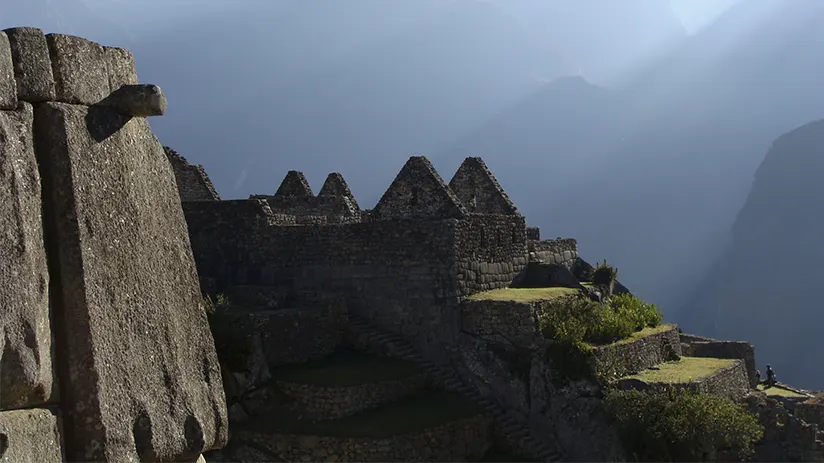
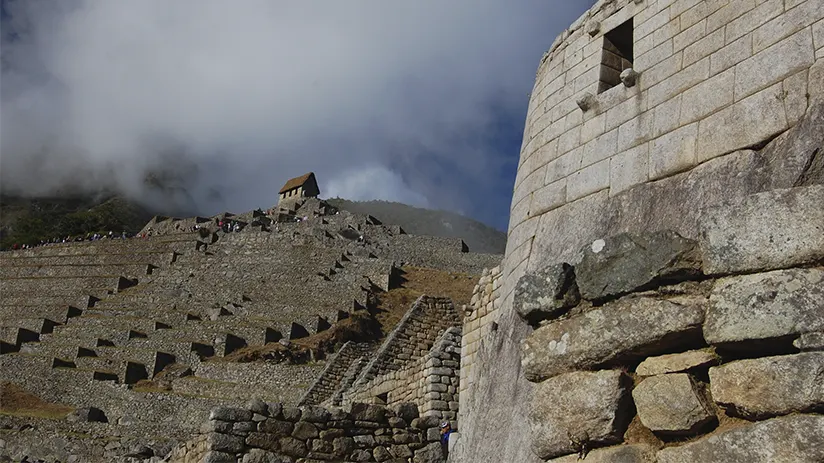
The Incas did not use mortar; instead, they employed a technique that involved carving enormous granite blocks with extreme precision. This made it possible to create massive structures that fit together perfectly. Although the blocks fit together firmly, they are able to shift slightly during earthquakes and return to their original position. Their seismic resistance is such that the walls do not collapse despite the region’s frequent seismic activity; this allowed it to withstand the elements and potential natural phenomena.
Agricultural Terraces and Slope Stabilization
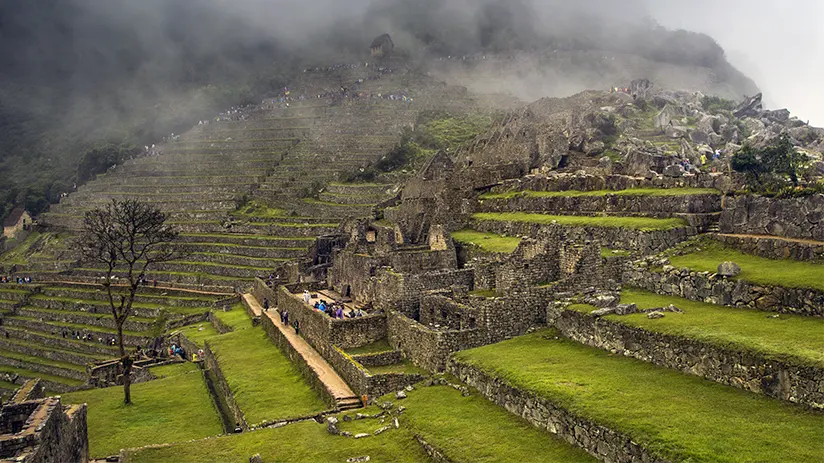
According to engineering studies, more than 60% of Machu Picchu’s engineering infrastructure lies below the surface. These structures are located below the surface, and their purpose is to manage the integrity of the mountain slope. A clear example is the agricultural terraces, which act as retaining walls but also as drainage filters for the cultivation of various crops.
Water Management and Drainage Systems
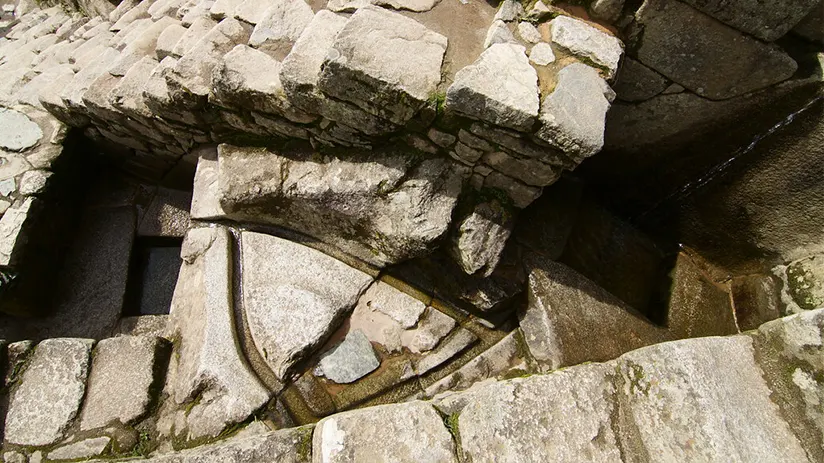
Water played a central role in everyday Inca life. Although local hydrographic conditions were adequate, they developed techniques to enhance this natural resource. The hidden network of canals, fountains, and drainage systems is one of the site’s key engineering systems, which is still visible throughout the Machu Picchu map The fresh water from the natural spring located high on the adjacent mountain was channeled through a stone aqueduct.
The stone aqueduct extended approximately 749 meters with an average gradient of about 3%, allowing water to flow at a controlled rate. In addition, the system of 16 liturgical fountains allowed for the efficient supply of continuous and regulated flows. The underground drainage system also stands out, including more than 130 drainage outlets that rapidly evacuate the heavy seasonal rains. All of this allowed for the stabilization of the soil and the resistance of the Inca site.
Urban Planning and Site Design
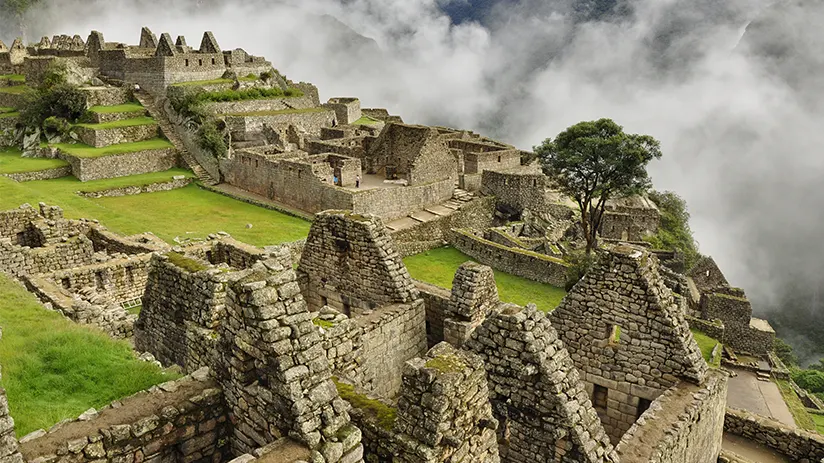
The site, built under the reign of Emperor Pachacuti, comprises 32,592 hectares on a steep Andean ridge. This ridge connected tectonic faults, which were used to naturally drain excess runoff and anchor the citadel. Moreover, materials obtained from excavating the mountaintop were strategically reused in the construction of the main buildings and walls. Finally, the correct use of the spaces allowed for the optimization of the functionality of the entire citadel and thus improved its durability.
How the Incas Built Machu Picchu Without Iron or Wheels

The Incas built the Inca city using a massive amount of human labor and advanced civil engineering. To transport materials up the steep mountains, they used earthen ramps, wooden levers, and the strength of crowds. The use of bronze tools, stone hammers, and friction was also important for shaping the granite. Here are important things to consider:
- Quarrying Process: The Incas sourced most of the granite used in Machu Picchu construction from nearby quarries. Instead of transporting stone over long distances, they carefully shaped each block close to the building site using stone hammers and simple bronze tools. This efficient process reduced labor while maintaining the exceptional precision seen in Inca stonework.
- Transporting Stone Blocks: One of the greatest mysteries of Inca engineering is how massive stone blocks were moved across steep mountain terrain. Archaeologists believe workers used earthen ramps, wooden levers, ropes, and coordinated human effort to transport the stones without wheels or draft animals. These methods highlight the ingenuity behind how Machu Picchu was built.
- Workforce Organization (Mit’a): The construction of Machu Picchu relied on the Mit’a labor system, a form of public service in which communities contributed workers to large state projects. Skilled stonemasons, engineers, and laborers worked together under careful planning, allowing the Incas to complete one of the world’s greatest examples of ancient engineering.
- Rope Systems and Manual Labor: Without modern machinery, the Incas depended on strong plant-fiber ropes and coordinated teamwork to lift and position heavy stones. These simple but effective methods played a crucial role in Inca construction techniques, allowing builders to create remarkably stable structures that still stand today.
- Precision of Inca Stonework: One of the defining features of Inca architecture is its precise stone masonry. Each block was carefully carved and tested until it fit perfectly with the surrounding stones, eliminating the need for mortar. This advanced craftsmanship increased the buildings’ resistance to earthquakes and remains one of the most significant achievements of Inca engineering.
The Materials and Construction Techniques Used at Machu Picchu
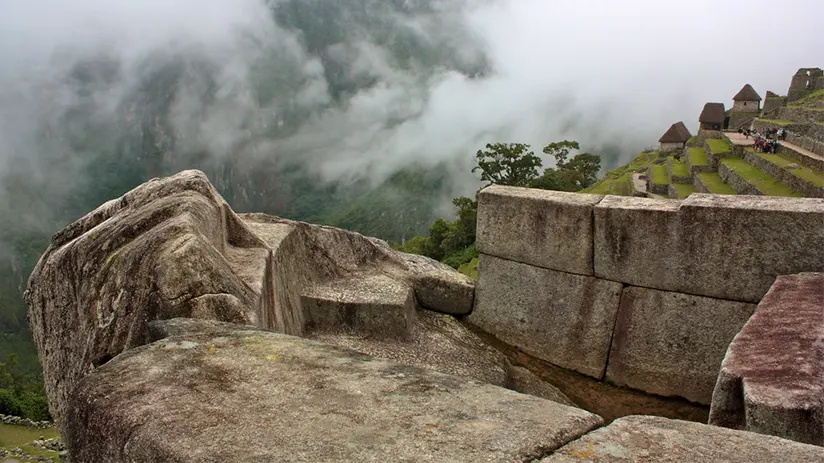
The Inca builders used highly resistant materials to construct their buildings. White granite was the primary building material because of its hardness and weather resistance. This civilization extracted it directly from the ground and its immediate surroundings. Once extracted, it was transported to the sites where the future buildings would be constructed.
Regarding key techniques, the Incas focused on ashlar masonry (polygonal) for elite areas and religious temples. The assembly of these materials was so precise that the joints between stones are extremely tight between the stones. The stones were sculpted by friction, rubbing their surfaces together with a thin layer of sand until they fit seamlessly.
Other techniques are evident in the trapezoidal design with a slight inward tilt. Doors, windows, and walls are clear examples of these techniques. All of this lowered the center of gravity and increased structural stability. Evidence of this can be seen in the windows of the Temple of the Sun, which, in addition to allowing the aforementioned functionality, also served as an observatory to measure the June solstice.
Why Machu Picchu Has Survived for More Than Five Centuries
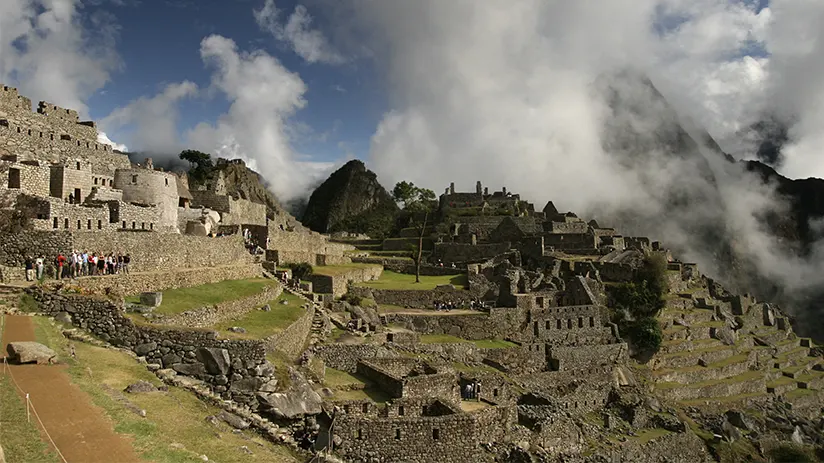
Machu Picchu survived for so long due to its earthquake-resistant architecture, water management system, and remote location. According to the history of Machu Picchu, it was built around 1450 and has since survived climatic, political, and social upheavals. Earthquake-resistant engineering, an advanced hydraulic network, and strategic isolation allowed for the preservation of this archaeological site in Peru.
What Modern Engineers Can Learn from Machu Picchu
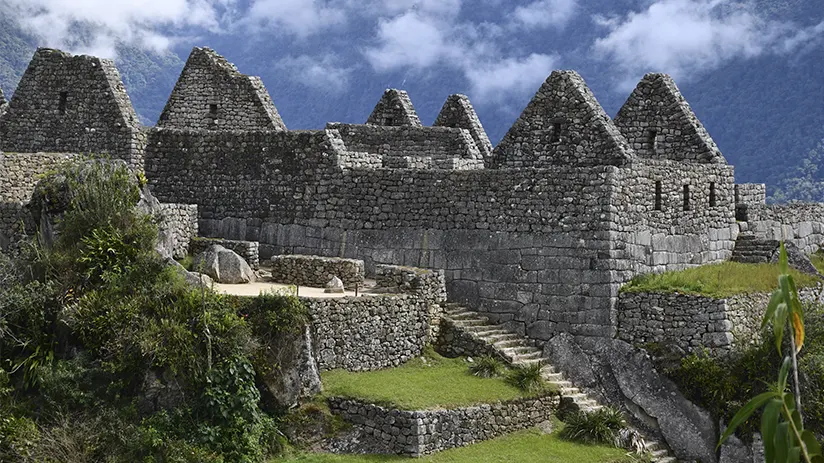
Modern engineers continue to study Inca engineering because its sustainable design principles remain relevant today. Their structures still stand today, evidenced by the history of Machu Picchu for more than 500 years. Another interesting lesson is the masterful management of groundwater with its integrated drainage, hydraulic system, and more than 130 drainage systems. Other valuable insights include anti-seismic mortarless masonry, agricultural terraces, and harmonious environmental integration.
FAQs About Machu Picchu Engineering
How was Machu Picchu engineered?
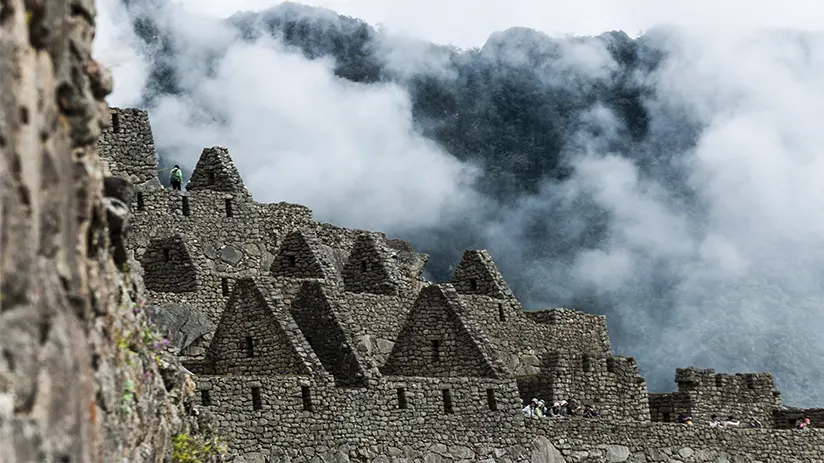
Machu Picchu was engineered to work with the mountain instead of changing it. The Incas built terraces, retaining structures, and an advanced drainage system to keep the site stable. They also designed buildings that could handle heavy rainfall and earthquakes. Experts believe the city served as a royal estate for the Inca ruler Pachacuti, combining practical construction with impressive architecture.
How did the Incas build Machu Picchu without modern tools?
The Incas built Machu Picchu without iron tools, cement, or wheeled vehicles. They shaped granite blocks using harder rocks and simple hand tools. Workers moved the stones with ropes, wooden levers, and human labor. Every block was carefully carved until it fit perfectly with the next, creating incredibly strong stone walls. This high level of craftsmanship impressed Hiram Bingham when he brought international attention to the site in 1911.
Why is Machu Picchu earthquake-resistant?
Machu Picchu is earthquake-resistant because its buildings were designed to move with the ground. Instead of relying on mortar, the precisely cut stones can shift slightly during seismic activity and settle back into place. Deep foundations, stable terraces, and effective water management also reduce stress on the structures, helping them withstand powerful earthquakes.
What engineering techniques were used at Machu Picchu?
The Incas used several advanced engineering techniques at Machu Picchu. They built agricultural terraces to stabilize the slopes, underground channels to control rainwater, and retaining walls to prevent erosion. Their careful planning allowed every structure to fit naturally into the mountain landscape. The Intihuatana Stone also reflects how engineering, astronomy, and religion were closely connected.
How does the Machu Picchu drainage system work?
The drainage system at Machu Picchu was designed to manage the region’s heavy rainfall. Layers of gravel, crushed rock, and soil beneath the buildings and terraces allowed water to drain quickly. Hidden channels carried excess water away from the foundations, reducing erosion and lowering the risk of landslides. So, this system remains one of the site’s greatest engineering achievements.
What makes Inca stonework so precise?
Inca builders achieved remarkable precision through patience, skill, and careful planning. Each stone was shaped by hand until it matched the surrounding blocks with almost no gaps. This tight fit improved stability, increased durability, and allowed buildings to perform well during earthquakes. The craftsmanship seen throughout Machu Picchu continues to impress engineers and archaeologists today.
Why has Machu Picchu survived for centuries?
Machu Picchu has survived for centuries because its design was adapted to the surrounding environment. Strong foundations, well-planned terraces, and excellent drainage have protected the site from erosion, earthquakes, and heavy rainfall. These innovations have helped preserve one of the most remarkable archaeological sites in South America.
What can modern engineers learn from Machu Picchu?
Modern engineers can learn the value of designing with nature instead of against it. Machu Picchu shows how careful planning, sustainable construction, and efficient water management can create structures that last for centuries. Even the meaning of Machu Picchu, commonly translated as “Old Mountain”, reflects the close relationship between the city and its natural setting, a principle that remains relevant in modern engineering.
“ANCESTRAL ARCHITECTURE IS EVIDENCE OF THE KNOWLEDGE OF INDIGENOUS PEOPLES”
Machu Picchu engineering continues to inspire architects, engineers, and historians around the world. The site’s innovative design, careful planning, and ability to adapt to a challenging mountain environment demonstrate the remarkable knowledge of the Inca civilization. Centuries after its construction, Machu Picchu remains a powerful example of sustainable building techniques and durable craftsmanship, proving that thoughtful design can endure across generations.
Machu Picchu has so much to offer; it can be hard to know where to start. With many years of experience in the tourism sector, Machu Travel Peru is happy to help with anything regarding your trip to Machu Picchu and any tours around it. Let us help you make your Machu Picchu travel experience unforgettable! Contact us today to plan your dream adventure!