The Ausangate Trek is a challenging high-altitude trekking circuit in the Cordillera Vilcanota near Cusco, Peru. The route circles Ausangate, one of the highest mountains in the region, passing through remote Andean landscapes, glacial lakes, high mountain passes, and traditional Quechua communities. This guide covers the Ausangate Trek route and itinerary, difficulty, altitude, best time to go, how to get there, what to pack, and how to prepare for the adventure.
Explore the Ausangate trek with the information below:
- What is the Ausangate Trek?
- Why Hike the Ausangate Trek?
- Ausangate Trek Route and Itinerary
- How Difficult is the Ausangate Trek?
- Ausangate Trek Altitude and Acclimatization
- Best Time to Do The Ausangate Trek
- How to Get to The Ausangate Trek from Cusco
- Where Do You Camp on The Ausangate Trek?
- What to Pack for The Ausangate Trek?
- Guided or Independent Ausangate Trek?
- Practical Tips for The Ausangate Trek
- Frequently Asked Questions About The Ausangate Trek
- Conclusion
What is the Ausangate Trek?

The Ausangate Trek is a high-altitude trekking route in the district of Ocongate, in Quispicanchi Province, Cusco Region. The route winds through the Cordillera Vilcanota and offers spectacular views of Nevado Ausangate, one of the most prominent snow-capped peaks in the Peruvian Andes.
Why Hike the Ausangate Trek?

The Ausangate Trek combines remote Andean landscapes, glacial lakes, snow-capped mountains, and traditional Quechua communities. For travelers interested in hiking in Peru, this route offers a challenging alternative to more established trekking routes around Cusco.
Ausangate Trek Route & Itinerary
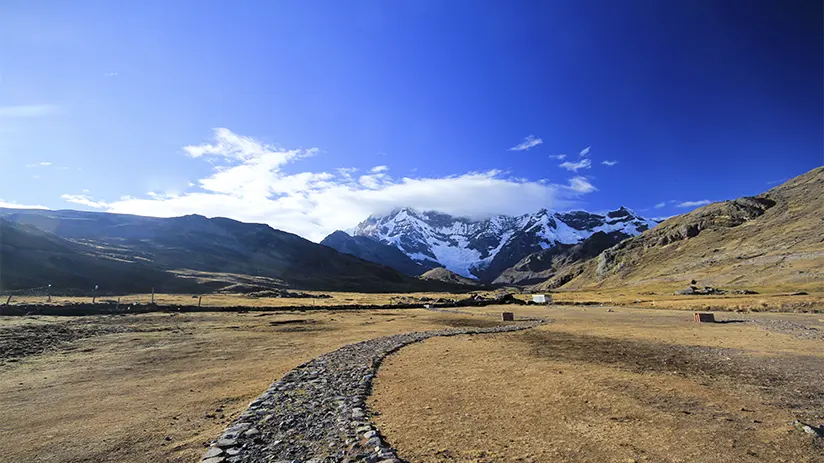
The highest passes on the Ausangate Trek reach roughly 5,100–5,200 meters (16,700–17,100 feet) above sea level, depending on the route and itinerary. Palomani Pass is generally considered the highest point on the classic circuit.
Several route and itinerary options are available for the Ausangate Trek, including 4-day, 5-day, 6-day, and 7-day itineraries. A 6-day itinerary provides more time to explore the route at a comfortable pace.
The route is particularly appealing to travelers seeking remote landscapes and a demanding high-altitude experience. If you are comparing different trekking experiences in Peru, consider how factors such as altitude, terrain, duration, and access to Machu Picchu match your travel plans.
The Ausangate Trek Route
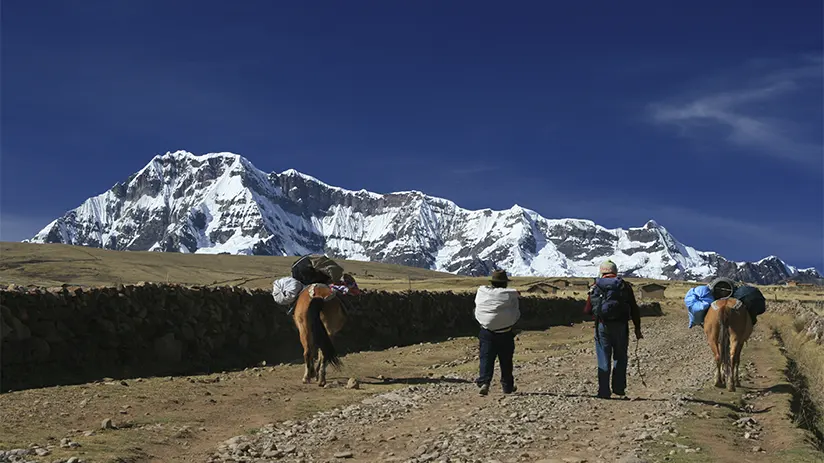
Trekking around Ausangate allows you to watch its natural attractions, including glaciers, wildlife, and colored lakes. Along the route, you will encounter remote Andean villages that still retain their traditions.
- Apu Ausangate: Ausangate is regarded as an important apu, or sacred mountain, in Andean culture. Although the trek does not climb to the summit, the circuit provides dramatic views of its snow-covered slopes and glaciers.
- Rainbow Mountain (Vinicunca): Some Ausangate Trek itineraries include Vinicunca as a route extension. Instead of approaching Rainbow Mountain on the crowded day-trip route from Cusco, the Ausangate route can approach Vinicunca from the quieter back side of the mountain, offering a different trekking experience. Some itineraries also include the nearby Valle Rojo.
- Andean Culture: The Ausangate route passes through remote Andean communities where traditional customs and ways of life remain an important part of daily life. One of the region’s most significant traditions is the Qoyllur Ritt’i pilgrimage, held annually and attracting thousands of pilgrims who travel to the foothills of Ausangate. The celebration combines religious traditions, traditional dances, and Andean cultural practices.
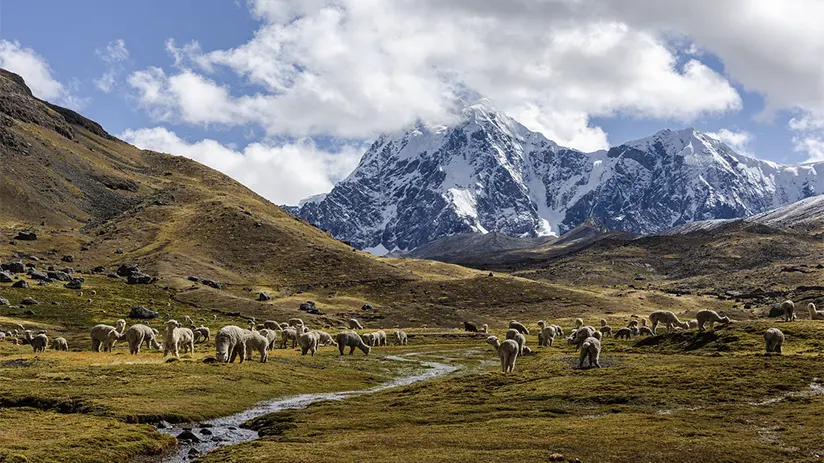
- Flora and Fauna: The site is preserved as habitat for many wildlife species. These include llamas, alpacas, vicuñas, and vizcachas. Vizcachas are South American rabbit-like rodents.
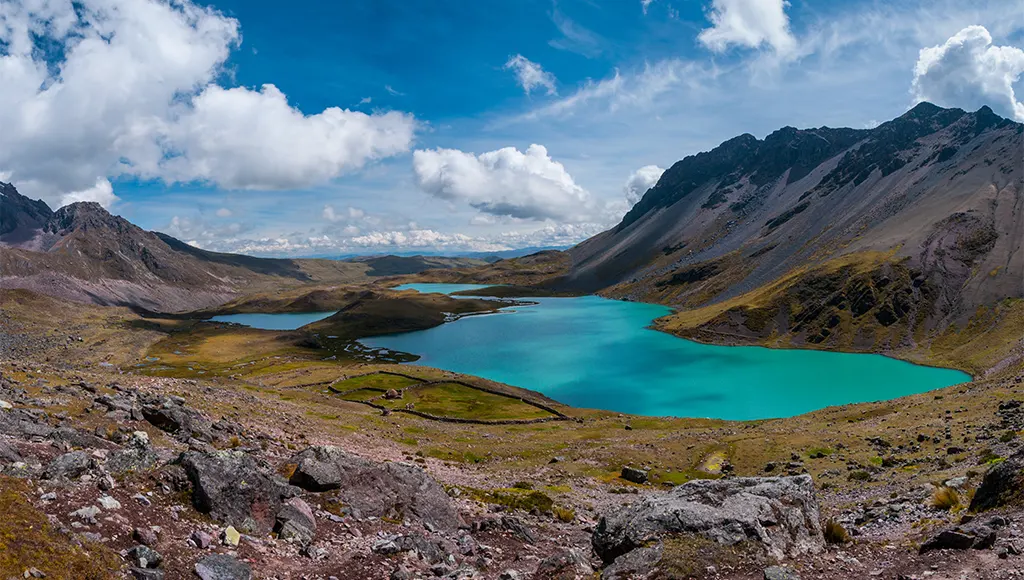
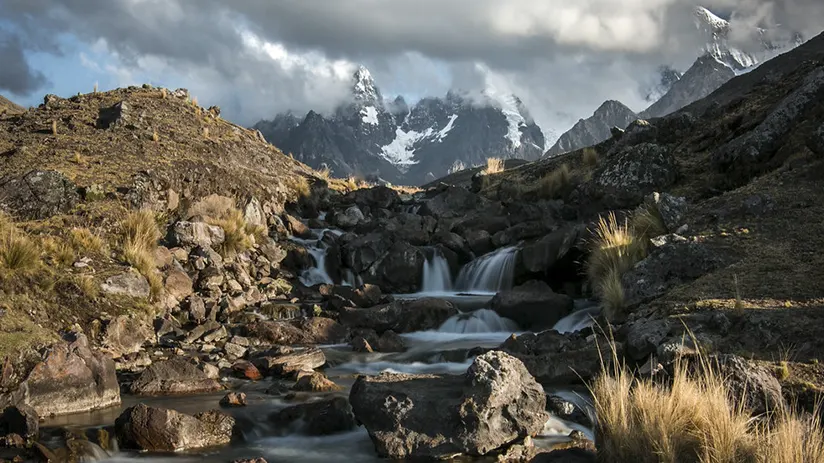
- Glaciers & Lakes: The Ausangate circuit passes through a landscape shaped by glaciers, high-altitude lakes, and mountain streams. Depending on the route, you may see turquoise, green, or reddish lakes surrounded by snow-capped peaks.
6 Day- Ausangate Itinerary
Route details vary between operators and itinerary versions. Distances, campsites, hiking times, and whether Vinicunca is included can change depending on the route selected.
The following is a representative six-day itinerary. Exact campsites, distances, hiking times, and route points vary by operator and itinerary.
Day 1: Cusco to Tinki
Travel from Cusco to Tinki, with optional stops at the archaeological site of Tipon, the ancient settlement of Pikillaqta, Lake Huacarpay, and the town of Andahuaylillas. The day is primarily focused on travel and acclimatization rather than a full day of trekking.
Day 2: Tinki to Upis
Start by making your way to the camp of Upis. On the way, you’ll pass by the beautiful ecological landscape of Quinsapucyu and the mountain Huarmisaya. After lunchtime, hikers have an opportunity to hike to mystical thermal lakes and marvel at the uniqueness of the surrounding glaciers. Approximately 6-7 hours of hiking time.
Day 3: Upis to Ausangatecocha
The most challenging day of the trek. You’ll start on an increasingly steep trail that leads you up to a high mountain pass at Arapa, where you will be rewarded with outstanding views of the entire mountain chain.
After Arapa Pass, you approach a series of beautiful Andean lakes. In the afternoon, you’ll make another climb to the Ausangate Pass before descending towards your campsite for the night at Ausangatecocha. Approximately 9 hours of hiking time.
Day 4: Ausangatecocha to Hatunpampa
This is another demanding day, with a steep ascent toward Abra Palomani before descending toward Huchuy Phinaya and continuing across the high Andean landscape to the campsite at Hatunpampa.Approximately 9 hours of hiking time.
Day 5: Hatunpampa to Pacchanta
Your trail rises immediately towards the second high pass of Abra Janca, dominated by the peak of Colquecruz. From here it’s a gentle descent towards your lunch spot before you reach the town of Pacchanta, where you’ll be rewarded with a dip in the town’s mineral-rich thermal baths – a perfect chance to relax after a long, demanding day of hiking. Approximately 8 hours of hiking time.
Day 6: Pacchanta to Cusco
Following the trail from Pacchanta, you eventually return to the town of Tinki, from where you began your adventure. You will celebrate the end of your Peru trek with a pachamanca, an ancient Andean cooking style. Approximately 5 hours of hiking time.
How Difficult is the Ausangate Trek?
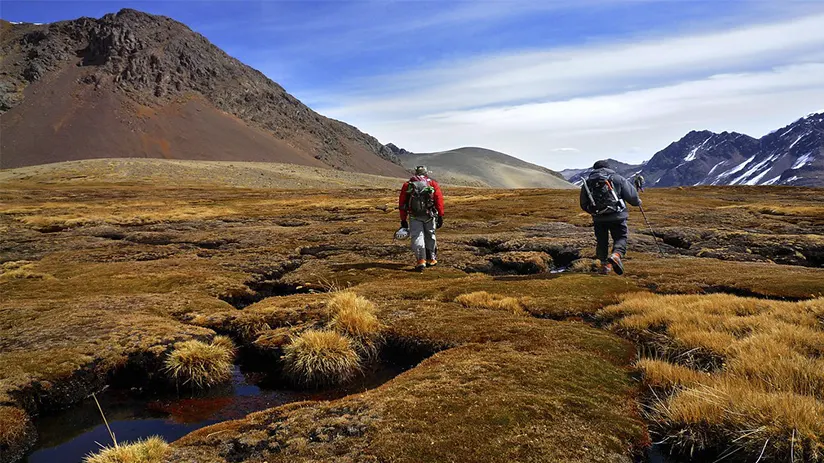
The Ausangate Trek is a strenuous multi-day hike that combines steep ascents and descents, rocky and uneven terrain, cold nights, and several consecutive days of trekking. Compared with the Salkantay Trek, Ausangate is more focused on sustained high-altitude hiking and remote Andean landscapes.
Travelers looking for other demanding multi-day routes in Peru may also consider the Choquequirao Trek, which offers a very different experience focused on remote landscapes and archaeological heritage.
Ausangate Trek Altitude & Acclimatization
Altitude
Nevado Ausangate reaches approximately 6,384 meters (20,945 feet) above sea level, making it the highest peak in the Cusco region. The mountain’s highest summit was first climbed in 1953 by an expedition that included the famous climber Heinrich Harrer.
Acclimatization
Physical fitness and altitude acclimatization are not the same. You may be in excellent physical condition and still struggle at Ausangate’s elevations if your body has not had enough time to adapt. Before starting the trek, spend several days at altitude and learn more about altitude sickness in Peru to understand the risks and how to prepare for high-elevation travel.
Best Time to Do The Ausangate Trek
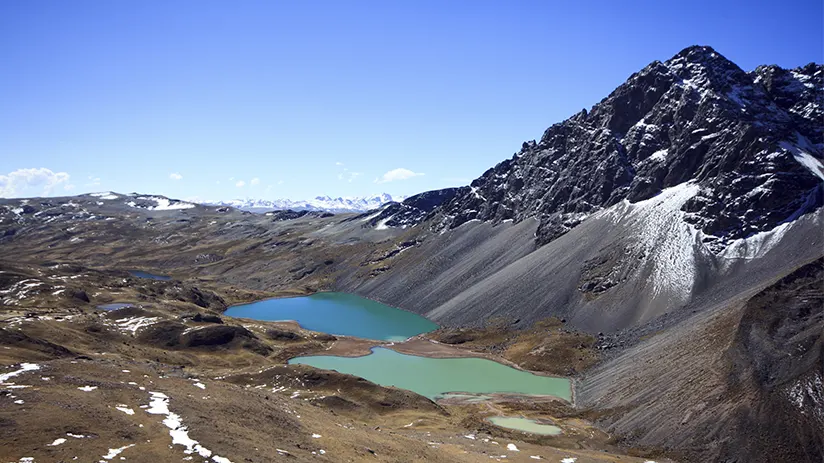
The best time to do the Ausangate Trek is during May to September. The dry season generally offers more stable conditions, clearer mountain views, and better trail conditions.
On the other hand, the rainy season runs roughly from November through March. During these months, heavy precipitation can create genuine hazards on the Ausangate route, including snow-covered mountain passes, slippery terrain, and swollen river crossings. Weather can change quickly at high elevations, so trekking conditions may be significantly more challenging.
How to Get to The Ausangate Trek from Cusco

Cusco is the base for most popular treks in the region. You can reach Ausangate from Cusco by public bus or private transport and travel southeast to the villages of Tinki and Pacchanta. The journey fromCusco to Tinki takes approximately 3 hours, although travel time can vary depending on road conditions.
Where Do You Camp on The Ausangate Trek?

Campsites vary depending on the route and operator. Ausangatecocha is one of the commonly used high-altitude camping areas, while other itineraries may camp near Upis, Jampa, or other locations along the circuit.
What to Expect at the Campsite: Campsites are generally remote, with no established mountain lodges. On an organized trek, the operator typically provides the tents, cooking equipment, and camp logistics
What to Pack for the Ausangate Trek?
This list ensures that you have everything you need for the Ausangate Trek.
| Category | What to Pack | Purpose |
| Clothing | Base layers, fleece, insulated jacket, waterproof jacket, hiking pants, thermal underwear, beanie, gloves, and extra socks | Helps protect you from cold temperatures and changing weather |
| Footwear | Waterproof hiking boots with good ankle support and extra laces | Provides traction and stability on uneven and wet terrain |
| Rain & Sun Protection | Rain pants, waterproof backpack cover, sunglasses, sunscreen, and a hat | Protects you from rain, strong sunlight, and high-altitude exposure |
| Hiking Gear | Trekking poles, headlamp, sleeping bag, daypack, and water bottles or hydration system | Helps you manage steep terrain and remote camping conditions |
| Health & Personal Items | Personal medications, basic first-aid supplies, toiletries, lip balm, and hand sanitizer | Covers essential personal care and minor needs during the trek |
| Electronics | Phone, camera, power bank, and spare batteries | Useful when access to electricity is limited |
| Optional Items | Snacks, lightweight towel, earplugs, and dry bags | Adds comfort and helps protect your belongings from moisture |
Guided or Independent Ausangate Trek?

Guided Tours
A guide is strongly recommended for the Ausangate Trek because of the route’s extreme altitude, remote terrain, and rapidly changing weather. Above 5,000 meters, altitude-related health risks become a serious consideration, while poor visibility can make route-finding more difficult.
Guided trips can also coordinate horses or other pack animals for camping equipment and connect travelers with local Quechua communities and their knowledge of the area.
Independent Trek
If you are a more experienced hiker, it is possible to do the trek independently. However, you may risk an accident because of extreme weather. Also, the mountains are far from towns. You are free to do your own itinerary and move at your own rhythm.
If you have your own gear, the cost is significantly lower than traveling with a professional tour company.
Practical Tips for the Ausangate Trek
- Choose the right season for your trek. The dry season, from May to September, generally offers more favorable conditions for hiking the Ausangate Trek. During the rainy season, from November to March, snow-covered passes, slippery terrain, and swollen river crossings can make the route more challenging.
- Make sure to stay acclimatized before starting the hike. Allow several days to acclimatize at altitude before starting the trek, especially if you are arriving from a lower elevation.
- Weather can change quickly, even during the dry season, so bring warm layers for cold nights.
- Stay well hydrated throughout the trek and monitor how you feel, especially if you begin to experience symptoms of altitude sickness.
- Purchase travel insurance. Cancellations because of weather, mudslides, etc. may occur. Investing in travel insurance is recommended to cover any incident during your trip.
- Practice your Spanish. English is not widely spoken in many remote Andean communities. Knowing at least basic words can help you to integrate and communicate if necessary.
- Tell others about your plans. If you are an experienced hiker and you have to do the Ausangate trek by yourself, you need to inform your family and close friends about your itinerary and where you stay in the city, because mobile phone coverage can be limited or unavailable in remote sections of the route.
Frequently Asked Questions About the Ausangate Trek

Do you need a permit for the Ausangate Trek?
Unlike the Inca Trail, the Ausangate Trek does not typically require a government-issued trekking permit. However, access requirements can vary by route, and local community fees or access arrangements may apply.
How many days do you need for the Ausangate Trek?
Most Ausangate Trek itineraries take between 4 and 6 days, although longer options are also available. A 6-day itinerary allows more time to experience the route at a comfortable pace.
What is the highest point on the Ausangate Trek?
The highest point on the standard Ausangate Trek is the Palomani Pass, which reaches an elevation of 5,200 meters (17,060 feet) above sea level.
How much acclimatization do you need before the Ausangate Trek?
Most travelers should allow several days to acclimatize at altitude before starting the trek, especially if you are arriving from a lower altitude. The time needed varies by person, so do not treat a fixed number of days as a guarantee against altitude sickness.
Can you do the Ausangate Trek without a guide?
It is possible to do it without a guide, but we recommend traveling with an experienced local guide who can help you navigate the route and better understand its surroundings.
Is the Ausangate Trek harder than the Inca Trail?
Compared with the Inca Trail, the Ausangate Trek is generally more demanding because of its sustained high altitude, remote terrain, and challenging mountain passes. It is also much less developed for tourism and typically less crowded, offering a quieter trekking experience than the Inca Trail.
Conclusion
The Ausangate Trek is an excellent choice for travelers looking for a remote and less crowded high-altitude adventure in the Peruvian Andes. With several itinerary options, including 4-, 5-, and 6-day routes, you can choose the duration that best fits your travel plans while experiencing dramatic mountain landscapes, glacial lakes, and traditional Andean communities.
Although it is possible to complete the trek independently, proper preparation is essential. The high altitude, changing weather, remote terrain, and limited access to services make traveling with an experienced local guide a valuable option. A professional guide can assist with route-finding, altitude-related risks, pack-animal logistics, and communication with local communities, allowing you to focus on enjoying the experience rather than managing the logistics yourself.
The Ausangate Trek has so much to offer; it can be hard to know where to start. With years of experience in tourism, Machu Travel Peru is happy to help you plan a trip to Peru. We also offer tours in the area. Let us help you make your experience unforgettable! Contact us today to plan your dream adventure!