Discover Oxapampa, a unique destination in Peru’s Central Jungle, known for its Austro-German heritage and its Yanesha and Asháninka cultural traditions. Explore forests, waterfalls, and local coffee traditions surrounded by some of Peru’s protected natural areas.
This Oxapampa travel guide covers the best things to do, places to visit, how to get there, the best time to go, how many days to stay, and practical tips for planning your trip.
You’ll find useful information about Oxapampa below:
- Where Is Oxapampa, Peru?
- What Is Oxapampa Known for?
- Why Visit Oxapampa?
- Oxapampa’s History and Cultural Heritage
- Best Things to Do in Oxapampa
- Best Places to Visit Near Oxapampa
- Nature and Wildlife Around Oxapampa
- Best Time to Visit Oxapampa
- How to Get to Oxapampa
- How Many Days Do You Need in Oxapampa?
- How to Plan an Oxapampa Itinerary?
- Practical Tips for Visiting Oxapampa
- Frequently Asked Questions about Oxapampa
- Conclusion
Where Is Oxapampa, Peru?
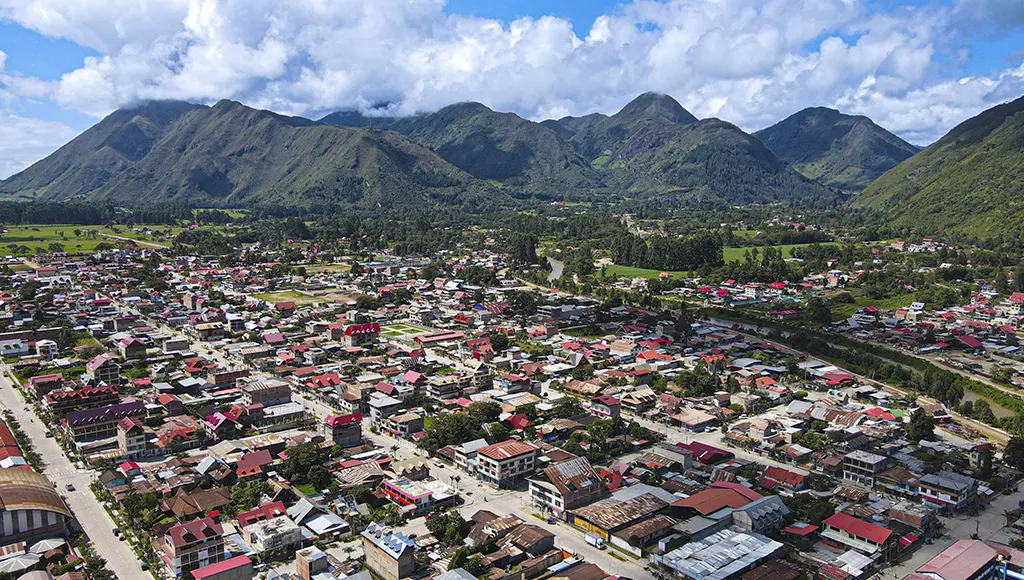
Oxapampa is a town in Oxapampa Province, Pasco Region, in Peru’s Central Jungle. It is located about 400 kilometers northeast of Lima and sits in a transition zone between the Andes and the Amazon lowlands.
What Is Oxapampa Known for?

Oxapampa is known for its Austro-German heritage, Alpine-style wooden architecture, Yanesha and Asháninka cultural traditions, surrounding forests and waterfalls, and the coffee-growing area of Villa Rica.
Why Visit Oxapampa?

Oxapampa combines cultural heritage with outdoor experiences, including hiking, birdwatching, waterfalls, coffee tours, and visits to local farms. Its Austro-German, Yanesha, and Asháninka influences give the destination a distinctive cultural character, while its forests and diverse ecosystems make it an excellent destination for birdwatching in Peru.
Oxapampa’s History and Cultural Heritage

Austro-German Heritage
In 1850, Baron Damian Freiherr von Schutz-Holzhausen signed an agreement with Peru’s government. The agreement was intended to bring up to 10,000 German and Austrian settlers from Tyrol and Prussia to Peru, though far fewer ultimately made the journey. Many Austro-German immigrants worked as cattle ranchers and carpenters, and used these skills to settle and build their lives in Peru.
The colonists took about four months to travel from Germany to Lima. Their plans changed because a civil war broke out that year. They also learned that no one had built the road to their new settlement yet. This was despite earlier promises from the Peruvian government.
In 1853, the first Austro-German immigrants arrived in Peru. After a long journey, they settled in Pozuzo, where they developed their community in isolation for decades. Around 300 people left the port of Huacho, about 150 km to the north, where authorities put them in quarantine.
From there, they crossed the coast and the Andes before making their way through the dense jungle, where they built the path themselves.
Only 170 of the colonists managed to reach the town of Pozuzo. In 1891, a few of the colonists left Pozuzo and founded nearby Oxapampa.
Access to the area remained difficult for decades until road upgrades made it easier for travelers. Currently, local people keep their Austro-German festivals and traditions, and you can see their European-style houses. Many descendants of the Austro-German settlers still live in the area and preserve their cultural heritage and traditions.
Yanesha and Asháninka Cultural Heritage
Oxapampa has long been home to the Yanesha and Asháninka Indigenous peoples, who have inhabited the region for centuries. In 1635, Franciscan missionaries arrived in the area and began their evangelization efforts. They also organized expeditions along several rivers in what is now Oxapampa Province.
In 1763, another expedition traveled along the Pachitea and Ucayali rivers to reestablish the region’s former missions. During this period, highland landowners began settling in the Huancabamba Valley. This led to several haciendas, including Chaupimonte, Punchao, Naranjal, and Lanturachi. These estates became part of the region’s colonial history and contributed to the development of the Huancabamba Valley.
The Development of Oxapampa
Over the following centuries, Oxapampa gradually developed as a settlement and later gained greater administrative and urban importance. On January 24, 1925, Oxapampa was officially recognized as a district. Alejandro Johnson was appointed as its first mayor.
On January 13, 1928, officials approved the cadastral plan for the district’s urban area. Engineer Juan E. Zegarra prepared it. In 1929, the government opened the district’s first public school, and it initially enrolled only boys. By 1940, a church had been inaugurated in the Plaza de Armas, built entirely of wood.
On November 27, 1944, Law No. 10030 created the Department of Pasco. It included the provinces of Oxapampa, Pasco, and Daniel A. Carrión. Four districts Oxapampa, Chontabamba, Huancabamba, and Villa Rica made up the Province of Oxapampa.
Architecture & Local Traditions
Architecture
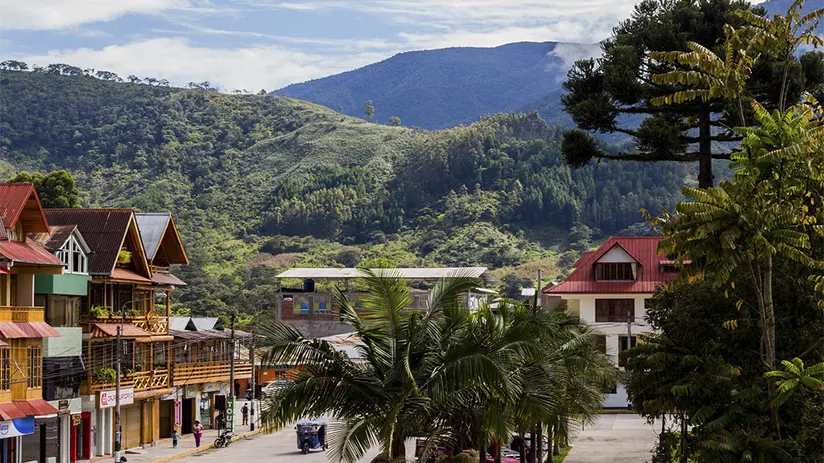
Oxapampa retains many European-style buildings that reflect its immigrant heritage. Many are wooden, Alpine-style homes built by Tyrolean and German immigrants. The Santa Rosa Church is an important architectural symbol, reflecting Tyrolean influences in its design and construction.
Local Traditions
Oxapampa has many local traditions and festivities that help preserve its cultural heritage.
- Encuentro de Sabios en Lenguas Originarias (June 25): In late June, this gathering brings together community elders. They promote and preserve traditional stories, songs, and myths. Indigenous languages like Yanesha and Asháninka pass these down. The Municipality of Oxapampa organizes the event.
- Annual “Colonist Festival”: The festival celebrates Oxapampa’s Austro-German heritage with traditional music, yodeling, and folk dances. People also wear traditional attire like lederhosen. Lederhosen are leather shorts worn in German-speaking regions. People in Pozuzo celebrate this festival in July.
- Patronal Festivity of Santa Rosa and Oxapampa Anniversary: This is one of the province’s most important cultural celebrations. The festival includes a traditional horseback ribbon tournament. It also features Tyrolean and Yanesha dances. There are food fairs. Large serenades take place in the Plaza Mayor.
- Selvamonos Festival takes place in late June or early July. It combines music, art, and environmental awareness. It is part of a Cultural Week. The week brings together young people from Peru and abroad. The week concludes with a large outdoor festival featuring performances by national and international bands.
Best Things to Do in Oxapampa

Explore the City Center
Oxapampa’s Main Square (Plaza de Armas)
Oxapampa’s Main Square is the heart of the city and an important gathering place. The square is surrounded by green spaces, native trees, and traditional wooden buildings with Alpine influences, reflecting the city’s Austro-German heritage.
At its center stands an octagonal obelisk built in 1959, decorated with wooden reliefs depicting an Austro-German colonist, a Yanesha Indigenous person, Saint Rose of Lima, and the town’s first parish priest. These carvings reflect some of the cultural and historical influences that have shaped Oxapampa over time. The plaza is also close to several important landmarks, including the Santa Rosa Church and the Oxapampa Social Center, which serves as a gathering place for social events and cultural celebrations.
Visit Waterfalls and Natural Pools
The waterfalls in and around Oxapampa each have distinctive features, from dramatic drops and emerald-green pools to lush jungle surroundings, making them a memorable addition to the waterfalls in Peru.
Waterfalls
- Rio Tigre Waterfall: It is about 10 minutes by mototaxi from Oxapampa’s city center. People say the sound of its rushing water resembles a tiger’s roar.
- El León Waterfall is a natural attraction in the Villa Rica District, in Oxapampa Province, Pasco Region. The waterfall is part of the region’s Coffee Route. The waterfall lies within the Oxapampa-Asháninka-Yanesha Biosphere Reserve.
- The Enchantment Waterfall is in the Villa Rica district, Pasco region. The waterfall drops about 30 meters. Lush tropical vegetation surrounds it. At its base, a large emerald-green pool forms, where travelers can swim and cool off.
- Bayoz Waterfall is located in the Perené District, Chanchamayo Province, Junín Region. This waterfall is one of the most famous in Peru’s Selva Central. It is known for emerald-green waters, multi-tiered cascades, and warm tropical swimming pools.
- Catarata Velo de Novia (Bridal Veil Falls) is located in the Perené District, Chanchamayo Province, Junín Region, close to Catarata Bayoz. This waterfall has a massive sheer rock wall dropping roughly 55 meters.
Natural Pools
- Manantial de la Virgen: It is in the Oxapampa district. The site has three terraced pools of clear, cold water. A natural spring feeds the pools.
- Pozos de Agua y Sal (Pozas Río Azul): Situated in the Pozuzo District, in Oxapampa Province. It is known for its turquoise waters. The water has high mineral levels, including salt and sulfur. The water reflects its distinctive color under sunlight.
Explore Forests and Nature Reserves
- Tsho’llet Forest: meaning “Queen of Colored Snails”, this humid, misty area has pajonal grasslands. It also has sclerophyllous shrubs up to 2 meters tall. Five lagoons, called the “Lágrimas de Sho’llet” (Sho’llet Tears), act as natural water reservoirs.
- They feed several local streams. The area also includes a watershed divide marking the boundary between the districts of Oxapampa and Villa Rica.
- Yanachaga-Chemillén National Park is near Oxapampa. This protected natural area is popular for birdwatching and hiking. It offers chances to explore diverse landscapes and wildlife.
Discover Local Farms & Coffee Culture
Local Farms
- Fundo Hassinger: Located near the city of Oxapampa, Fundo Hassinger is a rural property that offers opportunities for family and experiential tourism. Visitors can learn about local cattle-raising traditions and experience the relationship between agricultural activities and the surrounding natural environment.
- El Wharapo: Located in the Chontabamba District, about 15 minutes from Oxapampa. This historic rural estate shows how sugarcane was traditionally made by settlers’ descendants. It preserves traditional farming practices from earlier generations.
- Fundo La Colorada: Located in the picturesque Mesapata area, along the road connecting Oxapampa and Huancabamba, this 230-hectare rural estate combines farm-based accommodation with agricultural activities.
Coffee Culture
Oxapampa is known for its production of Peruvian coffee, particularly in Villa Rica, as part of Oxapampa Province’s heritage. Villa Rica is locally promoted as the “Land of the Finest Coffee in the World” and is an important destination for learning about coffee production and local coffee culture. Its coffee production is closely linked to the region’s economy, history, environmental conservation, and local traditions.
- Coffee Route: One way to experience this coffee culture is by following the Villa Rica Coffee Route. Several historic coffee farms, including Finca Santa Rosa and Finca La Torre, welcome visitors. Guests can learn the coffee-making process from bean to cup.
- Aneczu Villa Rica is in the Villa Rica District, Oxapampa Province. This coffee center specializes in specialty coffee. It also runs its own coffee brand. It was originally established in 2009 under the name “Arte y Café”.
- Today, it is part of the Coffee Route in Peru’s central jungle. It offers visitors chances to learn about coffee production. Visitors can also explore local farming traditions.
- Finca Santa Rosa is in the Villa Rica District. This coffee farm offers an immersive experience to learn about the coffee process and enjoy birdwatching activities.
- Finca La Torre: Also called the Coffee Park, this traditional coffee farm is in Villa Rica. Visitors can learn about local coffee production. It is an agrotourism destination.
- Under the Kere’ma Café brand, the farm processes and sells its specialty coffee beans. It uses washed, honey, and natural methods. It also produces value-added products such as jams and nectars made from native fruits, including guava and quitoquito.
Experience Oxapampa’s Local Culture & Gastronomy
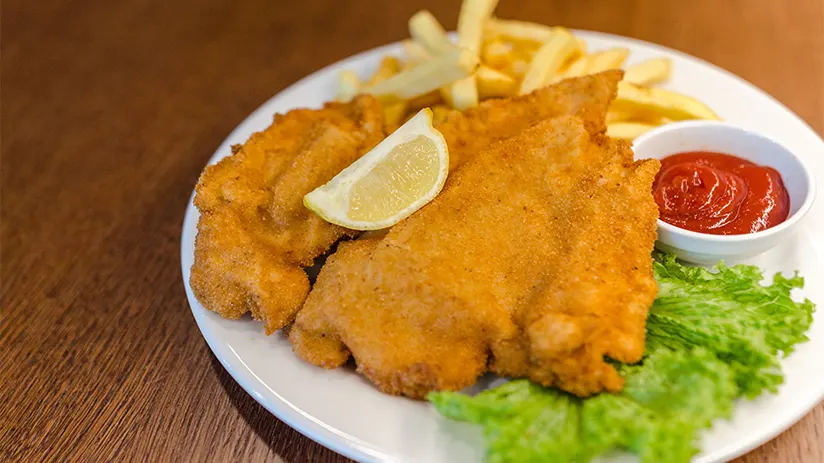
Oxapampa’s cuisine reflects Asháninka, Yanesha, and Austro-German influences. Its architecture, polka dances, and gastronomy reflect this mixture.
Local Food
- Oxapampa Grill: The typical dish of this region is the Oxapampa grill. It is served with beef, pork, chorizo, and yuca.
- Oxapampa Chicharrón: Like other versions of this traditional Peruvian dish, Oxapampa chicharrón is typically served with yuca.
- Plátano Rebosado: Ripe plantain slices coated in a mixture of egg and flour, then fried until golden and crispy. They are served as a side dish or dessert.
- Specialty dairy products are part of Swiss-German dairy traditions. Aged cheeses like Edam, Danbo, and Emmental are popular. Plain yogurt and artisanal butter are also common local products.
- Schnitzel: A classic breaded meat cutlet, often made with pork or beef. It is tenderized, coated in breadcrumbs, and fried until golden and crisp. It is often served with a warm potato salad.
- Gulasch con Spätzle: A tender beef stew seasoned with paprika and a blend of spices, served with rustic homemade noodles known as spätzle.
- Knödel (Meatball Soup): Dumplings made with chopped bread, milk, eggs, bacon, and spices, served in a comforting broth made with free-range chicken.
- Fleischsuppe with Strudel: A clear meat broth served with a savory strudel filled with vegetables and seasoned with spices.
Charcuterie and Sausages
- Schüblig and Bratwurst: Artisanal sausages prepared using traditional European recipes. Schüblig is known for its smoky flavor, made using local wood. Bratwurst is seasoned with fragrant herbs and grilled.
- Smoked Meats: Ribs and cured meats that are traditionally seasoned and smoked. Smoking was traditionally used to preserve meat in the region’s warm climate. Later, it became part of the local culinary tradition.
Traditional Drinks
- Quito-Quito Drink: Made from a native citrus fruit that is round in shape and resembles lulo or naranjilla. Its juice has a distinctly tart and intense flavor and is often served alongside grilled and smoked meats in Oxapampa.
- Craft Beer: Oxapampa and Pozuzo have a local brewing tradition influenced by their Austro-German heritage. Local breweries produce European-inspired beer styles using spring water from the surrounding rainforest and locally sourced ingredients. Some varieties incorporate regional ingredients, such as bamboo leaves and shoots or local fruits.
- Masato: An Indigenous traditional drink consumed mainly within Yanesha and Asháninka communities in the province. It is made from boiled and mashed cassava, which is left to ferment for several days.
Traditional Desserts
- Apfelstrudel: A classic apple pastry made with thin, crisp dough, cinnamon, and raisins, baked in the traditional Tyrolean style.
- Strukel (Shtrukel): A traditional Pozuzo pastry made with rolled dough and filled with ripe plantains or local fruits, adapting a European recipe to ingredients from the region.
- Kuchen: Fruit tarts and pies made with seasonal fruit, like quito-quito or passion fruit. They are topped with a crisp layer of dough and sugar.
Best Places to Visit Near Oxapampa

Pozuzo
The city of Pozuzo was created by Law 2889 on November 29, 1918. It is home to Yanachaga-Chemillén National Park and other natural areas. These include the Pozas Río Azul.
Currently, Pozuzo preserves its European-style buildings, and its welcome arch is the starting point for exploring the city. The city honors Santa Rosa every August 30. The celebration includes religious activities, novenas, and masses. It also includes cultural events that help preserve and enrich its cultural heritage.
Villa Rica
This site has a famous coffee culture, and its inhabitants mainly dedicate themselves to agriculture. Its surroundings are ideal for experiential tourism, ecotourism, and agritourism.
Yanachaga – Chemillén National Park
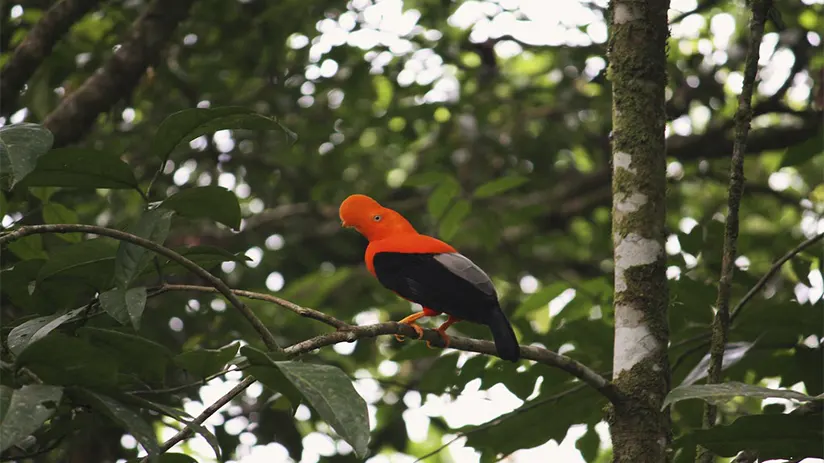
This National Park is home to much flora and fauna. The emblematic cock-of-the-rock, a national bird, stands out. The park offers opportunities for hiking and birdwatching.
Other Natural and Cultural Attractions
Cultural Attraction
- Schlaeffli Museum is a cultural center. It tells the story of immigrants who came to Peru in the 19th century.
- Armando Schaefli Loecke lived in his father’s house, which he later converted into a museum. It tells the town’s history and shows objects they brought when they arrived. One of its most important exhibits is a video. It includes a presentation about life in the colony.
Natural Attractions Near Oxapampa
- Tunqui Cueva: This is a natural cavern in Oxapampa. It is surrounded by underground caves that reach the surface. This cavern is the city’s main attraction because of its landscapes, stalagmites, and stalactites. It draws explorers and travelers to discover this stunning place.
- Yanesha Communal Reserve: This reserve has been a reserve since 1988. It protects local plants and animals. It also preserves local culture. It supports the community that lives there.
- El Sira Communal Reserve: This communal reserve is a state-protected area. It protects and preserves natural resources. Also, it supports the survival of the Asháninka, Yanesha, and Shipibo peoples living here.
Experiential Tourism
- Piscigranja La Cumbre: Located in Chontabamba district, Oxapampa province. This popular attraction is a well-known ecotourism spot. Travelers can learn about aquaculture and explore the Peruvian jungle.
Nature and Wildlife Around Oxapampa
Forests and Mountain Landscapes
- Chontabamba: It is a district of Oxapampa. This place is rich in natural, archaeological, cultural, and spiritual attractions. These attractions are ideal for experiential tourism.
- San Matias San Carlos Protection Forests: This protected forest extends across the districts of Villa Rica and Puerto Bermúdez. The forest also helps regulate the water cycle.
- This supports local Asháninka and Yanesha Indigenous communities. Its dense vegetation includes highland and lowland rainforest. It also forms an important biological corridor with Yanachaga-Chemillén National Park.
- Mirador La Florida is in Chontabamba. This viewpoint offers wide views of Oxapampa city, nature, and buildings.
Waterfalls, Rivers and Lagoons
- Pichis and Palcazú Valleys: These valleys offer opportunities for birdwatching and cultural experiences with local communities. You can take boat trips on the rivers, swim in natural stone pools, like the Mugñiz waterfall, and go birdwatching. Visitors can visit native communities to learn about traditional medicine. They can sample jungle fruits and taste river fish like paiche or doncella.
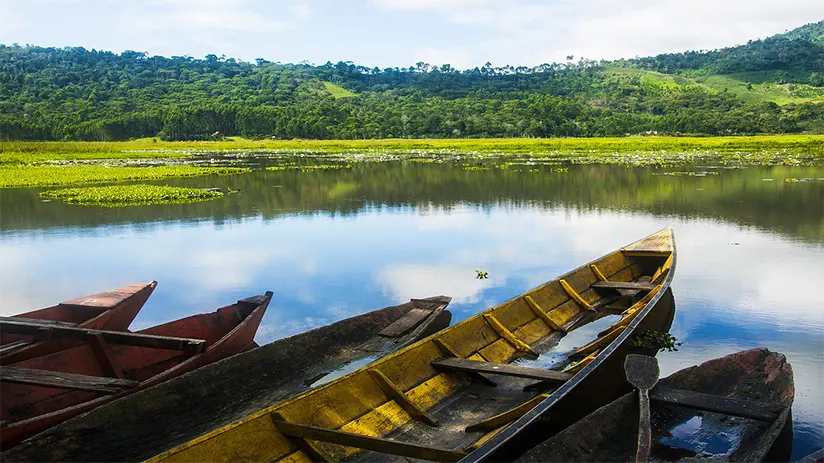
- Laguna Oconal: This lagoon is in the Villa Rica district. It is ideal for those who want to relax. You can also enjoy many activities.
- Take a boat ride among aquatic lilies and lotus flowers. You can also try ictiotherapy. Soak your feet in the lagoon and enjoy natural fish spa therapy.
- La Bruja Waterfall (The Witch) is in Villa Rica District. It is part of the Oxapampa Asháninka-Yanesha Biosphere Reserve. It has a 19-meter-high drop and is approximately 5 meters wide.
- Catarata Muñiz (Muñiz waterfall) is located in the Palcazú district, in Oxapampa province. Tucked inside the Oxapampa-Asháninka-Yanesha Biosphere Reserve. Few travelers visit the waterfall, so it remains hidden. Its features are pristine emerald- green waters and surrounding wild jungle scenery.
Birdwatching and Wildlife Experiences
Oxapampa is an important destination for birdwatching and wildlife observation in Peru’s Central Jungle. This region hosts over 855 recorded bird species representing roughly 45% of the bird diversity in Peru.
- Sector San Alberto is situated about 15 minutes from Oxapampa city. You can hike misty mountain trails to spot quetzals, trogons, and motmots. Or watch for fresh tracks from the endangered spectacled bear.
- Sector Huampal: Located along the route to Pozuzo. People in this sector praise its bird route and its great chances to see the cock-of-the-rock.
- El Palmeral Conservation Area: This area boasts about 150 bird species, including 6 endemics in Peru.
- Bosque de Churumazu Private Reserve: The reserve is well suited for bird photography. At this reserve, you can watch the green- and white-hummingbird or the yellow-scarfed tanager.
- Humedal de Villa Rica: This wetland oasis is located in the Villa Rica district. It is known for its aquatic birding. You can take a boat ride to appreciate the great egrets, herons, and migratory ducks.
Best Time to Visit Oxapampa
The drier months generally offer more favorable conditions for hiking, birdwatching, and visiting waterfalls. However, rainfall can occur throughout the year because Oxapampa is in a humid jungle environment.
How to Get to Oxapampa
From Lima
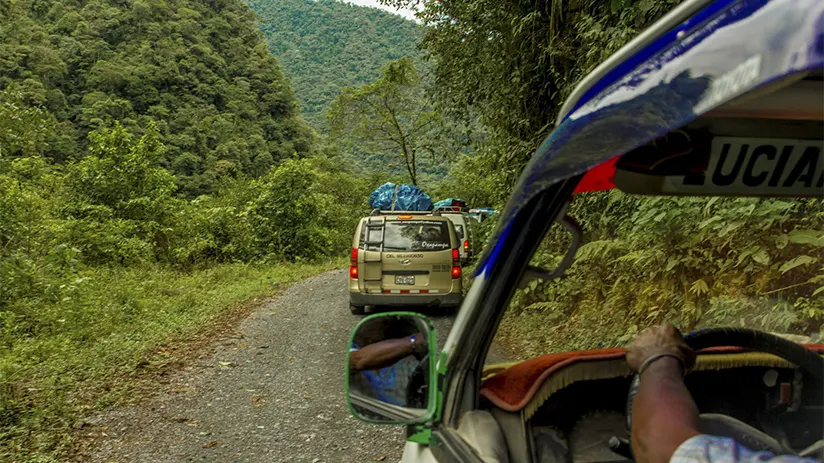
The most common way is to take a bus from Lima to Oxapampa. It takes about 12 hours, depending on the route and road conditions.
From Other Destinations in Peru
Another way is to fly from Lima to Jauja, the nearest airport. Then take a bus from Jauja to Oxapampa. The bus ride takes about 3 hours.
Getting Around Oxapampa
Getting around the city is easy by mototaxi, taxi, or public transport. These options also work for nearby areas. For exploring surrounding districts like Chontabamba, local colectivos (shared minivans) depart regularly from the terminals.
How Many Days Do You Need in Oxapampa?
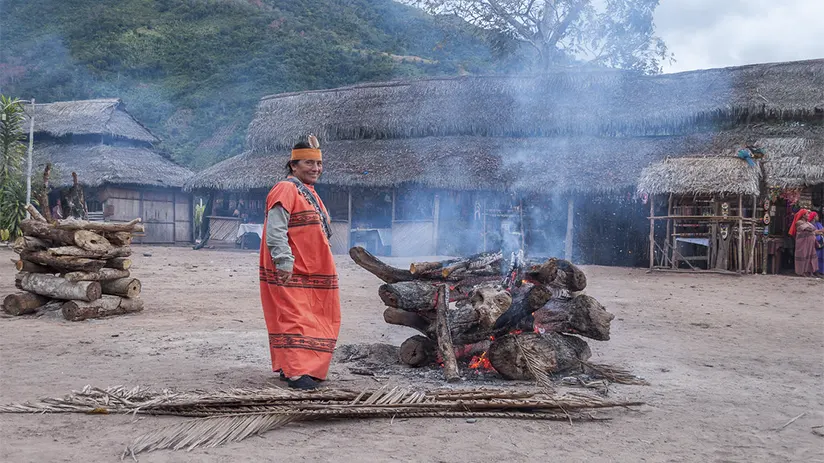
Plan to spend at least four days exploring Oxapampa and its surroundings. If you have more time, you can spend a week doing adventure, ecotourism, and experiential tourism in the city.
How to Plan an Oxapampa Itinerary

One-Day Oxapampa Itinerary
| Stop | Activity | What to Expect |
| Oxapampa City | Explore the city center | Discover the Plaza de Armas, traditional wooden buildings, and local cultural landmarks. |
| Local Cheese Factory | Learn about cheese production | See how locally produced cheese is made and learn about the area’s dairy traditions. |
| El Wharapo | See the sugar cane process | Learn about traditional sugar cane processing and local products. |
| Chontabamba District | Explore the surrounding area | Enjoy the rural landscape and learn more about the area’s agricultural traditions. |
| Miraflores Neighborhood | See traditional architecture | Admire European-style wooden buildings that reflect Oxapampa’s immigrant heritage. |
| Catarata Río Tigre | Visit the waterfall | Enjoy the natural scenery and finish the day with a visit to one of the area’s waterfalls. |
Two-Day Oxapampa Itinerary
Discover Oxapampa in two days and learn about its cultural heritage.
| Day | Stop | Activity | What to Expect |
| 1 | Oxapampa | Explore the city | Discover the city center and learn about its cultural and architectural heritage. |
| 1 | Local Cheese Factory | Learn about cheese production | See how locally produced cheese is made and learn about the area’s dairy traditions. |
| 1 | El Wharapo | Learn about sugarcane processing | See traditional methods used to process sugarcane and make local products. |
| 1 | Miraflores Neighborhood | Explore local architecture | See Tyrolean-style wooden buildings associated with Oxapampa’s immigrant heritage. |
| 1 | Río Tigre Waterfall | Enjoy the natural scenery | Visit a scenic waterfall surrounded by the forests and landscapes of the area. |
| 2 | Huancabamba District | Explore the district and surrounding landscapes | Discover rural landscapes and natural attractions around Huancabamba. |
| 2 | Rajatambo, Yulitunqui & Torrebamba Waterfalls | Visit waterfalls | Stop at several waterfalls along the route and enjoy the surrounding natural scenery. |
| 2 | Prusia, Pozuzo | Explore the town | Visit the main square and churches while learning about the town’s European immigrant heritage. |
| 2 | Local Craft Beer | Try a local product | Sample locally produced craft beer as part of the area’s food and drink culture. |
| 2 | Pozuzo Museum | Learn about local history | Explore exhibits related to Pozuzo’s history and immigrant heritage. |
Longer Oxapampa Itinerary
A longer Oxapampa itinerary and its surroundings.
| Day | Destination | Main Activities | What to Expect |
| 1 | Oxapampa & San Luis de Shuaro | Visit the Mirador de Mezapata, Oxapampa Valley, El Wharapo, Santa Rosa Church, and the Colonists’ Walk. | Enjoy views of the surrounding valley, learn about traditional sugarcane processing, and explore Oxapampa’s cultural and architectural heritage. |
| 2 | Perené Valley & Pichanaki | Visit the Kimiri Suspension Bridge, Sleeping Native Mountain, Bayoz Waterfall, Bridal Veil Waterfall, and El Pescador Beach. | Explore the natural landscapes of the Perené Valley and visit waterfalls, viewpoints, and riverside areas. |
| 2 | Pampa Michi | Visit the Asháninka Indigenous community of Pampa Michi. | Learn about Asháninka culture and local traditions through a community-based cultural experience. |
| 3 | Pozuzo | Visit the church, Guillermo Bridge, and Settlers Museum. | Discover Pozuzo’s history and European immigrant heritage while exploring its main landmarks. |
| 4 | San Ramón & La Merced | Visit Plaza de Armas de San Ramón, Tirol Waterfall, Chaveta Yarda Botanical Garden, Mini Zoo, and Plaza de La Merced. | Explore local attractions, gardens, and natural landscapes around San Ramón and La Merced. |
Practical Tips for Visiting Oxapampa
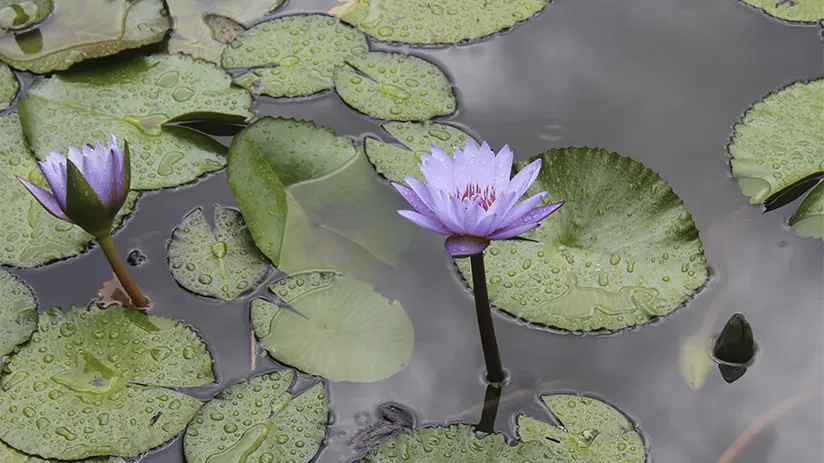
- Explore nearby nature reserves and their waterfalls. Learn about Yanesha and Asháninka communities. Discover their sustainable way of life. See how they protect these nature reserves.
- Try a traditional Oxapampa breakfast and local specialties. Some accommodations in Oxapampa offer breakfast buffets featuring local dishes and dairy products, including typical dishes mixed with Austro-German food. Their dairy products are high quality and loved by locals.
- Try the Local Craft Beer: When you visit Pozuzo, visit an artisanal craft brewery and try it.
- If you plan to visit for birdwatching, bring the right gear. Pack good binoculars and a camera with good low-light ability. This will help you take the best photos.
- Respect Protected Areas: Oxapampa and Pozuzo follow a sustainable conservation model. Respect and follow their rules.
- When visiting Yanesha or Asháninka indigenous communities (like Tsachopen), always ask for permission before taking photographs of individuals or their handmade crafts.
- Respect the local people, their native communities, and their way of life. Do not litter in the streets or natural areas. If you cannot find a trash bin nearby, keep your packaging in your bag and dispose of it properly when you find one.
What to Pack
- Layered clothing: the weather can vary, so it’s important to bring a windbreaker, layering clothes, and a rain poncho.
- A hat and sunscreen
- sunglasses
- Good-quality binoculars (in case of birdwatching activities)
- Comfortable shoes for hiking
- Towel and swimsuits for waterfalls and pools
- Anti-sickness tablets for the bus from Lima (optional)
- Bring water shoes to protect your feet from jagged, slippery rocks.
Weather & Road Conditions
Road conditions to Oxapampa from Lima are generally manageable on the Central Highway, but the winding mountain stretches are prone to heavy traffic, fog, and occasional landslides (huaicos).
Responsible Travel & Nature Conservation
Tourism can contribute to conservation efforts and support local communities. Some eco-friendly lodges reuse rainwater and compost organic waste.
Their local guides are trained in low-impact trekking and wildlife protection. Tourist income supports conservation of endangered species. These practices can support responsible tourism and conservation in the region.
Frequently Asked Questions About Oxapampa

Is Oxapampa worth visiting as part of a Peru itinerary?
Yes. The area has German heritage. It also has jungles and mountains. You can take a day trip to Pozuzo. This makes it unlike anywhere else in the country.
Can you visit Oxapampa and Pozuzo on the Same Trip?
Yes. Oxapampa and Pozuzo can easily be combined in the same trip. Located about 77 kilometers from Oxapampa, Pozuzo makes a natural addition to a multi-day itinerary through Peru’s Central Jungle. Because Pozuzo is located about 77 kilometers north of Oxapampa, they can be combined into a multi-day travel circuit through Peru’s central high jungle.
Is Oxapampa suitable for families?
Yes. Oxapampa offers family-friendly activities such as visiting farms, waterfalls, natural attractions, and cultural sites. Families should choose activities appropriate for their children’s age and fitness level.
Can you visit Oxapampa without a guide?
Yes. Visiting the town independently is possible. However, a specialized guide can be useful for activities such as birdwatching, cave exploration, or experiential tourism.
What should you pack for a trip to Oxapampa?
Pack a lightweight windbreaker, layers, and a rain poncho, as weather conditions can change. You should also bring a hat, sunscreen, and sunglasses.
Bring comfortable hiking shoes too. Pack a swimsuit if you plan to visit waterfalls or natural pools. Birdwatchers should also pack good-quality binoculars.
Is Oxapampa part of the Amazon Rainforest?
Yes, in a broader ecological sense. Oxapampa is located in Peru’s Central Jungle, a transition zone between the Andes and the Amazon Basin. Its landscapes are part of the wider Amazonian ecosystem, although they differ from the lowland rainforest found farther east.
What is the road like from Lima to Oxapampa?
The route from Lima to Oxapampa crosses several geographic zones. The route travels from the Pacific coast through the Andes before descending into Peru’s Central Jungle. Road conditions and travel times can vary, particularly during the rainy season.
How far is Oxapampa from Lima?
Oxapampa is about 400 km northeast of Lima by road. By bus, the journey takes about 12 hours from Lima, depending on the route and road conditions.
Also, you can fly from Lima to Jauja. Then take a bus from Jauja to Oxapampa. The bus ride takes about 3 hours.
Conclusion
Oxapampa offers a distinctive combination of Austro-German heritage, Yanesha and Asháninka cultural traditions, and outdoor experiences. Its diverse landscapes also reflect the richness of Peru’s biodiversity, from cloud forests and mountain ecosystems to the tropical landscapes of the Central Jungle.
For travelers interested in nature and responsible travel, Oxapampa provides opportunities to explore local forests, visit waterfalls, discover coffee farms, and experience ecotourism in Peru. While exploring the country’s natural attractions, travelers can also consider destinations such as Gocta Waterfall in northern Peru, another example of the country’s diverse landscapes and spectacular waterfalls.