A country is known for its unique qualities, which include its landscapes, its culture, its music, its dances, its people, and the clothes they wear. Clothing is not only an element of fashion, but also an integral part of a country’s culture. A clear example of this is the “chullo”, the famous hat of Peruvian traditional clothing that has become an iconic symbol.
Peru is a country with numerous regions, festivities, and traditions that blend harmoniously. Each city or place has its own identity. However, they all preserve the rich mix of flavors and colors characteristic of Peruvian culture. For this reason, we have worked with the travel experts at Machu Travel Peru, and we created this short article on the topic.
This video highlights the distinctive Peruvian traditional clothing worn across the country’s diverse regions, showcasing traditional garments, vibrant textiles, and authentic cultural details. It provides a visual complement to the history and traditions explored throughout this guide.
The best examples of Peruvian traditional clothes to wear
- Origin and history
- Traditional Peruvian clothing for women
- Traditional Peruvian clothing for men
- The cultural and economic impact
Origin and history
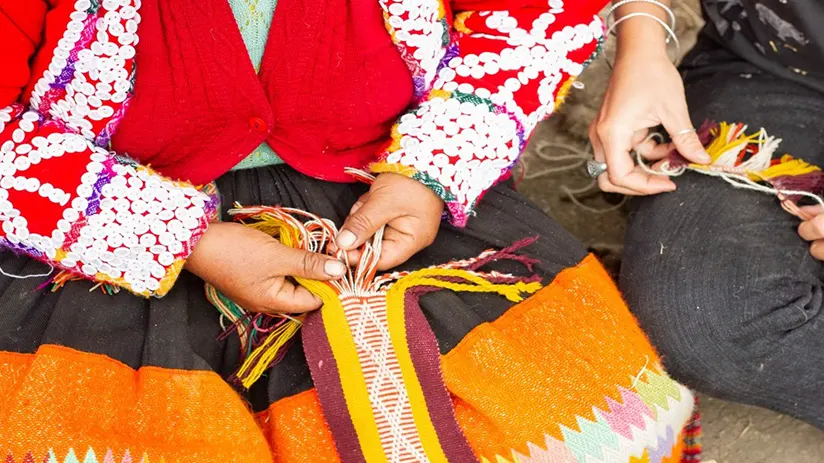
Traditional Peruvian clothing has an interesting, millennia-long history, evolving from ancient Andean civilizations to the present day, fusing indigenous techniques with colonial influences. Textiles were more than just garments: they symbolized social status, cultural identity, and spiritual beliefs. Furthermore, they have a rich history deeply intertwined with the country’s pre-Inca, Inca, and colonial past, evolving through cultural exchange and adaptation.
Textiles play a crucial role in diplomacy, with distinctive styles emerging from various regions. The arrival of the Spanish introduced new fabrics and styles, leading to a fusion of indigenous and European elements in garments such as the pollera and the montera.
Traditional Peruvian clothing for women
In general, within Peruvian women’s traditional clothes, the main elements are dresses, blankets, tunics, skirts, and hats. Remember that each suit or piece of clothing can vary a lot from one region to another.
Each city and town has its special qualities. People can often tell where someone is from just by looking at their hat. Traditional Peruvian garments are usually very colorful, bright, and with very original patterns, so they are usually a great option for Peruvian souvenirs. Apart from being useful as clothing, they represent our identity and history through fabric.
Lliclla

Lliclla is a Quechua word for a type of cape, Andean women often wear it, and people call it a Manta. A Lliclla is usually a textile that covers the back and shoulders of the women of Peru. People usually secure these in the front with a pin or Tupu, or they simply wear them tied.
Women also use this Peruvian traditional piece of clothing to carry children on their backs. Both men and women often use it to carry cargo. If the cloth is exclusively for carrying large loads, then it bears the name of K’eperina. In some tours in Peru, you will be able to appreciate the women carrying their children on their backs with these garments.
Chumpi

Women traditionally use a Chumpi to close their skirts. The Quechua language provides this word, which translates as belt. Men also often use Chumpis to tie their pants or as a means of supporting themselves with certain heavy loads. Some women even use Chumpi to secure their swaddled babies.
Jobona

The Jobona is a Peruvian traditional clothing extremely common among Andean women. Jobona is the Quechua equivalent of a traditional wool jacket. These jackets are usually decorated with colorful button patterns. These clothes always go under the Lliclla.
Monteras
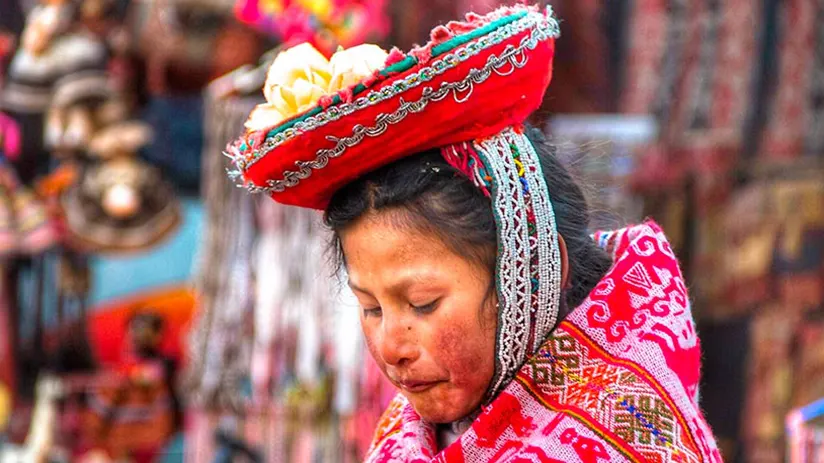
Monteras is a native Quechua language word for traditional hats that often vary and differ depending on the region. Many times, it is possible to identify the village or region the woman comes from just by looking at the hat.
These hats feature a woven strap called Sanq’apa, which usually adorns them with white beads. The strap holds the hat under the chin and keeps it steady. In some museums in Cusco, you will be able to find exhibits with some ancient monteras, as well as other examples of Peruvian traditional clothes.
Polleras

Polleras are wide skirts traditionally made of wool or other textile materials. Designers usually adorn the skirts with a colorful band called Puyto. People usually apply these bands by hand after buying a skirt from the market. As with other Peruvian traditional clothes, skirts often indicate a woman’s origin as well as her social status.
Ojotas

Ojotas are handmade sandals that are usually made from recycled tires. Despite their rough aesthetic, the Andean people feel very comfortable with them. Ojotas form a large part of Cusco cultural traditions, as well as other traditional Peruvian garments.
Traditional Peruvian clothing for men
Traditional men’s clothing has undergone many more cultural changes than women’s clothing. In recent years, young Andean men prefer to wear western-style clothing such as caps and sportswear. Despite this, people continue to wear traditional men’s clothing during local festivals or important events.
Older men still honor their traditions and culture; they often wear ponchos, chullos, and knitted pants. These are examples of traditional Peruvian clothing.
Poncho
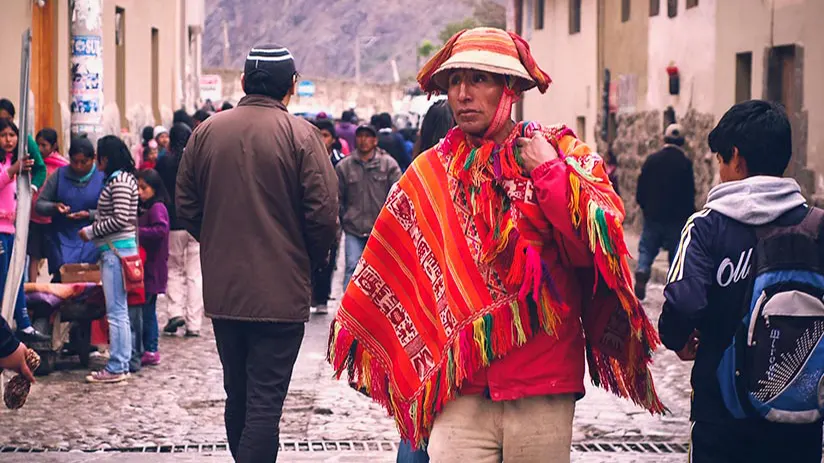
If you are planning a trip to Peru, you will most likely see most of the locals wearing Ponchos among other things. Poncho is one of the main elements of the Peruvian male attire. This outer garment is very warm and often comes in numerous vibrant designs depending on your motif. As with women’s hats, the poncho usually indicates the origin of the man.
Chullo
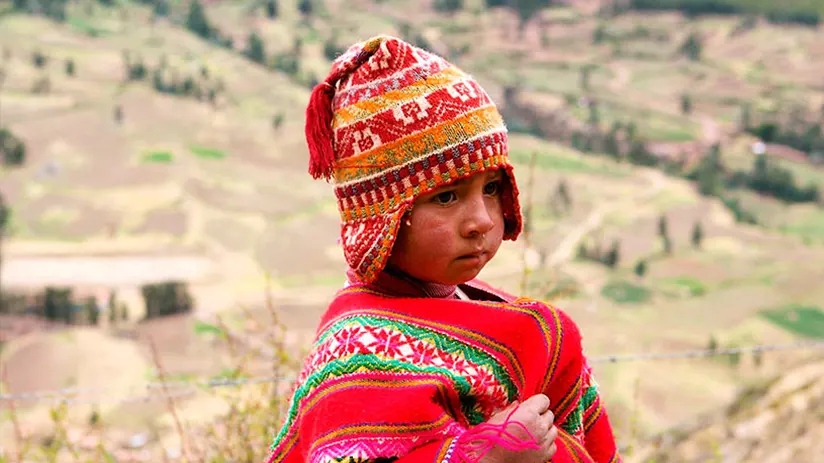
The Chullo is one of the most traditional and representative hats of the Andean country. Artisans usually make this item by hand with alpaca, llama, vicuña, or sheep wool, among others. She wears her signature earmuffs and tassels to keep you warm in the cold. One of the most surprising facts about Peru is that these hats have been used for thousands of years in the mountainous regions.
The cultural and economic impact
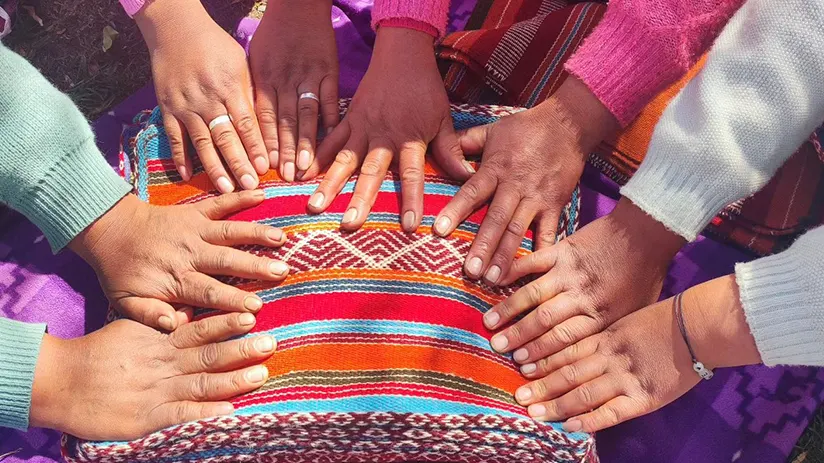
Traditional Peruvian clothing has deep cultural roots and plays a significant role in both identity and economy. People wearing bright, colorful outfits, often handmade, reflect ancient Andean traditions. Women wearing traditional skirts (polleras) and shawls showcase vibrant designs unique to each region.
Peruvian alpaca clothing, known for its warmth and softness, is a key export product. It supports local artisans and boosts tourism, turning textile art into a source of progress and evolution. The best top alpaca clothing brands promote sustainable fashion globally while preserving indigenous techniques and revaluing culture. Women often wear these garments during festivals and daily life in the highlands. The visual richness and craftsmanship of these garments attract worldwide interest, fueling cultural pride and economic development.
“YOU CAN HAVE ANYTHING YOU WANT IN LIFE IF YOU DRESS FOR IT”
As you can see, there are numerous traditional Peruvian clothes. Many of these garments were a social indicator, while others were a way to show her skill with textiles.
Peru has so much to offer, it can be hard to know where to start. With many years of experience in the tourism sector, Machu Travel Peru is happy to help with anything regarding your trip to Machu Picchu and any tours around it. Make your Machu Picchu experience an unforgettable one! Contact Us today to plan your dream adventure!