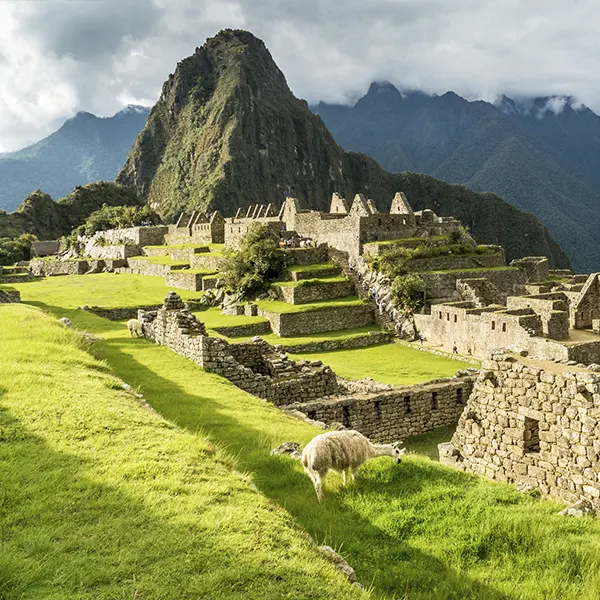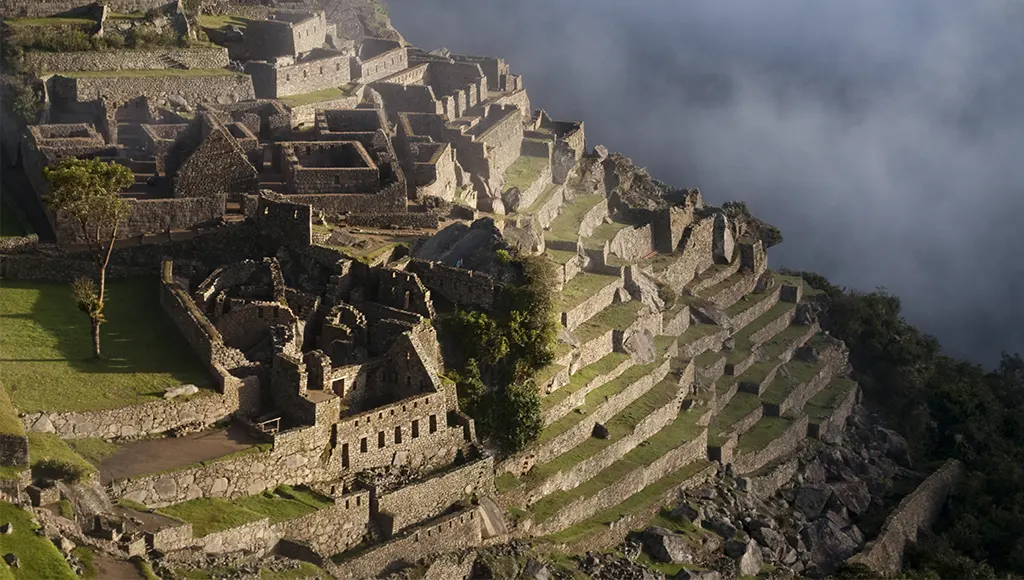
The water system of Machu Picchu is a masterpiece of Inca hydraulic engineering. From a 749-meter aqueduct to a complex network of 16 ceremonial fountains, its sophisticated engineering can still be seen today. Its canals, fountains, drainage systems, and agricultural terraces demonstrate the remarkable engineering skills of the Incas. This guide explains how the Incas designed one of the world’s most advanced ancient water systems.
Discover the fantastic Inca water management system
- Why the Machu Picchu Water System Was an Engineering Masterpiece
- The Natural Spring That Supplied Machu Picchu
- How Water Was Distributed Throughout the Citadel
- The Fountains and Water Channels of Machu Picchu
- The Inca Drainage System and Rainwater Management
- Hydraulic Engineering Techniques Used by the Incas
- Why the Water System Still Amazes Engineers Today
- Visiting Machu Picchu With a New Perspective
- FAQs About the Machu Picchu Water System
- Conclusion
Why the Machu Picchu Water System Was an Engineering Masterpiece

The water system of Machu Picchu is widely considered an engineering masterpiece because it successfully overcame the challenging geographical conditions of the area. The citadel is located on a steep, humid mountain in the middle of a cloud forest, and the Incas took full advantage of this. Additionally, the area’s geological faults provided natural pathways for groundwater, which the Incas cleverly incorporated into their engineering design. While this landscape might seem daunting at first glance, it enabled great Inca innovations.
Furthermore, the system prioritized sustainability and efficient water management, ensuring its supply for agriculture and other needs. For example, the cascading fountains allowed excess water to be naturally discharged onto the agricultural terraces, even during the worst rainfall events. The ingenuity is such that it endures today, serving as inspiration for modern engineers and geologists.
Quick Facts About the Machu Picchu Water System
| Feature | Details |
| Water source | Natural mountain spring |
| Canal length | 749 meters |
| Number of fountains | 16 |
| Annual rainfall | 1,800–2,000 mm |
| Drainage outlets | More than 130 |
| Construction | 15th century |
| Water flow | Gravity-fed |
The Natural Spring That Supplied Machu Picchu
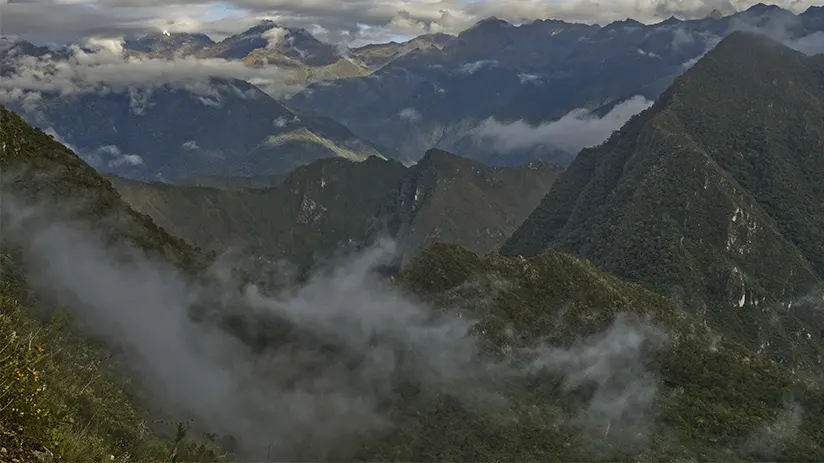
Machu Picchu was supplied by a primary natural spring located on the northern slope of the mountain. This spring, known as the sanctuary’s primary source, emerges in a natural filtration zone where rainwater falls on the peaks and accumulates in layers of rock. Interestingly, the ancient citadel is built near the intersection of two geological faults, which facilitates the retention of rainwater.
The choice of this water source was not accidental, as the ancient engineers had to select a spring located at a higher elevation than the citadel. Fortunately, the spring in question meets this requirement, allowing water to flow naturally through the entire citadel. From the highest point of the urban sector to the agricultural terraces, gravity powered the entire hydraulic system.
In 1994, hydrologist Kenneth Wright led studies to analyze this water source. His research found that the spring produced between 25 and 50 liters of water per minute during the dry season, with a significantly higher flow during the rainy season. This amount is more than enough to supply a population of between 500 and 1,000 people of the Inca civilization, with additional water for the irrigation of agricultural terraces.
How Water Was Distributed Throughout the Citadel
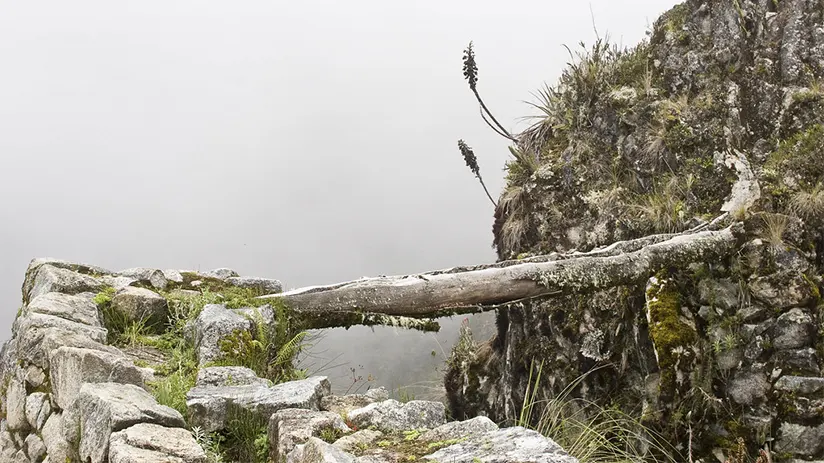
The Incas distributed the collected water through a 749-meter-long canal constructed with stone and clay walls. Beyond its impressive length, the aqueduct is notable for its average slope of approximately 3%. This allows for a constant flow, maintaining a steady flow while minimizing erosion, one of the most innovative technical achievements of the project. In addition, Inca engineering was so advanced that in some sections, they built retaining walls to maintain the necessary elevation.
The water obtained through this interconnected collection system fed 16 cascading stone fountains and drains by gravity. Its management was intelligent, achieved through an ingenious, multi-stage infrastructure. The sequence of fountains and the underground drainage system are among the most significant feats of their ingenuity. Both in design and usability, the water distribution system is an extraordinary achievement.
The Fountains and Water Channels of Machu Picchu

The impressive distribution system included 16 fountains descending along the western flank of the citadel. These are known as the “staircase of fountains” because each one is fed by the one before it and feeds the next from the basin above. Rather than functioning independently, each fountain formed part of a continuous hydraulic network. This network is strategically distributed throughout both the urban and agricultural areas of the Inca archaeological site.
The first fountain is the most prominent and also the tallest in the sequence, designated for the Inca emperor and for ritual purposes. According to local beliefs, the purest water, which came directly from the spring, was reserved for high-status individuals and for water worship. This fountain was also carefully constructed, featuring carvings on its back wall and more refined masonry.
The subsequent fountains become progressively simpler as they descend the slope. Each one receives water from the previous fountain and directs it to the next. The fountains are connected by short channels carved into the rock or constructed with stones. Excess water is channeled to the terraces or the main drainage network.
The Inca Drainage System and Rainwater Management
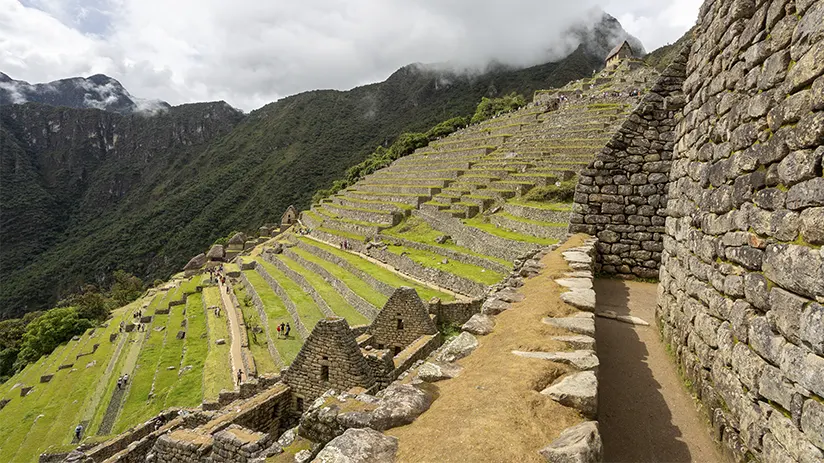
Machu Picchu receives between 1800 and 2000 mm of rain annually, mostly concentrated during the rainy season (November to March). This amount of rainfall can cause severe erosion and destruction if not properly managed. Fortunately, the Incas were aware of this and developed an effective drainage system to manage the excess water. Here are some of the key engineering techniques used by this ancient civilization:
- Agricultural Terraces (Andenes): The terraces served an agricultural function, but they were also an important stabilization mechanism. The Incas constructed them with different layers of large stones, gravel, and fertile soil to allow rainwater to filter through safely. This prevented waterlogging and soil erosion. The city has a total of 4.9 hectares of terraces supported by retaining walls.
- Underground Drainage: One of the key Machu Picchu facts is that many Inca constructions are not visible to the naked eye, including the underground drainage system. The ingenious architects created this system that encompassed the entire city, including its Main Plaza, courtyards, internal pathways, and other areas. To achieve this, they created porous layers of crushed rock and gravel to act like a sponge, stabilizing the ground.
- Urban drainage: 130 drainage holes in retaining walls and structures allow for the evacuation of excess rainwater. These outlets, along with channels excavated in staircases and plazas, direct the water to the site’s boundaries to prevent soil saturation. Many of these systems are still functional today, preventing the formation of open puddles within the sanctuary.
Hydraulic Engineering Techniques Used by the Incas

The history of Machu Picchu and the evidence visible today demonstrate a high level of hydraulic engineering knowledge. To manage the geographical and hydrographic conditions, they employed a series of advanced techniques that allowed for intelligent water management. Here are some of the key engineering techniques they used to prevent soil erosion and landslides:
- Spring water intake: A 749-meter-long stone channel with a precise gradient ranging from 1.0% to 4.8%.
- Staircase of fountains: A series of 16 cascading stone fountains.
- Underground drainage: More than 130 underground drains and outlets constructed with quarry rubble and gravel.
- Agricultural terraces: Stepped terraces for rainwater management, composed of retaining walls, crushed stone, and topsoil.
- The dry area: A deep, undeveloped ditch that separates the agricultural sector from the urban sector, functioning as a large drainage channel.
Why the Water System Still Amazes Engineers Today
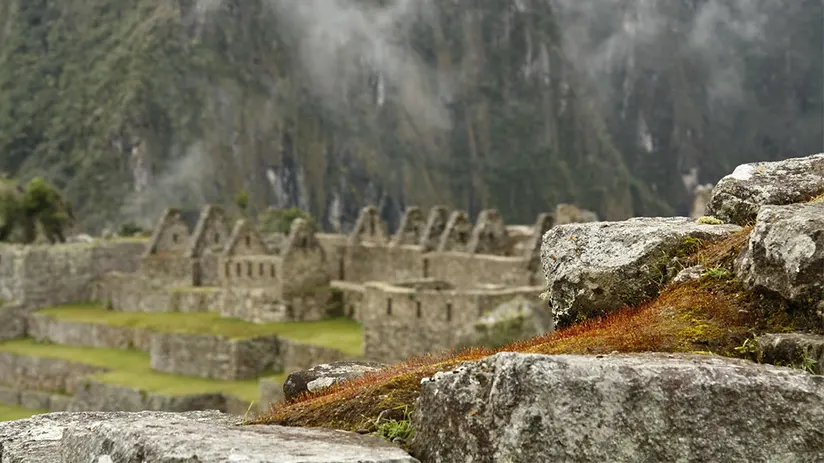
Modern engineers continue to study Machu Picchu because its hydraulic system solved intricate challenges using only gravity, stone construction, and careful planning. Practical knowledge of gravity and soil stabilization was applied in its construction. Moreover, its complex network comprises a 749-meter aqueduct, 16 ceremonial fountains, and extensive underground drainage systems, all of which continue to function after 500 years. Another key aspect that inspires wonder is its location amidst deep geological faults.
Visiting Machu Picchu With a New Perspective

The water system can be seen during the standard Machu Picchu circuits, particularly Routes 2-A and 2-B. This route offers a comprehensive tour of the fountains, famous reflecting pools, and ceremonial baths. The dry season (April to October) is Machu Picchu’s busiest period, so it’s best to book in advance. The canal and fountains typically show their strongest flow during the rainy season (November to March).
Hiring an experienced local guide will not only provide general information about the site but will also highlight these structures. Likewise, additional details such as the Machu Picchu meaning, history, culture, and more are available on a guided tour. Some important hydraulic features, such as the spring that feeds the water system, are not accessible for conservation purposes. It is essential to follow the established routes to respect the site and preserve it for future generations.
FAQs About the Machu Picchu Water System

How did the Machu Picchu water system work using gravity?
The Incas captured water from a natural mountain spring and guided it through stone canals using gravity. This system supplied fresh water for drinking, daily use, and ceremonies while reducing water waste. The ancient water system of Machu Picchu is a great example of efficient hydraulic design.
Where did Machu Picchu get its water?
Machu Picchu received its water from a permanent spring located above the citadel. Stone canals carried the water into the city with a steady flow, showcasing the skill of Inca water engineering.
How many fountains are there at Machu Picchu?
There are 16 interconnected fountains arranged in a series. Water flowed from one fountain to the next, creating a reliable distribution system. Today, the Machu Picchu fountains remain one of the site’s best-preserved features.
Why was the Machu Picchu drainage system important?
The drainage system prevented water from collecting around buildings and terraces during heavy rain. Layers of stone and gravel absorbed excess water, while the water channels at Machu Picchu directed it safely away.
Did the Incas build aqueducts at Machu Picchu?
Yes, the Incas built stone canals that worked as Machu Picchu aqueducts, carrying water from the spring into the city. Their gentle slope allowed water to flow naturally without pumps.
How did the Incas prevent flooding at Machu Picchu?
The Incas reduced flooding with terraces, retaining walls, and underground drainage. These features absorbed rainwater and protected the city’s Machu Picchu architecture from erosion and water damage.
What engineering techniques were used in the Machu Picchu water system?
The system used gravity-fed canals, precise stonework, drainage layers, and careful planning to coordinate labor and resources during construction.
Is the Machu Picchu water system still functioning today?
Yes, much of the original hydraulic network still functions today. Water continues to flow through several canals and fountains, proving the durability of Inca engineering.
Conclusion
The Machu Picchu water system remains one of the greatest achievements of the Inca civilization, combining practical design with a deep understanding of the natural landscape. The consistent yield of the spring provided a reliable water supply that supported daily life for generations.
Today, engineers and visitors alike continue to admire the precision behind this hydraulic network, which remains one of the finest examples of ancient hydraulic engineering. Together with landmarks such as the Intihuatana Stone, the water system reflects the ingenuity, planning, and lasting legacy.
Learning about these fascinating examples of Inca knowledge allows us to understand the ancestral ingenuity of their people. For experts, it reveals their methods of disaster management, adaptation to their environment, and the creation of sustainable structures that endure through time. For visitors, it offers a glimpse into their legacy and the importance of preserving it for future generations.
Machu Picchu has so much to offer; it can be hard to know where to start. With many years of experience in the tourism sector, Machu Travel Peru is happy to help with anything regarding your trip to Machu Picchu and any tours around it. Let us help you make your Machu Picchu travel experience unforgettable! Contact us today to plan your dream adventure!