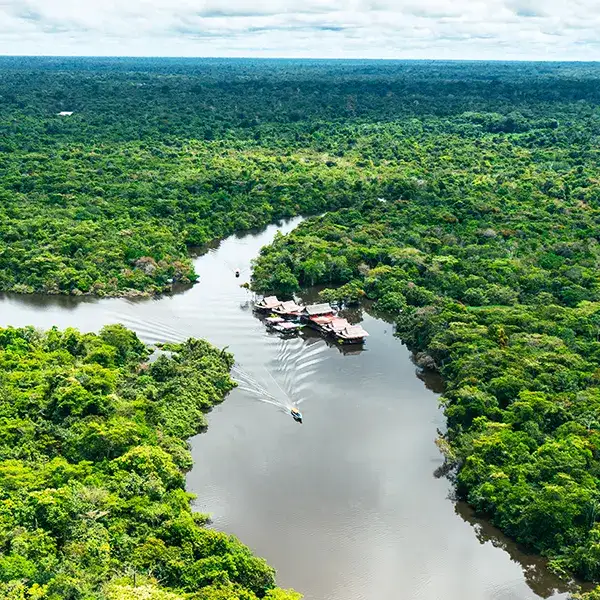
The jungle is a prime location for observing a wide array of animal and plant species. With countless options to discover and explore, wildlife viewing is one of the most popular activities. Among the many choices is birdwatching, especially macaw observation. Their vibrant colors, majestic flights, and incredible behavior inevitably captivate any traveler.
But you’re probably wondering where or how to see them, and the answer isn’t quite so simple. However, many conservationists and ecotourism enthusiasts have found a responsible way to observe them. That’s why we want to share everything about this undoubtedly exciting activity. Seeing macaws in the Amazon Rainforest is an experience like no other; it’s a new world of sustainability and care.
Discover all about macaw-watching in the Peruvian Amazon
- Why the rainforest is one of the best places for macaws
- The Macaw Clay Licks (Collpas)
- Best destinations to observe macaws
- The top season to spot macaws
- Process to visit Macaw Clay Licks
- Travel tips for first-time visitors
- FAQs about seeing macaws in the Amazon
Why the rainforest is one of the best places for macaws
The South American region is so vast that it’s home to a great diversity of Amazon rainforest animals. This is no shock, as it boasts ideal conditions for life to flourish. From food and habitat to climate, the rainforest is one of the most ideal ecosystems for life. Birds are no exception, with over 1,300 species boasting unique colors and characteristics.
Now, Amazon macaws find this an excellent place for feeding, developing, and reproducing successfully. With abundant food sources and multiple nesting opportunities, it’s one of the best places in the world to live. In their preferred habitat, these fascinating birds can even live up to 60 years. Nevertheless, human influence is significant, yet we will not focus on that at this moment.
The Macaw Clay Licks (Collpas)
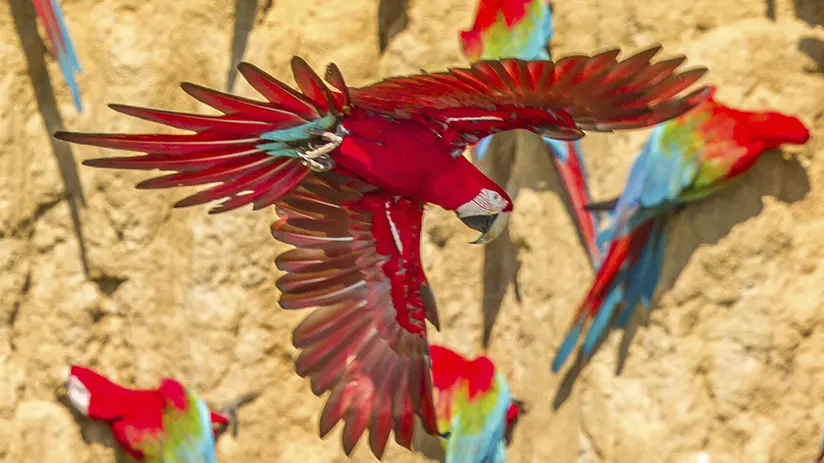
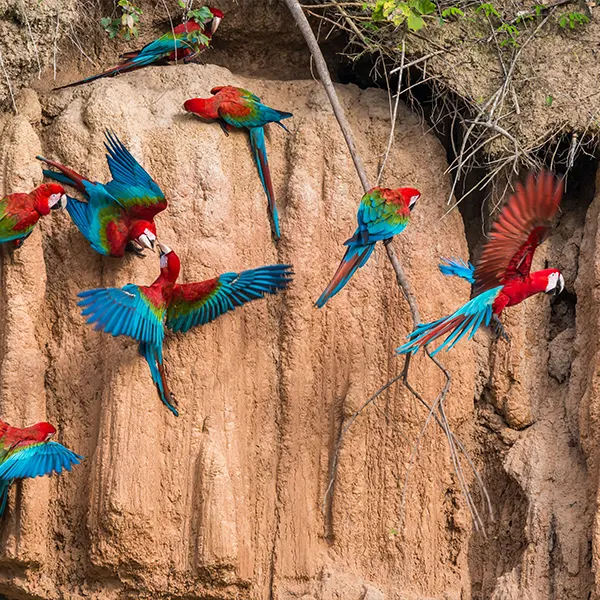
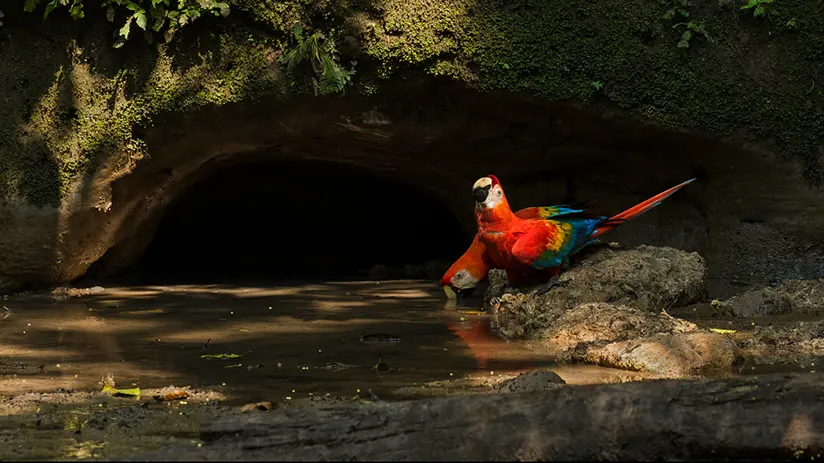
As a preferred habitat for macaws, observing them is quite accessible. Nonetheless, after much research, specialists have identified strategic locations for this purpose. Among the most important are the Macaw Clay Licks, areas of soil rich in minerals and salts. These sites are so significant that they also serve as the primary place to meet a mate for life.
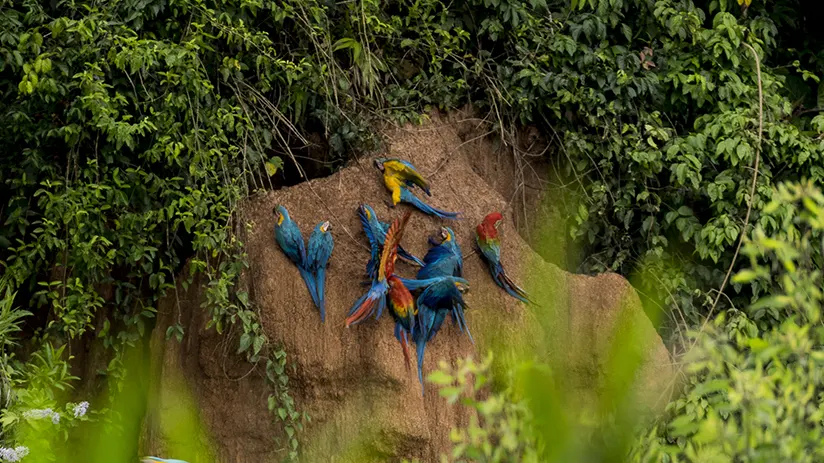
Macaws have a varied diet, consuming a wide range of fruits, nuts, seeds, insects, and more. To balance their diet, they visit these zones and ingest the clay along the banks. In doing so, in addition to neutralizing toxins from their food, they provide a spectacle full of color, flight, and song. These clay licks are also so popular that they have their own name in Quechua: Collpas.
Best destinations to observe macaws
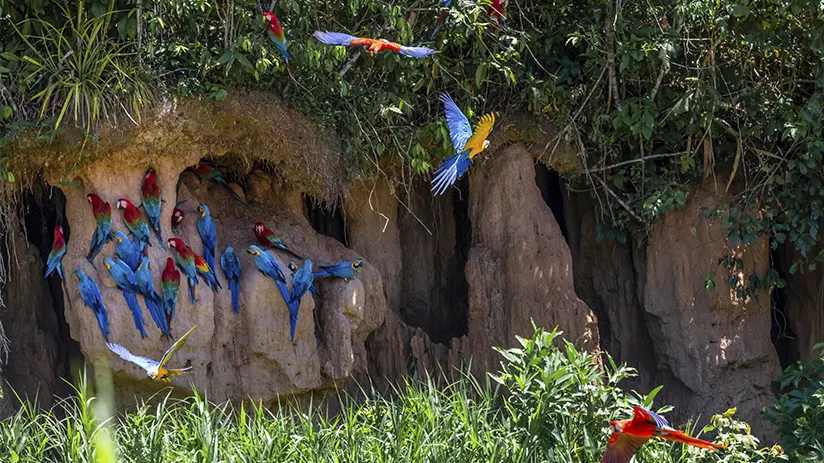
Okay, now let’s get to one of the most important aspects of the article: the best places to see these colorful birds. As we mentioned before, collpas are ideal for observing and photographing beautiful specimens of varying sizes and colors. Nevertheless, if we’re talking about specific areas, it’s necessary to mention some must-see spots. Remember that each area can offer a different experience with its own particular species and conditions.
Tambopata National Reserve (Peru)
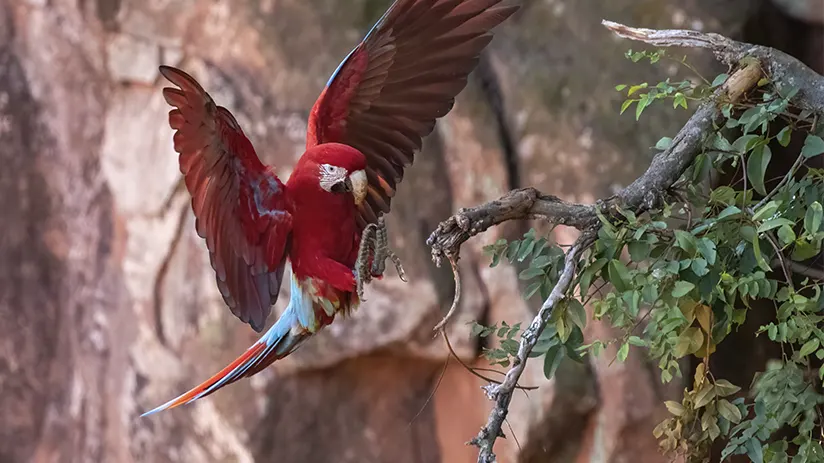
Exploring Tambopata is an exciting journey filled with diversity and, above all, easy accessibility. As one of the places with the best tourist infrastructure, this reserve offers excellent opportunities for Amazon rainforest birdwatching. Among the main species easily spotted are the scarlet macaw, the red-and-green macaw, and the blue-headed macaw. Below are some important clay licks in the area:
- Collpa Colorado: This clay lick is one of the most popular because of its considerable length. Its location is also an advantage, as it’s close to one of the most important research centers in the area. This, along with the great diversity of birds that frequent the area, makes it one of the best local options.
- Collpa Chuncho: Another interesting spot is Chuncho, a gathering place for various species of macaws and small mammals. Indeed, it’s not just these vibrant birds that frequent these sites. Unlike the previous location, this one requires a bit more travel time, but that shouldn’t be a concern.
- Collpa Cachuela: Those seeking even greater accessibility might consider Cachuela, a clay lick near the town of Puerto Maldonado. This attraction offers fantastic opportunities for observation, photography, and ecological learning, so many people highly recommend it. In addition, the combination of the Amazon parrot and the macaw species makes this a truly unique visual spectacle.
Manu Biosphere Reserve (Peru)

Manu is one of the most biodiverse places in the world, according to UNESCO, so it must be on the list. Although it has a restricted area, it also has areas that mimic human presence but are open to visitors. Among them are several clay licks that are home to interesting bird species. Some of the species include the red-and-green macaw, the blue-and-yellow macaw, and the chestnut-fronted macaw, among others.
- Collpa Blanquillo: Located in the buffer zone near the Manu River, visitors can visit Blanquillo and its charms. In addition to an exceptional variety of macaw species, you might also witness the activity of parrots and parakeets. As a different option combined with a magical setting, it’s worth considering.
- Mascoitania Macaw Clay Lick: Like the previous one, it’s in the nearly zone and attracts macaws, parrots, and parakeets. The main difference is that this site is part of several conservation programs. A vibrant natural spectacle of colors and sounds makes it an interesting way to observe these birds.
- Casa Matsiguenka Lodge: Unlike the previous sites, you can find this clay lick deep within the Manu National Park. While some requirements might be stricter, you’ll find more of Peru’s birdwatching hotspots. In a remote setting and with the necessary precautions, this is one of the most challenging experiences.
Other Amazon regions in South America
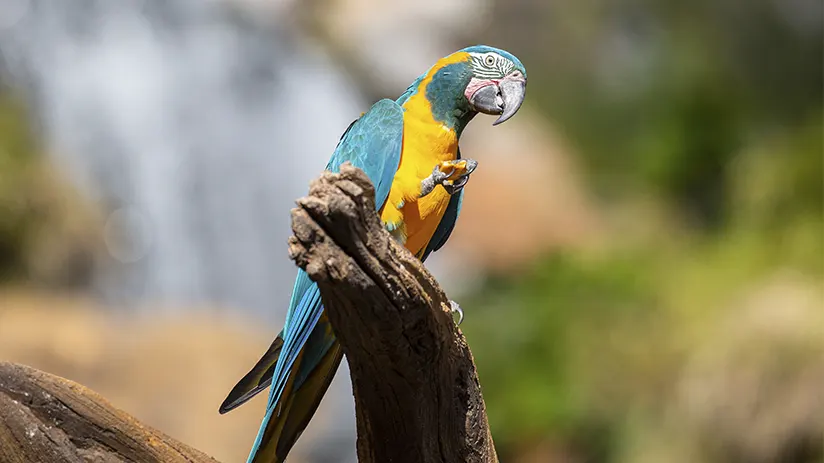
Aside from seeing macaws in Tambopata National Reserve or Manu, visitors can find other places in South America. You’ll likely find similar options to the clay licks, but other activities can also help you see these birds in the wild. Visitors could choose guided boat tours, canopy towers, or jungle hikes as the main options. Besides, we present some other good places to observe them:
- Yasuní National Park (Ecuador): The Ecuadorian clay licks attract dozens of macaws and parrots that descend on the banks. With amazing Amazon wildlife photography tours or simply for exploration, Yasuní has much to offer. You should consider the location as one of the main aspects, so it’s best to prepare for an extended adventure.
- Cristalino Reserve (Brazil): Brazil, a favorite destination for its rainforest and Amazon jungle predators, deserves a spot. We mention Cristalino because it’s home to six different species of macaws; truly impressive. From its observation towers, you’ll have the opportunity to see other birds such as cotingas, tanagers, and toucans.
- Llanos de Moxos (Bolivia): The Blue-throated Macaw has its only natural habitat in the world here. Undoubtedly, the importance of this place is remarkable for being home to this critically endangered endemic species. With guided observations led by specialists, the experience meets high conservation standards.
The top season to spot macaws
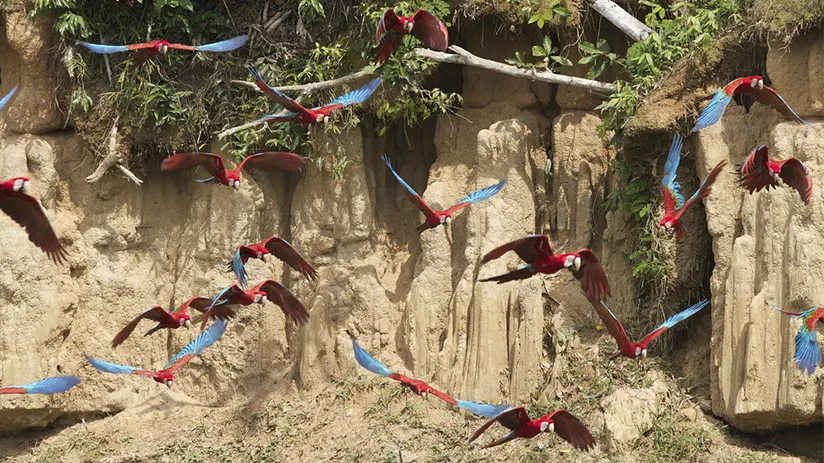
In general, when observing biodiversity in Peru or other South American countries, the season greatly influences the outcome. Specifically, the best time to see Amazon macaws is the dry season (May to October). During these months, there is less rain, clearer skies, and easier trails to navigate. Furthermore, these beautiful birds tend to gather more frequently, as this coincides with their breeding time.
Process to visit Macaw Clay Licks
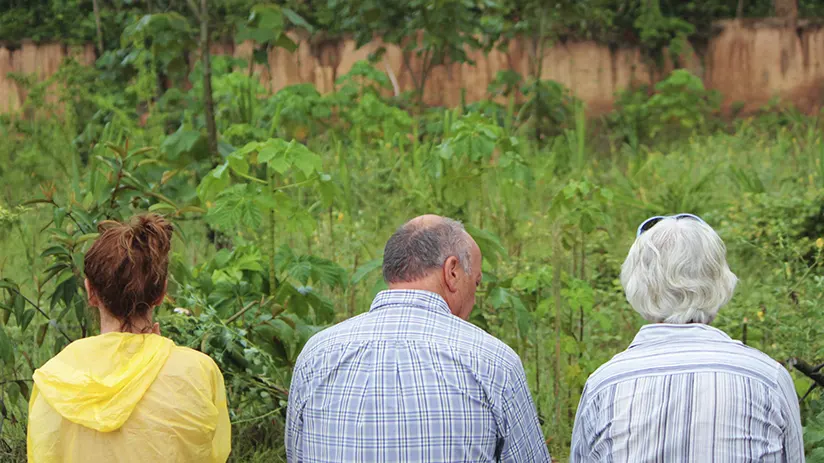
The process will depend on your location and the clay lick you choose to visit. Moreover, the first thing to consider is evaluating your stay in the jungle with a specialized tour. Even though promoting responsible tourism, these tours will provide constant assistance and necessary amenities, including river transportation to the aforementioned places.
Another important consideration is identifying the best time of day to see them, which is at dusk and dawn. Wildlife enthusiasts prefer dawn because they consider it the peak of macaw activity. Depending on the distance from your starting point, you’ll need to get up earlier or later. Nonetheless, it is best to arrive at the clay lick between 5:00 and 7:00 in the morning.
Most expert guides know strategic spots to observe them properly without disturbing them. Being in their natural habitat, any unexpected action could affect their behavior. Regardless of whether you choose an Amazon wildlife photography tour or another specialized one, the steps will usually be similar. We strongly recommend taking precautions based on the type of experience you wish to have and consulting with specialists.
Travel tips for first-time visitors
Well, aside from the previous information, whether you’re a beginner or even an expert, you probably have some questions. To complement this guide, we’d like to mention some suggestions you should consider. Remember that these recommendations could greatly improve your trip and make your experience more enjoyable. Here are some of the most important points for your visit:
- As we mentioned, the best way to visit the Amazon in Peru is with a tour through a specialized agency. Our recommendation is to evaluate all available options to choose the most suitable one. Remember that the better planned your trip, the more satisfying and fewer unexpected events you’ll encounter.
- Regarding lodging, opting for an ecolodge is perfect. Besides its sustainable practices, it will be an authentic experience in close contact with nature. Many also contribute to local communities by hiring residents and improving their economy.
- As with any other attraction, health and safety are paramount when traveling. The rainforest is no exception, and some travelers take the best precaution by getting a vaccination for yellow fever. Despite this, it’s best to consult your doctor, as every case is unique.
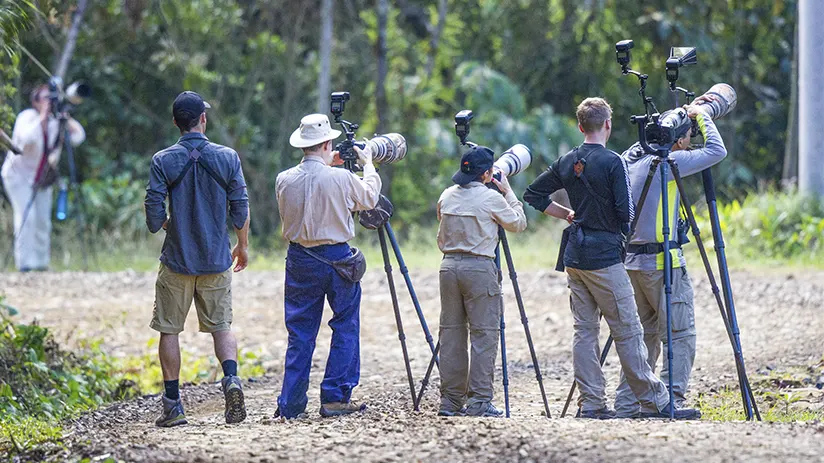
- For your luggage, it’s ideal to pack lightweight, waterproof, and quick-drying clothing. Rubber boots, insect repellent, and sunscreen are essential for any excursion here. On the other hand, for clay licks, binoculars, a facial patch, and cameras with a good telephoto lens will be ideal. Whenever possible, make a checklist to have everything ready before embarking on your adventure.
- Throughout your experience, you should choose to behave responsibly towards your environment and biodiversity. Not littering, not disturbing animals, and reducing your plastic consumption are common practices. Nonetheless, for our main point, keeping quiet and not wearing brightly colored clothing will help preserve the natural harmony. The pet trade of wildlife is a crime; we recommend contacting the authorities if you witness it.
FAQs about seeing macaws in the Amazon
When is the best time of year to see macaws in the Amazon Rainforest?
The best time of year to see macaws in the Amazon jungle is during the dry season, typically from June to October. The weather conditions are more stable, and macaws visit clay licks more consistently. In these months, river levels are lower, skies are clearer, and wildlife in general becomes easier to observe.
Which Amazon lodges offer guided macaw clay lick tours?
Several Amazon lodges offer guided tours, particularly in regions like Tambopata and Manu in Peru. Famous lodges such as Tambopata Research Center, Refugio Amazonas, and Posada Amazonas organize early-morning excursions. Likewise, they provide expert people who provide insight into macaw behavior and ecology.
How many species of macaws can you see in Tambopata, Peru?
In Tambopata, visitors can see six species of macaws, like the Scarlet Macaw, Blue-and-Yellow Macaw, and Red-and-Green Macaw, among others. The region’s rich biodiversity, combined with the presence of large clay licks, creates ideal conditions for Amazon rainforest macaw spotting. Visitors can observe multiple macaw species in a single outing, making Tambopata one of the world’s top destinations.
Is it safe to photograph macaws in the wild Amazon rainforest?
Yes, it is generally safe to photograph macaws in the rainforest as long as visitors follow the respectful guidelines. Clay strategic points allow photographers to capture stunning images without disturbing the birds. In addition, they provide proper behavior, such as staying quiet and avoiding sudden movements, to ensure your experience.
What is a clay lick, and why do macaws visit it?
A clay lick is a naturally occurring exposed wall of mineral-rich clay found along riverbanks in the Amazon. Macaws visit it to consume the clay, which helps neutralize toxins found in their diet of unripe fruits and seeds. This behavior not only supports their digestive health but also results in spectacular, colorful gatherings.
Where can you see macaws in the Amazon?
The best places to see macaws in the Amazon are the clay licks (collpas) in Tambopata and Manu in Peru, where dozens of scarlet, blue-and-yellow, and red-and-green macaws gather daily to feed on mineral-rich clay.
“THERE IS NOTHING MORE BEAUTIFUL THAN THE DISPLAY OF COLORS AND MOVEMENTS THAT CAN BE WITNESSED IN THE JUNGLE”
Observing macaws in the Amazon rainforest is definitely a vibrant wildlife experience, full of color, energy, and ecological richness. From early-morning visits to mineral-filled clay licks, each moment reveals the unique behaviors and beauty of these birds. By choosing responsible tours and respecting natural habitats, visitors help protect macaw populations while enjoying an unforgettable connection with the rainforest. As a result, every trip contributes to a deeper appreciation that allows this remarkable ecosystem to thrive.
Peru has so much to offer; it can be hard to know where to start. With many years of experience in the tourism sector, Machu Travel Peru is happy to help with anything regarding your trip to the Peruvian Amazon and nearby experiences. Make your Peruvian Amazon experience an unforgettable one! Contact us today to plan your dream adventure!