Lima is home to some of Peru’s most important historic churches, particularly in the city’s UNESCO-listed Historic Center. Dating from the colonial period, these landmarks showcase Baroque and Neoclassical architecture, religious art, and centuries of Lima’s history. This guide explores the most notable churches in Lima, their architecture, religious art, history, and practical visiting information.
Discover Lima’s historic colonial churches
- Why Lima’s Historic Churches Are Important
- The Most Historic Churches in Lima
- Lima’s Religious Heritage in the Historic Center
- Colonial Architecture and Religious Art in Lima
- Walking Tour of Lima’s Historic Churches
- Tips for Visiting Churches in Lima
- FAQs About Churches in Lima
- Conclusion
Why Lima’s Historic Churches Are Important
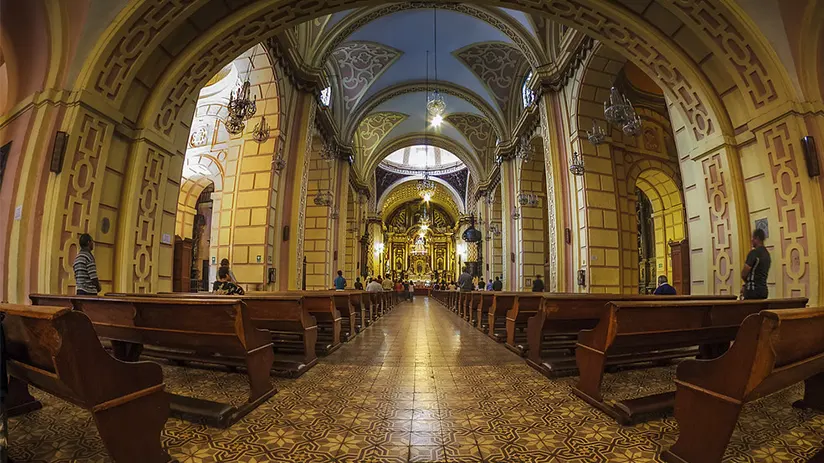
Lima’s churches reflect the city’s central role during the Spanish colonial period, when Lima served as the capital of the Viceroyalty of Peru. Francisco Pizarro founded Lima in 1535, giving it the name Ciudad de los Reyes. From 1542, it served as the political, religious, and economic seat of the Viceroyalty of Peru. This position brought significant wealth and political influence to Lima, contributing to the construction and decoration of churches throughout the city.
The evangelization that followed the conquest brought several religious orders to Lima by the end of the 16th century. Each of these orders raised its own church and convent near the Plaza Mayor. As a result, centuries of Baroque and Neoclassical construction turned the Historic Center into one of the densest concentrations of colonial religious architecture in South America. That legacy earned it UNESCO World Heritage status, and today its churches rank among the top things to do in Lima for travelers tracing the colonial era.
The Most Historic Churches in Lima

Six churches stand out for different reasons, from their historic importance and architecture to their religious traditions and cultural treasures. Whether through their founding history, catacombs, sacred relics, or distinctive architecture, these sites were and remain part of the city’s traditions. The sections below cover each one in turn, organized by what makes it distinct, along with the practical details for a visit.
Lima Cathedral

- Opening hours: Monday–Friday: 09:00 AM to 08:00 PM; Saturday: 10:00 AM to 10:00 PM; and Sunday: 01:00 PM to 07:00 PM
- Entrance ticket: S/30 for foreign visitors; other rates apply. Check the official website for current prices.
- Best for: Travelers interested in colonial history and religious art
- Highlights: Tomb of Francisco Pizarro, gold-leaf main altar, museum of religious art
Francisco Pizarro set aside the site for Lima’s cathedral when he founded the city in 1535. He laid the first stone himself, and the construction of the original adobe church was completed in 1540. In 1541, Pope Paul III established Lima as a diocese and elevated the church to cathedral status.
Long afterward, earthquakes forced repeated rebuilds over the next two centuries, including a full reconstruction after the 1746 quake destroyed much of the structure. Workers finished the present cathedral in 1797, blending Renaissance, Baroque, and Neoclassical elements across its facade and twin bell towers. Inside, a gold-leaf altar and a museum of religious art surround the tomb of Pizarro, identified among the crypt’s remains in 1977.
Basilica and Convent of San Francisco

- Opening hours: Monday–Sunday: 09:00 AM to 06:00 PM
- Entrance ticket: Guided tour required, about 40 minutes. Check current admission fees before visiting.
- Best for: Travelers curious about colonial burial customs and rare books
- Highlights: Catacombs, 25,000-volume library, Baroque cloisters with Sevillian tiles
Franciscan friars founded the convent in 1546, one of the earliest religious complexes in Lima’s historic center. Builders did not inaugurate the current church until decades later; it was completed in 1672 near the Plaza de Armas in the Spanish Baroque style.
Beneath the church, a network of catacombs served as Lima’s main cemetery until officials closed it in 1810. Estimates of how many remains it holds vary widely, from about 25,000 to as many as 70,000, since colonial burial records from the period are incomplete. The convent also houses a historic library with thousands of antique volumes, including books dating back centuries.
Basilica of Santo Domingo
- Opening hours: Monday–Sunday: 09:00 AM to 06:00 PM
- Entrance ticket: Church free; convent and bell tower tour cost an additional price
- Best for: Travelers interested in Peru’s patron saints and religious history
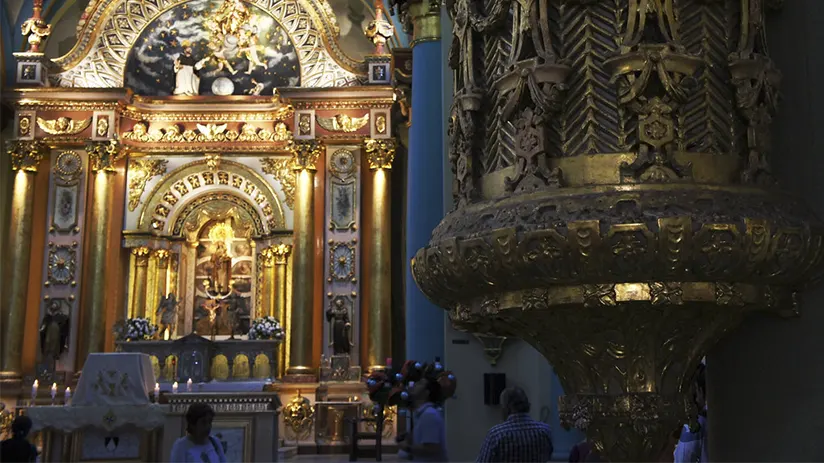
- Highlights: Relics of Santa Rosa de Lima, San Martín de Porres, and San Juan Macías; bell tower view; birthplace of the University of San Marcos
Francisco Pizarro granted the Dominican order its plot in 1535, a few blocks from the Plaza de Armas, and construction began in 1540 and continued for many years afterward. Here, in 1551, the convent’s halls already hosted the first classes of the university now known as the National University of San Marcos.
The church holds the relics of Santa Rosa de Lima, the first person from the Americas to be canonized by the Catholic Church; San Martín de Porres, the first person of African descent from the Americas to be canonized; and San Juan Macías, a Spanish-born friar who spent his ministry in Lima. Their remains still draw pilgrims to the altar today. The church’s bell tower also offers one of the best views of Lima’s Historic Center.
Church of La Merced

- Opening hours: Monday–Sunday: 08:00 AM to 01:00 PM and 04:00 PM to 07:00 PM
- Entrance ticket: Free entry, donations welcome
- Best for: Travelers interested in Baroque facades and local devotion
- Highlights: Churrigueresque stone facade, chapel of Padre Urraca, image of the Virgin of Mercy
The Church of La Merced stands at the corner of Jirón de la Unión and Jirón Miró Quesada, in the Historic Center. Its origins date to 1535, when Friar Miguel de Orenes founded the church, which today ranks among the earliest religious foundations in the city. Even so, earthquakes damaged the original structure repeatedly. After the worst, in 1687, builders raised the stone facade seen today, finished in 1696 in the Limeño Churrigueresque style.
Inside, a chapel honors Friar Pedro Urraca, a Mercedarian known for his life of penance. Devotees still touch the wooden cross he is said to have used against temptation, though that story rests on tradition rather than historical record. Here too stands the image of the Virgin of Mercy, patroness of the Peruvian Armed Forces, which presides over the main altar.
Church of San Pedro

- Opening hours: Monday to Saturday: 07:45 AM to 1:00 PM and 05:00 PM to 8:30 PM. Sunday: 07:45 AM to 01:00 PM and 05:00 PM to 07:00 PM
- Entrance ticket: Free entry, donations welcome
- Best for: Travelers interested in Jesuit history and gilded colonial art
- Highlights: Gilded altarpieces, La Abuelita bell (traditionally regarded as one of Peru’s oldest bells still in use), colonial paintings
Jesuit priests built the Church of San Pedro as part of the Colegio Máximo de San Pablo. It stands near the heart of colonial Lima, modeled on the Church of the Gesù in Rome, and the current building was consecrated in 1638. It kept the name San Pablo until the Crown expelled the Jesuits from Peru in 1767, when it was renamed San Pedro.
Inside, gilded altarpieces and Moorish-style wood carvings cover nearly every wall, alongside colonial paintings gathered over four centuries. The bell tower holds La Abuelita, cast in 1638 and considered the oldest bell still in use in Peru. Popular tradition says its toll marked the burials of Santa Rosa de Lima and San Martín de Porres. As with similar church legends, though, that claim rests on oral history rather than written record.
Church of San Agustín

- Opening hours: Check current visiting hours before your visit, as access may vary depending on religious services and other activities.
- Entrance ticket: Free entry; donations welcome
- Best for: Travelers interested in colonial architecture, religious history, and Lima’s Baroque heritage
- Highlights: Historic Baroque architecture, ornate facade, colonial religious heritage, and the San Agustín convent
The Church of San Agustín is one of the historic religious landmarks in Lima’s Historic Center and forms part of the city’s important colonial heritage. The Augustinian complex underwent several major transformations over the centuries, reflecting the architectural changes that shaped Lima’s churches during the colonial and later periods. The church and convent were declared a monumental heritage site in 1972.
The original church was built in the late 16th century, with construction documented between 1592 and 1596. Its early architecture combined Gothic-Isabelline and Renaissance elements, while later renovations introduced features associated with Lima’s Baroque tradition. The building was subsequently altered again, including major changes to its layout and architectural style in the 20th century.
Today, San Agustín offers visitors an opportunity to appreciate the architectural evolution of Lima’s churches. Its surviving historic elements, together with the convent complex, illustrate how religious architecture changed over several centuries while remaining an important part of the city’s cultural heritage.
Lima’s Religious Heritage in the Historic Center

The Historic Center of Lima was inscribed on the UNESCO World Heritage List in 1988. Its boundaries were significantly modified in 1991, followed by a minor boundary modification in 2023. The World Heritage property now covers approximately 278 hectares and includes historic religious, civic, and residential buildings.
The same blocks also hold civil landmarks from the same era, including the Government Palace, the Archbishop’s Palace, and the Torre Tagle Palace. Along with these stands the Casa de Aliaga, one of the oldest inhabited houses in the Americas. Travelers who want the fuller picture beyond religious architecture can explore Lima’s historic buildings for the palaces and mansions that share this heritage.
Colonial Architecture and Religious Art in Lima

The churches of Lima’s Historic Center combine Renaissance, Baroque, and Neoclassical styles. These buildings are notable for their stone-carved facades, altars adorned with gold leaf, and magnificent works of art from the Lima and Cusco schools. Classical proportions and redesigned altars characterize their architecture. The use of carved wooden coffered ceilings and imported tiles is also prominent.
Lima’s colonial churches also reveal how religious art developed alongside the city’s architecture. Elaborate altarpieces, carved wooden details, religious paintings, and gold-leaf decoration transformed their interiors into spaces designed to inspire devotion and demonstrate the wealth and influence of religious institutions. Visitors can see influences from European artistic traditions alongside styles that developed locally in Peru, creating a distinctive visual heritage that remains one of the defining features of Lima’s Historic Center.
For travelers interested in learning more about Peru’s artistic heritage, a visit to the MALI Museum provides useful context for understanding the evolution of Peruvian art beyond the churches of the Historic Center. Its collection covers more than 3,000 years of Peruvian art, including an important selection of colonial works. Exploring the museum alongside Lima’s colonial churches offers a broader perspective on how religious art, colonial traditions, and local artistic expressions shaped the country’s cultural heritage.
Walking Tour of Lima’s Historic Churches
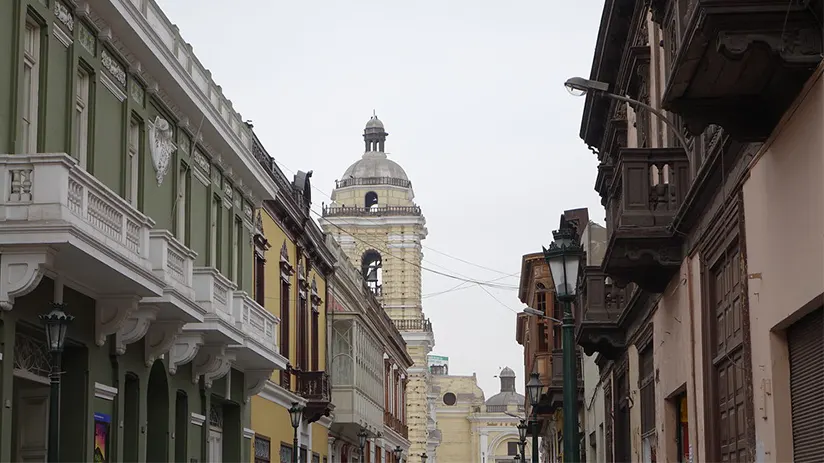
Visiting several of Lima’s main churches on foot is feasible, as many are located within walking distance of one another. The suggested route begins at Lima Cathedral and ends at Santo Domingo. The route takes approximately 3–4 hours, depending on how much time you spend inside each church, and complements your visit with other Lima attractions. Below are some general details of the walking tour:
| Tour Information | |
| General Description | A relaxed walking route through Lima’s Historic Center, combining historic churches, colonial architecture, and important city landmarks. |
| Churches Included | Lima Cathedral → San Francisco → San Pedro → La Merced → Santo Domingo |
| Estimated Time | 3–4 hours |
| Highlights | Colonial architecture, ornate interiors, religious art, historic streets, Plaza de Armas, and San Francisco’s famous catacombs. |
| Best For | History lovers, architecture fans, photographers, and first-time visitors to Lima. |
| Starting Point | Plaza de Armas |
| Walking Distance | Approximately 4–5 km, depending on the route and additional stops. |
| Suggested Route | Cathedral → San Francisco → San Pedro → La Merced → Santo Domingo |
| Practical Tip | Visit in the morning or early afternoon and check church opening hours before you go. |
Tips for Visiting Churches in Lima
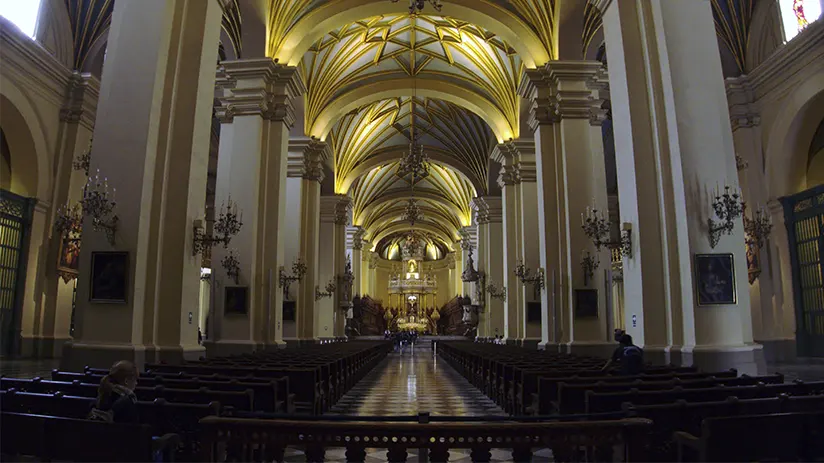
- Dress appropriately: Wear respectful clothing to enter churches, especially clothing that covers your shoulders and knees. Long pants, long skirts, shirts, and light jackets are common choices. Removing head coverings (hats or caps) is also recommended.
- Bring cash in small denominations: It’s ideal to carry small change or local currency for both entrance fees and donations. While you can make these payments or donations with foreign currency like dollars, it’s not recommended. Carrying some cash can also be useful if you plan to visit other attractions in Lima where entrance fees may apply, like Pachacamac, Museo Larco, among others.
- Visit churches early: Visitors generally try to go during the day, but few get there early. Exploring early in the day can help you avoid larger crowds, especially at popular sites. Remember to consider the times of religious services, such as Masses or religious holidays.
- Be quiet: Many people come to these places to pray, meditate, and reflect, so it’s best to speak in a low voice. Playing music or using loudspeakers is not ideal and disrupts the pleasant atmosphere for all visitors.
- Take photos responsibly: At historical sites, churches, and convents, it’s best to follow the photography guidelines provided. Some artifacts are highly sensitive, and photography is prohibited. Check for “No Photography” signs before taking photos.
- Don’t bring food: Avoid bringing food or drinks inside churches unless the site explicitly allows them. Many of these places require visitors not to bring anything that could damage the artifacts they house. Some offer luggage storage, but it’s best to inquire beforehand.
FAQs About Churches in Lima
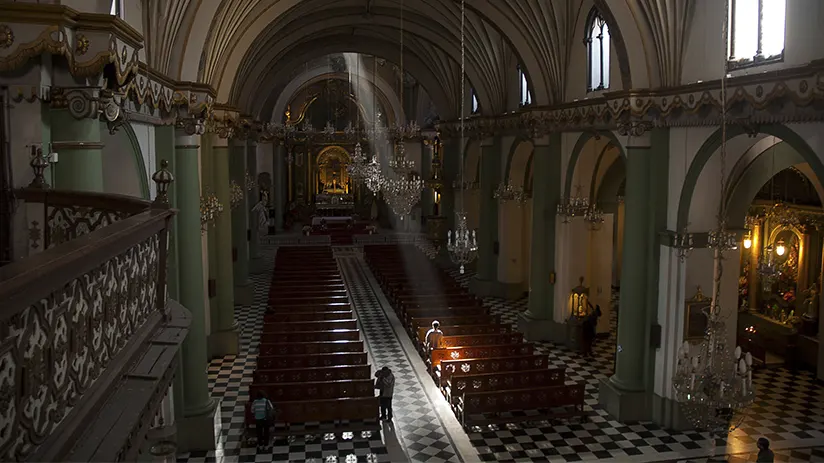
What are the best churches in Lima?
Some of the best-known churches are Lima Cathedral, Basilica and Convent of San Francisco, Santo Domingo, La Merced, San Pedro, and San Agustín. They stand out for their colonial architecture, ornate interiors, religious art, and historical importance.
Is Lima Cathedral worth visiting?
Yes, Lima Cathedral is one of the city’s most important historic landmarks and is located on the Plaza de Armas. Its interior combines several architectural styles and contains historic chapels, altarpieces, and religious artwork, making it a worthwhile stop when you visit Lima.
Can you visit the San Francisco Monastery in Lima?
Yes, the San Francisco Monastery and its catacombs can be visited as part of an organized tour. The complex is one of the most popular historic attractions in central Lima, so it is a good idea to check current visiting hours and ticket information before going.
Are Lima’s churches free to enter?
It depends on the church; some churches allow visitors to enter free of charge, particularly when there is no special tour or museum area. Others charge admission for guided visits or access to additional attractions, such as the San Francisco catacombs. Always check the current entrance conditions before visiting.
What churches are located in Lima’s Historic Center?
The Historic Center is home to many important churches, including Lima Cathedral, San Francisco, Santo Domingo, La Merced, San Pedro, San Agustín, and Santa Rosa de Lima. Because many are within walking distance of one another, they are ideal for a self-guided tour of Lima’s historic religious sites.
What is the oldest church in Lima?
By founding date, some of Lima’s earliest religious sites include the Cathedral’s original parish and the Church of La Merced, both dating to 1535, along with San Sebastián Church, founded in 1554 as the city’s third parish. Several other churches in the Historic Center also have origins in Lima’s earliest colonial period.
How long does it take to visit Lima’s historic churches?
A focused walking tour of the main churches can take around 3–4 hours. Allow extra time if you want to visit interiors, museums, or the San Francisco catacombs. If you want a more extensive exploration, you can easily dedicate half a day or more to Lima’s churches.
Can you visit Lima’s historic churches without a guide?
Yes, some churches in Lima can be visited independently, although certain sites or areas may require a guided tour. Always check the church’s current visiting conditions before you go.
Conclusion
The historic churches of Lima offer more than beautiful buildings to admire. They reflect the city’s role as an important political, religious, and cultural center during the colonial period. From the Cathedral and San Francisco to Santo Domingo, La Merced, San Pedro, and San Agustín, each church reveals a different part of Lima’s history through its architecture, religious art, traditions, and surviving heritage.
Exploring these churches also helps visitors understand why Lima’s Historic Center holds such cultural importance. The area preserves an exceptional collection of religious and civic buildings shaped by centuries of history, artistic exchange, and adaptation to earthquakes and changing urban life. Today, these landmarks remain an essential part of Lima’s identity and offer travelers a more meaningful way to experience the city’s past beyond its most famous attractions.
Whether you are interested in colonial architecture, religious art, history, or simply want to discover a different side of the Peruvian capital, visiting Lima’s historic churches can add depth to your trip. Walking between these landmarks allows you to experience the Historic Center at a slower pace while discovering the stories and traditions preserved within its streets. You can complement your visit with other iconic attractions such as Huaca Pucllana.
Lima has so much to offer; it can be hard to know where to start. With many years of experience in the tourism sector, Machu Travel Peru is happy to help with anything regarding your trip to Lima and any tours around it. Let us help you make your Lima travel experience unforgettable! Contact us today to plan your dream adventure!