Choosing where to stay in the Sacred Valley depends on your itinerary, train schedule, and the type of experience you want. Ollantaytambo is particularly convenient for travelers taking a train to Machu Picchu; Urubamba offers a central base for exploring several parts of the valley, and Pisac is a good option for travelers interested in its market, archaeological site, and eastern side of the valley.
In this guide, we’ll compare Pisac, Ollantaytambo, and Urubamba to help you choose the right base for your itinerary.
- Where to stay in the Sacred Valley at a Glance
- Ollantaytambo, Urubamba, and Pisac: Three Different Towns
- Access to Machu Picchu Train
- Proximity to Sacred Valley Attractions
- Accommodation Style and Range
- Altitude and Acclimatization
- Sacred Valley or Cusco: Which Should You Base In?
- Should You Split Your Stay Across Multiple Towns?
- Which Town is Right for You?
- Practical Tips for Choosing Your Sacred Valley Base
- Frequently Asked Questions
- Conclusion
Where to Stay in the Sacred Valley at a Glance

Several factors can shape your choice, including altitude, train access to Machu Picchu, accommodation, and location.
The table below compares the convenience of Pisac, Urubamba, and Ollantaytambo as bases for visiting Maras, Moray, and Chinchero. Checking a Sacred Valley Map can also help you visualize how the towns and attractions are distributed across the valley.
| Feature | Pisac | Urubamba | Ollantaytambo |
| Altitude | 2,972 m (9,751 ft) | 2,871 m (9,419 ft) | 2,792 m (9,160 ft) |
| Position in the Valley | Eastern Sacred Valley, closer to Cusco | Central Sacred Valley, well positioned for exploring the valley | Western Sacred Valley, near the route to Machu Picchu |
| Machu Picchu Train Access | Less practical for early train departures; requires additional transfer time | Has its own train station, though Ollantaytambo offers more timetable options | Offers the widest range of train services and departure times for journeys to Machu Picchu |
| Accommodation Profile | Smaller hotels, guesthouses, and boutique stays suited to a quieter visit | Wide range of hotels and spacious properties, making it convenient for longer stays | Hotels and guesthouses suited to travelers combining a Sacred Valley visit with a Machu Picchu trip |
| Atmosphere | Relaxed and cultural, with a traditional market, cafés, and a quieter pace | Peaceful and spacious, with a slower pace that works well for resting and exploring | Historic and lively, with cobblestone streets, Inca ruins, and a strong connection to the railway |
| Best Suited For | Travelers interested in markets, handicrafts, archaeology, and a quieter stay | Couples, families, and travelers who want a comfortable base for exploring several Sacred Valley attractions | Travelers prioritizing convenient train access, especially before an early departure to Machu Picchu |
Ollantaytambo, Urubamba, and Pisac: Three Different Towns
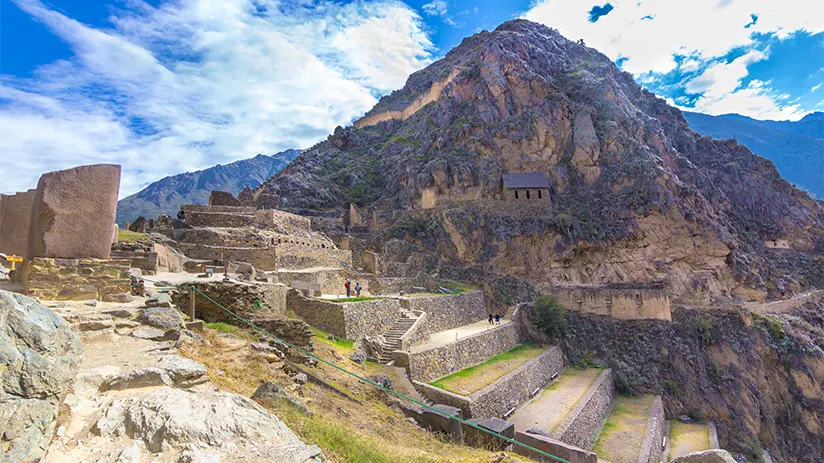
There are three main Sacred Valley towns to consider when choosing where to base yourself: Ollantaytambo, Urubamba, and Pisac. Each offers a different setting and can suit different travel styles and itineraries.
Ollantaytambo
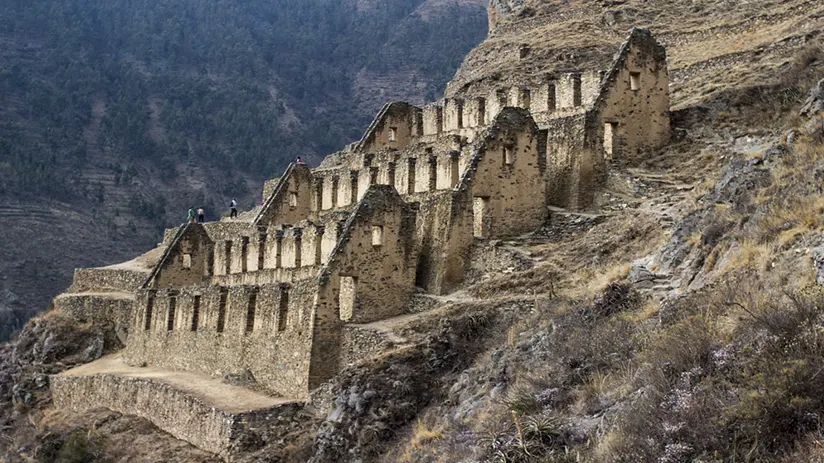
Ollantaytambo is a compact historic town known for its Inca-era urban layout, stone streets, archaeological remains, and traditional architecture. Its location also makes it a practical option for travelers combining a Sacred Valley stay with a Machu Picchu train departure.
Urubamba
Urubamba is a larger, more spread-out town located near the center of the Sacred Valley. Its size gives it a different feel from the smaller, more historic towns of Ollantaytambo and Pisac.
Pisac
Pisac has a lively market-town atmosphere, with a central plaza, local shops, cafés, and artisan stalls. Located on the eastern side of the Sacred Valley, closer to Cusco, it offers a convenient base for travelers who want to explore this part of the valley.
If you are planning a shorter visit, our guide to a one-day itinerary in Pisac can help you organize the main sights without adding unnecessary travel time.
Above the town, the hillside Pisac ruins overlook the valley, adding an important archaeological dimension to the area.
Access to the Machu Picchu Train

Ollantaytambo is one of the main train departure points in the Sacred Valley for Machu Picchu and is served by both major train operators. If your train departs early from Ollantaytambo, staying overnight in the town can make your morning departure more convenient.
However, Machu Picchu train services can use different departure points, including Ollantaytambo and Urubamba in the Sacred Valley, as well as Poroy in the Cusco area. Some itineraries also use a bimodal bus-and-train service. Your overnight base should depend on the departure station shown on your train ticket, rather than assuming you need to stay in Ollantaytambo for every Machu Picchu journey.
For this reason, your overnight base should depend on the departure station shown on your train ticket, rather than assuming that you need to stay in Ollantaytambo for every Machu Picchu journey.
Proximity to Sacred Valley Attractions

Where you stay can affect how much time you spend traveling between different parts of the Sacred Valley. Urubamba’s central location makes it a convenient hub for day trips to destinations such as Maras, Moray, and Chinchero, while Pisac and Ollantaytambo are more naturally positioned for exploring the areas around each town.
If you are still deciding which destinations to include, reviewing things to do in the Sacred Valley can help you choose a base according to the areas you plan to explore.
| Town | Maras | Moray | Chinchero |
| Pisac | Less convenient; requires traveling west across the valley | Less convenient; requires a longer transfer | Moderate convenience; closer to the Cusco side of the valley |
| Urubamba | Convenient; its central location provides a practical starting point | Convenient; well positioned for exploring the western and central parts of the valley | Convenient; relatively central for combining several attractions |
| Ollantaytambo | Reasonably convenient, though it requires traveling back toward the central part of the valley | Reasonably convenient, though it requires traveling back toward the central part of the valley | Less convenient; requires traveling east toward Cusco |
Accommodation Style and Range

The Sacred Valley offers a wide range of accommodation styles, from guesthouses and boutique properties to larger resorts and luxury hotels in the Sacred Valley. The right option depends on how much space, privacy, location, and on-site amenities you want during your stay.
The table below compares the accommodation styles and options available in each destination, helping you choose an option that fits your travel plans and preferences.
Ollantaytambo
Ollantaytambo offers a mix of boutique hotels, heritage-style properties, guesthouses, and smaller accommodations close to the historic center. Travelers prioritizing train convenience may also find properties near the railway station, while options outside the center provide a quieter setting.
Urubamba
Urubamba offers a broad range of accommodation, from upscale resorts and boutique hotels to mid-range properties and spacious stays. Because the town is more spread out, the location of your hotel matters when considering restaurants, transportation, and access to nearby attractions.
Pisac
Pisac offers smaller hotels, guesthouses, boutique properties, and accommodations surrounded by gardens or agricultural landscapes. Staying near the center makes it easier to explore the market and town on foot, while properties farther out offer a quieter setting.
| Accommodation Type | Pisac | Urubamba | Ollantaytambo |
| Boutique & Heritage | Restored haciendas, colonial-style properties, and smaller hotels with traditional architectural details | Luxury boutique hotels and properties combining traditional design with gardens and the surrounding landscape | Boutique and heritage-style properties that reflect the town’s historic setting and Inca heritage |
| Larger Hotels & Resorts | Fewer large-scale properties, with more emphasis on smaller accommodations | A wider selection of larger hotels and resorts, including properties with extensive grounds and wellness facilities | Larger hotels and eco-resorts, including properties with gardens, riverside settings, and additional facilities |
| Guesthouses & Smaller Properties | A variety of guesthouses and small hotels, some surrounded by gardens, farmland, or mountain scenery | Smaller hotels and guesthouses are available alongside larger properties | Small hotels, guesthouses, and alternative accommodations, including tiny homes |
Altitude and Acclimatization

The three towns differ in elevation, with Ollantaytambo at the lowest altitude, Urubamba in the middle, and Pisac at the highest. Because elevation can vary slightly depending on the reference point and source, these figures are best used as general travel information rather than exact measurements.
| Town | Approx. elevation |
| Ollantaytambo | 2,792 m (9,160 ft) |
| Urubamba | 2,871 m (9,419 ft) |
| Pisac | 2,972 m (9,751 ft) |
| Cusco | 3,400 m (11,152 ft) |
Sacred Valley or Cusco: Which Should You Base In?
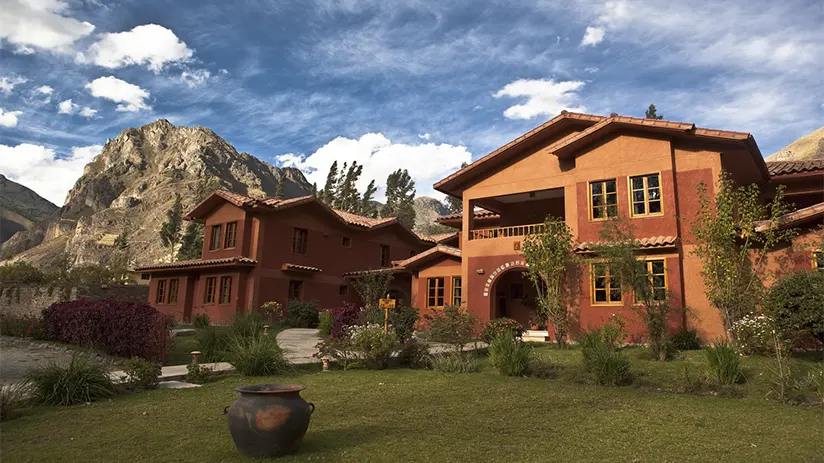
Choosing between Cusco and the Sacred Valley mainly depends on your itinerary and preferred pace. Cusco offers a wider range of accommodations, restaurants, shops, transportation, and cultural activities, while the Sacred Valley generally provides a quieter pace and smaller-scale surroundings. Because services vary by town in the Sacred Valley, the location of your accommodation becomes an important part of the decision.
Should You Split Your Stay Across Multiple Towns?

When planning an itinerary that combines the Sacred Valley and Machu Picchu, choosing the right accommodation base can simplify transfers and make it easier to explore the surrounding area. Splitting your stay can make sense when your itinerary covers different parts of the valley or when your Machu Picchu train schedule makes one overnight location more convenient than another.
For example, staying in Ollantaytambo before an early Machu Picchu train can reduce the morning transfer, while spending additional nights in Urubamba or Pisac afterward may make it easier to explore other parts of the valley.
Which Town is Right for You?
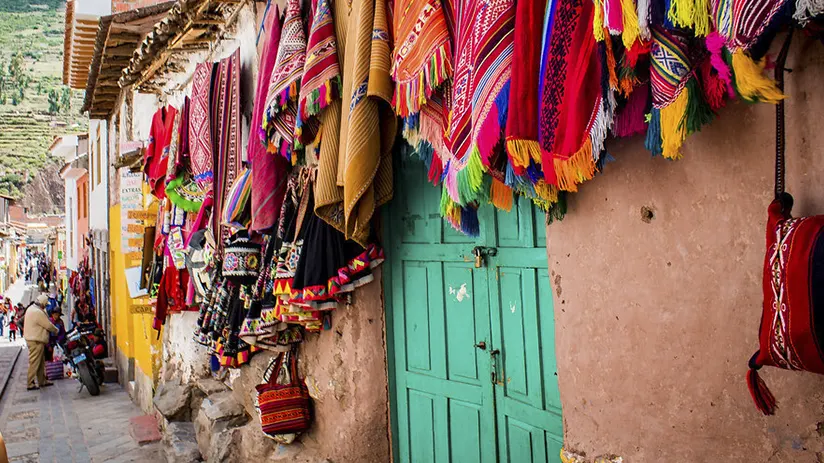
The right base depends on what matters most for your itinerary. Use the priorities below to narrow down your options and decide whether to stay in one town or adjust your base around your plans.
If Train Convenience is Your Priority
Start with your train ticket, not the hotel. Check the departure station and departure time first, then choose the town that gives you the simplest morning transfer.
If You Want a Central Base for Sightseeing
Map your must-see attractions before booking. If your list includes destinations on both sides of the valley, a central base such as Urubamba can reduce unnecessary backtracking.
If You Prefer Culture and a Walkable Town
Consider how much time you want to spend exploring on foot. Look at what you want to do after your main sightseeing stops.If you value exploring local streets, visiting markets, and having cafés and shops within walking distance, consider a compact town such as Pisac or Ollantaytambo.
If You Prioritize Comfort and a Relaxed Stay
Decide how much of your day you want to spend at your accommodation. If you prefer spacious properties, on-site amenities, and a slower pace between excursions, compare hotels outside the busiest town centers as well as those in town.
Practical Tips for Choosing Your Sacred Valley Base
- Check your train ticket: Confirm the departure station and time before booking, especially if you are traveling to Machu Picchu the following morning.
- Map your daily itinerary: Group nearby attractions together to avoid unnecessary backtracking across the valley.
- Consider transportation after dark: A location that looks convenient on a map may be less practical if you need transportation outside the busiest travel hours.
- Check luggage logistics: If you are splitting your stay between towns, confirm whether your accommodation can help with luggage storage or transfers.
- Check entry requirements: The Boleto Turístico includes admission to several major archaeological sites in the Sacred Valley, including Pisac, Ollantaytambo, Chinchero, and Moray through Circuit III. Check the current ticket type, validity, and admission conditions before visiting.
Frequently Asked Questions

Do you have to stay in Ollantaytambo to catch the Machu Picchu train?
No. The town you stay in should depend on the departure station and time listed on your train ticket. Ollantaytambo is particularly convenient when your train leaves from its station, especially for an early departure, while some services use Urubamba, Poroy, or a bimodal bus-and-train connection.
Is Ollantaytambo too touristy?
Ollantaytambo receives a steady flow of visitors, but it still retains a small-town atmosphere. The main square and central areas tend to be busier, while quieter streets offer a more relaxed pace.
Which Town Has the Best Ruins, Pisac or Ollantaytambo?
Pisac and Ollantaytambo offer different archaeological experiences, so the choice depends on what you want to see. Pisac is known for its hillside ruins and agricultural terraces overlooking the Sacred Valley, while Ollantaytambo features an extensive Inca settlement, ceremonial structures, and well-preserved urban design. If your itinerary allows, visiting both gives you a broader view of Inca architecture and engineering in the Sacred Valley.
Is Pisac or Urubamba better for families?
Urubamba may suit families looking for more spacious accommodations and easier access to different parts of the Sacred Valley, while Pisac may appeal to families who prefer a smaller-town atmosphere with its market, cafés, and archaeological site nearby.
The better choice depends on your itinerary, accommodation preferences, and how much you plan to explore the valley.
How far is the Sacred Valley from the Cusco airport?
The Sacred Valley is reached by road from Cusco Airport. Pisac is the closest option, generally 45 minutes to an hour away, while Urubamba and Ollantaytambo are farther, typically 1 to 2 hours depending on the route and traffic.
Which Sacred Valley Town is closest to Moray and Maras?
Urubamba is a practical base for visiting both Moray and Maras because of its central location. If these sites are a major part of your itinerary, staying in Urubamba can reduce unnecessary backtracking and make it possible to visit both on the same day, depending on your transportation and schedule.
Can you split your stay between two Sacred Valley towns?
Yes, you can split your stay between two Sacred Valley towns, depending on your itinerary and where you plan to visit. Some travelers choose to stay in one town before visiting Machu Picchu and another afterward, while others change bases to reduce travel time between attractions.
Consider your train schedule, planned activities, transportation options, and whether changing hotels will actually save time before or after your Machu Picchu visit.
Conclusion
Choosing where to stay in the Sacred Valley depends on your train schedule, itinerary, and preferred pace. Ollantaytambo can be convenient for trains departing from its station, while Urubamba offers a central base for exploring several parts of the valley, and Pisac provides a lively town atmosphere with easy access to its market and ruins.
No single town is the right choice for every traveler. The best base for your trip depends on how much you want to move around, where you are heading next, and the kind of Sacred Valley experience you want.
Planning to stay in Urubamba, Pisac, or Ollantaytambo? With years of experience creating travel experiences in Peru, Machu Travel Peru can help you plan your stay and itineraries in Cusco, the Sacred Valley, and other destinations in Peru. Contact our travel experts to start planning your trip!