Your choice ultimately depends on your priorities, from scenery and difficulty to archaeology, booking flexibility, budget, and how you want to arrive at Machu Picchu.
Here’s how the Salkantay Trek and Inca Trail compare in terms of route, difficulty, scenery, cost, and overall experience:
- Salkantay Trek vs. Inca Trail at a Glance
- Route and Distance
- Difficulty, Altitude, and Terrain
- Archaeological and Cultural Experience
- Scenery and Natural Landscapes
- Permits and Booking
- Cost
- Accommodation: Camping vs. Lodges
- Arriving at Machu Picchu: The Sun Gate vs. Aguas Calientes
- Which Trek is Right for You?
- Doing Both Treks
- Frequently Asked Questions About Choosing Between the Salkantay Trek and Inca Trail
- Conclusion
Salkantay Trek vs. Inca Trail at a Glance

Machu Picchu can be reached through several trekking routes, but the Salkantay Trek and the Classic Inca Trail are two of the most popular options. While both lead to Machu Picchu, they offer very different experiences in terms of scenery, difficulty, distance, and cultural highlights. Comparing the Salkantay Trek vs. the Inca Trail can help you choose the route that best fits your travel style and hiking experience.
| Feature | Classic Inca Trail | Salkantay Trek |
| Duration | 4 days / 3 nights | 5 days / 4 nights |
| Distance | Approximately 26 miles (43 km) | Approximately 37 miles (60 km) |
| Highest Altitude | 13,828 ft (4,215 m) at Dead Woman’s Pass | 15,190 ft (4,630 m) at Salkantay Pass |
| Difficulty | Moderate to challenging | Challenging |
| Archaeological Sites | Extensive Inca ruins, including Wiñay Wayna and other archaeological sites along the trail | Fewer archaeological sites along the route; the main highlight is the natural landscape |
| Scenery | Inca ruins, mountain landscapes, cloud forest, and diverse vegetation | Snow-capped mountains, high-altitude valleys, cloud forest, and diverse ecosystems |
| Permits | Required. Access is limited to 500 users per day, including guides, porters, and other support staff. | No equivalent government trekking permit or daily quota applies to the trek itself, although route-specific access requirements may apply. |
| Accommodation | Camping at designated campsites | Camping, mountain lodges, or a combination of both, depending on the itinerary |
| Guide Requirements | A licensed guide is required, and the trek must be booked through an authorized operator. | A guide is recommended but not required for the route itself; most travelers choose an organized trek. |
| Cost | Generally more expensive due to permits, limited availability, and required services | Generally more flexible and often less expensive, depending on the itinerary and accommodation |
| Arrival Experience | Enter Machu Picchu through the Sun Gate (Inti Punku) on foot, depending on the itinerary and current regulations | Most itineraries arrive at Machu Picchu via Aguas Calientes, with the final ascent to the citadel by bus or on foot |
| Best For | Travelers who prioritize Inca history, archaeological sites, and the experience of following the ancient Inca road | Travelers who prioritize dramatic mountain scenery, biodiversity, hiking challenges, and greater booking flexibility |
Route & Distance

The two routes differ considerably in distance, elevation gain, and terrain. Salkantay generally involves longer hiking days and a higher mountain pass, while the Classic Inca Trail follows a shorter historic route through several Inca archaeological sites.
For travelers who enjoy longer hiking days and dramatic mountain terrain, Salkantay may be the better fit. If you prefer a shorter route with a stronger historical focus, the Inca Trail may be more appealing.
| Feature | Classic Inca Trail | Salkantay Trek |
| Typical Duration | 4 days / 3 nights | 5 days / 4 nights |
| Total Distance | Approximately 26 miles (43 km) | Approximately 37 miles (60 km), depending on the itinerary |
| Route | Follows an ancient Inca road from Km 82 through mountain passes, cloud forest, and archaeological sites before reaching Machu Picchu | Crosses the Salkantay Pass before descending through highland valleys, cloud forest, and the upper Amazon slopes toward Machu Picchu |
| Major Landscapes | Andes mountains, high-altitude passes, cloud forest, and lush valleys | Snow-capped mountains, alpine landscapes, highland valleys, cloud forest, and tropical vegetation |
| Trekking Experience | A historic and cultural trek focused on ancient Inca pathways, archaeological sites, and the experience of approaching Machu Picchu on foot | A more diverse mountain adventure focused on dramatic scenery, changing ecosystems, and the transition from high-altitude landscapes to the cloud forest |
| Arrival at Machu Picchu | Reaches Machu Picchu through the Sun Gate (Inti Punku), depending on the itinerary and current regulations | Typically reaches Aguas Calientes before visiting Machu Picchu, with the final ascent to the citadel by bus or on foot |
Difficulty, Altitude & Terrain

Both treks reach high elevations, but the Salkantay Trek reaches a higher maximum altitude than the Classic Inca Trail. Altitude is only one factor that determines how challenging each trek feels. Distance, elevation gain, steep descents, trail conditions, and your experience with high-altitude hiking also affect how demanding the trek feels.
Allowing a few days to acclimatize in Cusco or another high-altitude destination can help your body adjust before the trek. Travelers who are unfamiliar with high-altitude trekking should also learn about altitude sickness in Peru and the steps they can take to reduce the risk before starting either route.
| Feature | Classic Inca Trail | Salkantay Trek |
| Difficulty | Moderate to challenging, with steep ascents and descents | Challenging, mainly due to the high-altitude Salkantay Pass and longer trekking days |
| Highest Pass | Dead Woman’s Pass (Warmiwañusca), approximately 13,828 ft (4,215 m) | Salkantay Pass, approximately 15,190 ft (4,630 m) |
| Elevation Changes | Significant climbs and descents, particularly on the approach to Dead Woman’s Pass | Major elevation gain to Salkantay Pass, followed by a long descent into lower and warmer valleys |
| Terrain | Stone-paved Inca paths, steep stone steps, mountain trails, and sections through cloud forest | Rocky mountain trails, steep ascents and descents, high-altitude terrain, and forest trails |
| Most Physically Demanding Section | The ascent to Dead Woman’s Pass is generally considered the toughest section | The climb to Salkantay Pass is the most demanding section because of the elevation and steep ascent |
| Acclimatization | Spend several days in Cusco or another high-altitude destination before starting the trek | Especially important because the route reaches a higher elevation; several days of acclimatization are recommended |
| Who Is It Best For? | Hikers with a good level of fitness who are comfortable with steep steps and sustained elevation changes | Fit and experienced hikers prepared for longer days, higher elevations, and more demanding terrain |
Archaeological & Cultural Experience

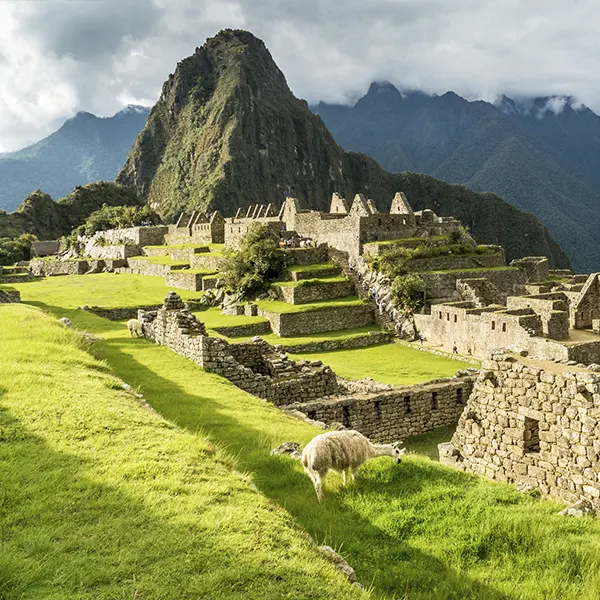
The Classic Inca Trail has a clear advantage for travelers interested in archaeology and Inca history. Along the route, trekkers pass important sites such as Patallacta, Runkurakay, Sayacmarka, Phuyupatamarca, and Wiñay Wayna before reaching Machu Picchu.
The Salkantay Trek offers a different experience, with more emphasis on rural Andean communities, mountain landscapes, and contemporary local life, rather than a sequence of major archaeological sites. The route is therefore better suited to travelers who want to combine high-altitude trekking with mountain scenery and encounters with contemporary Andean life.
If archaeological sites are one of your main reasons for choosing a trek, the Inca Trail is the stronger choice. If your priority is the natural environment and mountain landscapes, Salkantay may be a better match.
| Feature | Classic Inca Trail | Salkantay Trek |
| Archaeological Sites | Numerous Inca sites along the route, including Patallacta, Runkurakay, Sayacmarca, Phuyupatamarca, and Wiñay Wayna | Fewer major archaeological sites along the route, with the experience focused more on nature, mountain landscapes, and local communities |
| Historical Character | Follows an ancient Inca road that once connected different settlements and ceremonial sites | Combines ancient Andean landscapes with a route through traditional rural areas and mountain communities |
| Inca History | Strong focus on Inca history, architecture, and engineering throughout the trek | Inca history is present but is less central to the trekking experience |
| Cultural Experiences | Learn about Inca history and traditions through archaeological sites and the ancient trail | Opportunities to interact with local communities, observe traditional farming practices, and experience contemporary Andean culture |
| Local Communities | The route passes through areas with limited direct interaction with local communities | Greater opportunities to encounter local communities and rural life along the route |
| Overall Experience | Best for travelers interested in archaeology, Inca history, and following an ancient Inca route to Machu Picchu | Best for travelers seeking a combination of mountain scenery, nature, rural life, and contemporary Andean culture |
Scenery & Natural Landscapes
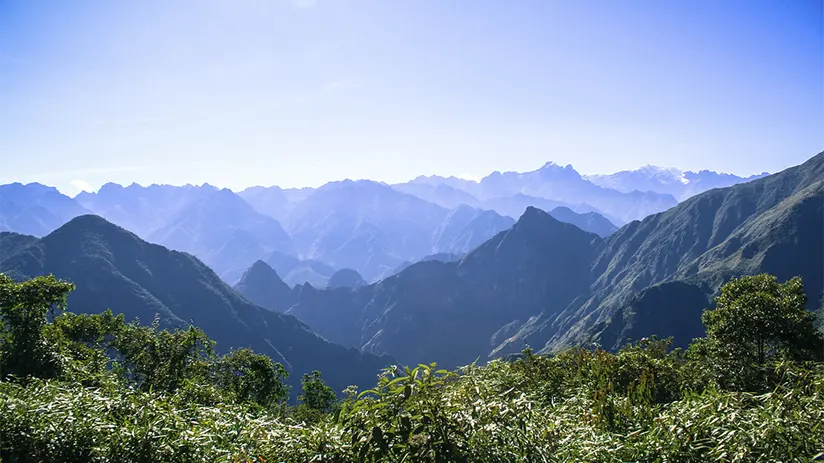
The Salkantay Trek is particularly known for its dramatic mountain scenery, snow-capped peaks, glaciers, and changing ecosystems. The Inca Trail offers a different progression of landscapes, combining mountain terrain and cloud forest with ancient pathways and archaeological sites. Wildlife may also be seen along both routes, although sightings are not guaranteed.
The main difference is the way each route presents its natural surroundings: Salkantay places greater emphasis on expansive mountain landscapes, while the Inca Trail combines natural scenery with the historic environment of the ancient Inca road.
| Feature | Classic Inca Trail | Salkantay Trek |
| Mountain Scenery | Mountain passes, rugged peaks, valleys, and views of the Andes | Dramatic high-altitude mountains, deep valleys, and spectacular views of the Salkantay range |
| Glaciers & Snow-Capped Peaks | Mountain views include snow-capped peaks in the surrounding Andes | One of the route’s major highlights, with views of snow-capped peaks and glaciers around Salkantay |
| Lakes | Fewer major lakes along the main route | Humantay Lake is one of the trek’s most iconic natural highlights |
| Cloud Forest | Passes through lush cloud forest on the descent toward Machu Picchu | Descends from high-altitude landscapes into warmer, lush cloud-forest environments |
| Ecological Transitions | Changes from high-altitude mountain terrain to cloud forest and subtropical vegetation | One of the route’s defining features, transitioning from alpine landscapes and high-altitude terrain to cloud forest and tropical vegetation |
| Flora & Fauna | Diverse vegetation and opportunities to spot Andean wildlife | Diverse ecosystems provide opportunities to observe wildlife and a wide variety of plant life |
| Major Natural Highlights | Mountain landscapes, cloud forest, and panoramic views along the ancient Inca Trail | Salkantay Pass, Humantay Lake, snow-capped mountains, glaciers, valleys, and cloud forest |
| Overall Scenery | A combination of natural landscapes and archaeological heritage | A nature-focused trekking experience with greater emphasis on dramatic landscapes and ecological diversity |
Permits & Booking
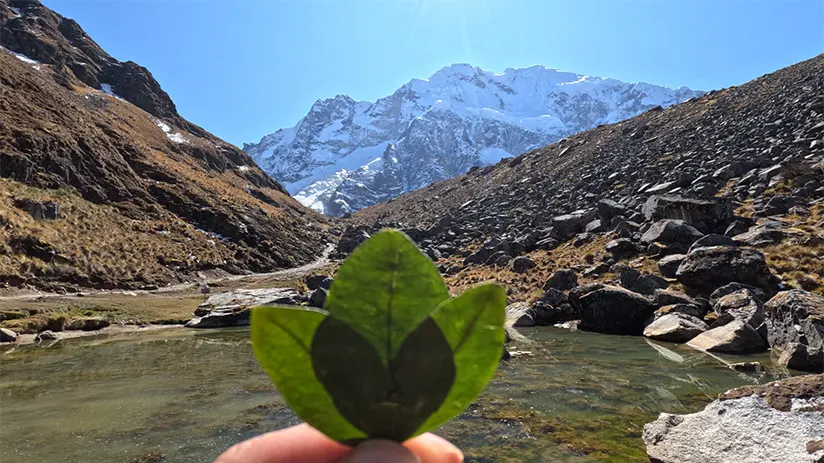
Salkantay Trek
The Salkantay Trek does not reach Machu Picchu directly. Depending on the itinerary, trekkers typically reach the Hydroelectric Station on the final day and can either take a train or walk approximately three hours along the railway tracks to Aguas Calientes, also known as Machu Picchu Pueblo.
However, specific access fees, protected-area requirements, Machu Picchu tickets, and transportation arrangements may apply depending on the itinerary.
This greater booking flexibility can make Salkantay a practical option for travelers who cannot secure an Inca Trail permit or are planning their trek closer to their departure date. Travelers can also explore alternative treks to Machu Picchu to compare other routes based on scenery, difficulty, and overall trekking experience.
Inca Trail
Reservations are required for the Classic Inca Trail, and availability is limited. The reservation schedule can change from year to year, so travelers should check the latest official information before booking their trek.
The Inca Trail itself has a maximum of 500 people per day, including trekkers and support staff, which is separate limit from Machu Picchu’s own daily visitor capacity. For example, reservations for the 2026 season opened in November 2025. Travelers should check the latest official schedule to confirm opening dates and availability.
Cost

The Salkantay Trek generally offers more flexibility in pricing, but the total cost depends heavily on the itinerary, accommodation, transportation, meals, Machu Picchu entrance, and whether the package includes train transportation.
The Classic Inca Trail generally has higher fixed access and operating costs, partly because access is regulated and services must be arranged through authorized operators. The final price also varies according to the operator, group size, accommodation, porter services, and inclusions.
When comparing prices, do not compare the tour price alone. Check whether the package includes Machu Picchu entrance, transportation, meals, camping equipment, porters, and any additional services.
Accommodation: Camping vs. Lodges

Both treks involve camping, but accommodation options differ considerably. Traditional Inca Trail itineraries use designated campsites along the route, making camping an essential part of the experience. Facilities are basic and vary between campsites.
Salkantay offers greater accommodation variety. Depending on the itinerary and operator, travelers may stay in traditional campsites, glass-domed tents, or mountain lodges.
If sleeping in basic campsites is part of the adventure for you, either trek can work. If you prefer the possibility of a more comfortable overnight stay, Salkantay offers more flexibility.
| Feature | Inca Trail | Salkantay Trek |
| Main Accommodation | Camping is the standard accommodation option along the trail. | Accommodation varies by itinerary and tour operator and may include camping, mountain lodges, or a combination of both. |
| Campsites | Trekkers stay at designated campsites with marked areas for tents and basic facilities. | Campsites vary depending on the route and operator, with facilities generally ranging from basic camping areas to more comfortable setups. |
| Bathrooms & Showers | Basic bathroom facilities are available at campsites. Showers are limited, and hot water is generally not available. | Facilities vary by campsite or lodge. Some lodges may offer private bathrooms and hot showers. |
| Comfort Level | Basic camping with limited facilities and a more traditional trekking experience. | Options range from basic camping to more comfortable lodge stays, depending on the itinerary. |
| Alternative Options | Accommodation options are more limited because camping is part of the traditional route experience. | Some operators offer lodge-to-lodge itineraries, upgraded camping, or glass-domed tents, depending on availability. |
| Best For | Travelers who want a traditional trekking experience focused on the historic Inca Trail. | Travelers who want more flexibility in accommodation and the option to add greater comfort to their trek. |
Arriving at Machu Picchu: the Sun Gate vs. Aguas Calientes
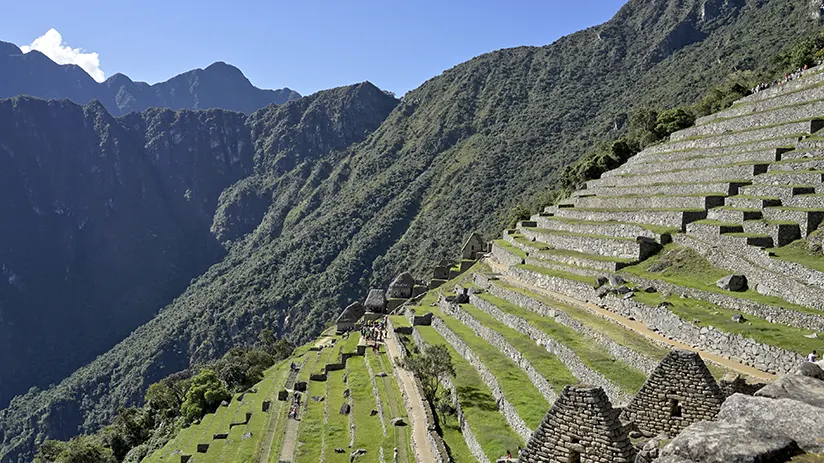
This difference can be decisive for travelers who want the arrival at Machu Picchu itself to be part of the trekking experience.
One of the main differences between the two treks is how they approach Machu Picchu. On the Inca Trail, trekkers reach the site through the Sun Gate (Inti Punku), arriving at Machu Picchu as part of the trekking experience.
On many Salkantay Trek itineraries, trekkers reach the Hydroelectric Station and continue to Aguas Calientes, often staying overnight before visiting Machu Picchu the following day. This means the Inca Trail offers a more direct trekking approach to Machu Picchu, while Salkantay combines the trek with a stay in Aguas Calientes before the visit.
If you are combining a trek with other transportation options, you can also review the different routes from Cusco to Machu Picchu to understand how the trekking and transportation portions of your journey connect.
Which Trek is Right for You?

Choose the Inca Trail if…
- Prioritize Inca archaeology and history
- Want the classic approach to Machu Picchu
- Prefer a shorter route
- Are willing to plan months ahead
- Are comfortable with designated campsites
Choose Salkantay if…
- Prioritize mountain scenery
- Want more itinerary flexibility
- Enjoy longer hiking days
- Want more accommodation variety
- Are comfortable with higher elevations
Before booking, check our guide to the best time to visit Machu Picchu to learn more about seasonal conditions and choose the period that best fits your trip.
Doing Both Treks
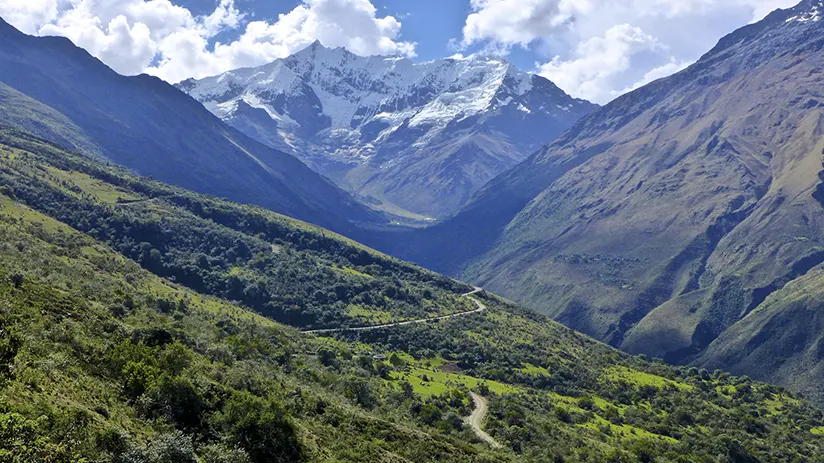
For travelers with enough time in the Cusco region, completing both the Salkantay Trek and the Inca Trail can provide two distinct trekking experiences in the same trip. Rather than choosing between them, travelers can combine both routes and experience their different landscapes, terrain, and approaches to Machu Picchu.
However, doing both requires additional time, physical preparation, and careful coordination of trekking schedules, permits, transportation, and recovery days. For most travelers, choosing one route based on their priorities will be sufficient, but combining both can be worthwhile for experienced hikers with a longer itinerary.
Frequently Asked Questions About Choosing the Salkantay Trek & Inca Trail

Is the Inca Trail or Salkantay Trek harder?
Neither trek is universally harder for every traveler. Salkantay usually presents greater altitude and longer hiking days, while the Inca Trail involves steep climbs and descents over a shorter route. Your fitness level, acclimatization, hiking experience, and response to altitude can make one feel more demanding than the other.
Which is cheaper, Salkantay or the Inca Trail?
The Salkantay Trek is generally less expensive than the Inca Trail, although the final cost depends on the itinerary, tour operator, accommodation, transportation, and services included.
Do you need a permit for the Salkantay Trek?
The Salkantay Trek does not require the same government trekking permit as the Inca Trail, so booking is generally more flexible. However, you still need an entrance ticket to visit Machu Picchu. In contrast, the Inca Trail has a limited daily capacity, so you should book permits well in advance.
Can you hike the Inca Trail without a guide?
No. The Classic Inca Trail must be completed with an authorized guide. A guide can also help with logistics and provide information about the history, archaeology, and culture along the route.
Do both treks end at Machu Picchu?
Both treks lead to Machu Picchu, but the final approach is different. The Classic Inca Trail reaches Machu Picchu through the Sun Gate (Inti Punku), subject to current site regulations. On typical Salkantay itineraries, trekkers reach the Hydroelectric Station and then continue to Aguas Calientes, where they usually stay overnight before visiting Machu Picchu the following day.
How far in advance should you book the Inca Trail?
It is best to book the Inca Trail several months in advance, especially if you plan to trek during the busiest travel periods. Permits are limited and can sell out for popular dates. The Salkantay Trek generally offers more flexibility, although availability may still depend on the operator and itinerary.
Is Salkantay a good alternative if the Inca Trail is sold out?
Yes. The Salkantay Trek can be a good alternative if Inca Trail permits are unavailable. It offers a different experience, with dramatic mountain scenery, high-altitude sections, and changing landscapes. Travelers considering other routes can also explore Inca Trail alternatives to compare additional trekking options to Machu Picchu.
Which trek is better for first-time hikers?
Neither trek is necessarily better for every first-time hikers. The Inca Trail may be more suitable for travelers who prefer a shorter route and are interested in Inca history and archaeology, while the Salkantay Trek may appeal to those who prefer more dramatic mountain scenery and a more physically demanding route. Both require good physical preparation and acclimatization, particularly because they include high-altitude sections.
Conclusion
Both the Salkantay Trek and the Inca Trail offer memorable ways to reach Machu Picchu, but they provide distinctly different trekking experiences. Whichever route you choose, good acclimatization, preparation, and planning will help you make the most of your trek.
Choosing between the Salkantay Trek and the Inca Trail can be challenging, but you don’t have to navigate your adventure alone. With years of experience creating travel experiences in Peru, Machu Travel Peru can help you choose the right trek and build an itinerary that fits your travel style. Discover how to plan your trip to Peru and contact our travel experts to start your Machu Picchu adventure!