Trujillo is the country’s third-largest city, widely known as the City of Eternal Spring. Located on the northern coast, it serves as the capital of the La Libertad region. Trujillo also holds Chan Chan, the largest adobe city in the Americas. Beyond its pre-Columbian sites, Trujillo pairs a well-preserved colonial center with the nearby beach town of Huanchaco.
This guide covers the essentials for planning a trip to Trujillo
- Why Visit Trujillo, Peru?
- The History and Cultural Heritage of Trujillo
- The Best Things to Do in Trujillo
- Trujillo Gastronomy: What to Eat
- How to Get to Trujillo
- Where to Stay in Trujillo
- The Best Time to Visit Trujillo
- How Many Days Should You Spend in Trujillo?
- Suggested Trujillo Itineraries
- Travel Tips for Visiting Trujillo
- FAQs About Trujillo, Peru
Why Visit Trujillo, Peru?

Trujillo is one of the most famous places to visit in Peru, combining ancient history, colonial architecture, and nearby beaches. Likewise, a mild climate lasts most of the year, so travelers usually explore centuries-old adobe cities each morning and unwind on the coast of Huanchaco each afternoon.
The city also serves as a convenient starting point for exploring northern Peru, thanks to the Moche Route. This tourist circuit links Trujillo to several nearby ancient sites, keeping most attractions within a short drive from downtown.
The History and Cultural Heritage of Trujillo
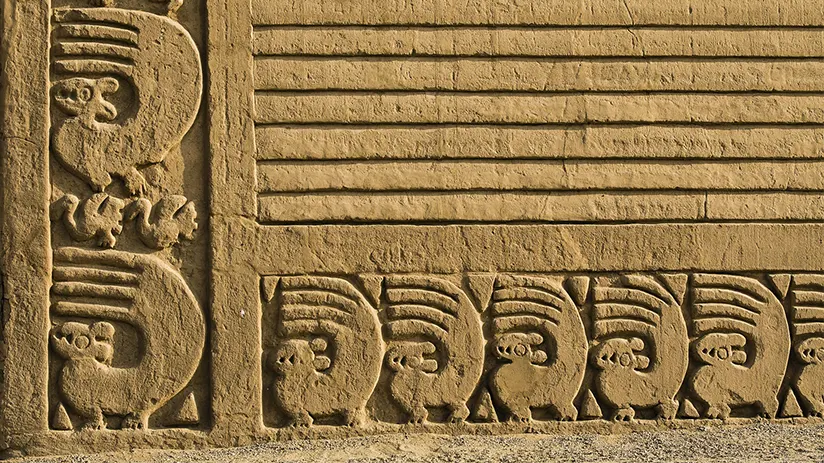
Trujillo’s past spans more than a thousand years. The Moche and Chimú shaped it first, and Spanish colonization later transformed it. Both left behind adobe temples, colonial churches, and a downtown grid still in use today. This part of the guide explores that layered chapter of Peruvian history.
Pre-Columbian Legacy: The Moche and Chimú Civilizations
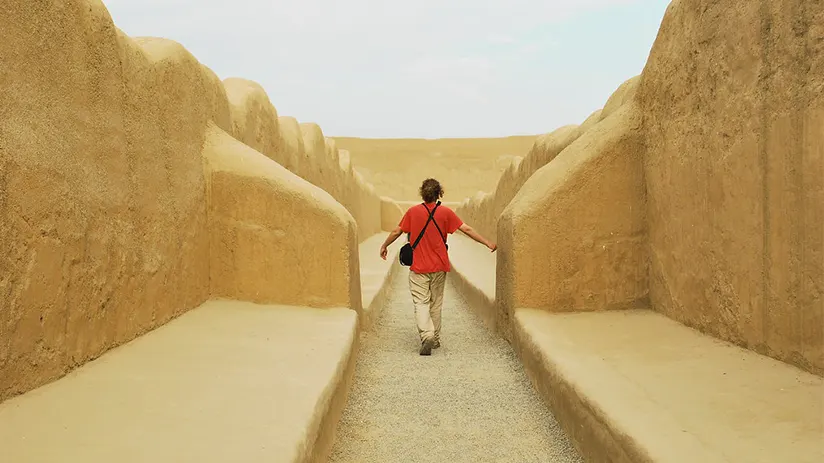
The Moche ruled the Trujillo region from about 100 to 800 AD, becoming the area’s first major regional civilization. They were known for their skilled metalwork, fine ceramics, and advanced irrigation systems. That same skill shaped their monumental architecture. Huaca del Sol, for example, served as an administrative and military center, rising nearly 40 meters above the valley.
In another way, the Chimú civilization emerged after the Moche declined, dominating the region from about 1000 to 1471 AD. At this height, their capital, Chan Chan, became the largest adobe city in the pre-Columbian Americas. Even so, the Inca Empire conquered its territory shortly before the Spanish arrived, marking the end of one of the last ancient cultures of Peru before colonization began.
Colonial Trujillo: Spanish Foundation and Architecture

Diego de Almagro, a Spanish conquistador, founded the settlement of Trujillo in 1534, naming it after Francisco Pizarro’s birthplace. Pizarro made it official the following year, giving it the formal name Trujillo de Nueva Castilla. From there, city planners organized the streets around a main square, leaving behind a grid pattern still visible today.
Over time, the city grew into an important administrative hub, home to churches, courts, and wealthy merchant families. To guard against pirate attacks, local authorities built a defensive wall around it between 1687 and 1690. Likewise, several buildings from that colonial period still stand in the Historic Center today.
The Marinera Dance and Its National Legacy
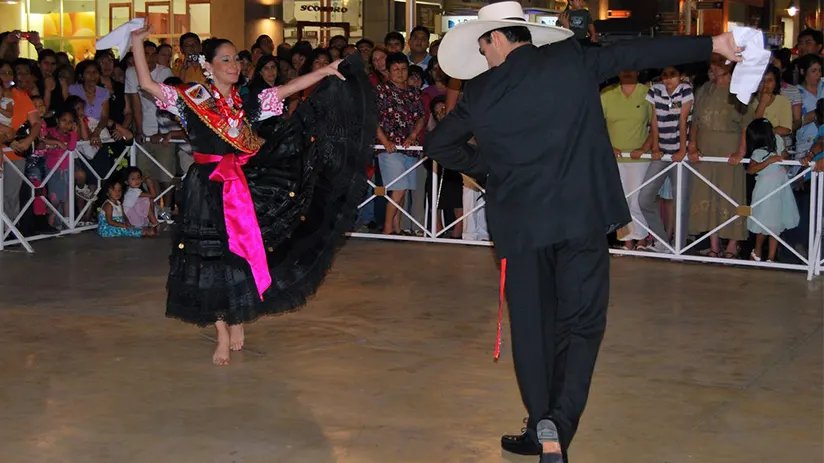
Trujillo holds the official title of Capital Nacional de la Marinera, Peru’s national courtship dance, granted in 1986. Dancers perform in pairs, moving to guitar and cajon music while waving handkerchiefs. This performance blends Spanish, African, and Andean influences and remains part of Peruvian culture across the northern coast.
The Concurso Nacional de Marinera dates back to 1960, when the Club Libertad organized the first edition in Trujillo. That same 1986 law later named it Peru’s only official national marinera contest. Couples compete across categories that span children, teens, and adults, working toward the top honor, Campeón de Campeones.
Recent editions, however, have taken place in Callao rather than Trujillo, following a dispute between organizers. Even so, the origins and cultural weight of the competition remain rooted here. This city still holds its own Marinera festivities every summer, generally in January and February. Exact dates and venues change each year, so travelers should confirm them through official regional channels before planning a visit.
The Best Things to Do in Trujillo
Trujillo concentrates its top sights into a handful of easy day trips, most within thirty minutes of downtown. An ancient adobe city sits alongside colonial streets and a lively seaside neighborhood, giving travelers a mix of archaeology, history, and beach life in one visit. The four stops below cover the essentials for a complete experience.
Explore Chan Chan
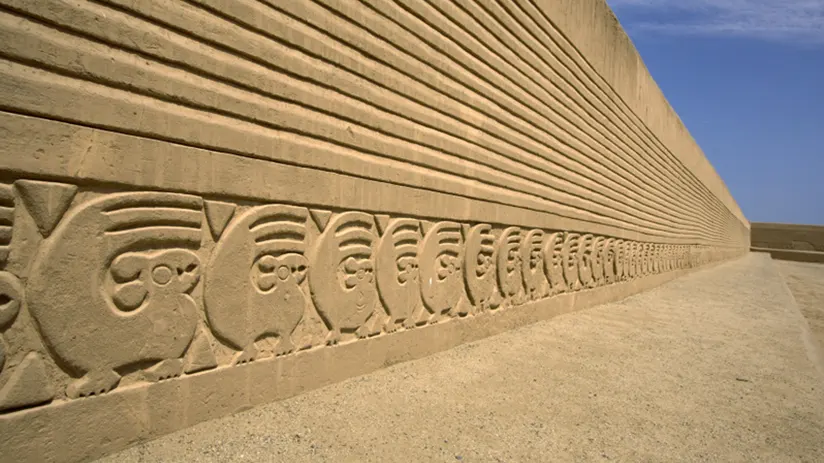
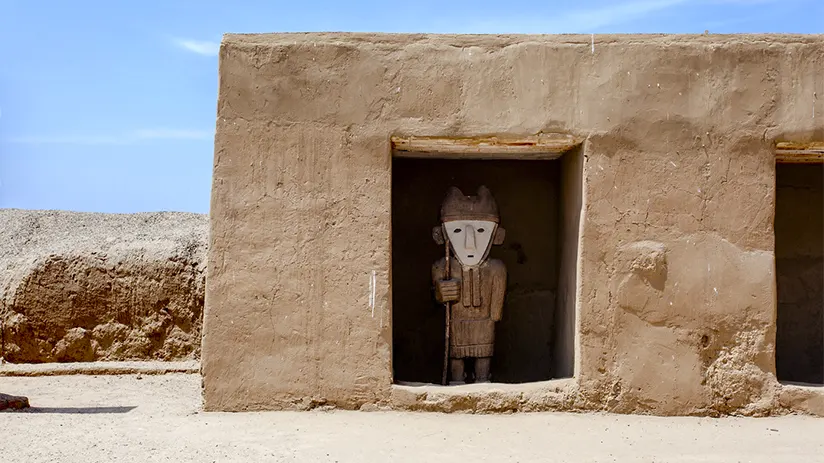
Chan Chan sits about 5 km from downtown Trujillo, and it’s among Peru’s most impressive archaeological sites. UNESCO added it to the World Heritage list in 1986, recognizing it as the largest adobe city built. Specifically, the complex is made up of ten walled citadels, each built by a different Chimú ruler, though only one, Nik An, is restored and open to visitors.
Visitors need a single ticket to tour the site. That same entry also covers two smaller Chimú temples nearby. On one hand, Huaca Arco Iris, also called the Dragon Temple, displays stepped reliefs shaped like rainbows and serpents. On the other hand, Huaca La Esmeralda is likely a ruler’s residence. The quick reference below covers hours, pricing, and highlights before planning a visit.
- Access: Tuesday through Sunday, 9 A.M. to 4 P.M.
- Ticket required: Yes, single entry covers three sites.
- Price: About $3, with reduced rates for students.
- Highlights: Nik An Palace, Huaca Arco Iris, Huaca La Esmeralda.
Visit the Huacas of the Sun and Moon
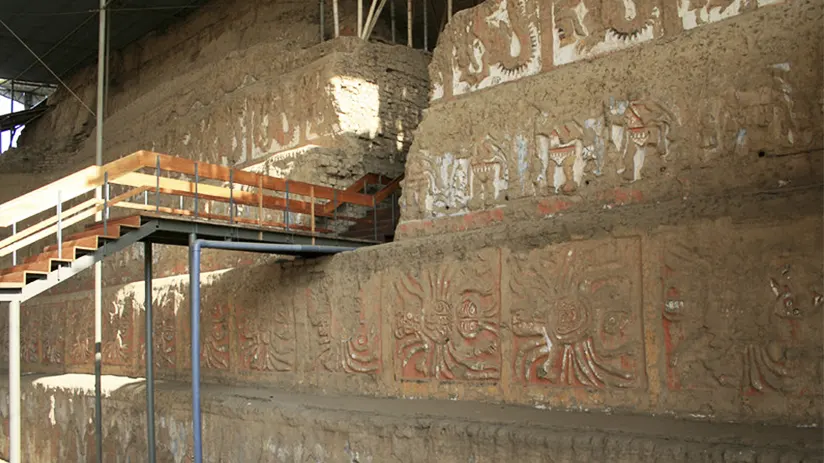
The Huacas of the Sun and Moon sit about 5 km south of Trujillo, in the valley below the city. A site museum near the entrance displays ceramics and metalwork from the Moche period, giving context before the walk begins. From there, a marked path leads toward the two temples.
Huaca del Sol remains closed to visitors due to erosion and past looting. Most of the walk instead focuses on Huaca de la Luna, the better-preserved of the two structures. Its Old and New Temples reveal seven overlapping construction phases, each built atop the last.
Its walls also carry painted murals tied to Moche religious life. Original pigments came from ground minerals and crushed shells, producing the reds, yellows, blacks, and blues still visible today. Among the figures is Ai Apaec, the Moche’s principal deity, carved with feline fangs and a commanding expression. For planning, the details below summarize admission and hours.
- Access: Tuesday through Sunday, 9 A.M. to 4 P.M. (last entry 3:30 P.M.).
- Ticket required: Yes, single entry.
- Price: About $3, with reduced rates for students.
- Highlights: Huaca de la Luna murals, on-site museum.
Walk Through the Historic Center
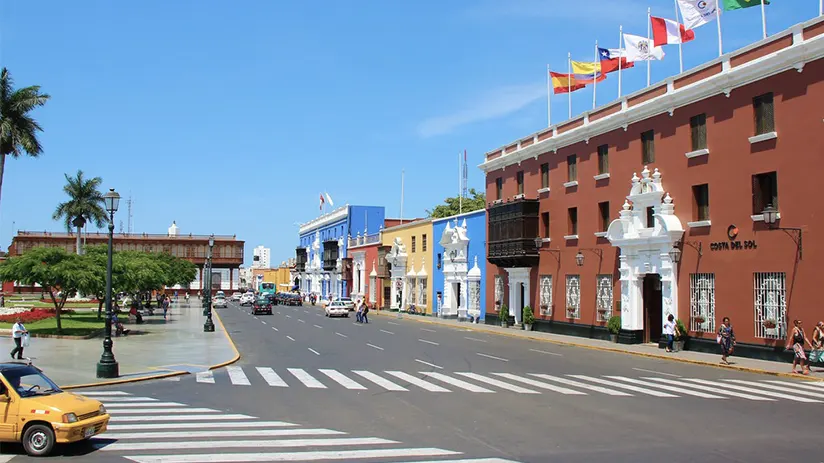
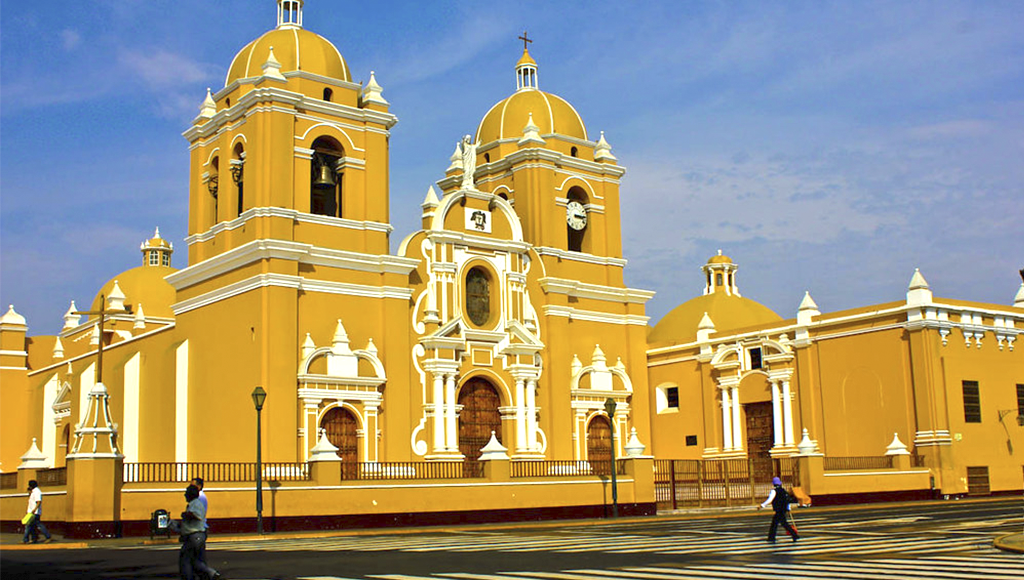
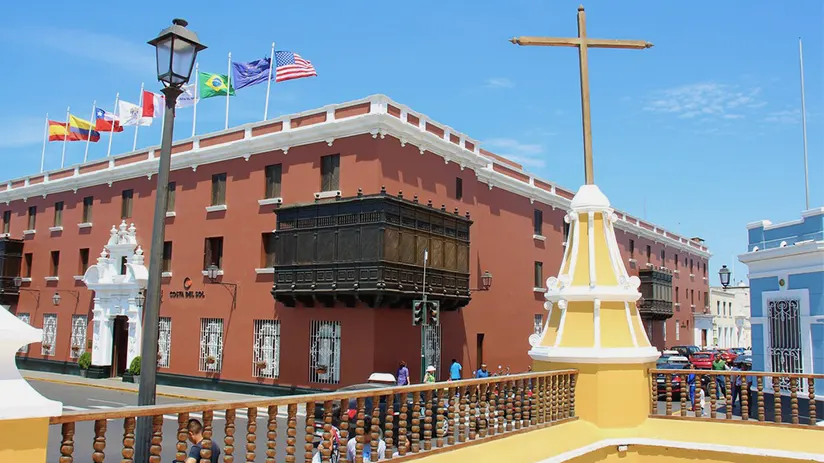
Trujillo’s Historic Center revolves around the main square, framed by colonial buildings and a bronze Liberty Monument. Facing the square, the Cathedral of Trujillo shows off a yellow facade, one of the city’s well-known landmarks. Likewise, along the surrounding streets, balconies and iron grilles still trace the wealth of local elite families.
A few blocks away, colonial mansions such as Casa de la Emancipación and Casa Urquiaga open their courtyards to visitors. Both once belonged to prominent families, and today they host art and history exhibits instead. As a result, Trujillo’s center is one of Peru’s best-preserved historic towns in Peru, with most sites within easy walking distance. Since this area has no single ticket, the overview below covers the main stops and their admission details.
- Area: Plaza de Armas and surrounding streets.
- Highlights: Cathedral of Trujillo, Casa de la Emancipación, Casa Urquiaga, Liberty Monument.
- Admission: All the highlights offer free entry, Monday through Friday, 9:30 A.M. to 3 P.M.
- Best way to explore: On foot, since most sites sit within easy walking distance of each other.
Enjoy the Coastal District of Huanchaco

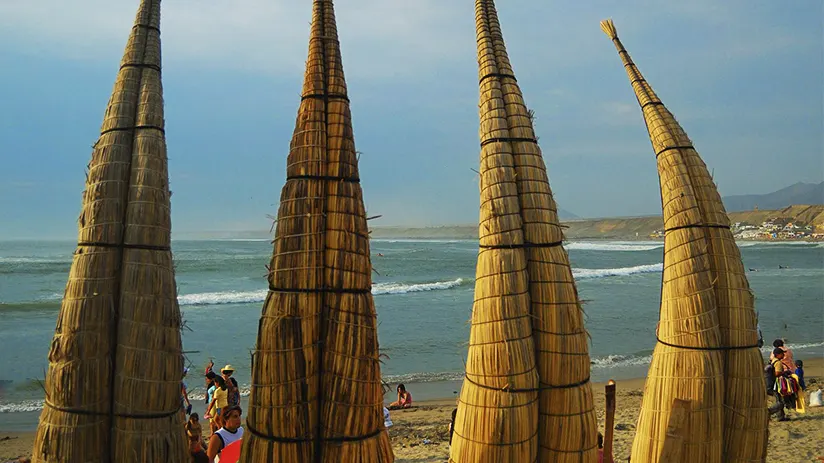
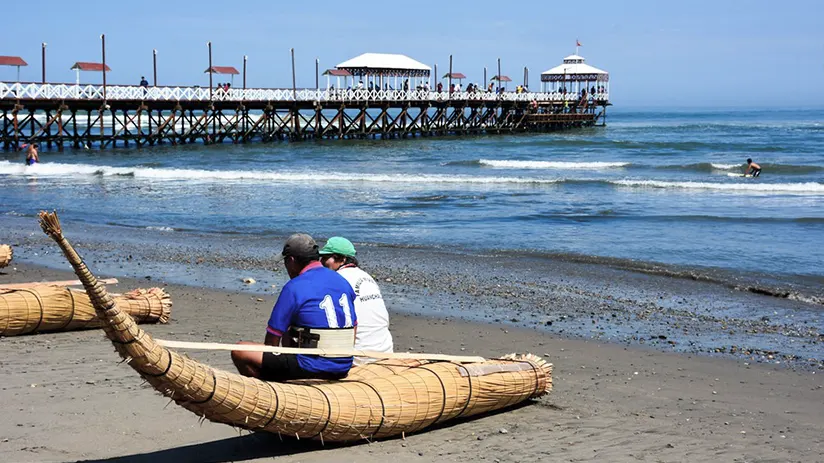
Huanchaco sits about 20 minutes from downtown Trujillo and pairs easily with a morning at the cultural sites. Fishermen here still paddle out on caballitos de totora, slender reed boats used for more than a thousand years. Rows of these vessels line the beach each afternoon as fishermen return with the day’s catch.
Beyond the boats, Huanchaco makes a good beach stop, with surf breaks, casual restaurants, and a long pier. Many spots along the waterfront serve fresh ceviche and other seafood dishes typical of the coast. On top of that, visitors combine it with Chan Chan or the Huacas of the Sun and Moon for a full-day trip.
Trujillo Gastronomy: What to Eat
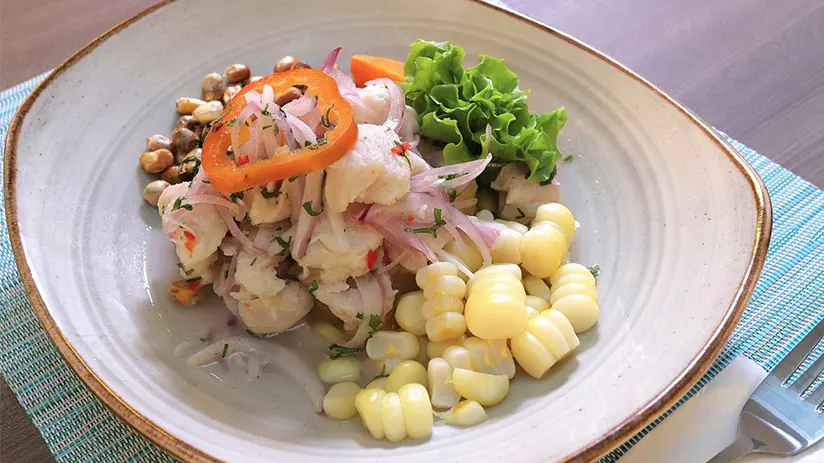
Fresh coastal seafood meets colonial-era recipes in Trujillo’s kitchens, creating a distinct regional cuisine in Peru. Several dishes rarely appear outside the region, giving visitors a chance to taste flavors unique to the north. The list below highlights the most sought-after choices among locals and travelers alike.
- Ceviche norteño (northern-style ceviche): Made with larger cuts of fish and a spicier marinade than Lima’s version, often served with cancha (toasted corn kernels).
- Shambar: A hearty soup of wheat, beans, and pork, traditionally served only on Mondays in local restaurants.
- Sudado de mero (grouper stew): Fresh grouper simmered in a tomato and onion broth, a specialty along the northern coast.
- Seco de cabrito: Tender goat cooked in a cilantro-based sauce, traditionally served with beans and rice.
- Causa trujillana: A layered cold potato dish filled with seafood or chicken, a northern take on Lima’s better-known version.
- Sopa teologa (theologian’s soup): A rich, colonial-era dish which Dominican friars reportedly created in Trujillo during the 1600s, traditionally served during Holy Week.
How to Get to Trujillo
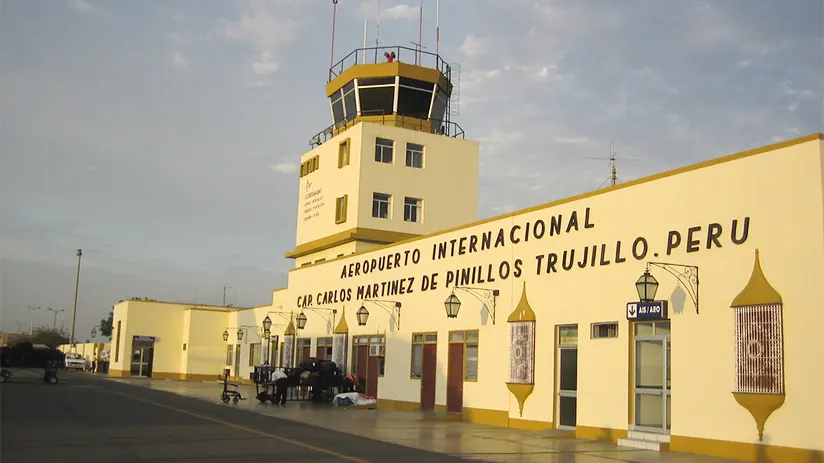
Most travelers reach Trujillo through Lima, connecting by air or by road. Flights take about an hour, while buses cover the same distance overnight. The table below compares both options.
| Method | Distance | Duration | Typical Price Range |
|---|---|---|---|
| Flight from Lima | About 560 km | About 1 hour 10 minutes | $60 to $130+ |
| Bus from Lima | About 560 km | About 8 to 10 hours | $15 to $70+ |
LATAM and Sky Airline operate several daily direct flights between Lima and Trujillo, making air travel the fastest option. These flights land at Trujillo’s Capitán FAP Carlos Martínez de Pinillos Airport, about 10 km from downtown.
For a tighter budget, several bus companies also cover this route overnight, departing from the Plaza Norte terminal in Lima. These buses arrive instead at Trujillo’s Terrapuerto terminal, on the outskirts of the city. Independent shared vans, known as colectivos, offer another option, though schedules and comfort vary widely.
Where to Stay in Trujillo
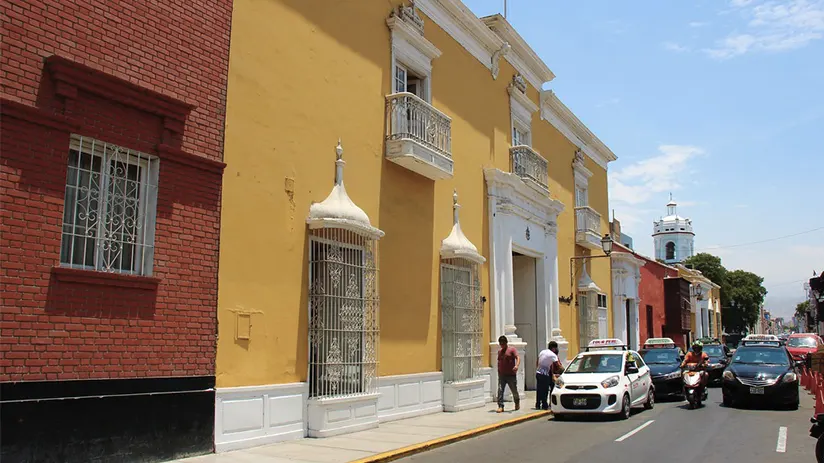
Trujillo offers lodging options across a few distinct areas, each suited to a different kind of trip. Most travelers choose between staying downtown, near the coast, or close to the airport. The table below summarizes what each area offers.
| Area | Best For | Price Range (per night) |
|---|---|---|
| Historic Center | First-time visitors who want to walk to major sights | $30 to $90 |
| Huanchaco | Travelers who prefer ocean views and a relaxed pace | $25 to $80 |
| Near the Airport | Business travelers or early departures | $35 to $70 |
The Historic Center puts most attractions within walking distance, from the main square to the Cathedral of Trujillo. Many hotels here occupy restored colonial buildings, adding character to an otherwise practical stay. As a result, this area suits travelers who prefer exploring on foot and staying close to restaurants. It also suits travelers interested in the city’s nightlife.
Huanchaco suits travelers who want to combine sightseeing with time by the ocean. Guesthouses here range from simple surf hostels to boutique properties along the waterfront. The trade-off is a short taxi ride, about 20 minutes, back into downtown Trujillo.
Hotels near the airport suit travelers with early flights or those in town for business. Options here tend toward modern chains, with fewer boutique or colonial-style properties than downtown. This area is generally quieter at night, though it means fewer restaurants within walking distance.
The Best Time to Visit Trujillo
Trujillo keeps a warm, dry climate most of the year, with two main seasons instead of four. Understanding the shift between them helps travelers plan for both comfort and crowds. The table below outlines what to expect in each.
| Season | Months | Temperature | Conditions |
|---|---|---|---|
| Warm (Austral Summer) | January to April | 72°F to 82°F (22°C to 28°C) | Clear skies, little rain, warmest and busiest months |
| Cool (Austral Winter) | June to September | 63°F to 72°F (17°C to 22°C) | Morning fog (garúa), cloudier days, fewer crowds |
The warm season draws the largest crowds, since it lines up with school vacations in Peru. It also overlaps with the Marinera festivities described earlier in this guide, when hotels near the Historic Center fill up quickly. Even during peak weeks, rainfall stays minimal.
Travelers who prefer quieter streets and lower hotel prices often choose the cool season instead. Mornings can bring garúa, a dense coastal fog common along Peru’s northern coast, though it usually burns off by midday. Light layers are recommended year-round, since desert heat by day often gives way to cooler evenings.
How Many Days Should You Spend in Trujillo?
Most travelers need at least 2 full days to visit Trujillo’s main sights. The first day works well for Chan Chan and the Huacas of the Sun and Moon. The second leaves time to explore the Historic Center on foot. A stop for local dishes, such as ceviche norteño or shambar, rounds out the journey.
Instead, allow 3 to 4 days for a slower pace, with time to add Huanchaco and sample the local food scene. This flexibility also makes room for trips beyond the city, such as nearby colonial towns. Travelers combining Trujillo with other stops along Peru’s north coast often stay closer to a week.
Suggested Trujillo Itineraries
These schedules build on the sights already covered in this guide, grouped to avoid unnecessary backtracking across the city. Both assume a starting point in the Historic Center, since most hotels and transportation options cluster there. Travelers can shorten or extend either plan based on personal interests and pace. Either option also flows naturally into other Peru destinations along the north coast.
| Day | 2-Day Itinerary | 4-Day Itinerary |
|---|---|---|
| Day 1 | Chan Chan (morning), Huacas of the Sun and Moon (afternoon) | Chan Chan and the Huacas of the Sun and Moon |
| Day 2 | Historic Center walking tour, dinner featuring local dishes such as ceviche norteño | The Historic Center, including the Plaza de Armas and nearby colonial mansions |
| Day 3 | — | Huanchaco, with time for the beach and fresh seafood |
| Day 4 | — | A relaxed morning before heading toward other Peru destinations along the north coast |
Travel Tips for Visiting Trujillo

Trujillo is straightforward to navigate, but a handful of practical details make the visit noticeably smoother. Some of these differ from what travelers may expect in Cusco or Lima, Peru’s most visited cities. The tips below cover common questions first-time visitors ask, from payments to what to wear at the ruins.
- Peruvian Soles: Most cultural sites, small restaurants, and local taxis only accept cash, not cards. ATMs are available in the Historic Center, though rarely near Chan Chan or the Huacas.
- Sun protection: Trujillo’s UV index often reaches the maximum level, even on cloudy winter mornings. Sunscreen, a hat, and sunglasses provide essential protection at outdoor sites.
- Book tours at least a month ahead during the warm season: January through April brings the busiest crowds, so popular tours can sell out weeks in advance.
- Wear comfortable, closed-toe shoes: Paths at Chan Chan and the Huacas of the Sun and Moon cross uneven, sandy ground, so sandals do not hold up well here.
- Storing water: Bottled water offers a reliable alternative during scheduled supply interruptions.
- Prepare for dust: Chan Chan and the Huacas sit in an exposed, dry landscape, so wind can kick up dust on many afternoons. A light scarf or buff helps protect the eyes and airways from blowing dust.
FAQs About Trujillo, Peru
What is Trujillo Peru known for?
Chan Chan and the Huacas of the Sun and Moon give Trujillo its reputation for pre-Columbian archaeology. The city also holds colonial architecture, the Marinera dance, and the nearby surf town of Huanchaco.
Is Trujillo worth visiting in Peru?
Trujillo ranks among Peru’s important destinations for colonial heritage, with sites rarely matched elsewhere in the country. Its mix of ancient adobe cities, a preserved Historic Center, and a nearby coastal district makes it a valuable addition to a northern Peru itinerary.
How many days do you need in Trujillo?
Most travelers plan 2 to 4 days in Trujillo, depending on how many sites they want to cover. 2 days fit the essentials, Chan Chan, the Huacas, and the Historic Center, while 4 days allow time for Huanchaco and the local food scene.
What are the best things to do in Trujillo, Peru?
The top activities in Trujillo include Chan Chan, the Huacas of the Sun and Moon, and a walk through the colonial Historic Center. Many visitors also add Huanchaco for its beach, along with a stop for local dishes.
Can you visit Chan Chan from Trujillo?
Chan Chan sits about 5 km from downtown Trujillo, making it an easy stop for most visitors. Taxis reach the site in about 15 minutes, and several tour operators include it in half-day circuits alongside the Huacas of the Sun and Moon.
When is the best time to visit Trujillo?
The warm season, from January to April, offers the clearest skies and warmest temperatures for exploring Trujillo’s archaeological sites. Travelers who prefer fewer crowds and lower hotel rates often choose the cooler months instead, from June to September.
Are the Huacas of the Sun and Moon worth visiting?
The Huacas of the Sun and Moon rank among the most significant archaeological sites in Peru. With painted murals rarely preserved elsewhere. Huaca de la Luna remains open for guided visits, while erosion and past looting have closed Huaca del Sol to visitors.
Is Trujillo safe for tourists?
Most safety concerns in Trujillo involve a few outlying districts, including El Porvenir, La Esperanza, and Alto Trujillo. Within the Historic Center, Huanchaco, and the main sites, standard precautions still apply, including keeping valuables out of sight. Checking current travel advisories beforehand is also worthwhile.
“WHERE SPRING NEVER ENDS, HISTORY NEVER STOPS TELLING ITS STORY.”
Trujillo offers a unique mix of pre-Columbian attractions, colonial architecture, and coastal towns along Peru’s north coast. Most travelers need 2 to 4 days to cover the main sites, from Chan Chan to the Historic Center. Whether paired with other stops along the Moche Route or visited on its own, Trujillo remains one of the best destinations for exploring Peru’s history.
Peru has so much to offer; it can be hard to know where to start. With many years of experience in the tourism sector, Machu Travel Peru is happy to help with anything regarding your trip to Peru and any tours around it. Let us help you make your Peruvian experience unforgettable! Contact us today to plan your dream adventure!