Chiclayo is the gateway to northern Peru’s most important archaeological sites, including the Royal Tombs of Sipán Museum, Huaca Rajada, Tucume, and the Pomac Forest. It is also known for its traditional cuisine and proximity to Pimentel Beach.
This guide to Chiclayo covers the following topics
- Why Visit Chiclayo?
- The Ancient Civilizations of Northern Peru
- The History and Cultural Heritage of Chiclayo
- The Best Things to Do in Chiclayo
- Chiclayo Gastronomy: What to Eat
- How to Get to Chiclayo
- Where to Stay in Chiclayo
- The Best Time to Visit Chiclayo
- Suggested Chiclayo Itineraries
- Travel Tips for Visiting Chiclayo
- FAQs About Chiclayo
Why Visit Chiclayo?
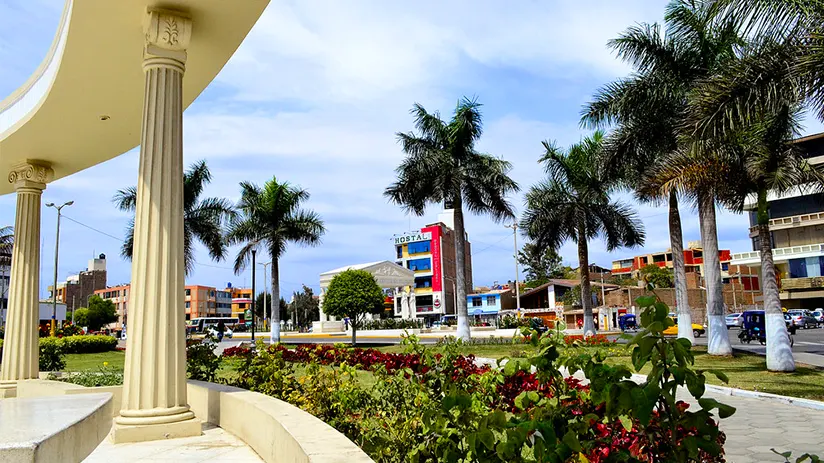
Many visitors know Chiclayo as the city of friendship, a reputation forged by its people’s friendliness. Likewise, the coastal stop is among Peru’s most visited destinations because it’s home to many pre-Columbian sites. This wealth of history is largely due to Lambayeque’s role as the birthplace of several pre-Columbian cultures, including the Moche and the Sican.
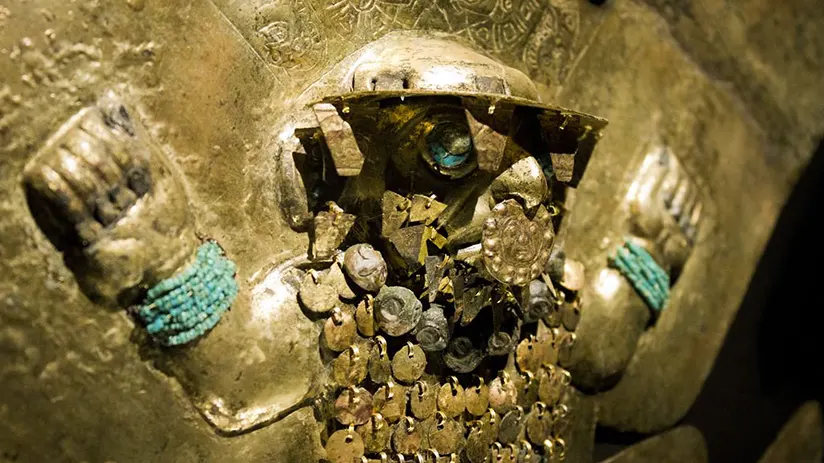
One of the best examples of this legacy is the tomb of the Lord of Sipan, discovered intact in 1987, one of the few royal Moche tombs found without looting. The discovery, in good condition, revealed the identity of a powerful Moche ruler and, therefore, remains one of the region’s greatest sources of pride today.
The Ancient Civilizations of Northern Peru

Lambayeque was home to three ancient civilizations long before Chiclayo became a city, each rising in succession over more than a thousand years. The Moche, the Sican, and later the Chimu each left their own mark on the region, from monumental adobe pyramids to elaborate royal tombs. Together, these layered cultures gave Lambayeque one of Peru’s highest concentrations of pre-Columbian ruins.
The Moche arrived first, their influence stretching from the Piura Valley in the north to the Huarmey Valley in the south. Rather than a single unified state, they functioned as a loose confederation of valleys, each contributing irrigation canals and ritual centers to the wider culture. Moche goldsmiths worked in small, individual pieces for specific rulers, using a technique called depletion gilding to make copper-gold alloys appear as solid gold. As mentioned, this metalwork tradition produced the tomb of the Lord of Sipan.
The Sican culture followed, rising between about 750 and 1375 AD. Their goldsmiths achieved a different scale altogether, reaching furnace temperatures above 1,800°F with charcoal from carob wood, a technique that allowed for far larger and more numerous gold pieces than the Moche had produced. Their first capital stood at Batan Grande, an adobe complex, and they later moved it to Tucume, known today for its cluster of adobe pyramids. This shift also reflected a hierarchical, theocratic society, where elite burials held far richer grave goods than those of ordinary people.
The Chimu people arrived last and extended their state into the region around 1375 AD. Their capital at Chan Chan grew into a highly organized city, with walled compounds built for different ruling families and a centralized bureaucracy that oversaw trade and irrigation across the empire. The Inca Empire conquered them less than a century later, in the 1470s. Despite this defeat, their capital still stands near Trujillo as the largest adobe city in the Americas.
The History and Cultural Heritage of Chiclayo
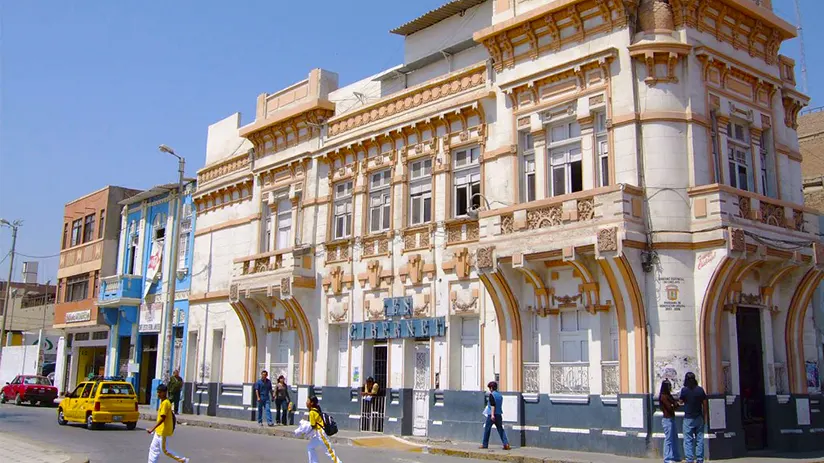
Chiclayo began as a small settlement in the 16th century, when Franciscan missionaries arrived near northern Peru’s Pacific coast. The settlement grew slowly around their convent, and it did not become an official city until 1835. That year, President Felipe Santiago Salaverry granted it the title of Heroic City, recognizing its role in Peru’s independence.
As mentioned, Chiclayo is named the city of friendship. The name dates back to the 1960s, when migrants from other parts of Peru arrived and found welcome and opportunity. On top of that, this city is one of the most populous metropolitan areas, serving as the commercial and administrative center of the Lambayeque region. This blend of colonial roots and modern growth provides insight into contemporary Peruvian culture.
The Best Things to Do in Chiclayo
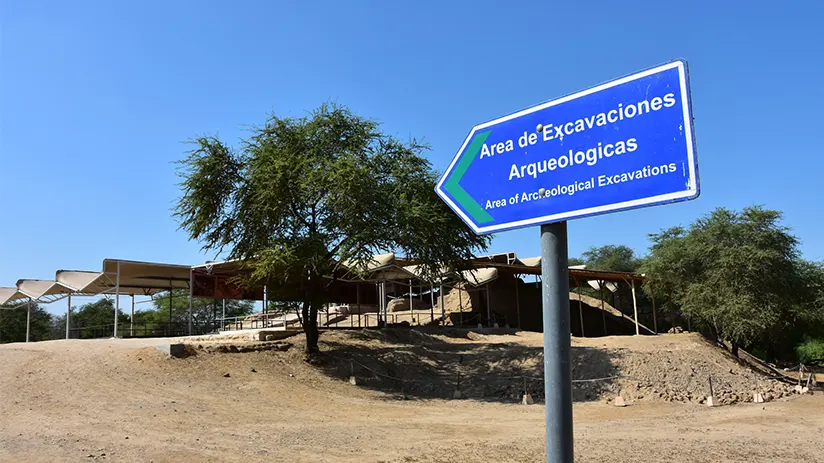
Chiclayo has enough archaeological sites in Peru, natural areas, and historic landmarks to keep visitors busy for several days. The sections below explore the region’s top attractions, each offering a different way to experience its ancient and colonial past.
Royal Tombs of Sipan Museum

- Access: Buses depart regularly from Chiclayo’s bus terminals, with fares around $1 per person. Taxis make the trip in about 15 minutes and cost $7 to $9.
- Opening hours: Tuesday to Sunday, 9:00 A.M. to 5:00 P.M.
- Entrance fee: $3 for adults, $0.50 for children.
The Royal Tombs of Sipan Museum sits in the town of Lambayeque, about 11 Km from Chiclayo. Its pyramid-shaped design draws directly on Moche architecture, giving the building a visual connection to the culture it represents. Inside, the museum holds the original pieces recovered from the tomb of the Lord of Sipan.
The building itself takes the shape of five inclined prisms, each displaying a replica of the ritual banners uncovered in the tomb. This design turns the site into more than an exhibition space, giving it the feel of the mausoleum it represents.
Huaca Rajada and the Lord of Sipan

- Access: Taxis and buses leave from Chiclayo, with the trip taking about 45 minutes and fares around $2 on the bus and $15 to $20 on a taxi.
- Opening hours: Tuesday to Sunday, 9:00 A.M. to 5:00 P.M.
- Entrance fee: $2 for adults, $0.50 for children.
Huaca Rajada, one of the most significant ancient ruins in Peru, sits about 35 Km southeast of Chiclayo, in the district of Zana. The complex consists of three huacas, or adobe mounds. Here, archaeologist Walter Alva discovered the intact tomb in 1987.
Years later, in 2009, an on-site museum opened at the site, displaying a replica of the original tomb as it was found, along with real pieces from three other Moche noble tombs uncovered in later excavations.
Tucume Archaeological Complex

- Access: Shared vans leave from the city center for about $1, followed by an auto rickshaw ride to the entrance for around $0.60. A direct taxi costs about $3 and takes 30 to 40 minutes.
- Opening hours: Tuesday to Sunday, 9:00 A.M. to 4:30 P.M.
- Entrance fee: $2 for adults, $0.50 for children.
Tucume, also known as the Valley of the Pyramids, sits about 33 Km north of Chiclayo. As noted earlier, the Sican culture moved its capital from Batan Grande here. According to legend, a descendant of the god Naylamp founded the site around 700 AD. Over the centuries that followed, the complex grew into 26 adobe pyramids spread across the desert.
Most of these pyramids remain closed to visitors, since many are still under active excavation. As a result, the trail available only covers the site’s central huacas. Instead, those seeking a wider view can climb toward Cerro Purgatorio, where a lookout point offers a panoramic view of the entire valley.
Though Tucume is not listed among UNESCO sites in Peru, this place is among the country’s most significant complexes. The entrance fee also includes access to the on-site museum, which displays more than a thousand ceramic, metal, and textile pieces recovered from the complex.
Chiclayo’s Historic Center
- Access: Most tourist hotels are within walking distance of the square, and local buses and taxis also serve the area.
- Opening hours: The Cathedral generally opens from early morning to evening, while Mercado Modelo runs in the early evening.
- Cost: No entrance fee applies, since these are public spaces.
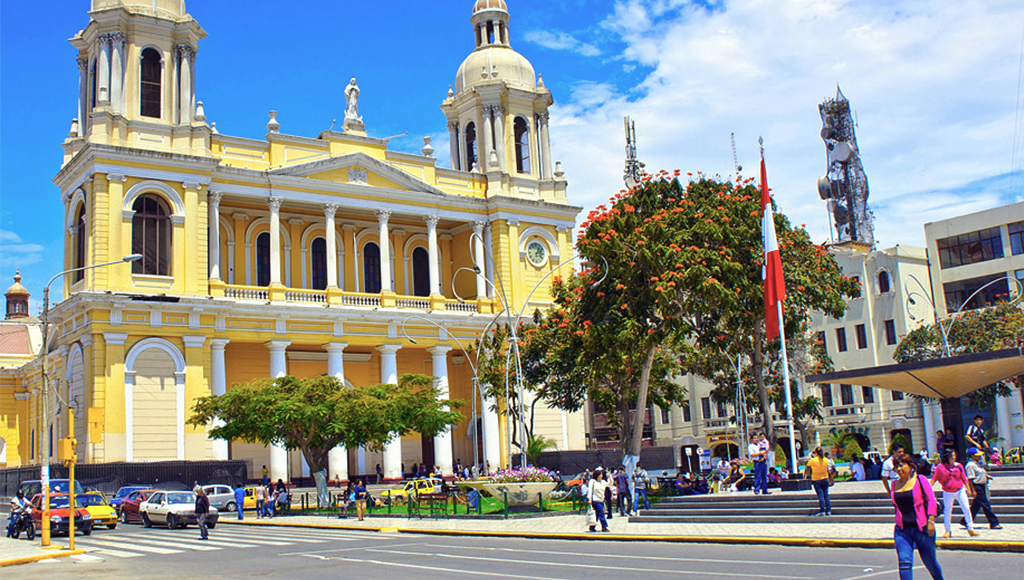
Unlike most historic towns in Peru, Chiclayo has no traditional Plaza de Armas. As mentioned, the city never had a formal Spanish founding, growing instead around a Franciscan convent. Its downtown centers instead on the Parque Principal. Furthermore, the Cathedral of Santa Maria faces this square, with a design dating back to 1869, though construction did not finish until 1939.
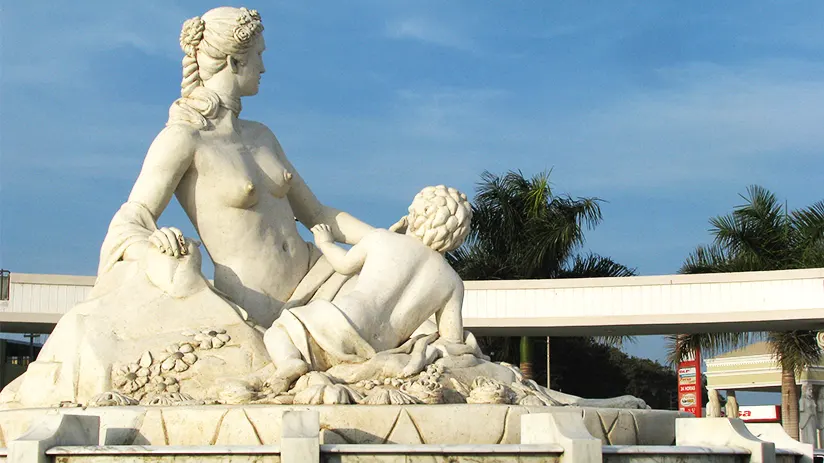
A few blocks away, Paseo de las Musas draws on Greek mythology, with marble statues. Nearby, Mercado Modelo offers a wide range of goods, including fresh produce and handmade crafts. In particular, one section of the market is known as the Mercado de Brujos, or witch doctors’ market, where vendors sell medicinal herbs and traditional healing items.
Batan Grande and the Pomac Forest Historical Sanctuary

- Access: Buses leave from Chiclayo’s Terminal Epsel for about $1.50, with the trip taking around 45 minutes.
- Opening hours: Daily, 8:00 A.M. to 5:00 P.M.
- Entrance fee: $3 for adults, $1.50 for children.
Batan Grande sits inside the Pomac Forest Historical Sanctuary, established in 2001, about 31 km from Chiclayo. The sanctuary protects Peru’s largest stand of centuries-old carob trees, some standing for more than 400 years. Long before shifting to a new site, the Sican culture built its original capital here, using Batan Grande as its center of power for centuries.
Excavations at Huaca El Oro uncovered one of the richest pre-Columbian tombs documented in the Americas, containing more than a ton of funerary goods. This discovery confirmed Batan Grande’s role as the heart of ancient Sican metalworking, long before the site became a protected natural and archaeological sanctuary.
National Sican Museum

- Access: Buses leave from Chiclayo’s Terminal Epsel for about $1.50, with the trip taking 20 to 24 minutes
- Opening hours: Tuesday to Sunday, 9:00 A.M. to 5:00 P.M.
- Entrance fee: $3 for adults, $1.50 for children.
The National Sican Museum sits in Ferreñafe, about 20 Km from Chiclayo. Opened in 2001, the two-story building holds the gold recovered from Batan Grande’s tombs. Unlike broader regional museums, this one focuses entirely on Sican history and culture.
Inside, visitors can see full-scale reconstructions of the noble tombs excavated at Batan Grande. To place Sican craftsmanship in a broader context, the museum also displays a timeline to compare the culture with other ancient societies around the world. Many visitors pair this museum with the sanctuary at Batan Grande to complete a full day of Sican history.
Pimentel Beach

- Access: Buses and taxis leave from Chiclayo regularly, with the trip taking about 20 minutes. Bus fares run around $1, while a taxi costs $8 to $10.
- Opening hours: Always open, as a public beach.
- Entrance fee: Free
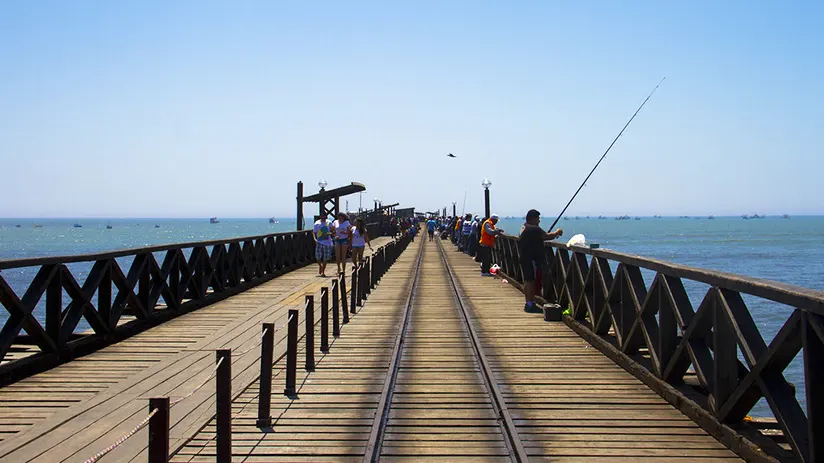
Pimentel sits about 12 Km from Chiclayo, making it an easy half-day trip from the city. Its 695-meter pier, built in 1911, once handled regional export goods and now ranks among the longest in Peru. Since the pier no longer serves a commercial purpose, it now serves as a scenic pedestrian pier.
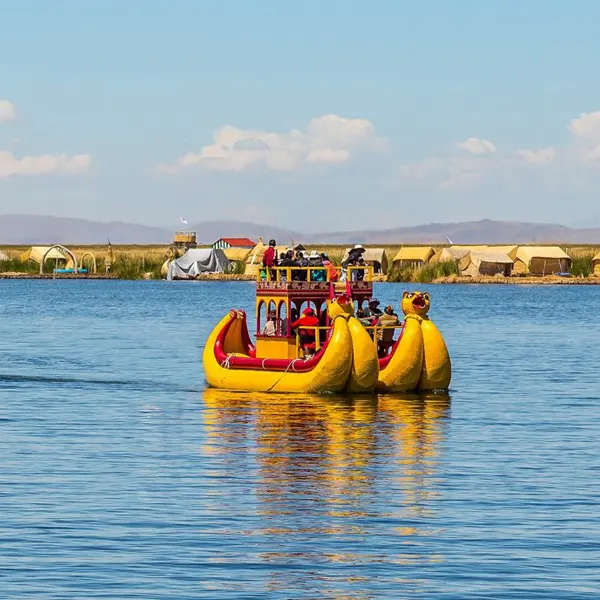
The Moche depended on the sea for their livelihood, a tradition that continues in Pimentel today, where local fishermen paddle out on caballitos de totora, reed boats nearly unchanged since Moche times and among the oldest watercraft in the Americas. Likewise, these same waves draw surfers, mixing tradition with recreation.
Chiclayo Gastronomy: What to Eat

Chiclayo cuisine draws on centuries of blended Quechua and Spanish cooking traditions, giving the region its own distinct place in Peruvian gastronomy. The dishes below represent the flavors most closely tied to Lambayeque.
- Arroz con Pato a la Chiclayana (duck and rice stew): Slow-cooked in chicha de jora, a fermented corn drink, the duck infuses the rice with cilantro, giving the dish its signature deep green color.
- Espesado de Lunes (Monday corn stew): This thick stew of ground corn, loche squash, and beef is traditionally eaten only on Mondays across the region.
- Chinguirito (dried fish ceviche): This dish replaces the fresh fish found in a typical ceviche with dried, shredded guitarfish, cured the same way in lime juice.
- Causa Ferreñafana (Ferreñafe-style potato dish): This version of the classic Peruvian causa uses yellow potato and fried fish, and originates from the nearby town of Ferreñafe.
- King Kong: Layers of cookie dough hold together manjar blanco, pineapple jam, and peanut paste, forming Lambayeque’s signature sweet.
- Chirimpico: This stew, made from goat organ meats and local spices, appears less often on tourist menus but remains a genuine local specialty.
How to Get to Chiclayo

Most visitors reach Chiclayo through Lima, since nearly all international flights into Peru land at Jorge Chávez International Airport. From there, LATAM Airlines, JetSmart, Sky Airline, and Star Peru all operate direct flights to the airport. The flight takes about 1 hour and 15 minutes, with many departures available throughout the week.
Travelers with more time can also reach Chiclayo overland from Lima. Several long-distance bus companies run overnight service along the Pan-American Highway North, and the trip takes 11 to 13 hours depending on the route and stops. This option costs less than flying, though it requires giving up a full day of travel.
Where to Stay in Chiclayo

As one of the most compelling places to visit in Peru, Chiclayo offers lodging options across a few distinct areas, each suited to a different kind of trip. Most tourists choose between staying downtown, near the coast, or close to the airport. The table below summarizes what each area offers.
| Area | Best For | Price Range (per night) |
|---|---|---|
| City Center | First-time visitors who want to walk to major sights | $20 to $70+ |
| Pimentel | Travelers who prefer a beachside, relaxed pace | $25 to $70+ |
| Near the Airport | Early flights or business travelers | $30 to $65+ |
- The historic center puts most attractions within walking distance, from the Parque Principal to the Cathedral of Chiclayo. Numerous local hotels use renovated buildings, lending charm to a practical stay. As a result, this area suits travelers who prefer to explore on foot and stay close to restaurants. It also suits those interested in the city’s nightlife.
- Pimentel suits those who want to pair ancient ruins with time by the ocean. Guesthouses here range from simple surf hostels to boutique properties along the waterfront. However, travelers who stay here should plan for a short taxi ride back into downtown Chiclayo, about 20 minutes.
- Hotels near the airport are suitable for early flights. Options here tend toward modern chains, with fewer boutique or colonial-style properties than downtown. This area is generally quieter at night, though it means fewer restaurants within walking distance.
The Best Time to Visit Chiclayo
The best time to visit Chiclayo is between June and September, since the cooler, drier weather makes it easier to explore outdoor sites. Overall, Chiclayo has a warm desert climate year-round, unlike regions of Peru with a defined rainy season. As a result, rainfall stays minimal no matter the month.
Daytime temperatures during these cooler months hover around 75-77°F, comfortable for a full day of walking between huacas and museums. That said, those who prioritize beach time at Pimentel may prefer the warmer months from January to April, when temperatures climb into the low 90°F. However, the higher temperatures can make visiting some sites more demanding.
Suggested Chiclayo Itineraries

The right travel plan for Chiclayo depends on how much time a traveler has available. For example, a three-day schedule can cover the region’s most significant sites at an efficient pace, while a five-day stay allows time for the coast and a more relaxed close. The table below outlines both options.
| Day | 3-Day Itinerary | 5-Day Itinerary |
|---|---|---|
| Day 1 | Royal Tombs of Sipan Museum (morning), Huaca Rajada (afternoon) | Royal Tombs of Sipan Museum (morning), Huaca Rajada (afternoon) |
| Day 2 | Tucume Archaeological Complex (morning), Chiclayo’s Historic Center (afternoon) | Tucume Archaeological Complex (morning), Chiclayo’s Historic Center (afternoon) |
| Day 3 | Batan Grande and the National Sican Museum | Batan Grande and the National Sican Museum |
| Day 4 | — | Pimentel Beach |
| Day 5 | — | A relaxed morning before heading toward other destinations in the country. |
Travel Tips for Visiting Chiclayo

Chiclayo is easy to navigate, but a few practical details can make the visit noticeably smoother. Some of these differ from what tourists may expect in Cusco or Lima, Peru’s most visited cities. The tips below cover common questions first-time visitors ask, from payments to what to wear.
- Peruvian Soles: Most cultural sites, small restaurants, and local taxis only accept cash, not cards. ATMs are common in downtown Chiclayo, though scarce near Tucume, Batan Grande, or Huaca Rajada, so travelers should withdraw cash before heading out.
- Plan the Sipan route as one trip: The Royal Tombs Museum sits northwest of the city, while Huaca Rajada sits southeast, in the opposite direction. Booking the combined Sipan tour saves a full day of separate backtracking.
- Check opening days before planning: The Royal Tombs Museum, Huaca Rajada, and Tucume all close on Mondays, so visitors should schedule these visits between Tuesday and Sunday.
- Wear closed-toe shoes at Batan Grande: The dry forest here includes thorny shrubs along some trails, making sturdy, closed footwear the safer choice.
- Sun protection: Chiclayo’s desert climate keeps the UV index high year-round, even during the cooler months. Sunscreen, a wide-brimmed hat, and sunglasses offer important protection in sunny, low-shade outdoor areas.
- Prepare for dust: Tucume and Batan Grande sit in an exposed, dry landscape, so wind can kick up dust on many afternoons. A light scarf or buff helps protect the eyes and airways from blowing dust.
FAQs About Chiclayo
What is Chiclayo known for?
Chiclayo is known as one of Peru’s most important archaeological regions, home to the tomb of the Lord of Sipan and the legacy of the Moche and Sican cultures. Considered by many to be the fourth largest city in Peru, Chiclayo also carries the name City of Friendship, or Ciudad de la Amistad, reflecting the friendliness of its people.
Is Chiclayo worth visiting?
Yes, Chiclayo rewards travelers with world-class museums, active excavation sites, and a food scene rarely matched elsewhere in Peru. Few other cities pack this much pre-Columbian history into such a compact area, making it a strong addition to any trip to northern Peru destinations.
What are the best things to do in Chiclayo?
The region’s top attractions include the Royal Tombs of Sipan Museum, Huaca Rajada, Tucume, Batan Grande, the National Sican Museum, the Historic Center, and Pimentel Beach. Each site represents a different period of regional history, from Moche gold to Sican pyramids.
How many days do you need in Chiclayo?
Three days allow travelers to cover the region’s main historic sites and the city center at a comfortable pace. Those with five days can add Pimentel Beach and a more relaxed schedule between stops.
What is the Lord of Sipan Museum?
The Lord of Sipan Museum, officially the Royal Tombs of Sipan Museum, holds the original gold and sacred pieces recovered from the tomb of the Lord of Sipan. The building’s design, shaped like inclined prisms, echoes the Moche architecture the collection represents.
Can you visit Tucume from Chiclayo?
Yes, because Tucume sits about 33 Km north of Chiclayo, roughly a 45-minute drive. Buses, taxis, and organized tours all make the trip daily, making it an easy stop on any Chiclayo travel plan. Travelers continuing north from there can also reach other northern Peru ruins, such as Kuelap.
When is the best time to visit Chiclayo?
The best time to visit Chiclayo is between June and September, when cooler, drier weather makes it easier to explore ancient sites with little shade. Travelers highlighting the beach at Pimentel may instead prefer the warmer months from January to April.
Is Chiclayo safe for tourists?
Yes, Chiclayo’s historic center and busy areas carry a similar level of risk to other major Peruvian cities, mainly petty theft rather than violent crime targeting tourists. Standard precautions, such as watching personal belongings and using official transportation at night, apply here as they would anywhere else in Peru.
“HISTORY BUILT THE RUINS, BUT ITS PEOPLE KEPT THEM ALIVE.”
Chiclayo offers travelers a rare combination of historical depth, coastal recreation, and a distinct culinary identity. From the gold of the Lord of Sipan to the pyramids of Tucume and the reed boats of Pimentel, the region packs centuries of rich history into just a few days of travel. Planning the itinerary around museum opening days, transportation, and seasonal weather makes the difference between a rushed visit and one that covers Chiclayo’s main attractions.
Peru has so much to offer; it can be hard to know where to start. With many years of experience in the tourism sector, Machu Travel Peru is happy to help with anything regarding your trip to Peru and any tours around it. Let us help you make your Peruvian travel experience unforgettable! Contact us today to plan your dream adventure!